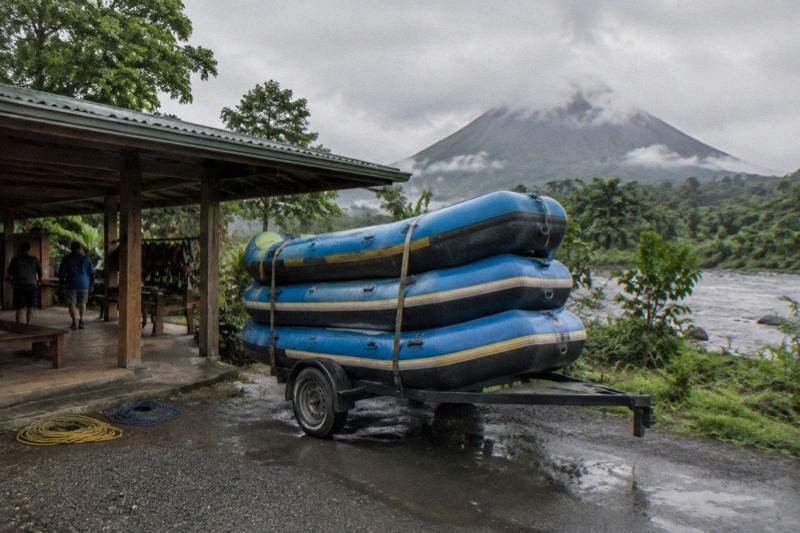
White Water Rafting In Costa Rica: Which River For Which Group
Costa Rica packs runnable whitewater into a small country, but the rivers are not interchangeable. Here is how the classes, regions and seasons sort out, and why the Sarapiqui fits most itineraries better than the famous alternatives.
Short answer
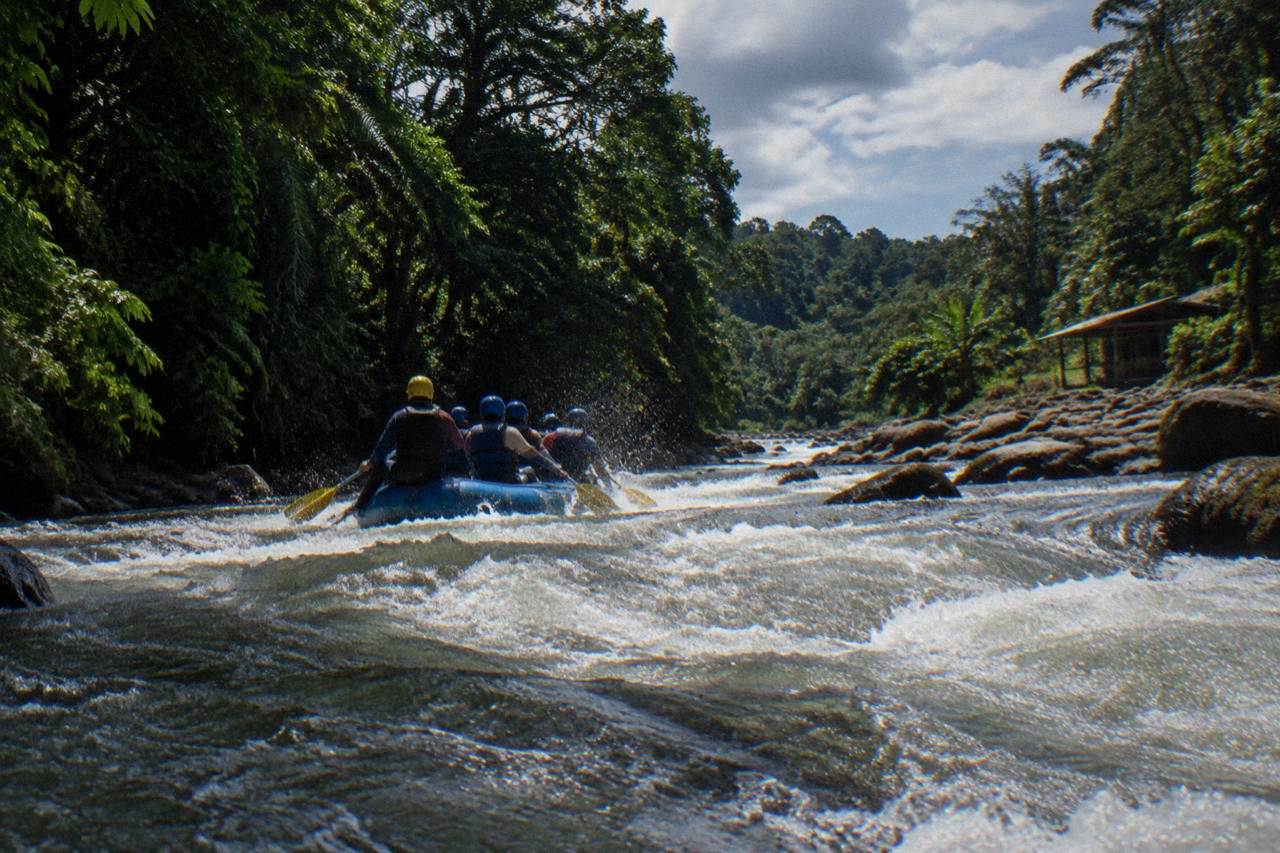
Costa Rica's main commercial rivers run from Class II-III family water (Sarapiqui upper, Balsa, lower Reventazon) to Class III-IV gorge trips (Sarapiqui Jungle Run, Pacuare). Sarapiqui trips run from $60 per person on this site's roster, and its base sits about 1 hour 30 minutes from San Jose and about 1 hour from La Fortuna, closer than the Pacuare for most travelers.
Costa Rica runs on water. The same rains that keep the lowlands green feed a set of rivers that, between them, cover every commercial rapid class from gentle Class II riffles to steep Class IV drops, all within a few hours' drive of the capital. That range is why the country became a rafting destination in the first place, and it is also why the question "which river?" matters more here than almost anywhere else in Central America. Picking the wrong class for your group turns a highlight into an ordeal; picking the right one is the trip people talk about for years. Once you've matched a river to your group, the next question is what it costs, and this guide to real white water rafting prices in Costa Rica lays out what operators charge and what each price band actually covers.
This guide steers deliberately toward the Sarapiqui for most itineraries, because that is the river this site sells and, more to the point, because the drive times and the class spread genuinely favor it for the majority of travelers. Where another river wins on facts, we say so plainly. The full side-by-side lives in the Sarapiqui rafting trips comparison, and the trip picker on the homepage narrows the roster by group and budget.
Which River In Costa Rica Is Best For White Water Rafting?
No single river wins outright: the Pacuare offers the country's most dramatic Class III-IV gorge but requires the longest drive, the Balsa is the gentlest half-day option near La Fortuna, and the Sarapiqui splits the difference with a Class II-III family run plus a Class III-IV Jungle Run about 1 hour from La Fortuna and 1 hour 30 minutes from San Jose, so pick by rapid class and drive time rather than name. If you're torn between those two rivers in particular, this Balsa versus Sarapiqui rafting comparison weighs rapid class, season, access, and family fit side by side.
Start with what the verified comparisons actually say. The Sarapiqui offers Class III-IV rapids with dense jungle scenery and sits closer to both La Fortuna and San Jose than the Pacuare, which is also Class III-IV but runs through a more remote gorge with a longer drive from La Fortuna. The Balsa, typically Class II-III, is easier and requires less paddling than the Sarapiqui's Class III-IV section. The Reventazon's lower sections are typically Class II-III or Class III, calmer than the upper options on either the Sarapiqui or the Pacuare. Those three sentences are the whole national picture, and everything else is choosing among them.
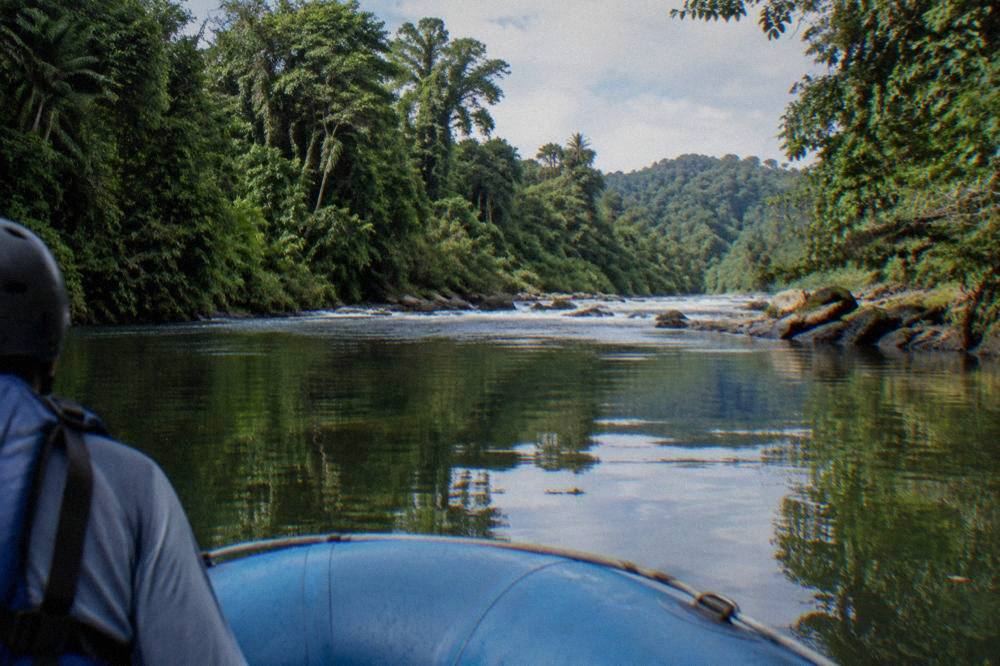
For most travelers the Sarapiqui wins on arithmetic alone. If you are staying in La Fortuna or Arenal, the Sarapiqui launch areas are roughly an hour away by road; the Pacuare's access is a materially longer commitment that eats most of a day before you touch water. If you are coming from San Jose, the drive to the Sarapiqui area runs about 51.2 miles, roughly 1 hour 28 minutes. A family with children old enough for Class III, a couple wanting a first Class IV, or a group splitting between a wildlife float and real whitewater can all be served by different listings on the same river, often from the same departure point. That concentration is rare, and it is the reason this site is built around the Sarapiqui rather than around the country's whole rafting menu. If you are still deciding whether a rafting day belongs in your trip at all, the honest look at whether white water rafting in Costa Rica is worth it covers what Sarapiqui trips typically cost and who should stay on dry land.
The Balsa still has a clear case: it is the right river for a nervous first-timer who wants wet, splashy and forgiving, and the deeper comparison is in the Sarapiqui versus Balsa breakdown. The Pacuare's case is the gorge, for travelers with a full day to spend on the journey. The honest summary is that the Pacuare is a destination trip, the Balsa is a confidence trip, and the Sarapiqui is the working river that fits the most itineraries.
What Rapid Classes Will You Paddle In Costa Rica?
Commercial trips in Costa Rica cluster in two bands: Class II-III, which is splashy, forgiving water legally open to participants from age 8 under the national norm, and Class III-IV, continuous rapids with bigger drops and stronger currents, legally open from age 12. The same river can shift between the bands with rainfall, so the class on the day depends on water level.
The class system matters more in Costa Rica than the brochure names suggest, because the national technical norm INTE G60-1:2019 ties minimum participant age directly to rapid class: under 5 no class, ages 5 to 7 Class I and II only, ages 8 to 11 up to Class III, ages 12 to 17 up to Class IV, and 18 and over up to Class V. Class VI is never run commercially. The same norm requires operators to supply and verify helmets and life jackets for every participant, and guides must hold national certification in rafting and swiftwater rescue under INTE G60-2:2019, per the published national rafting norm. Those rules give you something concrete to check on any listing: the stated class, the stated minimum age, and the equipment line.
Operators set their own minimums, often above the legal floor. On this site's roster, the Sarapiquí Outdoor Center family trip carries a listing minimum age of 6, the near-Arenal Class II-III tour lists 7, and the Class III-IV listings at the same base list 14 and 15. Weight limits and swimming-ability requirements are operator policies, not national law; where the roster does not state one, check the listing. A plain-language tour of all six classes, with what each feels like in the boat, is in the rapid classes explained guide.
If the class question is really a beginner question, the short answer is that Class II-III is the standard first-timer product in this country, and thousands of guests run it every season. The 3-hour family trip from La Virgen, at 4.9 from 200 reviews and from $85 per person with lunch listed, is the archetype. Class IV is a different commitment: stronger paddling, real consequences for missing strokes, and minimums set accordingly. Whether an inexperienced paddler should attempt it at all is treated honestly in can a beginner do Class 4 rapids.
How Does The Sarapiqui Compare To The Pacuare And The Balsa?
On verified comparisons the Sarapiqui's Class III-IV section is more demanding than the Balsa (typically Class II-III) and roughly comparable in class to the Pacuare, while beating the Pacuare on access: about 1 hour from La Fortuna against a longer drive, and about 1 hour 30 minutes from San Jose. The Pacuare answers with a remote gorge the Sarapiqui does not have.
Put the three rivers side by side on the facts this site could verify, and the trade-offs become obvious. Class first: the Sarapiqui runs an upper section at Class II-III in lower water, rising toward Class III when the river is up, and a Jungle Run section at Class III-IV in dry conditions, up to Class IV after heavy rain. The Balsa sits typically at Class II-III. The Pacuare is Class III-IV through a remote, dramatic gorge. Scenery second: all three run through jungle, but the Pacuare's gorge is the country's signature rafting landscape, which is exactly what the extra drive buys.
| River | Typical class | Character | Access from La Fortuna | Fits |
|---|---|---|---|---|
| Sarapiqui | II-III upper, III-IV Jungle Run | Jungle whitewater, two sections, floats too | About 1 hour | Families, first-timers, Class IV seekers |
| Balsa | II-III | Gentle, forgiving half-day | Short drive | Nervous beginners, tight schedules |
| Pacuare | III-IV | Remote gorge, destination run | Longer drive | Travelers with a full day for the trip |
| Reventazon (lower) | II-III or III | Calmer lower sections | Varies by section | Local trips, easier water |
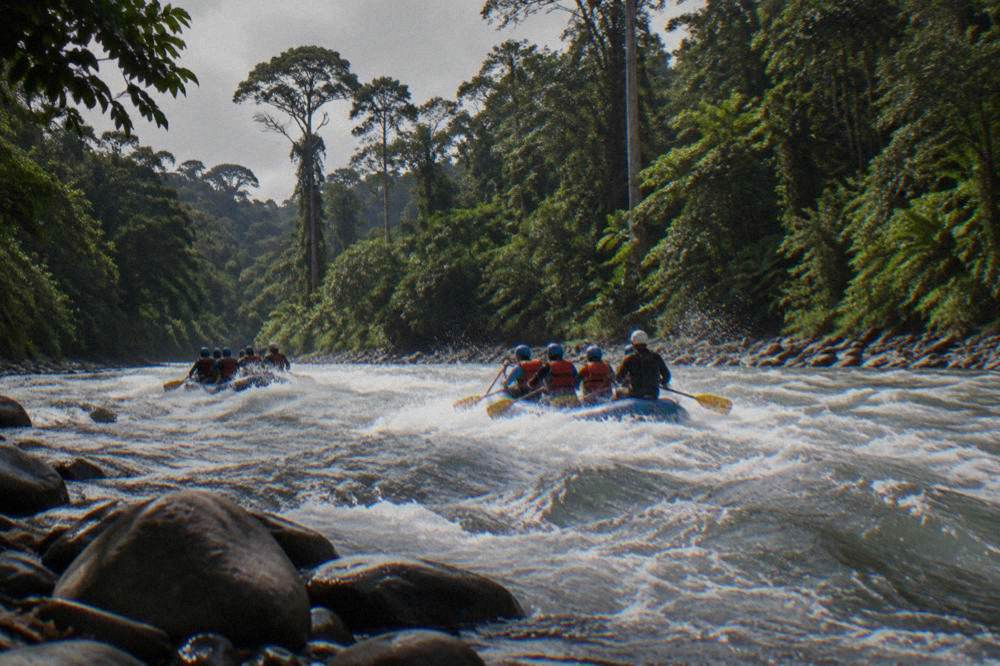
The comparison the roster can actually settle is price and convenience, and there the Sarapiqui listings are concrete. This site carries no Pacuare or Balsa products, so any price comparison beyond the Sarapiqui's own roster would be invented, and this site does not print invented figures. Within the Sarapiqui catalogue, the cheapest firm-priced listing is the 3-hour Class II-III trip from La Virgen at from $60 per person, 5.0 from 59 reviews, and the flagship Class IV product from La Fortuna runs from $85 per person at 5.0 from 845 reviews, the most reviewed listing on the site. The full head-to-head with the Pacuare, including what the drive times mean for a La Fortuna base, is in the Sarapiqui versus Pacuare guide.
One more Sarapiqui advantage is structural rather than scenic: it is a rain-fed river with no dams, and Law No. 10152 of 2022 puts a 25-year renewable safeguard along its main channel and banks, prohibiting new hydroelectric projects and new mining-extraction concessions. The flows will keep moving with the weather, which is what makes the class shift season to season, and no future dam will flatten the rapids into a reservoir.
When Is The Best Season For White Water Rafting In Costa Rica?
The dry season, December to April, brings lower, more predictable flows, typically Class II-III on the Sarapiqui, which suits beginners and families. The green season, May to November, raises the water and the class, with operators reporting Class III-IV conditions and the most dynamic rafting typically June to October. Trips can be cancelled or rerouted in high water.
Both seasons work; they just sell different products. In dry season the upper Sarapiqui settles into the Class II-III profile that family listings are built around, and the Jungle Run holds Class III-IV with technical, rock-defined lines. In green season the same river gains volume: stronger currents and bigger waves, with the fresh-file reporting that rapids push toward Class IV. Which is better depends entirely on whether your group reads "bigger water" as a selling point or a warning.
| Season | Months | Typical water | Trade-offs |
|---|---|---|---|
| Dry | December to April | Lower, predictable, Class II-III profile | Driest month April, about 117 mm over about 8 rainy days |
| Green | May to November | Higher, Class III-IV profile on the Sarapiqui | Wettest month November, about 445 mm over about 17 rainy days |
The honest caveat is the same one operators state: the Sarapiqui is undammed and rain-fed, so operators cancel or reroute trips during high-water events, flooding or road closures, and rainy-season landslides close Route 32 through Braulio Carrillo often enough that alternate routes via Route 10 or Bajos de Chilamate are standard knowledge among drivers. Daytime air temperatures run about 28 to 30 C year-round, so cold is never the issue; water level is. Month-by-month detail, including what the rainfall anchors mean for each quarter, is in the Sarapiqui weather and rainfall guide. For a wider view of how the green season shapes trips across the region, the month by month Costa Rica rainy season guide shows which stretches stay runnable when the rains peak.
What Does A Costa Rica Rafting Trip Cost?
On this site's Sarapiqui roster, per-person prices run from $60 for a 3-hour Class II-III trip without a stated meal to $160 for an 8-hour premium Class III-IV day, with the mainstream Class III-IV products clustered between $85 and $123. Every price is the listing's own, cancellation is listed as free across the roster, and lunch is included only where the listing says so.
Cost in this country is a function of duration, departure point and inclusions, not of class alone. A 3-hour trip from the river base costs less than an 8-hour day that bundles hotel pickup from San Jose or La Fortuna, lunch, snacks and an air-conditioned van. The table below shows the spread using real roster endpoints and representative listings; a fuller treatment with every listing is in the Sarapiqui cost and inclusions guide.
| Trip (roster name) | Class | Duration | Price | Rating | Meal |
|---|---|---|---|---|---|
| Rafting Sarapiqui River Class II-III | II-III | 3 hours | from $60 | 5.0 from 59 reviews | Not stated |
| Aguas Bravas Rafting, Pickup Included | II-III | 3 hours | from $70 | 4.9 from 101 reviews | Meal listed |
| Class IV from La Fortuna (featured) | III-IV | 5 hours | from $85 | 5.0 from 845 reviews | Lunch |
| Class 3-4 Rafting, 6 Hours | III-IV | 6 hours | from $122.04 | 4.9 from 136 reviews | Lunch |
| Premium Class III-IV Day, Faro Travel | III-IV | 8 hours | from $160 | No rating on file | Meal listed |

Read the fine print before comparing numbers. Where a listing says hotel pickup is not included, the operator base is the meeting point and a van takes you to the river and back, as the listing states; where pickup is listed, it is usually scoped, for example hotels within about 6 km of the operator's main office on the featured La Fortuna listing. Photos are sold separately on many trips, tips are excluded on most, and the 2-night Sarapiqui package at from $556 per person is a lodging-plus-rafting product, not a day trip. None of these are hidden fees; they are simply line items that the price alone does not show. Other pages covering the same trip are gathered on Sarapiqui River Rafting.
Which Sarapiqui Trip Fits Your Group?
Families with children from about 8 match the Class II-III listings, the cheapest being the 3-hour trip at from $60 per person; adrenaline groups match the Class III-IV listings from $85; mixed groups can split between a wildlife float and whitewater from the same La Virgen base. Minimum ages on the listings range from 6 to 15, so check each one.
The roster sorts cleanly by who is in the boat. For families, the Sarapiquí River Family Rafting Adventure lists a minimum age of 6, takes up to 24 guests, includes lunch, tropical fruit and a yucca snack, and departs from the outdoor center in La Virgen de Sarapiqui with a van to the river. It carries 4.9 from 200 reviews at from $85 per person. On a tighter budget the same class of water runs from $60 per person on the no-meal 3-hour listing, 5.0 from 59 reviews.
For groups chasing the big water, the featured listing is the one this site points most readers toward: the Class IV run from La Fortuna, 5.0 from 845 reviews, from $85 per person, 5 hours total, hotel transport included for hotels within about 6 km of the operator's main office, with lunch, fresh fruit, towels and bottled water listed. It is the most reviewed product on the roster by a wide margin, and its review pool is the deepest evidence this site has for any trip. If your base is La Fortuna and your group wants the strongest commercially guided water, this is the listing to price first.
Mixed groups and non-paddlers are better served than they might expect. The wildlife safari float from the same La Virgen base is a gentle kayak-based river trip with a listed minimum age of 4, lunch, a sugar cane tour and a fruit and yucca snack, from $90 per person; the roster carries too few reviews on it for a star claim, 3 reviews, so judge it by its inclusions rather than a rating. Half the family can run Class III-IV in the morning while the other half floats, or the whole group can take the Class II-III run and spend the afternoon at Tirimbina and La Selva, both reachable in the same area.
How Do You Get To The Sarapiqui River?
The main gateways are San Jose, about 51.2 miles and roughly 1 hour 28 minutes from the Sarapiqui area, and La Fortuna, about 46 miles and roughly 1 hour to 1 hour 10 minutes to Puerto Viejo de Sarapiqui. Many La Fortuna and San Jose listings include hotel pickup, while the La Virgen base trips meet at the operator base, where a van takes you to the river.
Choose your departure by where you are sleeping, not by where the river is. If you are based in La Fortuna or Arenal, the listings departing La Fortuna with hotel pickup listed are the practical choice: the featured Class IV trip, the 6-hour Class 3-4 trip at 4.9 from 136 reviews, and the 8-hour near-Arenal trip at 5.0 from 101 reviews all leave from that corridor. If you are in the capital, the full-day Class II-III trip from San Jose at from $105 per person includes round-trip transport from selected hotels and runs 10 hours door to door, and several connection products raft on the way between San Jose and La Fortuna, effectively making the river your transfer.
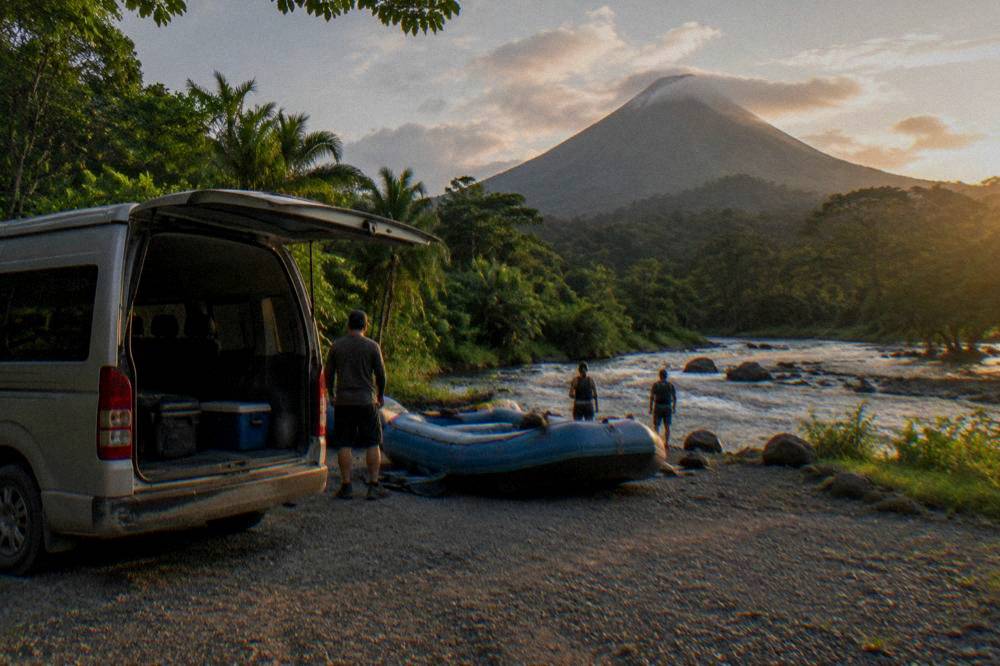
If you are staying in the Sarapiqui area itself, the La Virgen and Chilamate listings are the shortest days on the roster, 3 hours total, because no transfer is needed. Typical start times across operators run 7:00 to 8:30 in the morning, per the logistics research, so river days are early days. One road note worth planning around: rainy-season landslides close Route 32 through Braulio Carrillo with some frequency, and drivers divert via Route 10 through Turrialba or the Bajos de Chilamate route, which stretches a San Jose departure. The Chilamate listing with pickup included, from $70 per person at 4.9 from 101 reviews, will even collect you from a Sarapiqui hotel if you arrange it ahead.
What Should You Check Before Booking Any Costa Rica Rafting Trip?
Check five things on the live listing before you book: the stated rapid class and its day-of variability, the listing's own minimum age and any weight limit, whether hotel pickup is included and from where, what the price actually covers, and the cancellation terms, which the roster lists as free on every Sarapiqui product. Regulation backs you on equipment, not on weather.
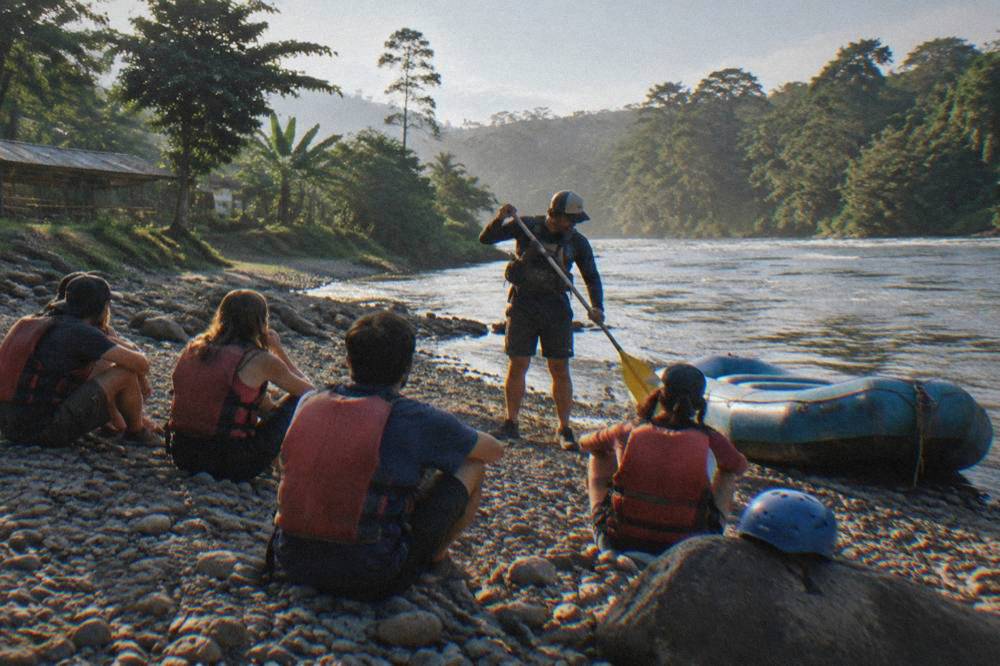
The regulation worth knowing about is the adventure-tourism framework: operators must use ICT-credentialed or approved guides, and guides must hold current first aid and CPR alongside their rafting certification, per the adventure tourism regulation. The rafting norm separately obliges operators to brief you on techniques and to verify helmets and life jackets on every participant. Those duties are the operator's, not yours; your job is to read the listing honestly against your group.
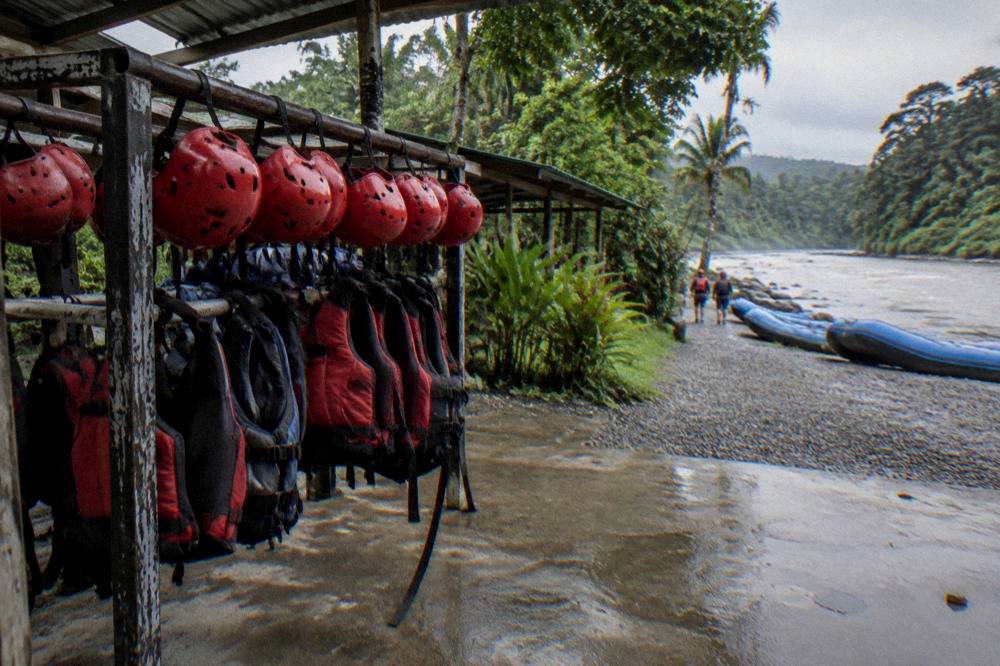
Health disclosures matter here. The national norm requires operators to collect health and physical-condition disclosures, and pregnancy, certain cardiovascular conditions, low mobility and obesity are commonly listed by operators as restrictions or non-recommended conditions. Disclose on the booking, not at the riverbank. On money: operators commonly advise cash for tips and photo purchases, tipping ranges for adventure guides are commonly reported at $5 to $10 per person for a half-day group tour and $10 to $20 for a full day, and photos are an add-on purchase on most listings. For entry rules, taxes and departure formalities, skip blogs entirely and check the official Costa Rica tourism and immigration pages, since those rules change and this site does not publish them.
Finally, book with the calendar in mind. Dry-season mornings fill first because that is when families travel; green-season water is the best whitewater in the country but carries the cancellation risk described earlier. Whatever you choose, the homepage comparison on Sarapiqui River Rafting sorts every listing by class, price and departure point in one view.
Which River, Summed Up
Match the river to the group, not the guidebook: the Balsa for the gentlest introduction, the Pacuare for a once-per-trip gorge commitment, and the Sarapiqui for everything in between, with two sections, wildlife floats, three departure cities and roster prices from $60 per person. For most Costa Rica itineraries the Sarapiqui is the river that fits.
The Sarapiqui's advantage is not that it is the biggest or the most famous, it is neither. It is that one river covers the whole spread of what visitors actually want: a Class II-III family morning from La Virgen, a Class III-IV Jungle Run for strong paddlers, a wildlife float for the grandparents, and listings departing San Jose, La Fortuna or the river base itself, so the trip adapts to your itinerary instead of the reverse. The other rivers are excellent at one thing each. This one is very good at nearly all of them, closest to the two towns most visitors sleep in, and priced from $60 per person on this site's roster.
Common Questions About White Water Rafting In Costa Rica
Which river in Costa Rica is best for white water rafting?
There is no single best. The Pacuare is the signature Class III-IV gorge trip with the longest drive, the Balsa is the gentlest Class II-III half-day near La Fortuna, and the Sarapiqui offers both a Class II-III family run and a Class III-IV Jungle Run about 1 hour from La Fortuna and about 1 hour 30 minutes from San Jose, which fits most itineraries.
What class rapids does Costa Rica have?
Commercial trips run from Class II to Class IV. Class VI is never run commercially. The national norm INTE G60-1:2019 ties age to class: ages 8 to 11 may paddle up to Class III, ages 12 to 17 up to Class IV, and 18 and over up to Class V.
How much does white water rafting cost in Costa Rica?
On this site's Sarapiqui roster, per-person prices run from $60 for a 3-hour Class II-III trip to $160 for an 8-hour premium Class III-IV day, with mainstream Class III-IV products between $85 and $123. Lunch and hotel pickup are included only where the listing states them.
Can beginners do white water rafting in Costa Rica?
Yes. Class II-III is the standard first-timer product, and the family listing from La Virgen (4.9 from 200 reviews, from $85 per person) is built for exactly that. Class III-IV demands stronger paddling; the minimum ages listed on those trips run 14 and 15.
When is the best time to go rafting in Costa Rica?
Dry season, December to April, gives lower, predictable Class II-III water suited to families. Green season, May to November, raises flows toward Class III-IV with the most dynamic rafting typically June to October, but trips can be cancelled or rerouted in high water.
Is white water rafting in Costa Rica safe?
No activity on a wild river is risk-free, and this site does not print safety verdicts or incident statistics. What you can verify: the national norm mandates helmets and life jackets on every participant, guides must hold rafting and swiftwater rescue certification with current first aid and CPR, and every roster listing shows free cancellation.