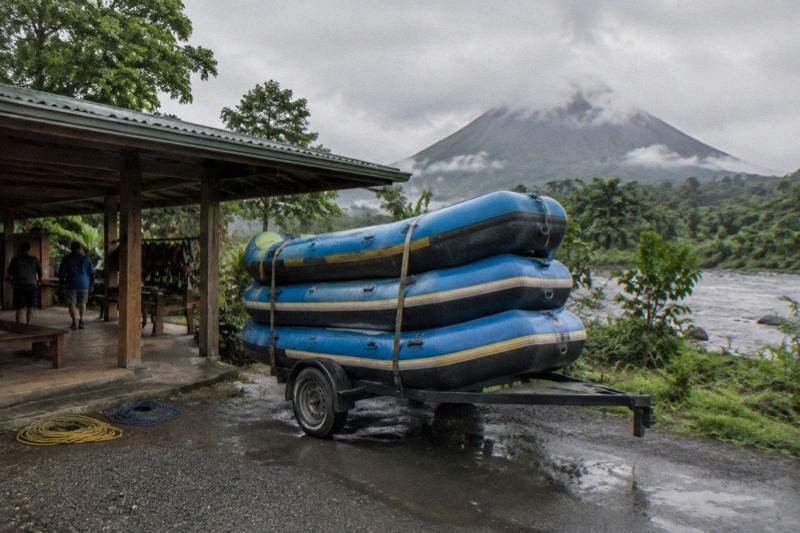
Costa Rica Rainy Season: What To Expect
The green season reshapes the Sarapiqui River, the roads that reach it, and the trips that run on it. Here is what the rain actually does month by month, and which rafting options thrive when it falls.
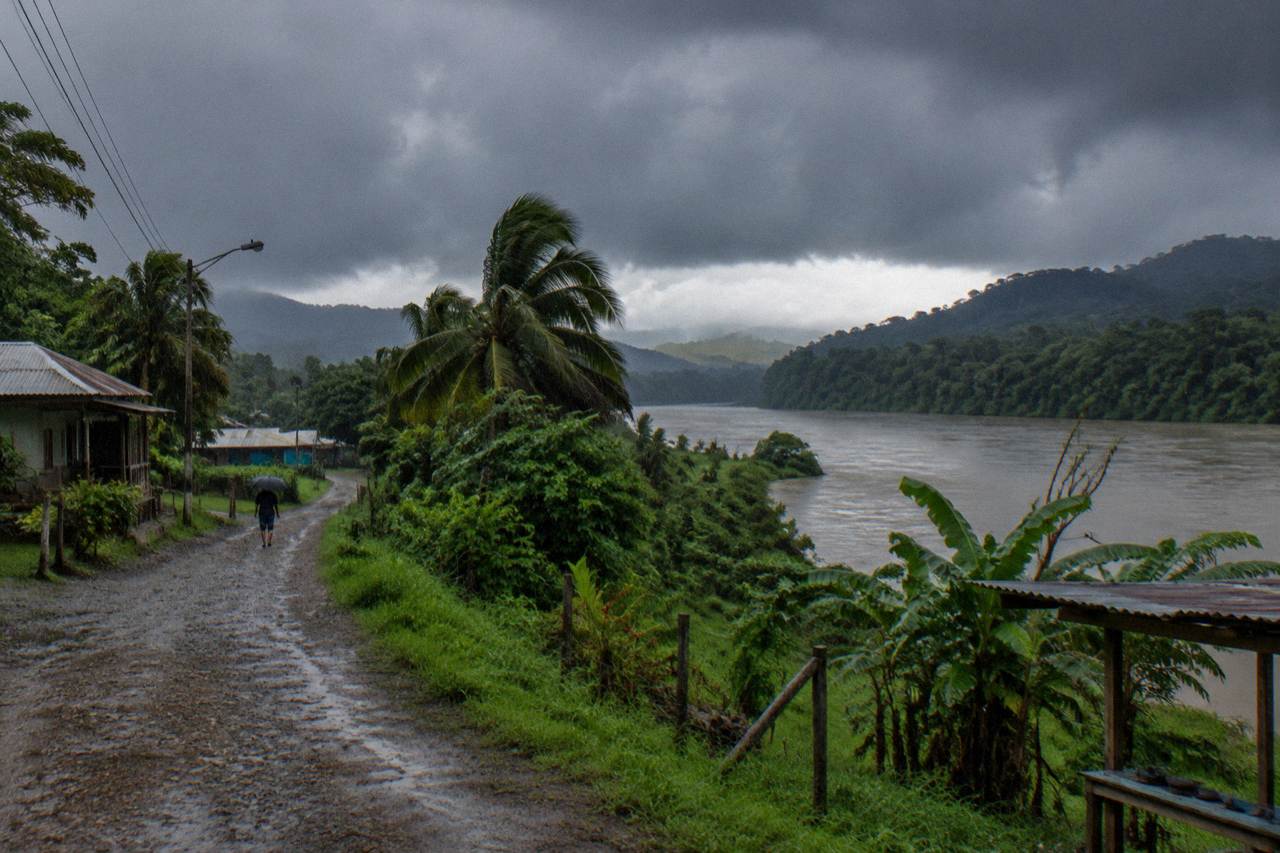
Short answer
The Costa Rica rainy season runs May through November, with the Sarapiqui lowlands averaging about 3,464 mm of rain per year. November is the wettest month at roughly 445 mm over 17 rainy days; April is the driest at about 117 mm. Operators run trips in both seasons on this undammed river, with rapids reported stronger in the green season.
The Sarapiqui River is rain-fed and undammed, which means the Costa Rica rainy season is not a footnote to a rafting trip here, it is the engine that drives it. Roughly 3,464 mm of rain falls on the Sarapiqui lowlands in an average year, based on 1990 to 2020 climate normals, and almost all of it arrives between May and November. That water lifts the river, steepens the rapids, and turns a mellow Class II-III family stretch into something pushier. Operators report exactly that shift: the same run reads Class II-III at lower dry-season flows and Class III, sometimes IV, after heavy rain. For travelers, the green season is when the region's wildest water shows up, including the Class IV run from La Fortuna operated on the most reviewed listing in the region, and when a little planning around rain, roads and river levels pays off most. If the idea of pushier water sounds exciting rather than alarming, our guide to whether white water rafting in Costa Rica is actually worth it covers what Sarapiqui trips cost and who should skip the river entirely.
This guide walks through the rainy season as it actually behaves around Sarapiqui, La Virgen de Sarapiqui and the surrounding lowlands: how much rain falls and when, what it does to the river, which trips hold up, and what the practical realities of roads and packing look like.
When Is The Rainy Season In Costa Rica?
The rainy, or green, season runs May through November, and the dry season runs December through April. Those are the two real seasons here: there is no true winter, and daytime temperatures in the Sarapiqui lowlands sit around 28 to 30 C year-round. What changes through the year is rain, and rain is what changes the river.
The pattern inside the green season matters more than the label. Mornings are frequently sunny, with showers arriving in the afternoon, so a rafting trip that starts early often gets dry paddling even in the wettest months. Travel sources consistently describe the green season this way: sunny mornings, afternoon showers, smaller crowds, and lower prices than the December to April peak. Operators in the region typically start trips between 7:00 and 8:30 a.m., which fits that rhythm well. That early start also shapes where you should base yourself, since our guide to choosing between La Fortuna and Monteverde weighs rafting access against cloud forest hiking for green season travelers.
The dry season is not bone dry either. April, the driest month, still averages about 117 mm of rain over roughly 8 rainy days. The river keeps flowing; it simply runs lower and more predictable, which is why families and first-timers are steered toward the Class II-III stretches then. The deeper story of how water levels move rapid ratings is covered in the guide to Sarapiqui river levels by season.
How Much Rain Falls Around Sarapiqui Each Month?
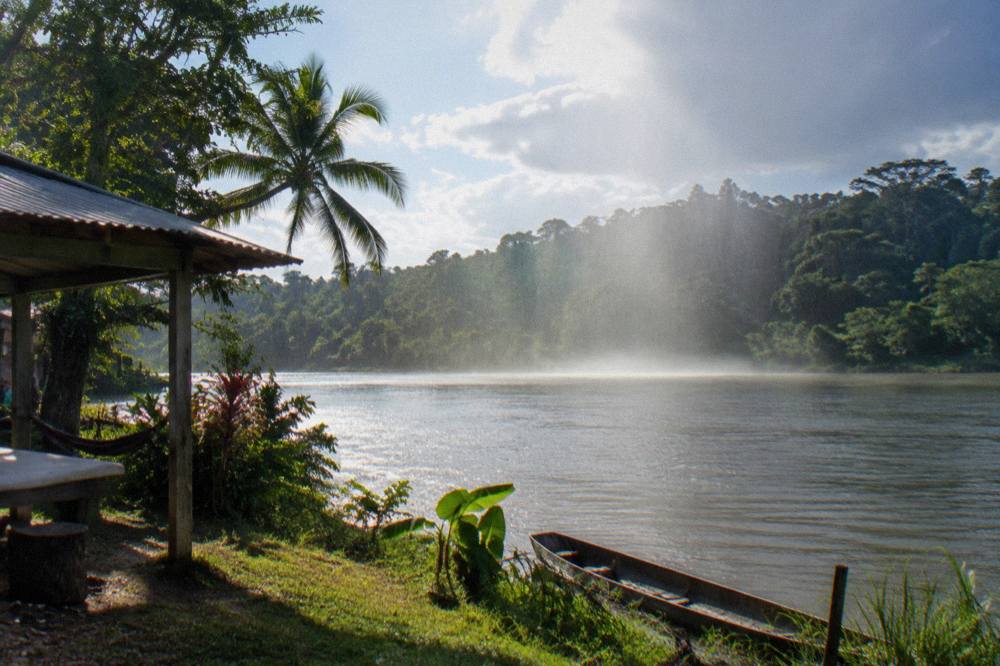
The Sarapiqui lowlands average about 3,464 mm of rain per year. November is the wettest month at roughly 445 mm spread over 17 rainy days, and April is the driest at about 117 mm over 8 rainy days. Month-by-month figures beyond those anchors are not tabulated here, because no consistent official month-level dataset for this specific area exists.
What can be stated honestly is the shape of the curve. Rain builds slowly from May, deepens through June to October, and peaks in November before falling off sharply into December. The green-season months are when the national weather service and the emergency agency issue alerts for saturated soils and localized flooding in the Sarapiqui basin, and those alerts are the real signal to watch, not the calendar alone.
| Period | Season | What the rain does on the Sarapiqui |
|---|---|---|
| December to April | Dry season | Lower, more predictable flows; operators report Class II-III conditions on the family run |
| May to July | Early green season | Flow building; bigger waves, rapids reading toward Class III |
| August to October | Peak green season | Highest water of the year commonly reported; Class III to IV conditions on the upper run |
| November | Wettest month | About 445 mm over 17 rainy days; trips may be rerouted or cancelled in high water |
| April | Driest month | About 117 mm over 8 rainy days; most predictable paddling of the year |
That last row deserves emphasis: April rain is not zero, and November rain is not constant. Daytime air temperatures stay in the 28 to 30 C band either way, so cold is never the issue on this river. The month-by-month picture, including what it means for crowds and prices, is laid out in more detail in Sarapiqui weather and rainfall by month.
The featured Class IV trip from La Fortuna carries a 5.0 rating from 845 reviews and runs from $85 per person for a 5-hour day with lunch. The Class II-III run from La Fortuna ending in San Jose, 4.8 from 17 reviews at $122.04 per person, covers 8 hours and works as a one-way travel day with paddling built in. The 8-hour Jungle Run, 4.9 from 29 reviews from $123 per person, is the trip that most directly answers big green-season water.

Does Rafting Still Run On The Sarapiqui River In The Rainy Season?
Yes. Operators on the Sarapiqui run trips in both seasons, and the green season is when the river is at its most powerful, with rapids commonly reported in the Class III to IV range on the upper run. Trips are cancelled or rerouted when water gets too high, so the real question is not whether trips run, but which trip fits the water level and your group.
Because the river has no dam, levels track rainfall directly. After sustained heavy rain the upper section reads harder: stronger currents, bigger waves, and continuous whitewater that demands real paddling. Guides make the call on the day, and reputable operators will move a group to a calmer section or cancel outright when the water is beyond the trip's rating. That is a feature of a well-run operation, not a disappointment. The national rafting norm requires operators to brief participants and supply and verify helmets and life jackets for every guest, and guides must hold certification in rafting and swiftwater rescue under the companion guide competency norm, per the national technical standard published by INA.
The trips that most benefit from green-season water are the Class III-IV listings. The most reviewed of them, the Class IV trip from La Fortuna, runs 5 hours from $85 per person with hotel pickup for hotels within about 6 km of the operator's main office, lunch, fresh fruit and towels included; it carries 5.0 from 845 reviews. Its 6-hour sibling from La Fortuna, 4.9 from 136 reviews at $122.04 per person with hotel pickup and drop-off and lunch, sets a listing minimum age of 15, and the law sets 12 as the floor for Class IV water, with the operator's own limit usually the one that counts. Check the listing for the current minimum age and any condition requirements.
Families get the mirror-image situation: in high water, a Class II-III trip can be a handful for young children, and the wildlife safari float, a gentle kayak-based trip with no whitewater, from $90 per person with a listing minimum age of 4, becomes the steadier family choice. Wildlife along the banks, sloths, monkeys, toucans, iguanas and aquatic birds, is commonly reported by operators and guests, though no sighting can be promised.
What Does The Rain Do To Rapid Classes On The Sarapiqui?
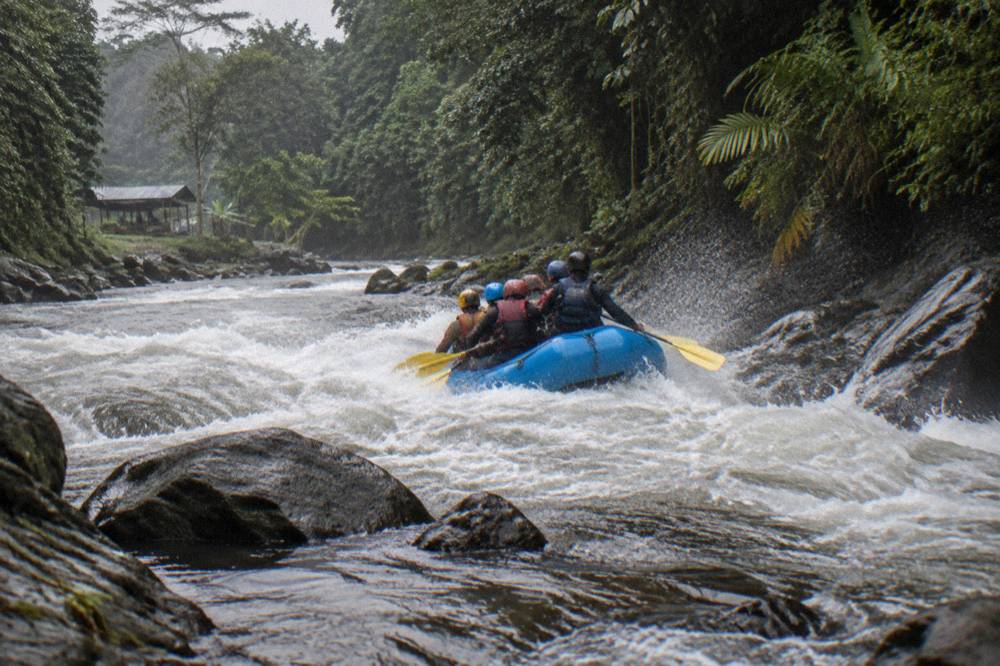
The family run reads Class II-III at lower dry-season flows and up to Class III in higher water; the upper or Jungle Run section reads Class III-IV in the dry season and up to Class IV when the river is high. Rain moves every rapid on this river, which is why the same listing can feel like two different trips in two different months.
This is the single most useful thing to understand about paddling here. Whitewater ratings are not fixed properties of a stretch of river, they are descriptions of a stretch at a given flow. On an undammed rain-fed river, the flow is a running commentary on last week's weather. A first-timer who loved the family run in February might find the same water in September pushy enough to reconsider; a thrill-seeker who found March tame will get everything they wanted in July.
The practical takeaway is to match the booking to the season, and to ask the operator on the morning of the trip what the river is doing. A budget-friendly option like the 3-hour Class II-III trip from La Virgen, 5.0 from 59 reviews at from $60 per person, the cheapest firm-priced listing on the roster, is a low-cost way to sample the river at whatever level the season has given it. The Aguas Bravas trip from Chilamate, 4.9 from 101 reviews from $70 per person, adds hotel pickup from Sarapiqui-area hotels plus a fruit buffet, lunch and drinks.
| Water condition | Family run (Class II-III listings) | Upper run (Class III-IV listings) |
|---|---|---|
| Low, dry season | Gentle Class II-III, beginner friendly | Class III-IV, demanding but defined |
| Moderate, early green season | Class III push, solid paddling needed | Class III-IV with bigger waves |
| High, after heavy rain | Can exceed comfortable family level; operators may reroute | Up to Class IV; strong current, possible cancellation |
No operator will promise a class rating in advance, and none should. What the listing promises is the section, the gear, the guide and the meal; what the sky decides is the water.
Which Roads And Closures Affect A Sarapiqui Trip In The Green Season?
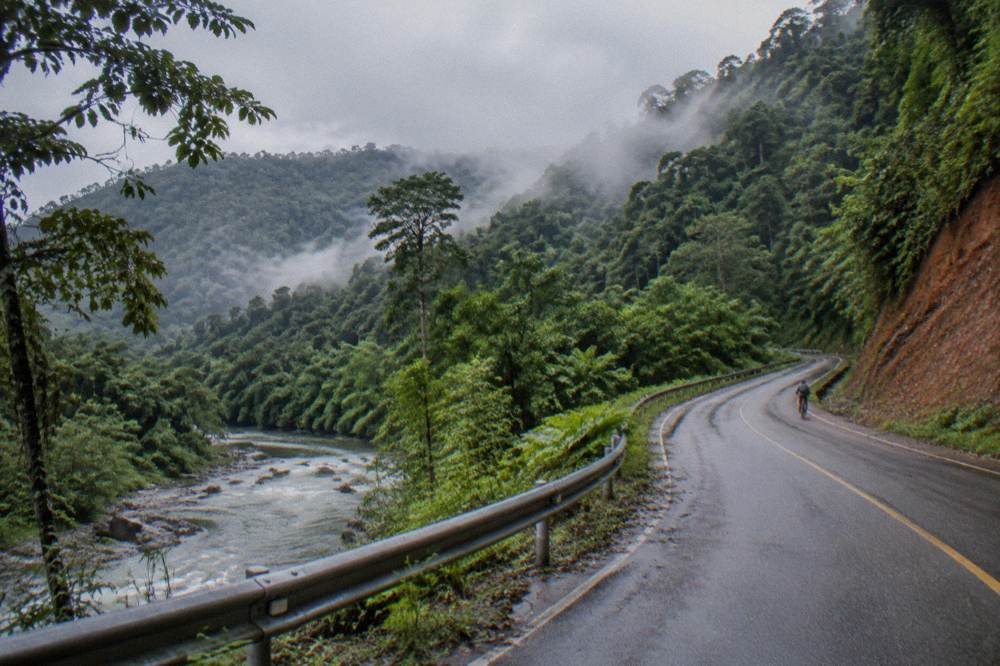
Route 32 through Braulio Carrillo National Park, the main road from San Jose toward the Sarapiqui area, is the closure-prone link in heavy rain, with landslides commonly reported in the rainy season. Route 126 via Vara Blanca is a lighter-vehicle alternative, and detours can add real hours, so build slack into any travel day that ends with a raft.
The drive from San Jose to the Sarapiqui area is about 1 hour 30 minutes in normal conditions, and La Fortuna to Puerto Viejo de Sarapiqui is about 1 hour to 1 hour 10 minutes. Those are fair-weather figures. When a landslide closes Route 32, traffic shifts to alternates such as the route via Bajos de Chilamate, and a planned morning departure can turn into an early one. Operators run pickups from San Jose hotels on several listings, including the 10-hour full-day Class II-III trip from San Jose, 4.0 from 20 reviews at from $105 per person with round-trip transport from selected San Jose hotels and lunch, and letting the operator absorb the road risk is a reasonable green-season move.
Two rules of thumb hold up. First, book rafting early in your stay rather than on your departure day, so a weather reroute does not collide with a flight. Second, if you are staying in Sarapiqui itself, in La Virgen or Chilamate, you are already beside the river and the road problem mostly disappears; several listings, including the family Class II-III trip and the Class III-IV extreme trip that both depart the Sarapiqui Outdoor Center base in La Virgen, simply meet you there. The park itself, Braulio Carrillo, is reported open daily 8:00 a.m. to 3:30 p.m. including holidays, per the SINAC park page, though its fees are not printed here because sources conflict.
What Should You Pack For Rainy Season Travel In Sarapiqui?
Pack for wet and warm, not wet and cold: quick-dry clothes, secure water shoes or trainers, a dry change of clothes, sunscreen, insect repellent and a light rain layer. Daytime temperatures sit around 28 to 30 C all year, so the rain is warm and the only real mistake is cotton, which stays soggy for hours.
The rafting-specific kit is simpler than most people expect. Helmets, life jackets, paddles and the raft come with every listing on the roster; several also include towels, dry bags, fresh fruit and showers at the end. What you bring is yourself, dressed to get soaked. The national norm requires operators to supply and verify helmets and life jackets for every participant, so there is no need to pack safety gear. What not to wear, denim, flip-flops, anything you would mourn, is covered in detail in what to wear rafting in Costa Rica, and the full checklist, including dry bags and waterproof camera thinking, is in what to bring for a Sarapiqui rafting trip.
Beyond the river, the green season asks for a little more from your bag. A compact rain jacket or poncho for town and trails, a dry bag or ziplock for phones on wildlife walks, and quick-dry shoes that can handle a muddy path are the honest essentials. Repellent matters more in the wet months, as standing water and humid forest keep mosquito activity up. Cash in the local colon is widely useful, and US dollars are widely accepted; the emergency number nationwide is 911.
| Item | Why it matters in the green season |
|---|---|
| Quick-dry clothing | Warm rain means you will be wet either way; cotton stays wet for hours |
| Secure shoes | Wet banks, raft entry points and muddy trails punish loose sandals |
| Dry change of clothes | Nearly every listing ends with showers and changing rooms |
| Rain layer | Afternoon showers in town and on trails, not just on the river |
| Insect repellent | Humid, wet months keep mosquito activity high |
| Dry bag or ziplock | Phones and documents on boats, floats and wildlife walks |
Which Sarapiqui Trips Fit Best In The Green Season?
For big water, the Class III-IV listings from La Fortuna are the green-season picks, led by the most reviewed Class IV trip at 5.0 from 845 reviews, from $85 per person. For families and cautious paddlers, the wildlife safari float from $90 per person and the Class II-III family trip from $85 per person are the steadier choices, with the operator's judgment on the day the final word.
Matching trip to traveler matters more in the green season because the water is less forgiving of a mismatch. The 5-hour Class IV trip from La Fortuna with hotel pickup for nearby hotels is the flagship for experienced or confident paddlers. The 6-hour Class 3-4 trip, 4.9 from 136 reviews at $122.04 per person, is the same character with a listing minimum age of 15. The 8-hour Jungle Run, 4.9 from 29 reviews from $123 per person, includes hotel transport and a typical meal, and can be run traveling from the San Jose area as part of the day.
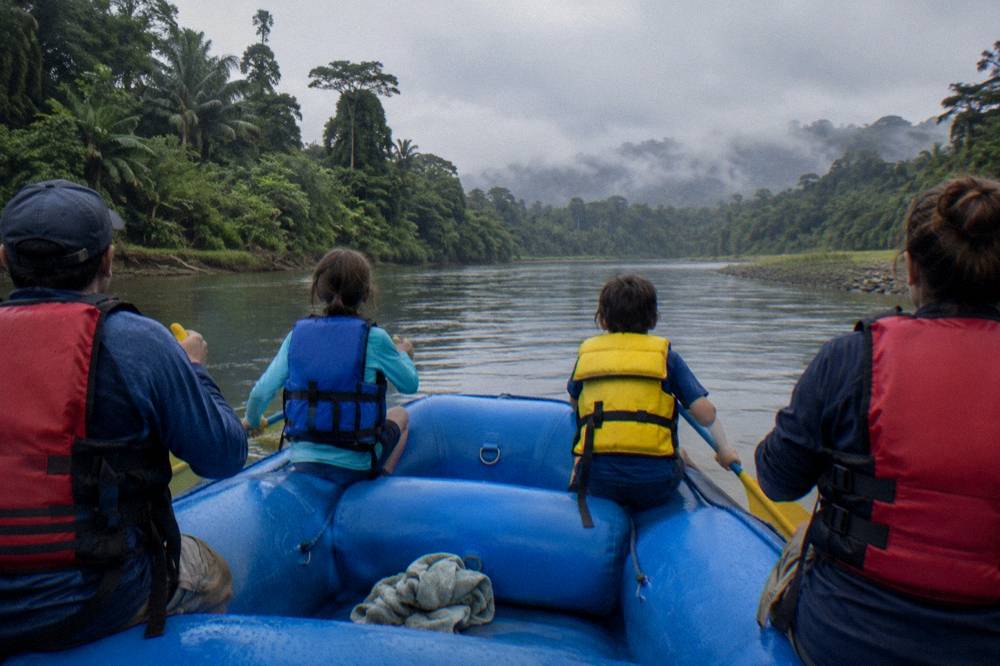
On the gentler end, the family Class II-III trip from the La Virgen base, 4.9 from 200 reviews at from $85 per person, carries a listing minimum age of 6 and includes lunch, tropical fruit and a yucca snack. The wildlife safari float is the calmest thing on the river: a 3-hour kayak-based float, minimum age 4 per the listing, with a sugar cane tour and lunch included, and photos available for an additional $35 as the listing states. If you want to compare the calm options head to head, see the guide to Class II-III family floats on the Sarapiqui.
| Trip type | Green-season fit | Roster example |
|---|---|---|
| Class III-IV rafting | At its best; biggest water of the year | Class IV from La Fortuna, 5.0 from 845 reviews, from $85 |
| Class II-III rafting | Good, but expect a pushier ride in high water | Family trip from La Virgen, 4.9 from 200 reviews, from $85 |
| Wildlife float | Calm in most conditions; wildlife active in the wet | Safari float from La Virgen, from $90, minimum age 4 |
| Travel-plus-rafting day | Efficient one-way use of a transfer day | Fortuna to San Jose Class 2-3 run, 4.8 from 17 reviews, $122.04 |
One pairing worth naming: several La Fortuna listings work as connection days, rafting on the way between La Fortuna and San Jose, which turns a transfer you were paying for anyway into the best hours of the trip. The green-season caveat is the road one above: leave margin, and let the operator hold the schedule.
Is The Green Season Actually A Better Time To Visit Sarapiqui?
For rafting specifically, yes: the green season delivers the biggest, most dynamic water of the year, with smaller crowds and lower prices commonly reported across the region. The tradeoffs are real, afternoon rain, occasional road closures and a chance your chosen section is rerouted in extreme water, but none of them stops a well-planned trip.
Crowds tell part of the story. The December to April dry season is the region's peak, and the green months thin the queues at tour desks and trailheads alike. Rain tells the rest: the forest is at its lushest, wildlife is active, and the river, the reason most people come, is at full voice. The Sarapiqui basin is protected from new dams by Law No. 10152 of 2022, so that voice will keep depending on rainfall rather than a turbine schedule, which is exactly why green-season trips here can differ so much from dry-season ones on the same water.
For a longer treatment of the months, the trade-offs and what to book when, read the companion piece on green-season rafting in Costa Rica. And if your dates are fixed rather than flexible, the month-by-month detail in the Sarapiqui weather guide linked above is the practical companion. Once the timing question is settled, the comparison of Costa Rica's most famous rafting rivers helps you decide which stretch of water deserves your day.
The honest bottom line: if your goal is the biggest whitewater of your life, come between June and October. If your goal is a gentle family float with the smallest chance of a reroute, aim for the dry months, and consider the wildlife float regardless of season. Either way, this is a river that rewards showing up, because unlike dammed rivers with release schedules, it plays whatever the sky has arranged.
The comparison the whole season question comes down to is simple, and it is the one this site exists to help with: matching a specific listing, at a specific price, to your group and your month. Every listing named above shows free cancellation on its page, so a green-season booking carries less risk than the weather forecast might suggest.
Common Questions About The Costa Rica Rainy Season
When is the rainy season in Costa Rica?
The rainy, or green, season runs May through November; the dry season runs December through April. In the Sarapiqui lowlands, November is the wettest month at about 445 mm of rain over 17 rainy days, and April is the driest at about 117 mm over 8.
Does it rain all day during the green season?
No. The typical green-season pattern is a sunny morning followed by afternoon showers, and rafting operators commonly start trips between 7:00 and 8:30 a.m., which gets paddlers on the water in the driest part of the day.
Is rafting cancelled when it rains?
Rain alone does not cancel rafting on the Sarapiqui. Operators cancel or reroute only in high-water events, flooding or road closures, and guides make that call on the day.
Are the rapids harder in the rainy season?
Yes, generally. The river is undammed and rain-fed, so operators report the family run at Class II-III in lower dry-season flows and up to Class III in higher water, and the upper run at Class III-IV dry and up to Class IV when high.
What is the wettest month in the Sarapiqui area?
November, with approximately 445 mm of rain over about 17 rainy days, based on 1990 to 2020 climate normals for the Sarapiqui lowlands.
Do I need to worry about road closures in the green season?
Route 32 through Braulio Carrillo is the closure-prone road in heavy rain, with landslide closures commonly reported in the rainy season and detours adding hours. Booking rafting early in your stay, or staying in Sarapiqui itself, removes most of that risk.