What Is The Most Famous River In Costa Rica?
The Pacuare is the river most travelers have heard of, but the Sarapiqui, Balsa and Reventazon each earn their fame differently. Here is how Costa Rica's rafting rivers compare in plain terms.
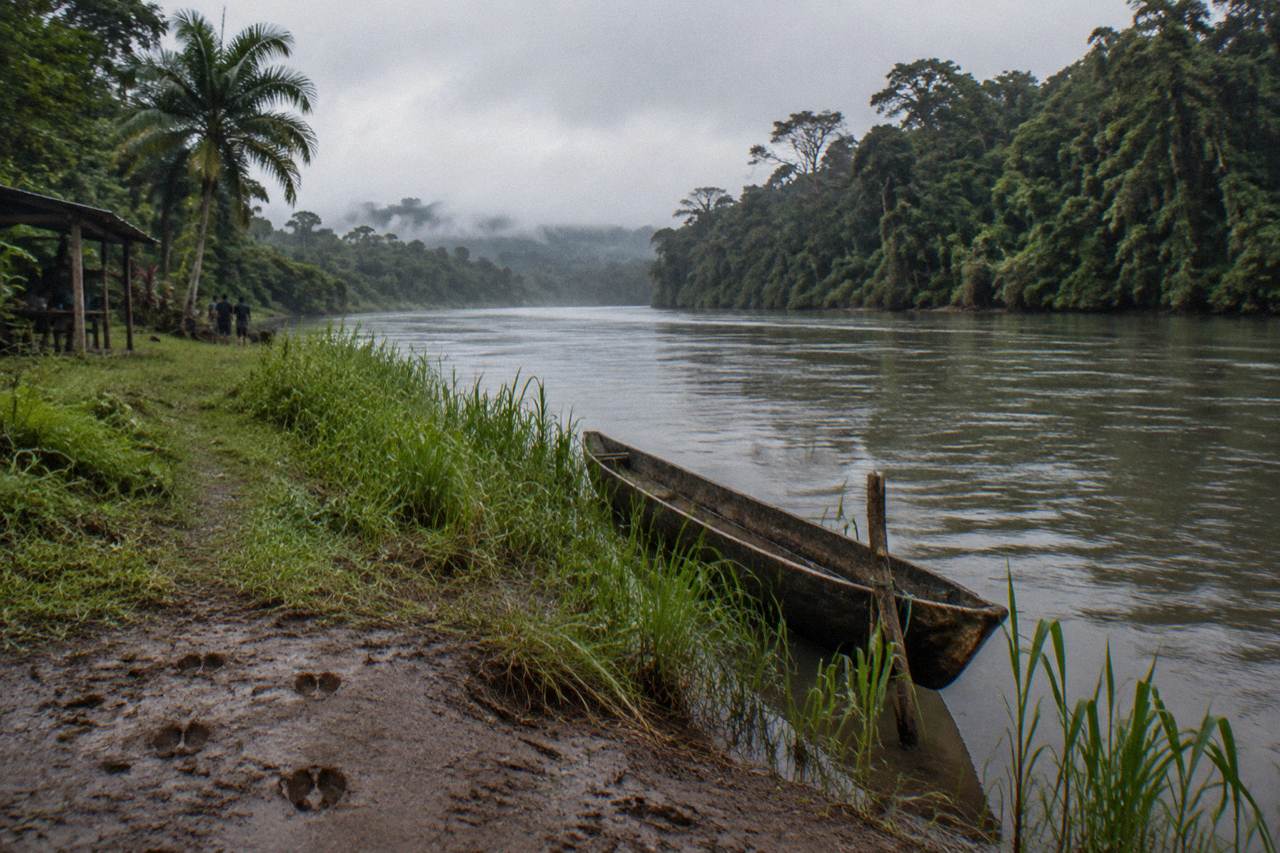
The Pacuare River is generally the most famous river in Costa Rica. Its remote Class III-IV gorge, multi-day rafting trips and heavy coverage in travel media give it the strongest name recognition among international visitors. The Sarapiqui River is the close second and arguably the more practical one: it runs Class II-III to Class III-IV, sits closer to La Fortuna and San Jose, and carries a 2022 legal protection along its entire main channel.
Fame and usefulness are different things, and that gap is the whole story of this article. The Pacuare earned its reputation honestly. It slices through a protected canyon where roads do not reach, so rafting it feels like an expedition in a way few one-day trips anywhere can match. Travel writers return to it decade after decade, and that coverage compounds the fame. A traveler who has read about Costa Rica for twenty minutes has probably read about the Pacuare.
But when we compared the listings travelers actually book from the two main tourist hubs, the Sarapiqui shows up more often in practical itineraries. It is roughly 1 hour 30 minutes from San Jose to the Sarapiqui area and about 1 hour to 1 hour 10 minutes from La Fortuna to Puerto Viejo de Sarapiqui, against a longer drive to reach the Pacuare's put-in from La Fortuna. For a visitor with two nights in Arenal, that difference decides the day. It also decides the price of the day in a subtle way: every hour of extra transfer is an hour not spent on the water or resting at the hotel.
This site sells Sarapiqui trips, and we say so plainly rather than pretending neutrality. The comparison below is still fair, because it rests on how operators describe each river: the Pacuare is Class III-IV with a remote gorge and a longer drive from La Fortuna, the Balsa is typically Class II-III and gentler, and the Reventazon's lower sections run Class II-III or III. If your heart is set on the canyon, go. If you want jungle whitewater without the long transfer, the Sarapiqui listings are the trips to check first.
Why The Pacuare River Holds The Fame
The Pacuare is famous for geography: its Class III-IV rapids run through a remote gorge that vehicles cannot follow, which makes multi-day rafting expeditions with riverside camps possible. No other Costa Rican river combines that seclusion with that difficulty so close to major tourism routes, and travel media have amplified the story for years.
Fame on the internet follows repetition, and the Pacuare gets repeated. Guides, magazines and bucket-list roundups describe the same few images: waterfalls pouring into the canyon, campsites on gravel bars, and a long wilderness stretch that feels far from anywhere. Those descriptions hold up, which is why this article does not dispute the Pacuare's standing. Name recognition of this kind is self-reinforcing. Writers hear about the river, raft it, write about it, and the next cohort of readers arrives already knowing the name.
What the fame rarely mentions is the logistics. Reaching the Pacuare from La Fortuna means a longer drive than the Sarapiqui requires, and from San Jose the routing depends on road conditions that shift in the rainy season. The Sarapiqui sits northeast of the central plateau, reachable by the same Route 32 corridor that connects the capital to the Caribbean lowlands, with the practical caveat that landslides close that road in heavy rain and travelers should check conditions before driving. Route 126 through Vara Blanca serves as an alternate in some situations, though it is limited to light vehicles and runs steep and curvy with fog risk in rain.
The river-curious reader who arrived here by searching for Costa Rica's most famous river usually has a follow-up question: can I actually raft something this trip? That is where the Sarapiqui option earns its place in the conversation. The featured trip in this catalogue, the Class IV run from La Fortuna, holds a 5.0 rating from 845 reviews and runs from $85 per person, which makes the "famous alternative" remarkably accessible. For a deeper look at the head-to-head, read the Sarapiqui versus Pacuare comparison.
What The Sarapiqui River Is Known For
The Sarapiqui is known for accessible jungle whitewater: a Class II-III upper run that families raft in the dry season, a Class III-IV section that firms up with rain, and banks thick with rainforest wildlife. Costa Rican law also protects its main channel from new dams and mining concessions under a 25-year renewable safeguard, a status the Pacuare does not formally share.
That legal point is the quiet headline. Law No. 10152 of 2022 established a 25-year renewable environmental safeguard along the Sarapiqui's main channel and banks from source to the San Juan River mouth, prohibiting new hydroelectric projects and new mining extraction concessions. For a rafting river in a country that dams many of its rivers, undammed and legally protected is a real distinction. It also means the river's character stays tied to rainfall alone, with no upstream release schedule reshaping the rapids.
The river is rain-fed with no dams, so its character moves with the seasons. Operators report Class II-III conditions at lower dry-season flows, suitable for beginners and families, and up to Class III or IV after heavy rain in the green season. That range is why the Sarapiqui serves both the eight-year-old on her first raft and the adult who wants big water, sometimes on different sections in the same week. The season and river levels guide breaks down how the class shifts month by month.
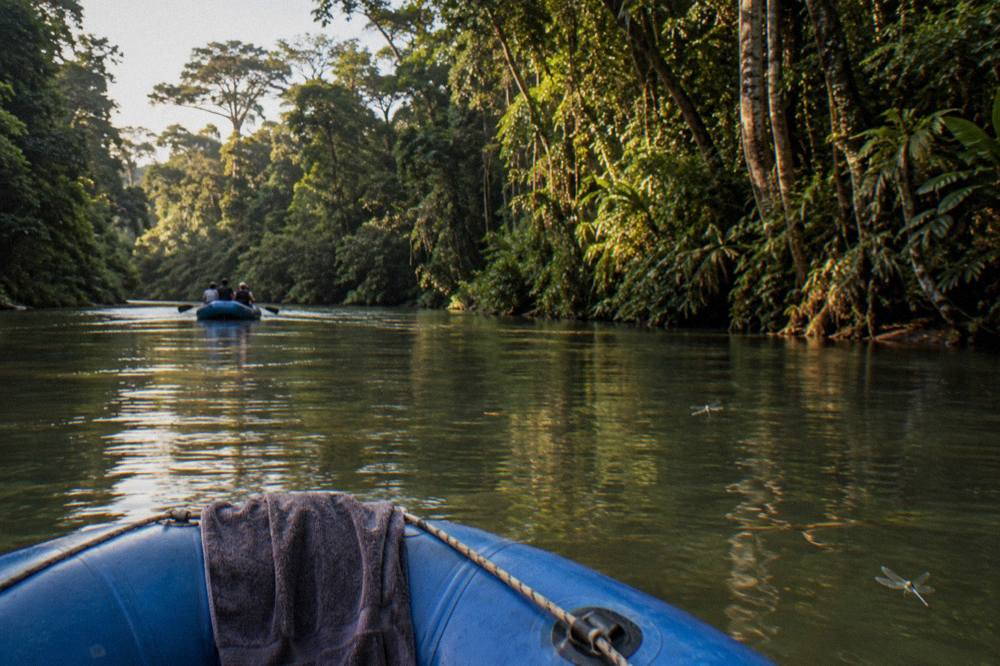
Wildlife is the other half of the reputation. Sloths, monkeys, toucans, iguanas, caimans and aquatic birds are commonly reported by operators and guests along the banks and in the calmer sections, and no honest writer promises a sighting. On the water, the practical entry points range wide: the cheapest firm-priced family listing in this catalogue is a Class II-III three-hour trip from $60 per person with a 5.0 rating from 59 reviews, while the featured Class IV trip from La Fortuna runs from $85 with lunch and hotel pickup within about 6 km of the operator's main office. There are also gentle safari floats for travelers who want the wildlife without the whitewater.
How The Balsa And Reventazon Rivers Compare
The Balsa River is the beginner's river: typically Class II-III, gentler than the Sarapiqui's upper section, and usually sold as a half-day trip from La Fortuna. The Reventazon's lower sections run Class II-III or III, calmer than both the Sarapiqui and Pacuare. Neither river carries the Pacuare's fame nor the Sarapiqui's legal protection.
Both rivers matter because they widen the market. Not every traveler wants Class IV, and Costa Rica's rafting industry needs a ladder: float, then Class II-III, then the bigger water. The Balsa occupies the first rung for many La Fortuna visitors, and the verified comparison states plainly that the Sarapiqui's Class III-IV section is more demanding and requires stronger paddling than the Balsa. The Reventazon, once a marquee name in its own right, now mostly serves calmer downstream runs in the verified comparisons.
The table below gathers what is known about all four rivers. It deliberately leaves out prices for rivers this catalogue does not sell, because inventing a figure for a competitor river would be dishonest, and mileage claims vary across sources too much to print.
| River | Typical rapid class | Character | Distance from La Fortuna | Notes |
|---|---|---|---|---|
| Pacuare | Class III-IV | Remote gorge, expedition feel, multi-day trips possible | Longer drive than the Sarapiqui | The famous one; heavy media coverage |
| Sarapiqui | Class II-III to Class III-IV by season | Jungle whitewater, wildlife banks, family to expert range | About 1 hour to 1 hour 10 minutes | Undammed; protected by Law 10152 from 2022 |
| Balsa | Typically Class II-III | Gentle beginner half-day | Short drive from La Fortuna | Less demanding than Sarapiqui Class III-IV |
| Reventazon | Lower sections Class II-III or III | Calmer downstream runs | Varies by section | Calmer than the upper Sarapiqui and Pacuare options |
One caution applies to all of them: never book by river name alone. Rapid class on any rain-fed river moves with water level, and operators cancel or reroute in high water, flooding or road closures. The honest way to choose is by the listing's stated class, duration, departure point and inclusions, then confirm current conditions with the operator. A Class III-IV listing in the dry season may deliver friendlier water than its label suggests, and the same listing after a week of rain may deliver the opposite.
Which River Should You Raft From La Fortuna Or San Jose?
From La Fortuna, raft the Sarapiqui: the drive is about 1 hour to 1 hour 10 minutes, and several listings include hotel pickup, from the $60 family Class II-III trip to the $85 Class IV run. From San Jose, the Sarapiqui is also the practical choice at about 1 hour 30 minutes away, with listings that bundle round-trip transport and lunch.
The departure point decides more than most travelers expect. A La Fortuna base puts you within pickup range of the featured Class IV trip, whose listing includes hotel transportation for hotels within about 6 km of the operator's main office, plus lunch, fresh fruit, towels and bottled water. The same trip shows a 5.0 rating from 845 reviews, the largest review pool in this catalogue, which is why it leads the picks on this page. Its total listed duration is 5 hours, and the pickup time may vary by up to 20 minutes depending on hotel location.
San Jose travelers get a different set of tradeoffs. The full-day Class II-III trip from San Jose runs 10 hours total, from $105 per person, with round-trip transportation from selected San Jose hotels and a traditional Costa Rican lunch listed. There are also connection tours that raft the Sarapiqui while traveling between San Jose and La Fortuna, turning transfer time into river time, a format several listings in this catalogue sell. The rafting-with-connection trips run about 8 hours and include lunch, which makes them a genuinely efficient day for anyone moving between the capital and Arenal anyway.
Families should check the ages carefully. The national rafting norm sets minimum ages by rapid class: 8 to 11 years may raft Class I to III, and 12 to 17 years may raft Class I to IV, while operators often set their own higher minimums. The norm INTE G60-1:2019 also requires operators to supply and verify helmets and life jackets for every participant. For a fuller walkthrough, see rafting with kids in Costa Rica.
Does Fame Matter When You Pick A Rafting Trip?
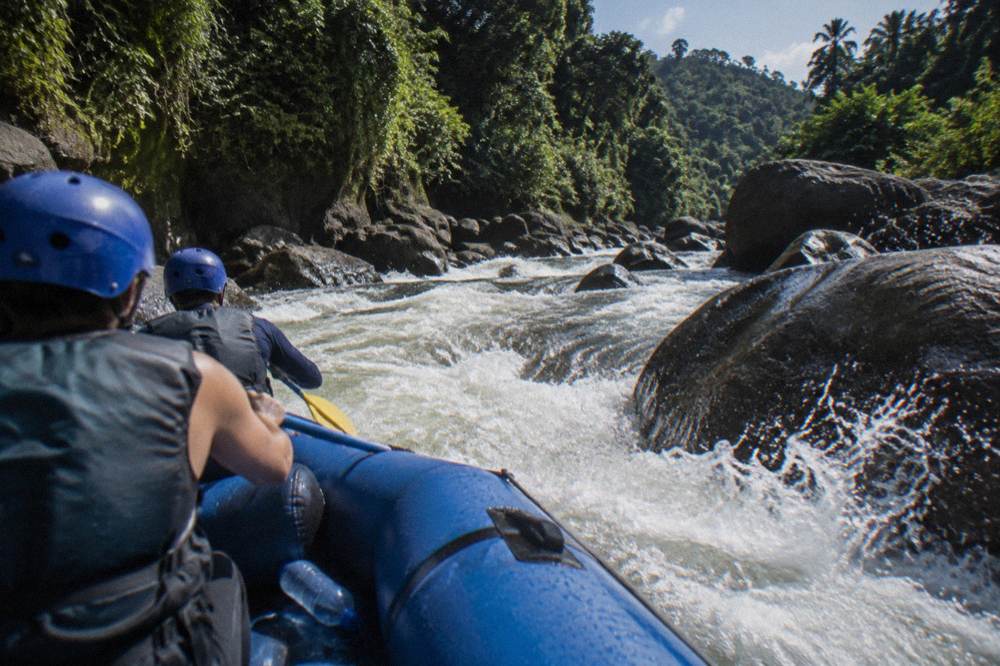
Fame matters for itinerary bragging rights, not for the quality of the day on the water. Rapid class, water level, guide certification, group size and inclusions decide whether a trip is good; a famous name only decides what you tell friends afterward. Both the Pacuare gorge and the Sarapiqui jungle deliver genuine whitewater.
Consider what actually varies between the rivers a visitor can book. Guide standards do not: national certification in rafting and swiftwater rescue, plus current first aid and CPR, is required under the guide competency norm INTE G60-2:2019, and adventure tourism regulation requires ICT-credentialed or approved guides. The gear rules are national too. What changes river to river is the water, the scenery and the logistics.
Season is the honest wildcard on all of them. The Sarapiqui lowlands average about 3,464 mm of rain a year based on 1990 to 2020 normals, with November the wettest month at about 445 mm over 17 rainy days and April the driest at about 117 mm over 8 rainy days. Daytime air sits around 28 to 30 C year-round. In the green season the same section that ran Class II-III in February can push toward Class IV after a hard rain, and operators reroute or cancel when water gets too high. Anyone promising a specific class on a specific day is overselling.
The choice, then, reduces to a short list of questions. How far do you want to drive? Does your group include children, and what are their ages? Do you want the canyon story or the jungle day with wildlife on the banks? Answer those, and the famous river matters far less than the right listing.
| If you want... | The river that fits | Why |
|---|---|---|
| The famous expedition story | Pacuare | Remote Class III-IV gorge, multi-day trips, longer drive from La Fortuna |
| Big water near La Fortuna | Sarapiqui Class III-IV | About 1 hour to 1 hour 10 minutes; listings from $85 with pickup options |
| A family first raft | Sarapiqui Class II-III or Balsa | Sarapiqui upper run and Balsa both typically Class II-III; family listings from $60 |
| A calm wildlife day | Reventazon lower sections or a Sarapiqui float | Reventazon lower runs Class II-III or III; Sarapiqui also sells gentle safari floats |
What Else The Sarapiqui Region Offers River Travelers
Beyond the rapids, the Sarapiqui area offers rainforest reserves reachable in a day: Tirimbina Biological Reserve, open daily 7:00 a.m. to 5:00 p.m. with hanging bridges over the river itself, and La Selva Biological Station with guided walks at $44 for three hours or $55 for six hours per person. Braulio Carrillo National Park, open daily 8:00 a.m. to 3:30 p.m., sits on the drive in from San Jose.
This matters for the fame question more than it first appears. A river earns a region's reputation partly through what surrounds it. The Pacuare's gorge is wilderness; the Sarapiqui's banks connect to working research forests, chocolate tours and bridge trails, which is why a two-night stay in the area, one this catalogue sells as a package with rafting and a jungle night walk at Tirimbina, makes a coherent trip rather than a drive-by rapid.
The La Selva figures come from the station's own visitor program, framed here as reported rates, and Tirimbina's hours come from the reserve's current site. Protected-area entrance fees elsewhere in the region conflict across sources, so this article prints none of them; check the official pages before you go.
Practical planning notes close the loop. Wear clothes that can get wet with secure shoes, bring a change of dry clothes, sunscreen and repellent, and check current road conditions in the rainy season, since Route 32 landslides close the corridor in heavy rain. Tips for guides, as operators and travel sites commonly report, run about $5 to $10 per person for a half-day group tour and $10 to $20 for a full day. The emergency number in Costa Rica is 911.
If you came here weighing one river against another, the honest summary is this: Sarapiqui River Rafting is the option this site exists to sell, and it happens to be the one that fits the most itineraries, from a San Jose stopover to an Arenal week.
Common Questions About The Most Famous River In Costa Rica
What Is The Most Famous River In Costa Rica?
The Pacuare River. Its remote Class III-IV gorge and multi-day rafting expeditions give it the strongest international name recognition. The Sarapiqui is the practical runner-up, closer to La Fortuna and San Jose, with Class II-III to Class III-IV water and legal protection of its main channel.
Can you raft the Sarapiqui as a beginner?
Yes. The upper run is reported at Class II-III in lower dry-season flows, which operators describe as suitable for beginners and families, and several listings in this catalogue start from $60 per person. Beginners should book the Class II-III trips, not the Class III-IV section, and check the listing's minimum age.
Which river is closest to La Fortuna?
The Sarapiqui, at about 1 hour to 1 hour 10 minutes from La Fortuna to Puerto Viejo de Sarapiqui, with several listings including hotel pickup from La Fortuna. The Balsa is also a short drive from La Fortuna, while the Pacuare's gorge requires a longer transfer.
Is the Sarapiqui River protected?
Yes. Law No. 10152 of 2022 establishes a 25-year renewable environmental safeguard along the river's main channel and banks from source to mouth, prohibiting new hydroelectric projects and new mining extraction concessions. The river is also undammed, so its flow moves directly with rainfall.
Do famous rivers have better rafting?
No. Guide certification, equipment rules and safety norms are national in Costa Rica, so they apply on every commercial river. What varies is rapid class, scenery, group size and logistics. Pick by listing details and current water conditions, not by name recognition.