Rafting With Kids In Costa Rica: Ages And Best Trip
Family rafting in Costa Rica comes down to one decision: the Class II-III Sarapiqui float children can legally join from age 8, or the bigger water that waits until they are older. Here is how the ages, the norms and the listings line up.
Short answer
Costa Rica's national rafting norm allows ages 8 to 11 on Class I to III water, so the Sarapiqui Class II-III family float, from $85 per person with a listed minimum age of 6, is the trip most families book. Class III-IV water is legally open from age 12, and several listings set higher minimums.
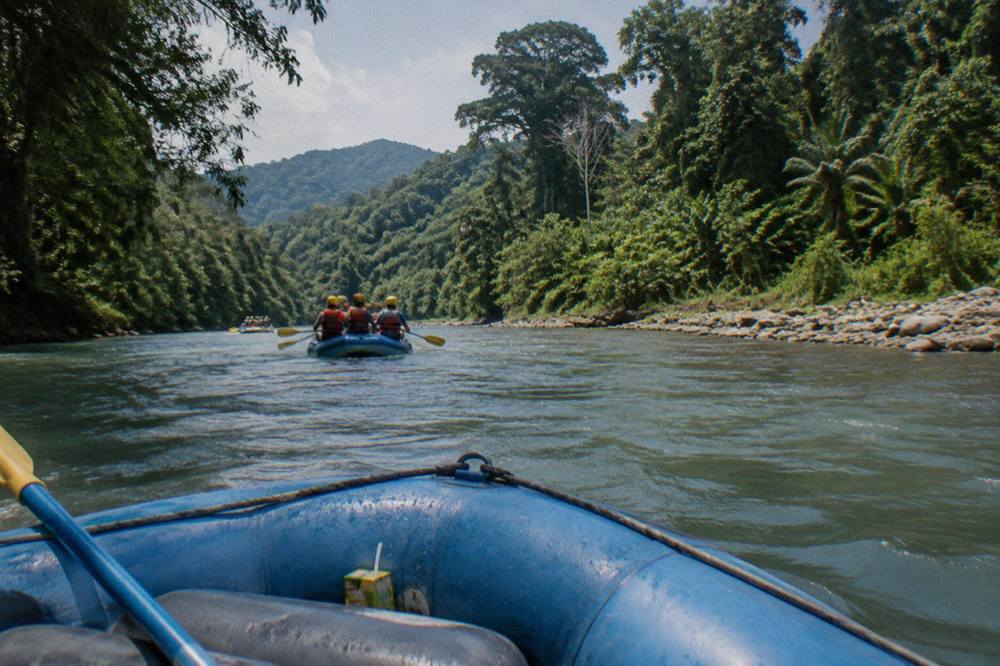
A family rafting day on the Sarapiqui River is one of the few Costa Rica adventures where the law, the listings and the water itself all agree on roughly the same thing. The river is rain-fed and undammed, so operators report its upper run reading Class II-III at lower dry-season flows, mellow enough that children paddle it every week. The same stretch firms up after heavy rain, and the Class III-IV sections downstream stay off the family menu until kids are older. To see how that range stacks up across the country, this breakdown of rapid classes on Costa Rica's rivers shows which stretches suit which paddlers.
The national rafting norm sets the legal floor: ages 8 to 11 may join Class I to III water, ages 12 to 17 may join Class I to IV. Operators layer their own minimums on top, and on the Sarapiqui the practical family choice is the Class II-III float, sold from $85 per person by the listing most parents land on, with a listed minimum age of 6. That is the featured trip on Sarapiqui River Rafting for exactly this reason, and the rest of this guide works outward from it: which age fits which trip, what the safety norms actually require, what children notice from the raft, and what they should wear.
What Age Can Kids Start Rafting On The Sarapiqui River?
Kids can start rafting the Sarapiqui at age 5, when Costa Rica's national rafting norm INTE G60-1:2019 allows Class I and II water only; ages 8 to 11 may add Class III, and ages 12 to 17 may run up to Class IV. Children under 5 may not raft at all, family Class II-III trips on the Sarapiqui open at each operator's own minimum age, and no Class III-IV listing can legally take anyone under 12. If you're wondering whether the bigger water suits your crew, our guide to which rapids older kids can run in Costa Rica spells out what the rules allow and where operators draw their own lines.
The norm is worth reading directly, because it is stricter than many families expect. It is published by the national standards body as a technical rafting norm (INTE G60-1:2019, available on the INAVirtual portal), and it also obliges operators to inform participants of the minimum age for the activity and to supply and verify helmets and life jackets for every person in the boat. So the age question is not a matter of operator discretion at the bottom end: a five-year-old cannot legally be put on Class III water no matter how confident the guide is.
| Child age | Legal classes under INTE G60-1:2019 | Sarapiqui trip that fits |
|---|---|---|
| Under 5 | None | Dry-land and wildlife activities only |
| 5 to 7 | Class I and II only | Calmest family float sections, operator minimums permitting |
| 8 to 11 | Class I to III | Class II-III family listings, including the featured float |
| 12 to 17 | Class I to IV | Class III-IV listings, subject to each listing's minimum age |
| 18 and over | Class I to V | All Sarapiqui trips |
The operator minimums then narrow things further. The Sarapiqui family float from Sarapiqui Outdoor Center lists a minimum age of 6, which sits inside the legal band for its Class II-III water. The Near Arenal Class II-III tour lists a minimum age of 7. One shorter 2.5-hour listing lists 8. On the bigger water, the Class III-IV listings post minimums of 13, 14 and 15 even though the law would allow 12, which is a good signal of how operators actually read the river. Where a roster line says "check the listing", the age is not printed here because the listing itself is the source; always confirm before booking.
Ages are one input. Weight limits, swimming ability and physical condition are commonly listed by operators as well, and the national norm requires health and physical condition disclosures, with pregnancy, certain cardiovascular conditions and low mobility commonly listed as restrictions. The short version for parents: if a child is at the young edge of the band, call or message the operator through the listing and ask, rather than assuming.
Which Sarapiqui Rafting Trip Fits Which Age Group?
Families with children aged 8 to 11 book the Class II-III float, sold from $60 to $105 per person across the shared listings, with the featured family trip at from $85 per person including lunch. Families with teenagers aged 13 to 15 and up can move to Class III-IV water, from $85 per person. Under 8s are limited to the calmest float options each listing permits.
This is where parents decide between the float and the upper trip, and the honest answer is that the float is the right call for almost every family with an under-12. We compared the listings: the budget 3-hour Class II-III trip runs from $60 per person with no meal stated, the featured family adventure runs from $85 with lunch and a minimum age of 6, and the Near Arenal 8-hour version runs from $105.87 with hotel transport from La Fortuna described on the listing. The differences are duration, departure point and inclusions, not the water.
The three-trip spread above is really a decision about your departure point. Families staying in the Sarapiqui lowlands meet at the operator base in La Virgen de Sarapiqui; the listing is explicit that hotel pickup is excluded but a van carries the group to the river and back. Families based in La Fortuna or Arenal get the most from the Near Arenal tour, which includes transport and lists a minimum age of 7 and a group size of up to 15 guests, small enough that a family can nearly fill a raft. The Chilamate listing, from $70 per person, adds hotel pickup from Sarapiqui area hotels and a fresh fruit buffet plus lunch on its inclusions list.
| Listing | Water | Listed minimum age | Price | Total duration | Departure |
|---|---|---|---|---|---|
| Family Rafting Adventure Class II-III | Class II-III | 6 | from $85 per person | 3 hours | La Virgen de Sarapiqui |
| Budget 3-Hour Rafting | Class II-III | Check the listing | from $60 per person | 3 hours | La Virgen |
| Rafting, Mid Price | Class II-III | Check the listing | from $79 per person | 3 hours | Chilamate |
| Near Arenal Rafting | Class II-III | 7 | from $105.87 per person | 8 hours | La Fortuna |
| Aguas Bravas Rafting | Class II-III | Check the listing | from $70 per person | 3 hours | Chilamate |
| Class IV from La Fortuna | Class III-IV | Check the listing | from $85 per person | 5 hours | La Fortuna |
For teenagers, the calculation flips. The Class III-IV listings from La Fortuna run from $85 per person for 5 hours up to $122.04 for 6-hour versions with hotel pickup and drop-off included, and the most reviewed listing on this river, 5.0 from 845 reviews, sits exactly there. Its minimum age is "check the listing", but two sibling listings on the same water post 13, 14 and 15. A 14-year-old who has already done the float will find the bigger water is a genuine step up, not a rerun.
Is The Family Float Safe For Children?
The national norm makes the safety architecture mandatory rather than optional: operators must supply and verify helmets and life jackets for every participant, guides must hold national certification in rafting and swiftwater rescue with current first aid and CPR, and the adventure tourism regulation requires ICT-credentialed guides. The float listings on the roster all state certified guides and full safety equipment in their inclusions.
The guide certification side is governed by a second norm, INTE G60-2:2019 on the INAVirtual portal, which requires rafting guides to hold national certification in rafting and swiftwater rescue plus current first aid and CPR. The adventure tourism regulation, Decreto 39703-S-TUR, then requires operators to use ICT-credentialed or ICT-approved personnel (the regulation text is public on the PGR database). For a parent, this means the person calling paddle commands is credentialed by law, not just experienced.
What the listings themselves add is the practical layer. The featured family adventure lists all safety equipment, safety instructions before the river, internationally certified guides, lockers, changing rooms, WiFi and private parking at the La Virgen base, with tropical fruit and a local yucca snack on the water. Photos and videos are sold separately, and hotel pickup is excluded, so plan to drive to the base. Free cancellation is listed, which matters for families: children get sick, and a listing you can cancel beats one you cannot.
The honest caveat is the river itself. The Sarapiqui is undammed, so its class moves with rainfall: operators report Class II-III conditions at lower dry-season flows and up to Class III or IV after heavy rain. Trips are cancelled or rerouted in high water, flooding or road closures, and no operator can promise a level or a wildlife sighting on any given day. That is not a reason to stay home with the kids; it is a reason to book the float, check the cancellation terms, and let the operator make the call on the day.
What Do Kids Actually Notice On The River?
Operators and guests commonly report sightings of sloths, monkeys, toucans, iguanas and aquatic birds from Sarapiqui rafts, especially in the calmer sections between rapids, and the family listings lean into this with fruit snacks, swim breaks and guides who point out wildlife. None of it is promised, but the float's slower pace gives children far more looking time than the Class III-IV runs.
The float listings are built for short attention spans. The featured family trip builds in a tropical fruit and yucca snack break; the wildlife safari float from the same base, from $90 per person, is a kayak-based safari with a listed minimum age of 4, a sugar cane tour and lunch, though its review pool is too small for a star claim. The Chilamate listing includes a fresh fruit buffet plus lunch and drinks. These are not incidental: for a six-year-old, the snack stop and the monkey in the tree are often the trip.
Wildlife on the Sarapiqui banks is commonly reported by operators and guests, never guaranteed. The species that show up in report after report are sloths, monkeys, toucans, iguanas, caimans and aquatic birds, seen mostly in the calm stretches where the guide can hold the raft still. The more detailed version of what lives along this river is covered in the Sarapiqui wildlife from the raft guide, which is worth reading with children before the trip; kids who know what a toucan looks like spot three times as many.
The age question reshapes what the day feels like. An eight-year-old on the Class II-III float experiences waves big enough to scream at and calm pools between them. A fourteen-year-old on the Class III-IV run from La Fortuna, 5.0 from 845 reviews on its listing, gets continuous paddling and bigger drops. Neither is the wrong trip; they are different trips, and the wildlife-rich, slower float is the one younger children talk about for weeks.
For families with a child under the float's minimum age, that safari float is the honest alternative: a listing minimum age of 4, the same La Virgen base, and a kayak safari rather than whitewater. It is a float, not rafting, and this site does not describe it otherwise, but it puts a four-year-old on the same river the rest of the family rafted.
What Should Children Wear And Bring For A Rafting Day?
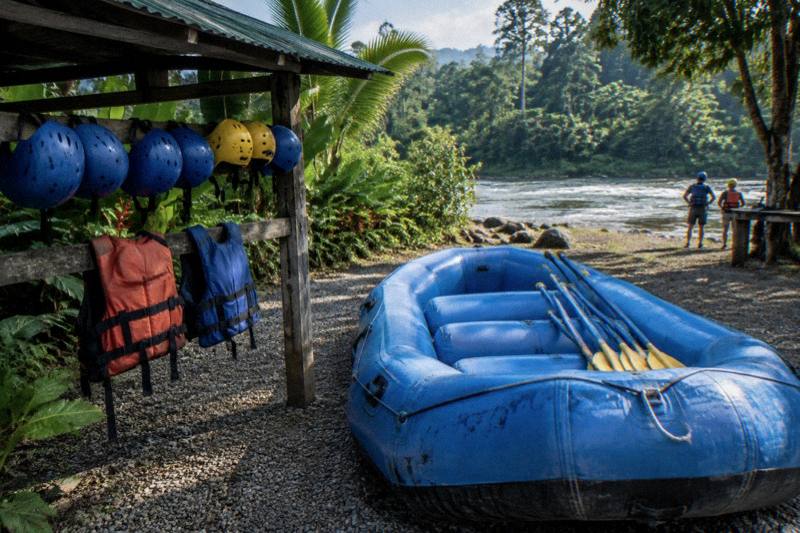
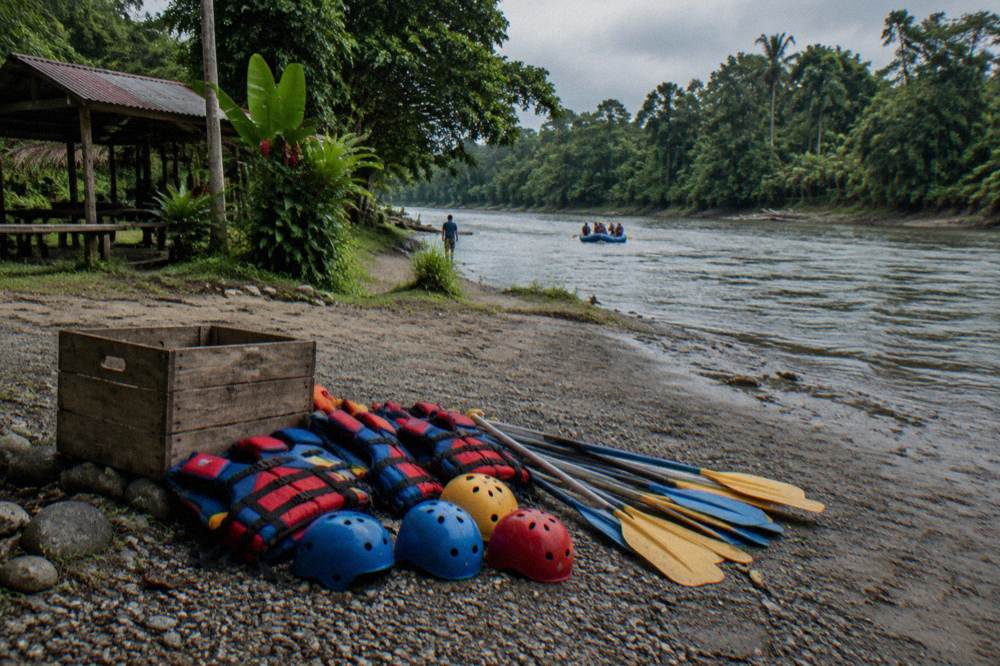
Operators advise clothes that can get wet, secure water shoes or tennis shoes rather than sandals, a change of dry clothes, sunscreen and insect repellent. Helmets and life jackets come with every listing on the roster, so parents should not buy or pack safety gear; the packing list is about comfort before and after the water.
The gear question answers itself quickly because the listings are explicit: every family rafting listing on this roster includes safety equipment in its inclusions. What families actually forget is the mundane layer. Dry clothes for the drive home, a towel, cash for the photos that are sold separately on nearly every listing, and something for the child who decides mid-trip that the helmet itches. Towels are included on some listings, including the featured family trip's base amenities, but a packed towel costs nothing.
| Item | Why it matters for kids | On any listing? |
|---|---|---|
| Water shoes or old tennis shoes | Secure footing on wet rocks; sandals float away | Bring your own |
| Dry change of clothes | Children get cold fast after the water | Bring your own |
| Sunscreen and repellent | Jungle sun on the calm stretches | Bring your own |
| Helmet and life jacket | Mandatory under the national norm | Included on every listing |
| Snacks and fruit | Energy between rapids | Listed on the family trips |
| Towel | Post-river comfort | Included on several listings |
The full packing breakdown, including what not to bring, is in the what to wear rafting in Costa Rica guide and the companion what to bring for rafting guide. The one child-specific note worth adding here: size matters more than brand. A life jacket that rides up on a small frame is a fitting question for the guide at the put-in, and parents should simply ask the guide to check the fit rather than adjusting it themselves.
How Does The Season Change A Family Rafting Trip?
The dry season from December to April brings lower, more predictable flows and the Class II-III conditions families book for; the green season from May to November raises the water, with green-season flows pushing sections toward Class III or IV and a higher chance of cancelled or rerouted trips. Annual rainfall in the Sarapiqui lowlands averages about 3,464 mm, and November is the wettest month at about 445 mm.
For a family planning around school holidays, this matters a lot. A December to April trip lands in the driest window: April averages about 117 mm of rain over roughly 8 rainy days, and operators report the mellow, predictable Class II-III water that suits first-timers. A July or August trip, peak green season, can mean bigger waves and a more demanding float, or a cancellation when the river is high. Operators cancel or reroute in high water, flooding or road closures, and Route 32 landslides in the rainy season are commonly reported, which affects the drive from San Jose more than the river itself.

Daytime air temperatures of about 28 to 30 C year-round mean children are rarely cold before the water, but they chill fast after it, which is the packing note from the previous section again: dry clothes in the van. The seasonal mechanics are covered in full in the river levels and rapid class by season guide; the family takeaway is simply to prefer the dry months if the calendar allows, and to book a listing with free cancellation if it does not.
Where Should A Family Book From: La Virgen, La Fortuna Or San Jose?
For the easiest logistics, families should book from La Fortuna, where several Class II-III rafting listings include hotel pickup from $105.87 per person; those staying in the Sarapiqui lowlands should book from the operator base at La Virgen de Sarapiqui or Chilamate, with river transport included though hotel pickup is not; San Jose works too, but the 10-hour Class II-III day from $105 per person means about 1 hour 30 minutes of driving each way.
The departure area is the most under-planned part of a family rafting day. A three-hour float becomes a very different day when the drive to it is ninety minutes each way with a tired child. The drives are about 1 hour 30 minutes from San Jose to the Sarapiqui area, and about 1 hour to 1 hour 10 minutes from La Fortuna to Puerto Viejo de Sarapiqui. If your base is La Fortuna, the Near Arenal listing that includes transport and lists hotel pickup is the low-friction choice, and its minimum age of 7 with up to 15 guests keeps the group small.
The Arenal day tour version runs from $96 per person for 6 hours with hotel pickup and drop-off included, fruit on its inclusions list (lunch is excluded), and free cancellation listed, another solid La Fortuna option when the Near Arenal departure is full. Its review pool does not yet support a rating claim, so judge it on the inclusions rather than stars.
The San Jose option deserves one honest caution. The full-day Class II-III tour from San Jose, 4.0 from 20 reviews on its listing, includes round-trip transport from selected San Jose hotels and a traditional lunch, but it is a 10-hour day, and that is a long day for an eight-year-old even with the mellow water. The San Jose listings that combine rafting with a connection to La Fortuna, from $119 and $122 per person, suit families using the rafting day as transit between bases, a genuinely useful trick covered in the San Jose to La Fortuna via Sarapiqui guide.
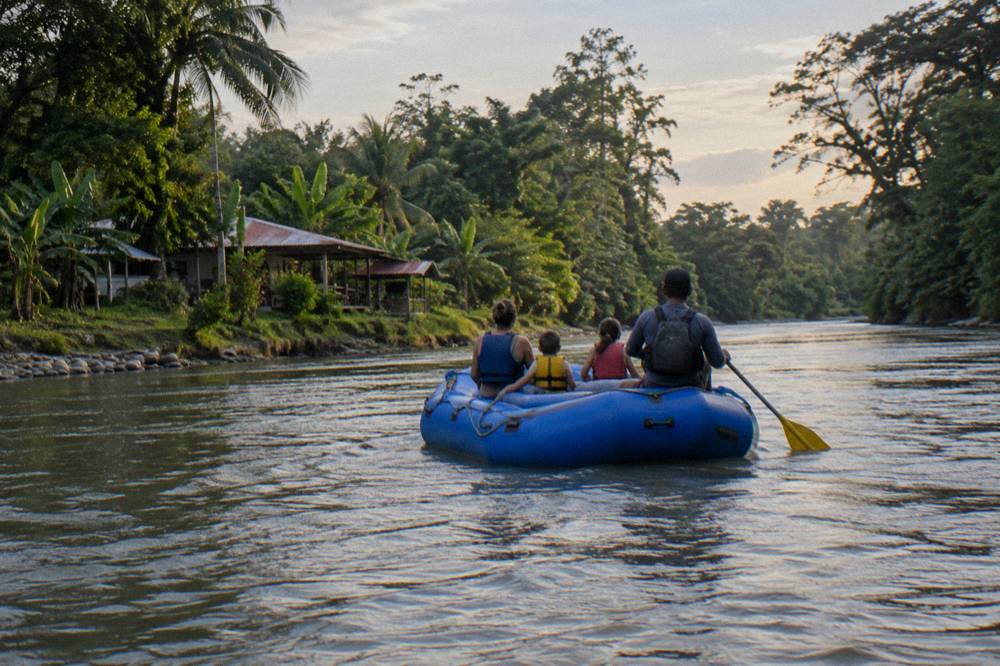
Families already staying near the river have the easiest version of the day. The La Virgen and Chilamate listings run 3 hours total, the base has changing rooms, lockers and parking, and the budget Class II-III listing from $60 per person keeps the day short and cheap for a family of four. Its rating, 5.0 from 59 reviews, comes from a real pool, and its inclusions list covers equipment, guides, a snack and a towel, with no meal stated.
Common Questions About Family Rafting In Costa Rica
What age can kids start rafting on the Sarapiqui River?
Legally, ages 5 to 7 may raft Class I and II water only and ages 8 to 11 may raft up to Class III under the national norm. The featured family listing sets its own minimum age at 6, and other Class II-III listings list 7 or 8, so check the specific listing before booking.
Is the Class II-III Sarapiqui float suitable for children?
Yes, it is the trip designed for them: certified guides, mandatory helmets and life jackets, snack breaks and calm pools between rapids. The river is undammed, so the class moves with rainfall, and operators cancel or reroute in high water rather than run a family trip on big water.
Can teenagers do the Class III-IV Sarapiqui trips?
From age 12 the law allows Class IV water, but the Sarapiqui Class III-IV listings post their own minimums of 13, 14 or 15, and some list weight limits. A teenager who enjoyed the float is the right customer; check the minimum age on the specific listing.
How much does family rafting on the Sarapiqui cost?
Class II-III listings run from $60 to $105.87 per person, with the featured family trip at from $85 including lunch and the Near Arenal version at from $105.87 including transport. Class III-IV trips for older teens run from $85 per person.
Do family rafting trips include hotel pickup?
It varies by listing. The La Virgen base trips exclude hotel pickup but include van transport to the river; the Chilamate listing offers pickup from Sarapiqui hotels; several La Fortuna and Arenal listings include hotel pickup and drop-off. The roster flags pickup on each listing, so confirm before booking.
What is the best season for family rafting in Costa Rica?
The dry season, December to April, brings lower and more predictable flows, with April the driest month at about 117 mm of rain. The green season from May to November raises water levels and the chance of cancelled or rerouted trips, especially toward November, the wettest month at about 445 mm.