What Class Rapids Are In Costa Rica?
Costa Rica's rivers run from Class II family floats to Class IV big water. Here is which river holds which class, how the Sarapiqui changes with the rain, and how to pick your trip.
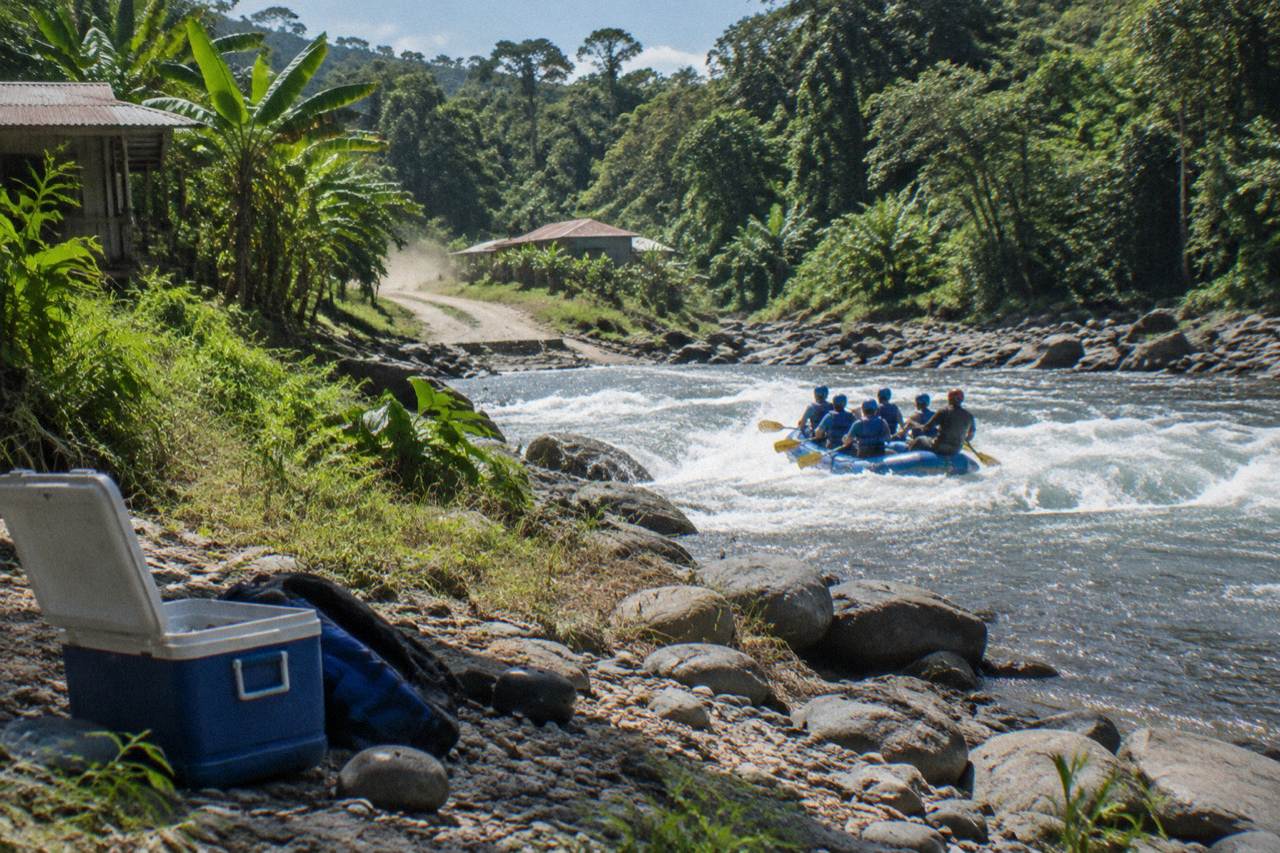
Costa Rica packs an unusual amount of whitewater into a small country: a rain-fed, undammed river system where the same stretch can paddle like a gentle float in March and like a committed big-water run in October. When people ask what class rapids are in Costa Rica, the honest answer is that the country holds Class II through Class V water commercially, but the trips almost every visitor books cluster in Class II-III family water and Class III-IV adventure water. The Sarapiqui, the river this site is built around, offers both tiers, and its class rating literally moves with the rain because no dam buffers its flow. If that steeper water tempts you but you have never held a paddle, our straight answer for first-timers eyeing the harder Sarapiqui runs explains what guides actually do with nervous beginners and when the milder float is the smarter call.
That single fact, a wild river whose difficulty is seasonal, explains most of the confusion travelers hit when comparing listings. One operator sells the Sarapiqui as a beginner float, another sells it as an extreme run, and both are telling the truth about different months and different sections. This guide untangles the class scale, maps it onto Costa Rica's main rafting rivers, and shows where the Sarapiqui's two commercial sections sit, so you can match a listing to your comfort level instead of guessing from the adjectives. Once you know what class you can handle, the next question is which river deserves a spot on your itinerary, and our guide to Costa Rica's most famous rafting river and its closest rivals makes that choice easier.
Costa Rica's raftable rivers span Class II through Class V, with Class VI water existing in the country but never run commercially. The Pacuare is rated Class III-IV in its remote gorge, the Sarapiqui sits at Class II-III in the dry season and can rise to Class III or IV after heavy rain, the Balsa typically runs Class II-III, and nearly all bookable trips fall within the Class II to IV range.
The class label on a listing is the single most important line on the page, more important than the price or the photo. It tells you how big the waves are, how much continuous paddling the trip demands, and who in your family can legally come. Costa Rica's national rafting norm even ties minimum participant age directly to the rapid class of the trip, which we cover further down.
Start with the trip this site knows best. The Sarapiqui River Extreme White Water Rafting Class IV listing from La Fortuna, rated 5.0 from 845 reviews and priced from $85 per person, sells Class III-IV water with hotel transport within about 6 km of the operator's office and lunch included. That is the upper tier of what a first-time visitor normally books in this country. At the gentler end, the same river hosts Class II-III family trips such as the Family Rafting Adventure from La Virgen, from $85 with a listed minimum age of 6, and the budget 3-hour Class II-III run from $60.
If you want the full picture of the two Sarapiqui tiers before choosing, the site's Class II-III family float guide and the Upper Sarapiqui rapids comparison break down each trip type in detail.
How The Rapid Class Scale Works, From Class I To Class VI
The international scale runs I through VI: Class I is moving flat water, Class II is easy waves with wide channels, Class III has moderate irregular waves needing maneuvering, Class IV adds powerful waves, drops and precise lines, Class V is long, violent and expert-only, and Class VI is considered unrunnable. Costa Rica's commercial trips sell almost exclusively between Class II and Class IV.
The scale matters because each step up is a real jump in physical demand, not a marketing gradient. On Class II water, the guide mostly steers and you paddle forward for fun. Class III water asks the whole crew to respond to commands quickly, with waves that will soak everyone and holes the guide paddles around. Class IV water is a team sport: missed paddling strokes matter, the raft will bounce hard through drops, and a swim, while managed by a safety kayaker or guide, is a genuinely uncomfortable event rather than a laugh.
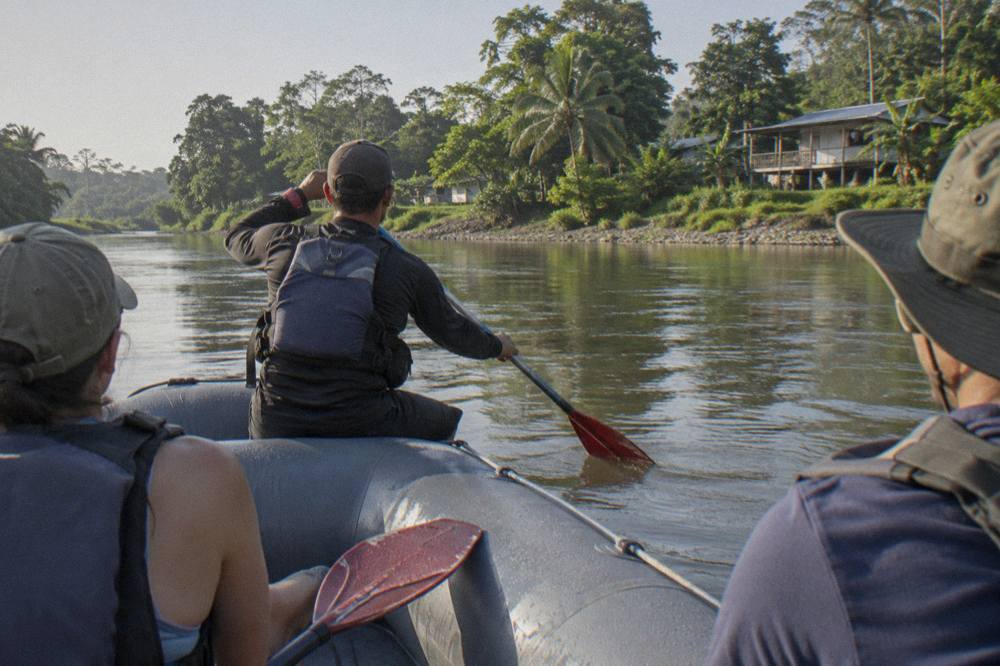
What the scale does not capture is scenery and wildlife, and in Costa Rica those are often the point. A Class II-III Sarapiqui float drifts past rainforest where operators and guests commonly report sloths, monkeys, toucans, iguanas and aquatic birds along the banks. A Class III-IV run on the same river gives you bigger adrenaline and less time to look around. Neither is a better trip; they are different products, priced similarly, sold to different travelers.
It also does not capture water level, which in Costa Rica shifts a run's effective difficulty more than most visitors expect. The International Scale of River Difficulty defines classes in terms of rapids as commonly run, and a rain-fed river rewrites them monthly. The next section shows how that plays out river by river.
Which Costa Rica Rivers Hold Which Class?
Operators describe the Pacuare as Class III-IV in a remote gorge, the Sarapiqui as Class II-III at lower dry-season flows rising to Class III or IV after heavy rain, the Balsa as typically Class II-III, and the Reventazon's lower sections as Class II-III or III. Class V water exists in Costa Rica but is rarely sold commercially; most booked trips are II to IV.
Here is the honest comparison, built only on what the verified operator and river-comparison sources state. Notice that the Sarapiqui appears twice, because its two commercial sections sit on different parts of the scale.
| River | Typical Class (As Operators Describe It) | Character |
|---|---|---|
| Sarapiqui, upper run | Class II-III dry season, up to Class III when higher | Family-friendly jungle water close to La Fortuna |
| Sarapiqui, Jungle Run section | Class III-IV dry, up to Class IV at high water | The demanding commercial run, stronger paddling |
| Pacuare | Class III-IV | Remote gorge scenery, longer drive from La Fortuna |
| Balsa | Typically Class II-III | Calmer than the Sarapiqui's III-IV section |
| Reventazon, lower sections | Class II-III or III | Downstream water calmer than the upper runs |
Two comparisons matter most for a visitor choosing between rivers. The Sarapiqui's Class III-IV section is more challenging than the Balsa and requires stronger paddling, so travelers deciding between the two are really deciding between a workout and a splash-around. And the Pacuare delivers comparable Class III-IV water with more dramatic, remote gorge scenery, but a longer drive from La Fortuna; the Sarapiqui is the closer Class III-IV option, roughly 1 hour to 1 hour 10 minutes from La Fortuna to the Puerto Viejo de Sarapiqui area, and about 1 hour 30 minutes from San Jose to the Sarapiqui area.
This site's catalogue sells only Sarapiqui trips, and within it the class tiers are clear. On the demanding side sit the Class IV trip with lunch from La Fortuna, rated 5.0 from 29 reviews and from $122.04 per person with hotel pickup and drop-off included, and the Desafio Jungle Run, Class 3-4, rated 4.9 from 29 reviews and from $123 per person. For a wider look at the comparison, the Sarapiqui versus Pacuare guide and the Balsa river comparison lay out the trade-offs.
Why The Sarapiqui's Class Changes With The Rain
The Sarapiqui is rain-fed and undammed, so its level moves directly with rainfall: operators report Class II-III at lower dry-season flows and up to Class III or IV after heavy rain. Dry season runs December to April; green season runs May to November, with June to October typically bringing the highest, most dynamic water.
This is the detail most first-time visitors miss, and it explains why two reviews of "the same river" can sound like different planets. In the dry season, December to April, the upper Sarapiqui settles into predictable Class II-III water suited to beginners and families, with April the driest month at about 117 mm of rain over roughly 8 rainy days. In the green season, May to November, flows rise and the same rapids carry stronger currents and bigger waves, with operators describing the run as Class III to IV at high water. November is the wettest month, about 445 mm across roughly 17 rainy days.
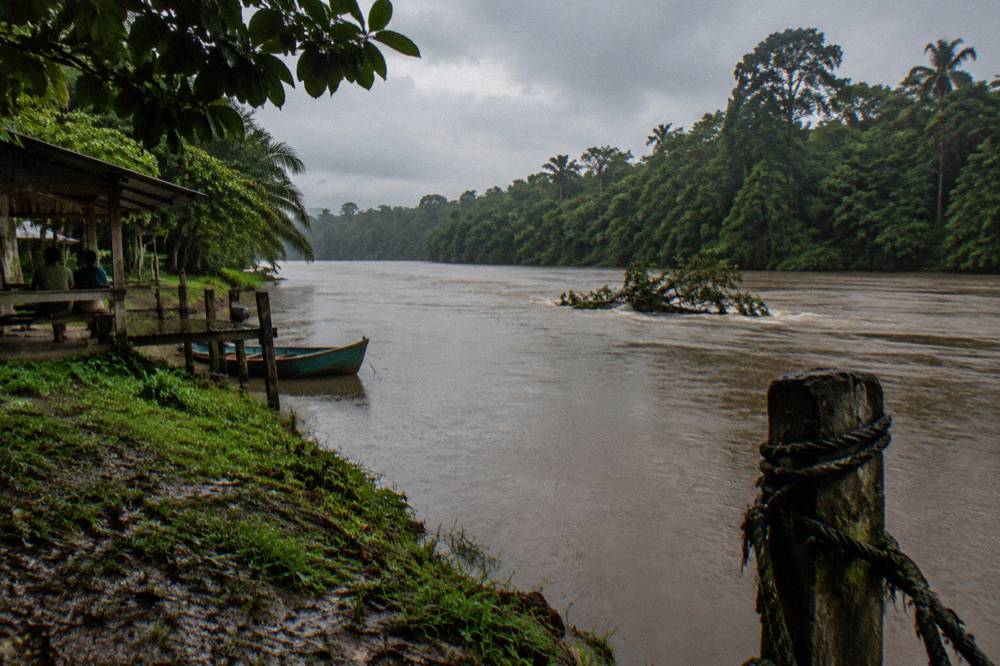
High water also means honest limits. Operators cancel or reroute trips during high-water events, flooding, or road closures, and rainy-season landslide closures on Route 32 are commonly reported, so a wet-season booking always carries a small chance of a changed plan rather than a guaranteed run. Daytime air temperatures hold around 28 to 30 C year-round, so cold air is never the reason to skip a month here.
For a family or a nervous first-timer, the practical read is: book the Class II-III tier in the dry season for the gentlest version of the river, and book the Class III-IV tier in the June-to-October window if bigger water is what you came for. The site's river levels and rapid class by season guide goes deeper on month-by-month planning.
Age Minimums By Class: What Costa Rican Law Actually Says
The national rafting norm INTE G60-1:2019 ties minimum age to rapid class: under 5 no rafting at all; ages 5 to 7 Class I-II only; ages 8 to 11 up to Class III; ages 12 to 17 up to Class IV; 18 and over up to Class V. Operators set their own, often higher, minimums on top of the law, so the listing's age line is the one that counts.
This is a genuinely useful piece of information that few first pages of search results surface. The rule, published as part of Costa Rica's national technical norms for rafting, means a Class III-IV Sarapiqui trip is legally open from age 12, and the Class II-III family tier from age 8. Individual listings choose their own numbers within or above that floor: the Family Rafting Adventure in La Virgen lists a minimum age of 6 on its softer section, while the Class III-IV Extreme trip from the same base lists 14, and the Class 3-4 run from La Fortuna lists 15.
| Participant Age | Classes Legally Permitted (INTE G60-1:2019) | What It Means For A Sarapiqui Booking |
|---|---|---|
| Under 5 | None | Too young for any commercial raft |
| 5 to 7 | Class I-II | Below the Class II-III family tier; check the wildlife float instead |
| 8 to 11 | Class I-III | Family Class II-III trips possible; Class III-IV excluded |
| 12 to 17 | Class I-IV | Class III-IV legally open, subject to the listing's own minimum |
| 18 and over | Class I-V | All commercial tiers open |
The same body of norms requires operators to supply and verify helmets and life jackets for every participant, with specified buoyancy ratings for Class III and above, and a companion guide-certification norm (INTE G60-2:2019) requires rafting guides to hold national certification in rafting and swiftwater rescue along with current first aid and CPR. The practical takeaway for a reader: the equipment and guide standards are codified, not vibes, and you can read more in the site's age and weight limits guide.
One caution: never assume a listing's minimum age from the law. The roster shows Sarapiqui listings with minimums of 6, 7, 8, 12, 13, 14 and 15 depending on the product, and some say "check the listing" outright. Weight limits and swimming-ability requirements also vary by operator and are not fixed by the national norm; treat the listing's own terms as the rule.
Choosing Between Class II-III And Class III-IV On The Sarapiqui
Choose Class II-III if you want splashy fun with mild commitment, children from about 8 in your group, or a first rafting trip; choose Class III-IV if you want continuous big waves, confident swimming ability and real paddling work. On this site the family tier starts from $60 per person and the III-IV tier from $85, with both offered from La Fortuna, San Jose and the river bases.
The decision usually comes down to three questions. Who is in the boat: if anyone is under 12, the Class III-IV tier is off the table legally, and several listings set it higher still. What kind of day you want: the II-III trips run about 3 hours total and read as a fun morning, while the III-IV trips run 5 to 8 hours including transport and lunch and read as the day's main event. And how you feel about a swim: on IV water it is a possibility you should be comfortable with, on II-III water it is usually just briefly wet.
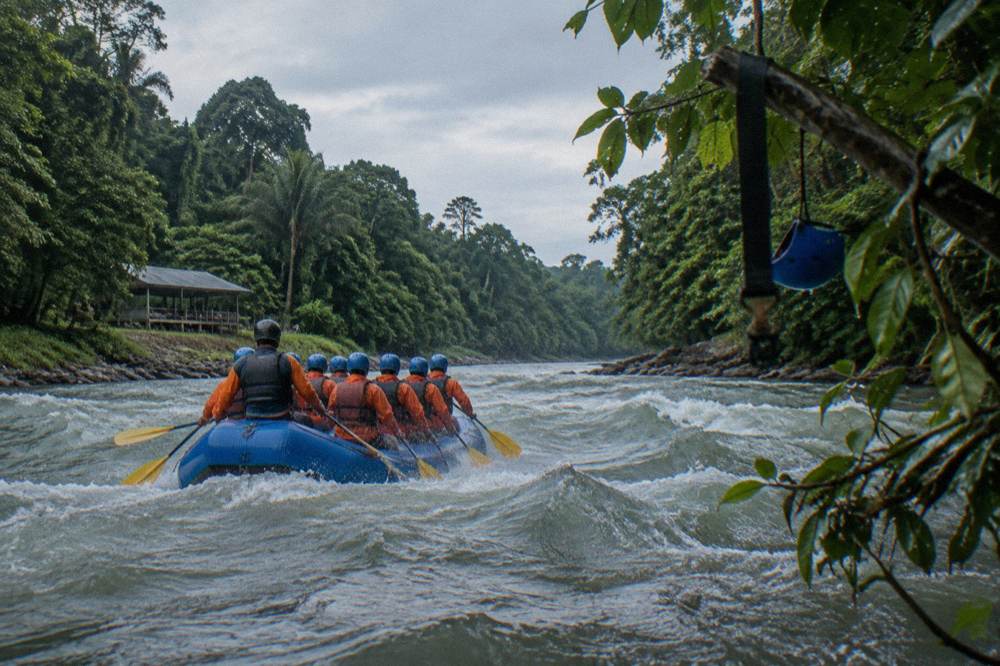
On the gentle tier, the budget 3-hour Class II-III run from La Virgen is the cheapest firm-priced listing on this site at from $60 per person, rated 5.0 from 59 reviews, with snacks, towel and in-tour transport included but hotel pickup excluded. The Aguas Bravas trip from Chilamate at from $70 includes a fresh fruit buffet, lunch and drinks, and even a CD of pictures. On the demanding tier, the Class 4 trip with lunch from La Fortuna, 5.0 from 29 reviews and from $122.04, keeps groups to 15 guests or fewer, which suits travelers who want a tighter boat.
A good middle path for mixed groups: split the day. Some parties send the adrenaline seekers on a Class III-IV morning run while the rest take a wildlife float, the gentle safari trips on the same river that carry no rapid class at all. The site's wildlife from the raft guide covers what those calmer trips commonly report seeing.
What Class Means For Price And What You Actually Pay
Class alone barely moves the price on the Sarapiqui: the family tier runs from $60 to about $105 per person and the III-IV tier from $85 to about $160, with the bigger drivers being departure point, duration and whether lunch and hotel transport are included. Free cancellation is listed across the roster, so price differences usually reflect logistics, not water difficulty.
Look at the pattern in the roster. The Class III-IV Extreme trip from La Virgen costs from $85 for 3 hours; the Class III-IV run from La Fortuna with hotel pickup costs from $122.04 for 6 hours; the premium Faro Travel Class III-IV day with transport, food and an Arenal Volcano National Park entry costs from $160 for 8 hours. The water is comparable; the price climbs with the driving, the meal and the extras. The same holds on the gentle tier, where the $60 no-frills run and the $92.66 afternoon trip with lunch differ by inclusion, not by wave size.
| Trip (Roster Card Name) | Class | From (Per Person) | Total Duration | Departure |
|---|---|---|---|---|
| Budget 3-Hour Rafting, No Meal | II-III | $60 | 3 hours | La Virgen |
| Family Rafting Class II-III, Meal | II-III | $85 | 3 hours | La Virgen |
| Class IV Extreme, 5 Hours | III-IV | $85 | 5 hours | La Fortuna |
| Class 3-4 Rafting, 6 Hours | III-IV | $122.04 | 6 hours | La Fortuna |
| Premium Class III-IV Day | III-IV | $160 | 8 hours | La Fortuna / Arenal |
The national norms also shape what is inside that price: the required helmets and certified guides are not optional upsells but legal baseline, and the listings on this site bundle safety equipment into every trip. What is almost never included is photos, which several roster lines explicitly list as a separate purchase, and gratuities, which travel sites commonly report at $5 to $10 per person for a half-day group tour. The cost and inclusions guide unpacks the full breakdown.
Reading A Listing's Class Label Without Getting Fooled
Trust the class label only when it names a section and a season, compare like listings by their roster facts (class, duration, departure, minimum age, inclusions), and remember the same river legitimately sells both a family float and an extreme run. Operators report their own classes, and on a rain-fed river the honest ones say the rating moves with water.
A few practical habits separate a smart booking from a lucky one. First, match the departure point to where you are sleeping: a La Fortuna listing with hotel pickup saves you nothing if you are in San Jose, and the San Jose and La Fortuna connection listings, like the Class 2-3 rafting with a La Fortuna connection at from $119, exist precisely to turn the drive into the activity. Second, read the minimum age as a difficulty signal: a listing that says 14 or 15 is telling you the water is real even before you read the class. Third, when a listing says "check the listing" for age or pickup, do exactly that rather than assuming.
The information most worth carrying away: Costa Rica's class range is wide, but your choice is really between two Sarapiqui tiers, and the river itself decides in any given month exactly how big each one feels. This Sarapiqui River Rafting site exists because that single river covers both ends of what most travelers want. The seasonal picture, the legal age floor by class, and the price logic above are the whole decision framework; the rest is picking a departure town and a lunch preference.
Common Questions About Rapid Classes In Costa Rica
What Class Rapids Are In Costa Rica?
Class II through Class V, commercially. The Sarapiqui runs Class II-III at lower dry-season flows and up to Class III or IV after heavy rain, the Pacuare is described by operators as Class III-IV, the Balsa as typically Class II-III, and the Reventazon's lower sections as Class II-III or III. Nearly every bookable trip sits between Class II and Class IV.
Is Class III-IV rafting hard for a beginner?
It is demanding but achievable for fit first-timers who can swim and follow commands quickly. Class IV water involves powerful waves and precise paddling. Several Sarapiqui listings in this tier are sold to beginners daily; check each listing's stated minimum age, which runs 12 to 15 depending on the product.
Can kids do Class III or IV rapids in Costa Rica?
By law, ages 8 to 11 may run up to Class III and ages 12 to 17 up to Class IV under the national norm. In practice operators set their own minimums, so a Class II-III family trip may still require age 6, 7 or 8, and Class III-IV listings commonly require 12 to 15. Always check the listing.
What is the easiest rafting in Costa Rica?
Class II sections and wildlife floats. On this site the gentlest options are the Class II-III family trips, with the budget 3-hour run from $60 per person as the cheapest firm-priced listing, and the safari floats, which carry no rapid class at all and are gentle river trips rather than whitewater.
Does the Sarapiqui's rapid class change with the season?
Yes. The river is rain-fed with no dams, so operators report Class II-III at lower dry-season flows, December to April, and up to Class III or IV at green-season high water, with June to October typically the most dynamic window. Trips can be cancelled or rerouted in floods or high water.
Is a higher class more expensive on the Sarapiqui?
Barely. The family tier runs from $60 to about $105 per person and the Class III-IV tier from $85 to about $160, and the bigger price drivers are duration, departure point, and whether lunch and hotel transport are included, not the wave size itself.