Class III-IV Upper Sarapiqui: The Rapids Worth Booking
The upper Sarapiqui is where this river stops being a scenic float and starts being real whitewater. Here is what the Class III-IV section actually demands, who can legally and physically ride it, and which trips run it.
Short answer
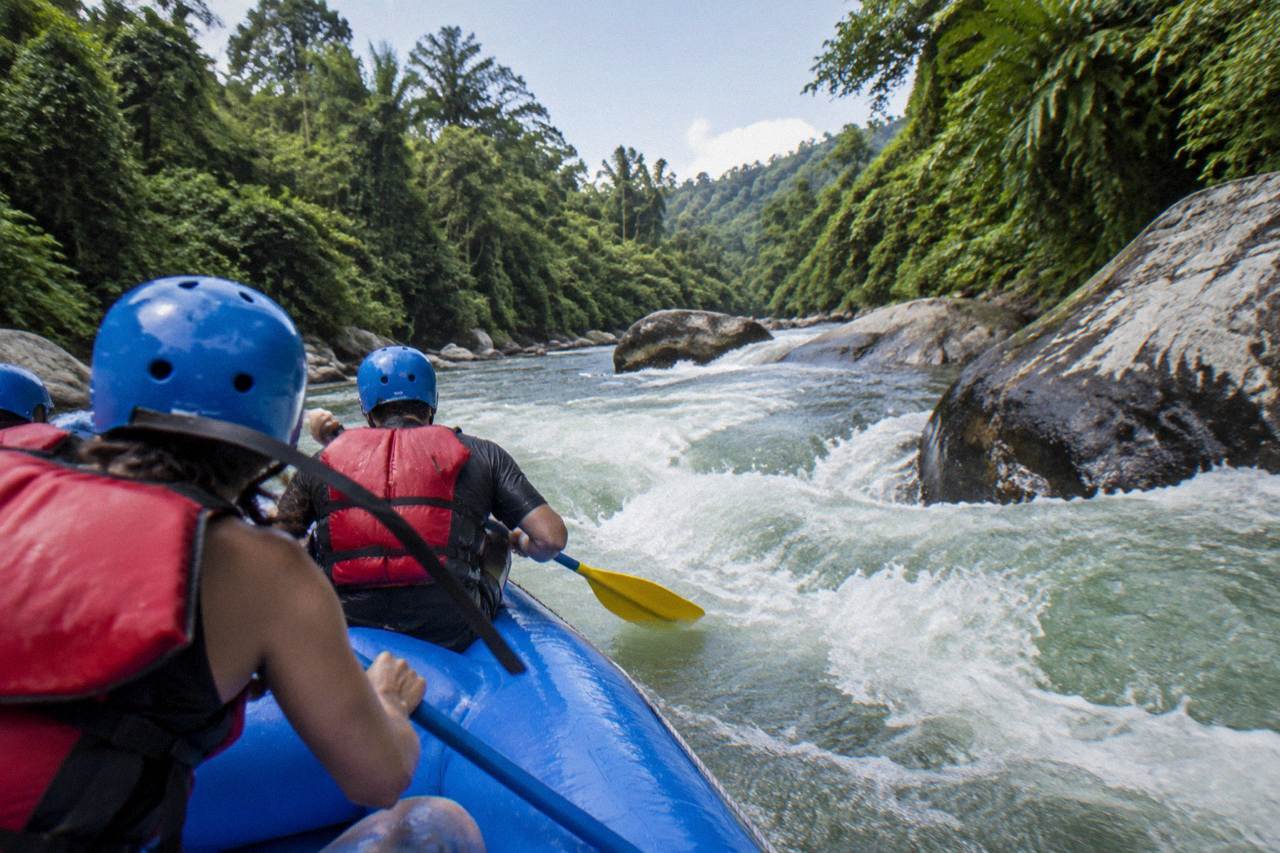
The upper Sarapiqui runs Class III-IV rapids, reported as Class III-IV in dry season and up to Class IV after rain on this undammed river. Firm-priced trips run from $85 per person, the national norm opens Class IV from age 12, and operators set their own, often higher, minimums. Most reviewed: 5.0 from 845 reviews.
The Sarapiqui River has two personalities. Downstream, the Class II-III family float carries six-year-olds past toucans. Upstream, the section operators call the Jungle Run turns into genuine whitewater: Class III-IV rapids that demand real paddling, a guide who reads water, and arms that still work after ninety minutes. The featured listing on this site, the Class IV trip from La Fortuna rated 5.0 from 845 reviews, exists because of that upper section. So do the Desafio Jungle Run and the Class IV Extreme trips, and this page breaks all of them down the way a buyer needs: what the water does, who is allowed on it, what fitness it takes, and what a fall out of the raft actually means here.
The river itself decides the difficulty on any given day. The Sarapiqui is rain-fed with no dams, so operators report the upper section as Class III-IV at dry-season flows and up to Class IV when heavy rain raises the level. Nothing about the class is fixed, and honest operators say so. What is fixed is the roster of trips that run it, and we compared every one of those listings for this guide. For a wider look at both sections side by side, see Rio Sarapiqui rafting trips compared.
What Makes The Upper Sarapiqui Section Different?
The upper Sarapiqui, the stretch operators market as the Jungle Run, is a Class III-IV whitewater section through dense lowland rainforest, harder and steeper than the Class II-III family run downstream, and its difficulty moves with rainfall because the river is undammed. Operators describe Class III-IV at normal flows and up to Class IV after heavy rain, which is why no listing can promise a fixed class on your date.
Section research describes the river as two distinct runs: an upper section that reads Class II-III at low dry-season water and Class III when higher, and the Jungle Run section, Class III-IV in the dry season and up to Class IV in high water, per the comparison guide at Costa Rica Spirit's rafting class comparison. Desafio Adventure Company operates its Class III-IV Jungle Run trips on this section, as its operator page for the Sarapiqui Class III-IV day trip states. Wave Expeditions runs Class III-IV trips with La Fortuna hotel pickups on the same river.
What that means physically: bigger standing waves, holes that can stop a raft, drops that require the crew to paddle hard on command, and less recovery time between rapids than the family section. Comparisons by operators consistently rate the Sarapiqui Class III-IV stretch more demanding than the Balsa River, which typically runs Class II-III; that comparison is covered in detail in Sarapiqui vs Balsa river rafting.
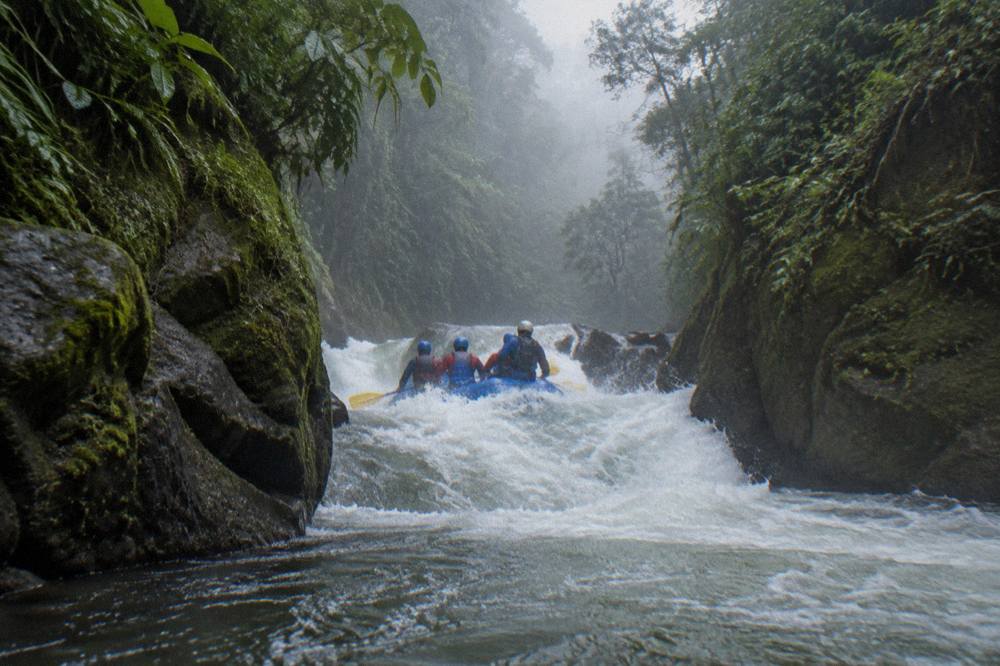
The scenery is the other half of the deal. The corridor is dense rainforest, and guests on these trips commonly report wildlife along the banks: sloths, monkeys, toucans, iguanas, caimans and aquatic birds. No sighting is ever promised, and the faster water leaves less time for watching than the float trips do, but the jungle presses right up to the bank. That combination, real whitewater inside real wilderness roughly an hour from La Fortuna, is the product you are buying.
| Feature | Upper Sarapiqui (Jungle Run) | Lower/family Sarapiqui |
|---|---|---|
| Reported class | Class III-IV dry, up to Class IV wet | Class II-III dry, up to Class III wet |
| Typical rider | Confident first-timers and up, age 12+ by law | Families, beginners, age 8+ by law |
| Paddling demand | Continuous, hard paddling on command | Moderate, instructional |
| Scenery | Dense jungle canyon | Wider river, jungle banks |
| Wildlife pace | Brief glances between rapids | Slow viewing, commonly reported |
Which Sarapiqui White Water Rafting Trips Run The Class III-IV Section?
Ten listings on this site's roster run Class III-IV water, from $85 per person for the Extreme White Water Adventure at La Virgen, 5.0 from 108 reviews, to $160 per person for the premium Faro Travel day from La Fortuna/Arenal. The most reviewed is the Class IV trip from La Fortuna, 5.0 from 845 reviews, from $85 per person.
Below are the firm facts from the listings themselves. Prices are per person, durations are total trip lengths as listed, and pickup claims come only from each listing's own flags.
| Listing | Price from | Rating | Duration | Departs | Pickup |
|---|---|---|---|---|---|
| Extreme White Water Adventure Class III & IV | $85 | 5.0, 108 reviews | 3 hours | La Virgen | Not included; meet at base |
| Class IV from La Fortuna (featured) | $85 | 5.0, 845 reviews | 5 hours | La Fortuna | Listed, hotels within about 6 km |
| Class 3-4 from La Fortuna | $122.04 | 4.9, 136 reviews | 6 hours | La Fortuna | Listed |
| Jungle Run (Desafio) | $123 | 4.9, 29 reviews | 8 hours | La Fortuna / San Jose | Listed |
| Class IV Extreme | $85 | 4.9, 29 reviews | 5 hours | La Fortuna | Check the listing |
| Class 4 with Lunch (Arenal Tours) | $122.04 | 5.0, 29 reviews | 6 hours | La Fortuna | Listed, extra fee for some spots |
| Premium Class III-IV Day (Faro Travel) | $160 | No rating on file | 8 hours | La Fortuna / Arenal | Listed |
| Class III-IV Run to San Jose | $122.04 | No star claim, 12 reviews | 8 hours | San Jose | Check the listing |
| La Fortuna Class IV Full Day | $99 | No star claim, 1 review | 8 hours | La Fortuna | Listed, selected hotels |
| San Jose Class 3-4 with Connection | $122 | No star claim, 9 reviews | 8 hours | San Jose / La Fortuna | Listed |
Three of these stand out for different buyers. The featured Class IV trip from La Fortuna is the most reviewed listing on the whole roster and the default choice for anyone staying in the Arenal area. The Desafio Jungle Run suits travelers who want the operator's named section of river and are coming from, or going to, San Jose. The Class IV Extreme at $85 from La Fortuna matches the featured trip's price with a shorter listed duration.
A note on same-base listings: the Extreme White Water Adventure and the Class IV trip from La Fortuna are different products from different departure points, one meeting at the operator base in La Virgen de Sarapiqui, the other picking up at La Fortuna hotels. Never assume the cheaper or closer one is the same run. If you are still weighing the gentler option for part of your group, the family alternative is covered in Class II-III Sarapiqui family float.
The La Virgen option deserves its own word. The Extreme White Water Adventure lists a minimum age of 14, caps groups at 18 guests, and includes lunch, tropical fruit and yucca snack, certified guides, lockers, changing rooms and WiFi at the base. Hotel pickup is excluded: you meet at the Sarapiqui Outdoor Center and a van takes you to the river and back. That makes it the natural pick for anyone already lodged in the Sarapiqui area rather than commuting from Arenal.
How Hard Is Class III-IV Rafting On The Sarapiqui River?
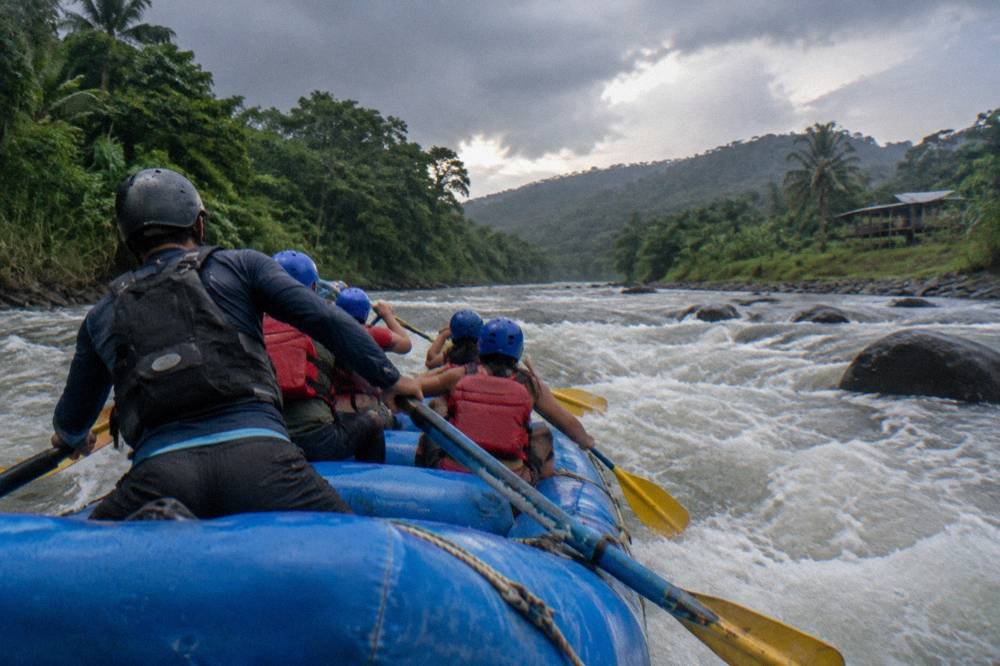
Class III means moderate, irregular waves that can swamp an open raft, and Class IV means intense, powerful water with precise maneuvering required, per the international scale. On the upper Sarapiqui, operators describe continuous paddling, commands that must be followed instantly, and a real chance of the raft hitting a wave wall sideways. Confident beginners do book these trips, but "beginner-friendly" and "easy" are not the same thing.
Honest framing: this is not a float. The guide calls commands, "forward," "back-paddle," "left side," and the boat only responds if the whole crew paddles. Between rapids there are calm pools, but on Class IV water the intervals are short. Operators on the fresh-file record describe 1.5 to 3 hours of rafting time within total trip durations of 4 to 8 hours including transport and lunch, though we print only each listing's stated total duration.
The water level question matters more than any class label. Because the river is undammed, the same named rapid can be a fun wave train in March and a portage-or-cancel feature in October. Operators cancel or reroute during high-water events, flooding and road closures; this is normal operations on a rain-fed river, not a red flag. How the class moves month by month is covered in Sarapiqui river levels and rapid class by season.
For context against the gentler product: the family section's Class II-III rating means waves and small drops that mostly self-resolve, which is why it legally opens to age 8. The upper section does not self-resolve. If you are unsure which side of that line you are on, first time rafting in Costa Rica walks through the decision, and rapids classes explained for Costa Rica covers the scale itself.

What Is The Minimum Age For Class III-IV Rafting In Costa Rica?
Costa Rica's national rafting norm, INTE G60-1:2019, permits ages 12 to 17 on Class I-IV water and 18 and over on Class I-V, so Class IV is legally closed below 12. Individual Sarapiqui listings set their own, often higher, minimums: the roster shows 12, 13, 14 and 15 across different operators, and several trips say check the listing.
The national norm's age table is unambiguous, and it is published in the official technical rafting norm on the INA portal: under 5 no class, 5 to 7 Class I-II only, 8 to 11 up to Class III, 12 to 17 up to Class IV, 18 and over all classes including V. Operators must inform participants of the minimum age for the activity and must supply and verify helmets and life jackets for every participant. Guides must hold national certification in rafting and swiftwater rescue with current first aid and CPR under the companion norm INTE G60-2:2019.
| Listing | Listed minimum age | Notes |
|---|---|---|
| Premium Class III-IV Day (Faro Travel) | 12 | The legal floor for Class IV |
| La Fortuna Class IV Full Day | 13 | Selected-hotel pickup only |
| Extreme White Water Adventure | 14 | La Virgen base, up to 18 guests |
| Class IV Extreme | 14 | La Fortuna |
| Class 3-4 from La Fortuna | 15 | Highest on the roster |
| All other Class III-IV listings | Check the listing | Not stated on the listing |
The practical point for families: a strong 13-year-old who swims well can legally and practically ride the section on the right listing, and the full picture including weight limits, which are never printed here because they live on each operator's page, is in rafting age and weight limits in Costa Rica. For the under-12s in the same family, the Class II-III trip with a listed minimum age of 6 from the same La Virgen operator is the companion booking. The wider family decision is covered in rafting with kids in Costa Rica.
Will a Class III-IV trip actually take a nervous 14-year-old? Operators commonly require swimming ability and good physical condition on this section, and some list health disclosures covering pregnancy, cardiovascular conditions and mobility limits, as the fresh safety file records. The listing is the contract: read the restrictions field before booking, not after.
How Fit Do You Need To Be For Upper Sarapiqui Rapids?
You need honest moderate fitness: the ability to paddle hard in bursts for roughly the listed rafting window, recover quickly, follow shouted commands instantly, and haul yourself back into a raft if you go over. No listing on the roster states a weight limit or training requirement in its published fields, so those are check-the-listing items, but several operators require swimming ability and good physical condition.
Paddling a raft is not kayaking. Six to eight people share the load, and the guide does the steering. What sinks unfit crews is not strength but endurance and reaction time: by the last rapid of a long section, tired paddlers react late, and late reactions are how rafts hit holes sideways. Operators on the fresh record describe trips of 4 to 8 or more hours total including transport and lunch, with the on-water portion the shorter slice of that. Other pages covering the same trip are gathered on Sarapiqui River Rafting.
The realistic self-test: could you do thirty minutes of intermittent bodyweight squats and rows, in the sun, in a helmet and life jacket, and still react to a one-word command within a second? If yes, you are fit for this section. If the honest answer is no, the Class II-III run is a genuinely good product, not a consolation prize, and the two sections' costs and inclusions are compared in Sarapiqui rafting cost and inclusions. If you're still weighing whether the region deserves a place on your itinerary at all, the honest verdict on Sarapiqui lays out who it suits, what a full day there delivers, and the downsides most guides skip.
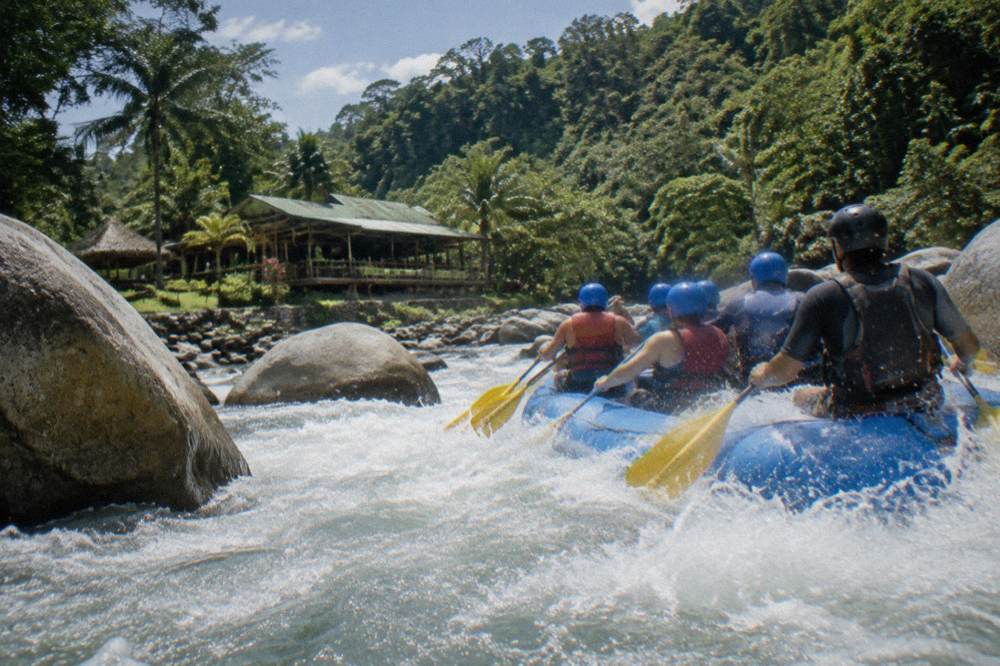
Age and fitness interact. The law opens Class IV at 12, but a 12-year-old who cannot pull their own paddle weight is a liability to the boat, and guides will say so. Conversely, fit travelers in their sixties ride this section regularly. Two roster facts help here: the Faro Travel premium day lists its minimum age at 12, and the Class 3-4 trip from La Fortuna lists 15, the highest on the roster. Operators are choosing their own comfort lines, and you should read those lines as signals about how demanding each trip's normal clientele finds it.
What Does Falling Out Of The Raft Mean On Class IV Sarapiqui Rapids?
Going overboard on Class IV water means a fast, bumpy ride through aerated current, on your back, feet up and pointed downstream, until the raft or a safety kayaker reaches you; the swim itself is short on this section but real, which is why operators require swimming ability and why the national norm mandates helmets and life jackets with specified buoyancy on Class III and above.
Nobody publishes a fall-out rate, and any site that quotes one is inventing it. The national norm requires operators to supply and verify helmets and properly buoyant PFDs for every participant, to instruct participants in techniques, and to run compliant risk management. Guide certification under INTE G60-2:2019 includes swiftwater rescue, first aid and CPR. The full safety picture, including the honest answer on incident statistics, is in is rafting in Costa Rica safe.
The briefing you will get on the bank covers the swim position: float on your back, feet at the surface and pointed downstream, never try to stand in moving water, hold your paddle only if it does not cost you the position. Most swims on a section like this end with the raft beside you in under a minute. The danger cases are foot entrapment on the bottom and getting pinned against wood, which is exactly why the feet-up rule is drilled before launch.
One roster detail worth flagging: several listings include a safety kayaker or a photographer on the water, per their own inclusions fields. A dedicated safety kayaker shortens a swim. If that matters to you, read the inclusions list on each live listing before choosing, because the fields genuinely differ between trips at the same price.
When Is The Best Season For Class III-IV Sarapiqui Rafting?
Dry season, December to April, brings lower, more predictable flows with the upper section reading Class III-IV; green season, May to November, raises the water toward Class IV with stronger currents and bigger waves, with June to October typically the most dynamic months. April is the driest month locally at about 117 mm of rain over about 8 rainy days; November the wettest at about 445 mm over about 17.
Month-level values beyond those anchors are not tabulated here, and any table claiming exact monthly river levels would be invented. What is real: the dry/green split, the three rainfall anchors, daytime air of about 28 to 30 C year-round, and the operational fact that trips are cancelled or rerouted during high-water events, flooding and road closures. The seasonal decision is covered fully in Sarapiqui weather and rainfall by month and rafting in Costa Rica green season.
| Season | Months | Typical upper-section character | Trade-offs |
|---|---|---|---|
| Dry | December to April | Class III-IV, predictable flows | Best for first-timers on this section |
| Early green | May to July | Bigger water, Class IV features | Lusher forest, fewer crowds |
| Peak green | June to October | Strongest currents, biggest waves | Cancellation risk rises with rainfall |
| Late green | August to November | High water, flood risk | November wettest, about 445 mm |
Buyer translation: book the upper section in dry season if you want Class IV at its most manageable, and in green season if you want it at its most powerful, with eyes open about weather risk. The featured Class IV trip from La Fortuna lists free cancellation, as do the other Class III-IV listings, which matters more in green season than any other time of year.
How Do You Get To The Upper Sarapiqui Trips?
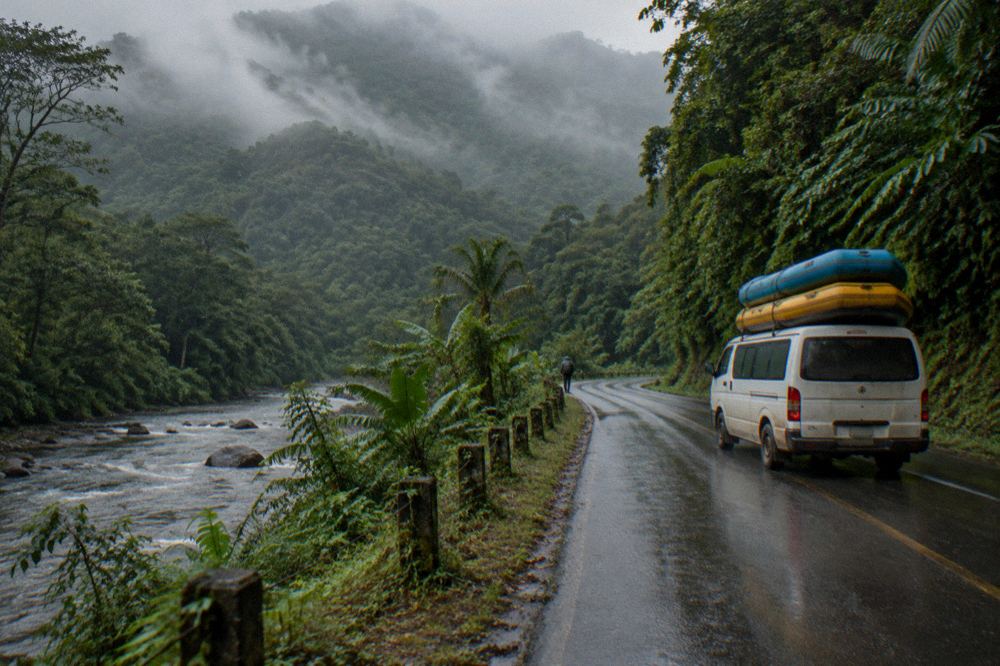
Drive time is about 1 hour 30 minutes from San Jose to the Sarapiqui area and about 1 hour to 1 hour 10 minutes from La Fortuna to Puerto Viejo de Sarapiqui, so most buyers do not drive at all: they book a listing that departs from where they are already sleeping. The roster covers both, with La Fortuna departures offering hotel pickup on several listings and La Virgen trips meeting at the operator base.
The departure-area choice is the single biggest convenience decision, and it is covered in full in rafting near La Fortuna and Arenal and rafting from San Jose to Sarapiqui. The short version: the featured Class IV trip from La Fortuna picks up at hotels within about 6 km of its main office, farther hotels excluded. The Jungle Run listings include hotel transport with travel from the San Jose area folded into the day, which is why they list 8-hour durations. The La Virgen Extreme trip excludes hotel pickup entirely; you meet at the base and its van takes you to the river and back.
One road warning that is not optional knowledge: Route 32 through Braulio Carrillo is repeatedly closed in rainy season by landslides, and detours add real time. Build slack into any same-day plan that crosses the mountains in green season, and check road status the morning of your trip.
What Should You Wear And Bring For Class III-IV Water?
Wear quick-drying clothes that can get wet, secure shoes that will not come off, and bring a full change of dry clothes, sunscreen and insect repellent; operators and travel sites consistently recommend exactly this kit for Sarapiqui whitewater, and the listing-level details of gear included, towels, dry bags, changing rooms, live on each trip's own inclusions field.
The basics are stable across the fresh record: clothes that can get wet, secure water shoes or tennis shoes, dry clothes for after, sunscreen, repellent. Helmets, life jackets, paddles and rafts are operator-supplied and legally must be. Beyond that the listings genuinely differ: one La Virgen trip includes towels, lockers, changing rooms and WiFi at the base; a La Fortuna listing includes towels and bottled water after the run; another lists dry bags. The full packing treatment is in what to wear rafting in Costa Rica and what to bring rafting in Costa Rica.
Two things not to bring: valuables you cannot afford to lose, and cotton, which stays wet and cold. Photos are sold, not given, on most of these trips: souvenir photography appears in the exclusions or as a purchase on listing after listing, so budget for it if you want proof you did this.
Which Class III-IV Trip Should You Actually Book?
Book the featured Class IV trip from La Fortuna, 5.0 from 845 reviews, from $85 per person, if you are staying in Arenal and want the most-reviewed upper-section trip with hotel pickup within about 6 km; book the La Virgen Extreme trip at the same price if you are based in Sarapiqui; book the Jungle Run if San Jose is your anchor and you want transport folded into the day.
This is the honest decision tree, and it reduces to departure point and review appetite rather than price, because the per-person spread across the section runs only from $85 to $160. The featured trip's 845-review pool is the largest on this site by a wide margin, which tells you the operation runs at scale and consistently. The premium Faro Travel day at $160 buys the smallest-listed package with national park entry in its inclusions, no rating on file yet.
Every listing in this category shows free cancellation in its listing fields. That is the buyer's real safety net on a rain-fed river: book the date you want, watch the weather, and know the cancellation terms on the live listing before you commit. Tipping, as operators and travel sites commonly report, tends to run $10 to $20 per person for a full day of guiding, cash on the day.
Common Questions About Class III-IV Sarapiqui Rafting
Can a beginner do Class III-IV rapids on the Sarapiqui?
Confident beginners do book these trips, and listings describe safety briefings and certified guides. But Class IV water demands hard paddling on command and real swimming ability, so a nervous or non-swimming beginner belongs on the Class II-III family section instead.
What is the minimum age for the upper Sarapiqui section?
National norm INTE G60-1:2019 permits ages 12 to 17 on Class IV water. Roster listings set their own minimums of 12, 13, 14 or 15, and several say check the listing. No Class III-IV trip on this roster is legally open below 12.
How much does a Class III-IV Sarapiqui trip cost?
Firm per-person prices on the roster run from $85 to $160. The featured Class IV trip from La Fortuna and the La Virgen Extreme trip both start at $85 per person; the premium Faro Travel day is $160.
Is the upper Sarapiqui always Class IV?
No. The river is rain-fed and undammed, so operators report the section as Class III-IV at dry-season flows and up to Class IV after heavy rain. Trips can be cancelled or rerouted in high water.
Do Class III-IV trips include lunch and pickup?
Most list lunch, and many list hotel pickup, but the flags differ by listing. La Virgen trips exclude hotel pickup and meet at the operator base; several La Fortuna and San Jose trips list hotel pickup and drop-off. Read each listing's own inclusions and exclusions.
Which trip is the most reviewed upper-section listing?
The Class IV trip from La Fortuna, rated 5.0 from 845 reviews, from $85 per person, is the most reviewed listing on this entire site.