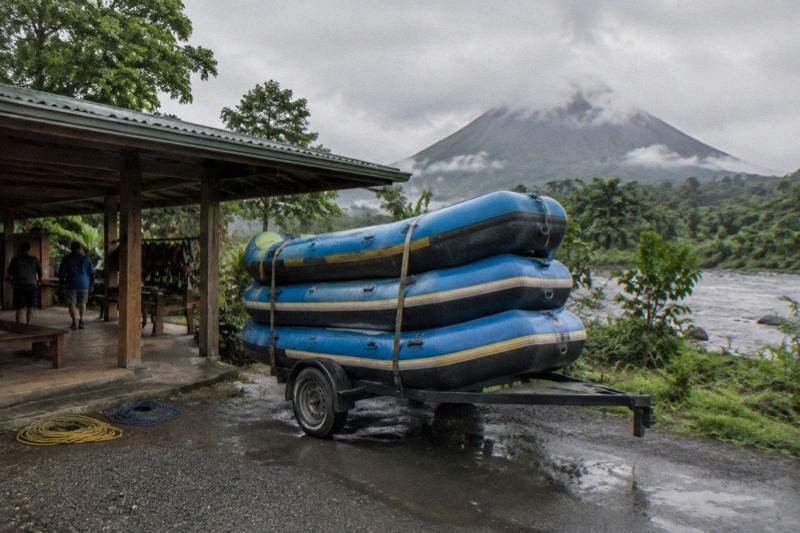
Sarapiqui Vs Balsa River Rafting Compared
Both rivers run out of the northern lowlands near La Fortuna, and both are sold as day trips, but they are not the same product. The Balsa is the gentler, beginner-oriented run, typically Class II-III, while the Sarapiqui offers a Class II-III family section and a more demanding Class III-IV section on a rain-fed, undammed river.
Short answer
The Balsa River is typically Class II-III and suits beginners and relaxed groups; operators who run both describe the Sarapiqui Class III-IV section as more challenging, with stronger paddling required. The Sarapiqui also offers a family Class II-III run. Drive time from La Fortuna to the Sarapiqui launch area is about 1 hour to 1 hour 10 minutes.
The Balsa and the Sarapiqui sit on opposite sides of the same question: how much white water do you actually want on your day off from La Fortuna? Operators who run both rivers answer it the same way in their own comparisons: the Balsa is typically Class II-III and built for first-timers, while the Sarapiqui carries a Class II-III family section and a Class III-IV section that demands more from the paddle team. This site sells only Sarapiqui trips, 31 of them, so the comparison below is candid about that: the Balsa numbers here come from what verified operator sources state, and every bookable link leads to a Sarapiqui listing. If you want the fuller picture beyond rapid class, our side-by-side look at the Balsa and Sarapiqui rivers weighs season, access, and family fit on both waterways.
Two things shape the difference more than anything else. The Sarapiqui is rain-fed and undammed, so its rapid class moves with the water, reported Class II-III at lower dry-season flows and up to Class III or IV after heavy rain. And the two rivers sit on different sides of La Fortuna, which changes your morning considerably.
How Do The Sarapiqui And Balsa Rivers Compare?
The Balsa is the mellow sibling: operators consistently describe it as typically Class II-III, a run built for beginners, mixed groups, and anyone who wants waves without a workout. The Sarapiqui runs two distinct products, a Class II-III family section and a Class III-IV section that operator comparisons describe as more challenging, requiring stronger paddling than the Balsa.
That line, "more challenging and requiring stronger paddling than the Balsa River", comes straight from operator comparison pages that sell both rivers, so it is not marketing for one side. The practical translation: on the Balsa you can paddle softly and still be fine; on the Sarapiqui Class III-IV run, the guide will need the whole boat working through the drops.
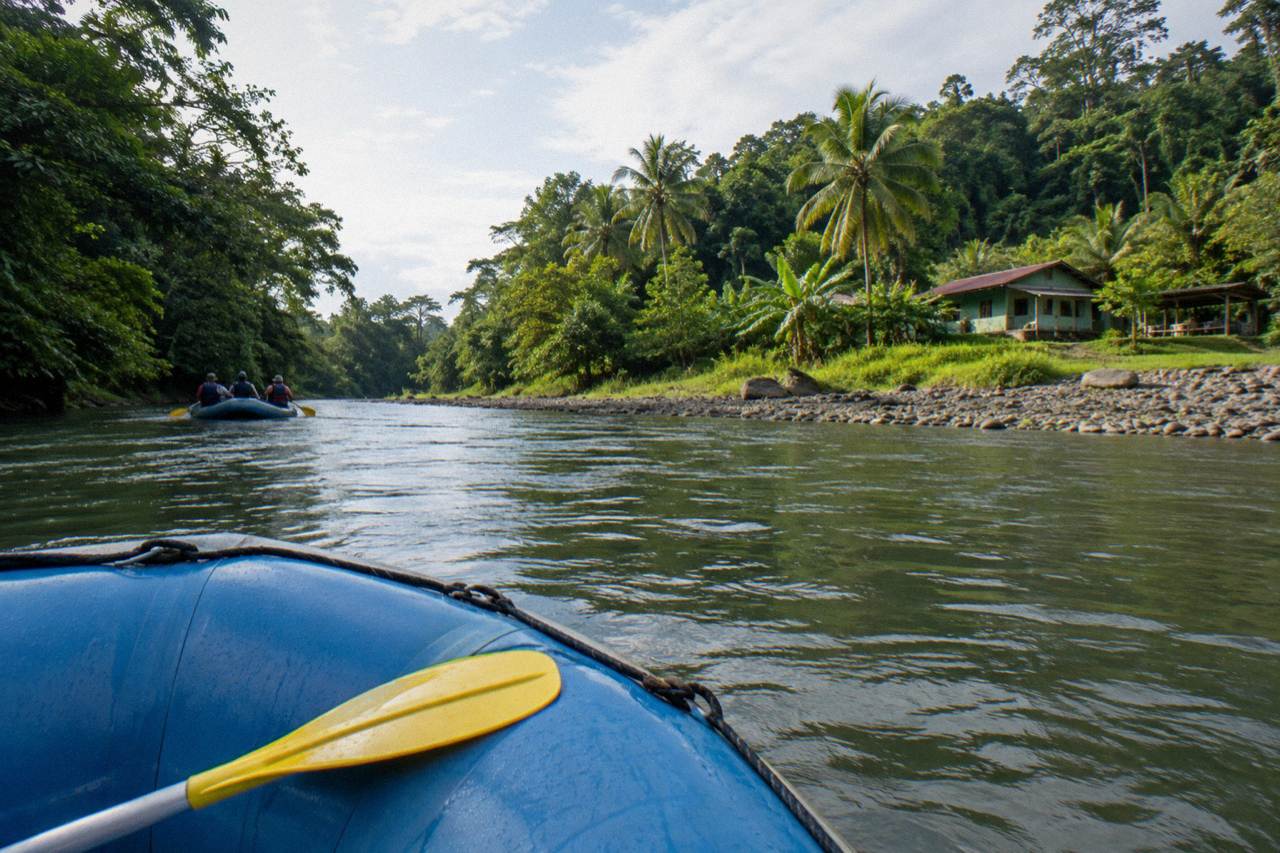
The character differs too. The Sarapiqui flows through dense lowland jungle, and guests commonly report wildlife along the banks, including sloths, monkeys, toucans, iguanas, and aquatic birds, with caimans reported in calmer stretches. No sighting is ever promised, on either river; wildlife appears when it appears. What the listings do promise, and what you can compare on paper, is class, duration, departure point, price, and inclusions.
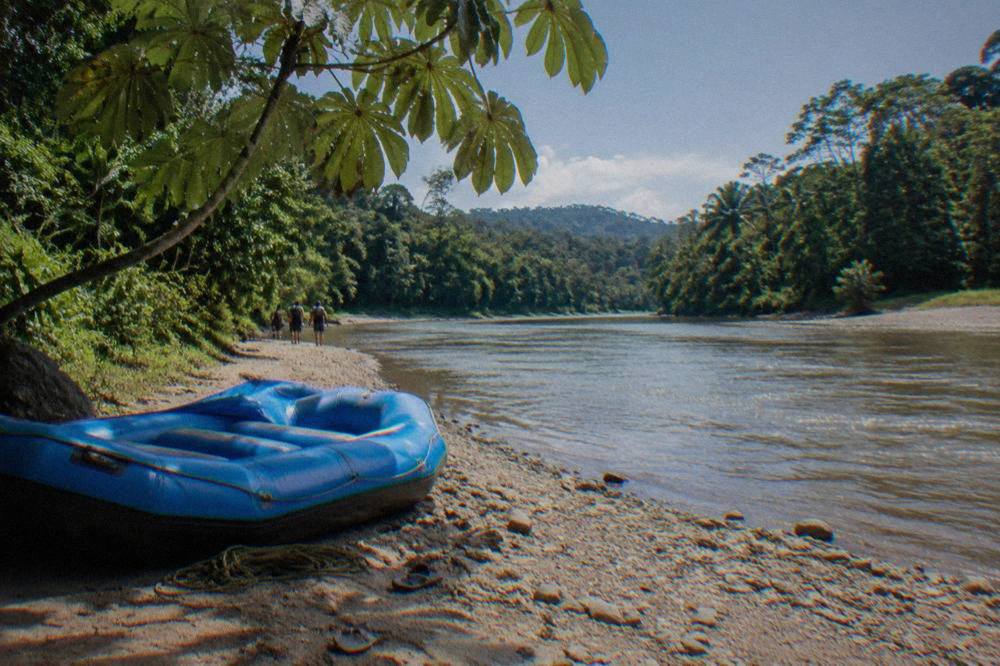
For a side-by-side with the country's other famous run, see the Sarapiqui versus Pacuare comparison; the Pacuare's remote gorge puts it in a different conversation from both of these.
Which River Is Closer To La Fortuna?
Neither river is far, but the logistics differ. Verified drive-time figures put La Fortuna to Puerto Viejo de Sarapiqui at about 1 hour to 1 hour 10 minutes direct, roughly 46 miles. The Balsa put-in lies closer to La Fortuna, which is why it dominates the short half-day market there, while Sarapiqui trips absorb the drive with lunch and full-day pacing.
The drive matters more than it sounds. Many Sarapiqui listings from La Fortuna are 5 to 8 hours total, not because the river takes that long, but because the listing duration covers hotel pickup, the drive, the safety briefing, the run, lunch, and the return. A typical example: the Class III-IV trip from La Fortuna rated 4.9 from 136 reviews runs 6 hours from $122.04 per person with hotel pickup and drop-off included and lunch on the list. A shorter option, the most reviewed listing on this site, is a 5-hour Class III-IV trip from $85 per person, rated 5.0 from 845 reviews, with hotel transport for hotels within about 6 km of the operator's main office.
Departure area is worth checking on every listing, and the differences are real. Some trips leave from La Virgen de Sarapiqui at an operator base, where hotel pickup is excluded and a van takes you to the river and back, which is exactly how the Family Rafting Class II-III trip works. Others include hotel pickup in La Fortuna outright. Never assume; the listing states it.
If you are routing the whole day yourself, the guide to rafting near La Fortuna and Arenal breaks down which departures make sense from that base.
What Class Of Rapids Does Each River Carry?
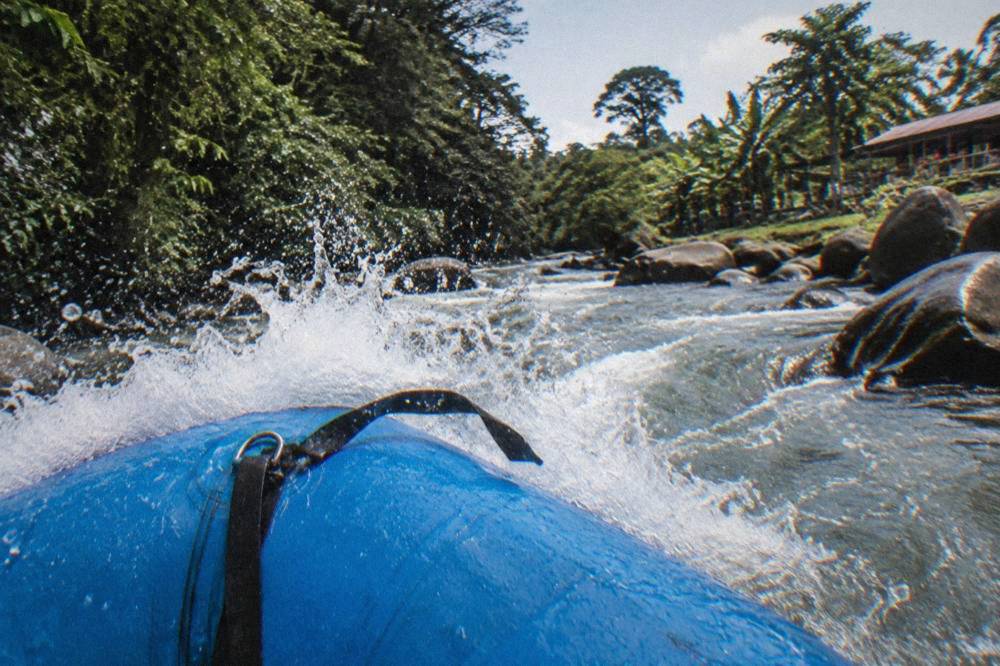
The Balsa holds at typically Class II-III year-round in operator descriptions, a ceiling rather than a range. The Sarapiqui is rated Class II-III on its family section and Class III-IV on its Jungle Run section, and because the river is undammed and rain-fed, those ratings flex with water level: lower flows read Class II-III, high water pushes sections toward Class III or IV.
If you have never paddled before, the Costa Rica rapids classes explained page unpacks what those Roman numerals feel like in the boat. The short version: Class II is splashy fun with easy lines, Class III adds real drops and maneuvering, and Class IV means continuous, powerful water where the guide's commands are not optional.
One honest caveat that applies to both rivers: trips get cancelled or rerouted in high water, flooding, or road closures, and operators say so plainly. Route 32 through Braulio Carrillo has seen repeated rainy-season landslide closures, with alternate routes via Turrialba or Bajos de Chilamate. If you are driving yourself to La Virgen, check road status the day before.

Which River Suits Families And First-Time Rafters?
If the group includes children or nervous adults, either river can work, but the details decide it. On the Sarapiqui, the Class II-III family run is the match, and one listing states a minimum age of 6 with groups up to 24 guests, lunch included, from $85 per person, rated 4.9 from 200 reviews. Cheaper still, a 3-hour Class II-III trip from $60 per person carries a 5.0 rating from 59 reviews.
The Balsa markets itself squarely at this same audience, which is why it is often the default first rafting trip sold in La Fortuna. The argument for choosing the Sarapiqui family run instead is twofold. First, the price floor is genuinely low for a 3-hour trip: the budget listing above includes equipment, certified guides, a snack of cookies and fruit, and a towel. Second, the jungle corridor and the wildlife commonly reported along it give the calm stretches something to look at.
Age rules are not decoration in Costa Rica. The national rafting norm, INTE G60-1:2019, sets minimum participant ages by rapid class: under 5 no class at all, ages 5 to 7 Class I and II only, ages 8 to 11 up to Class III, and ages 12 to 17 up to Class IV, per the published norm. Operators then set their own, often higher, minimums, so always check the listing. For the full picture, see rafting age and weight limits.
Which River Suits Stronger Paddlers?
There is no contest here: the Balsa tops out where the Sarapiqui begins. Operators describe the Sarapiqui Class III-IV Jungle Run as the more demanding river, requiring stronger paddling, and its listings run from $85 to $160 per person with durations from 3 to 8 hours. Paddlers who want the biggest water this area offers are choosing the Sarapiqui, specifically its Class III-IV section.
The standout by review volume is the 5-hour Class IV trip from La Fortuna, rated 5.0 from 845 reviews, from $85 per person, with lunch, fresh fruit, towels and bottled water on the inclusion list. Tighter and smaller is the Class 3-4 trip from La Fortuna, 6 hours from $122.04 per person, rated 4.9 from 136 reviews, capped at 25 guests with hotel pickup and drop-off included. And departing the La Virgen base rather than La Fortuna, the Extreme White Water Adventure Class III & IV runs 3 hours from $85 per person, rated 5.0 from 108 reviews, with a stated minimum age of 14 and up to 18 guests per group. The full index of guides sits on Sarapiqui River Rafting.
Can a beginner handle Class IV? That question deserves its own honest answer, and it has one: can a beginner do Class 4 rapids walks through what operators actually require. The national norm permits ages 12 to 17 on Class IV water, but individual listings commonly set minimums of 12 to 15, and several Sarapiqui Class III-IV listings here state 14 or 15. Fitness disclosures matter as well: operators are required to inform participants of restrictions, and pregnancy, certain cardiovascular conditions and limited mobility are commonly listed as not recommended.
Guides on both rivers are credentialed under national law. The guide competency norm INTE G60-2:2019 requires national certification in rafting and swiftwater rescue plus current first aid and CPR, and the adventure-tourism regulation, Decreto 39703-S-TUR, requires operators to use ICT-credentialed or approved personnel.
| Listing | Class | Duration | From (per person) | Rating | Departure |
|---|---|---|---|---|---|
| Class IV from La Fortuna | III-IV | 5 hours | $85 | 5.0 from 845 reviews | La Fortuna, pickup within about 6 km |
| Class 3-4 Rafting, 6 Hours | III-IV | 6 hours | $122.04 | 4.9 from 136 reviews | La Fortuna, pickup and drop-off included |
| Class III-IV Extreme, 3 Hours | III-IV | 3 hours | $85 | 5.0 from 108 reviews | La Virgen base, minimum age 14 |
| Premium Class III-IV Day | III-IV | 8 hours | $160 | No rating on file | La Fortuna / Arenal, pickup included |
How Does The Season Change Each River?
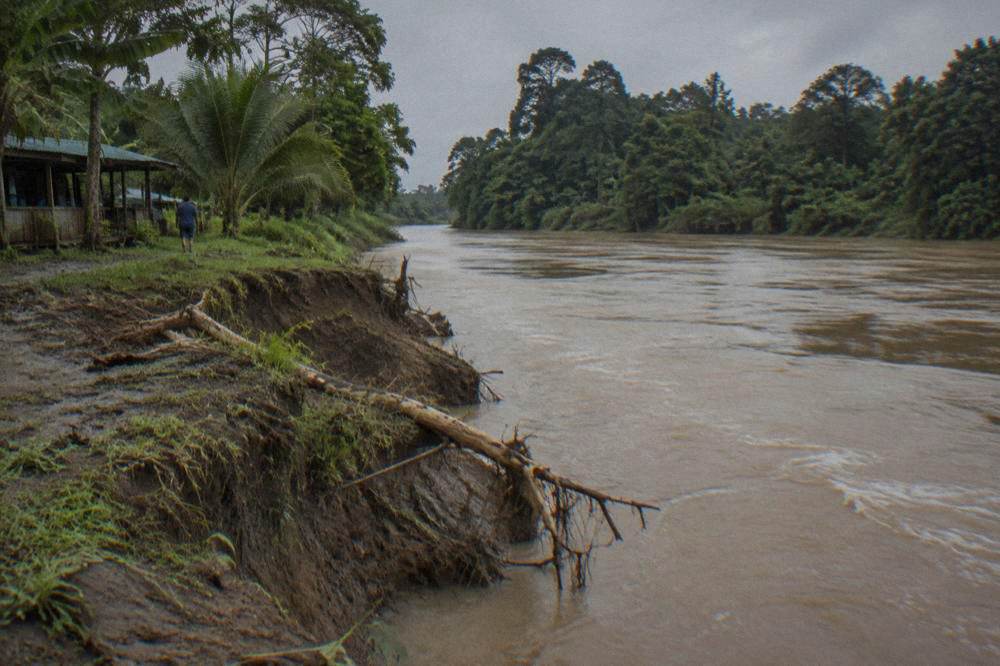
The dry season, December to April, brings lower and more predictable flows, when the Sarapiqui's family section reads Class II-III and suits beginners. The green season, May to November, raises flows, pushing Sarapiqui rapids toward Class III-IV with stronger currents and bigger waves. The Balsa's typical Class II-III description holds, but it also rises with rain; no operator promises either river's class on a given day.
The numbers behind the pattern are stark. The Sarapiqui lowlands average about 3,464 mm of rain a year based on 1990 to 2020 climate normals. November is the wettest month, about 445 mm across roughly 17 rainy days; April is the driest, about 117 mm over about 8 rainy days. Daytime air temperatures hold around 28 to 30 C year-round, so cold is never the issue, water level is.
For planning purposes, month-level detail is not tabulated here beyond those anchors, and any source quoting exact monthly river levels for either river is guessing. What you can plan on: dry season for the friendliest water and the most predictable family trips, June through October if you want the biggest, most dynamic rapids of the year, and a genuine possibility of cancellation or rerouting after major rain events on either river. The month-by-month picture, such as it can honestly be drawn, is in Sarapiqui river levels and rapid class by season.
| Factor | Dry season (Dec to Apr) | Green season (May to Nov) |
|---|---|---|
| Sarapiqui family section | Class II-III, predictable flows | Higher water, stronger currents |
| Sarapiqui Jungle Run | Class III-IV | Up to Class IV after heavy rain |
| Balsa River | Typically Class II-III | Same class, bigger waves |
| Rainfall anchors | April driest, about 117 mm over 8 rainy days | November wettest, about 445 mm over 17 rainy days |
| Trip operation | Most predictable | Cancellations and reroutes possible |
How Do Prices And Inclusions Stack Up?
Across this site's 31 Sarapiqui listings, per-person prices run from $60 (a 3-hour Class II-III trip) to $160 (an 8-hour premium Class III-IV day), with one multi-day package at $556 per person and a private zipline-plus-rafting combo at $335 per group. This site sells no Balsa listings, so no honest Balsa price catalogue can be printed here; check any Balsa operator's live listing directly.
That last clause is the honest limit of this comparison. Market snapshots in fresh operator research put typical half-day trips around $70 to $85 and full days near $130, but those are not catalogue prices from this roster, so they are not printed here as bookable figures. What the roster does show is that the Sarapiqui price ladder is wide enough to match almost any Balsa budget anyway, and with firm, published numbers.
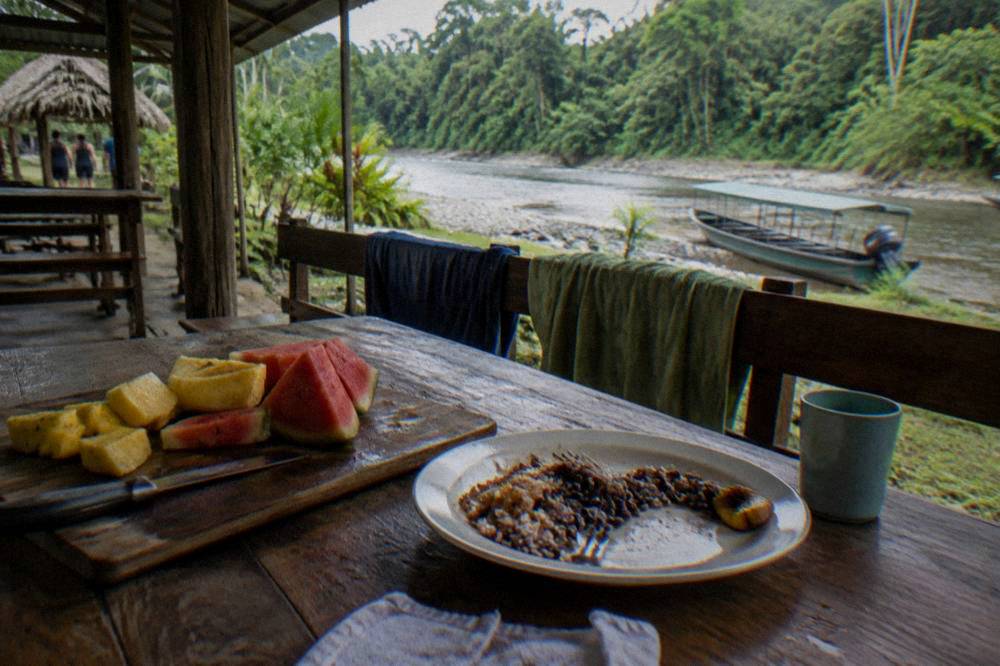
Inclusions vary more than prices. Some listings bundle lunch, snacks, towels, lockers, changing rooms and even WiFi at the base; the budget $60 trip includes equipment, guides, a fruit-and-cookie snack and a towel but not hotel transport; others include round-trip hotel pickup and drop-off. Free cancellation is listed on every trip in the roster. Photos are almost universally sold separately.
| What varies across Sarapiqui listings | Range on the roster |
|---|---|
| Price per person | From $60 to $160 |
| Total trip duration | 2.5 hours to 10 hours |
| Group size (where stated) | Up to 15 to 50 guests |
| Hotel pickup | Included on some, excluded at the La Virgen base, not stated on others |
| Meals | Lunch listed on most; snack-only on the budget trips |
For the full inclusion-by-inclusion breakdown across every price bracket, the Sarapiqui rafting cost and inclusions guide goes line by line.
Which River Should Your Group Actually Book?
Most groups should book the Sarapiqui: it matches the Balsa's gentle Class II-III water at a lower floor price, and it is the pick if anyone wants real white water, the Class III-IV option, or a full-day jungle itinerary with lunch. Book the Balsa only when your single criterion is the shortest possible morning with gentle water. That is what this site's own booking pattern shows: shortlisting readers pick the Sarapiqui whenever it fits their group.
Decision cues, in order of how much they should move you. Children under 8: the family run at La Virgen states minimum age 6, so it wins by rule where other listings say check the listing. Mixed ability group: the Class II-III section keeps everyone paddling without anyone panicking. Confident swimmers wanting a story: the Class III-IV listings, from $85 per person with the biggest review pool in the roster at 845 reviews. Staying in San Jose rather than La Fortuna: several listings depart San Jose with hotel pickup, including a 10-hour Class II-III day from $105 per person and Class III-IV connection trips at $122 per person, covered in rafting from San Jose to Sarapiqui.
There is also a protection angle worth knowing, because it explains why this river stays wild: Law No. 10152 of 2022 established a 25-year renewable environmental safeguard along the Sarapiqui's main channel and banks, prohibiting new hydroelectric projects and new mining extraction concessions. The river you paddle is protected by statute, not accident.
Every listing carries free cancellation, so the cost of choosing slightly wrong is low.
Common Questions About Sarapiqui Vs Balsa River Rafting
Is the Balsa River easier than the Sarapiqui?
Generally yes. Operator comparisons describe the Balsa as typically Class II-III and beginner-oriented, while calling the Sarapiqui's Class III-IV section more challenging and requiring stronger paddling. Note that the Sarapiqui also has a Class II-III family section, so the easiest Sarapiqui trip and the Balsa are closer in difficulty than the hardest Sarapiqui trip and the Balsa.
Which river is better for beginners near La Fortuna?
Both work for beginners, but the Sarapiqui's Class II-III listings start from $60 per person for a 3-hour trip and include certified guides and all equipment. National rules allow ages 8 to 11 on Class III water, and one family listing states a minimum age of 6. Check each listing's own minimum before booking.
Does the Sarapiqui have Class IV rapids?
Operators report a Class III-IV Jungle Run section, Class III-IV at dry-season levels and up to Class IV in high water, because the river is undammed and rain-fed. The exact class on any given day depends on flow, and operators reroute or cancel in extreme conditions.
How far is the Sarapiqui from La Fortuna?
About 46 miles, roughly 1 hour to 1 hour 10 minutes direct to the Puerto Viejo de Sarapiqui area, per verified drive-time figures. Many listings from La Fortuna run 5 to 8 hours total because the duration covers pickup, transport, the safety briefing, the run, lunch and the return.
Can kids do the Class III-IV Sarapiqui trips?
Legally, ages 12 to 17 may paddle Class IV under national norm INTE G60-1:2019. Individual listings often set higher minimums: Class III-IV trips on this roster state ages 14 and 15 where stated, and others say check the listing. The Class II-III family run is the right product for younger children.