Rafting Age And Weight Limits In Costa Rica
Costa Rica sets rafting minimum ages by rapid class in a national technical norm, and Sarapiqui operators layer their own, often higher, age and weight limits on top. Here is what the law says, what the listings say, and how families and stronger paddlers confirm eligibility before paying.
Short answer
The national norm INTE G60-1:2019 sets minimum ages by rapid class: under 5 may not raft at all, ages 5 to 7 may run Class I-II, ages 8 to 11 up to Class III, ages 12 to 17 up to Class IV, and adults 18 and over up to Class V. Individual Sarapiqui operators often set higher minimums, from 6 to 15 depending on the trip, plus weight and health checks.
The Sarapiqui River splits its trips into two eligibility worlds. The Class II-III family runs, like the Sarapiquí River Family Rafting Adventure Class II & III from La Virgen de Sarapiqui, list a minimum age of 6 and take up to 24 guests. The Class III-IV and Class IV runs, like the Sarapiqui River Extreme White Water Rafting Class IV trip from La Fortuna, sit behind a higher bar set first by Costa Rican law and then by each operator. Confusing the two is the single most common booking mistake on this river. Once everyone in your party clears the right cutoffs, the next common misstep happens at the packing stage, and our guide to rafting outfit mistakes on the Sarapiqui shows which items to leave at the hotel.
This guide lays out the national rules, the operator rules, and the health and weight questions in between. It draws on the Costa Rican national rafting norm, the roster of 31 bookable Sarapiqui trips on this site, and the operator policies reported in current sources. Nothing here promises a condition: the river is rain-fed and undammed, rapid class moves with water level, and the listing in force on the day you book is always the final word.
What Is The Minimum Age For White Water Rafting In Costa Rica?
Costa Rica does not have one national rafting age. The national technical norm INTE G60-1:2019 sets a minimum age for each rapid class: children under 5 may not raft at all, ages 5 to 7 may only run Class I and II, ages 8 to 11 may run up to Class III, ages 12 to 17 may run up to Class IV, and only adults 18 and over may run Class V. Class VI is never offered commercially.
The norm is published by the national standards body and applies to commercial rafting across the country, not just the Sarapiqui. Its age table is a floor, not a target: it says what is legally possible, not what any given operator will accept. A Class III-IV trip on the Sarapiqui is therefore legally open from age 12, never below, while a Class II-III family float is legally open from age 8. Operators are free to set their own limits above these floors, and on this river they routinely do: current operator policies commonly set minimum ages of 8 to 12 for Class II-III sections and 12 to 15 for Class III-IV sections, as multiple operator sites report.
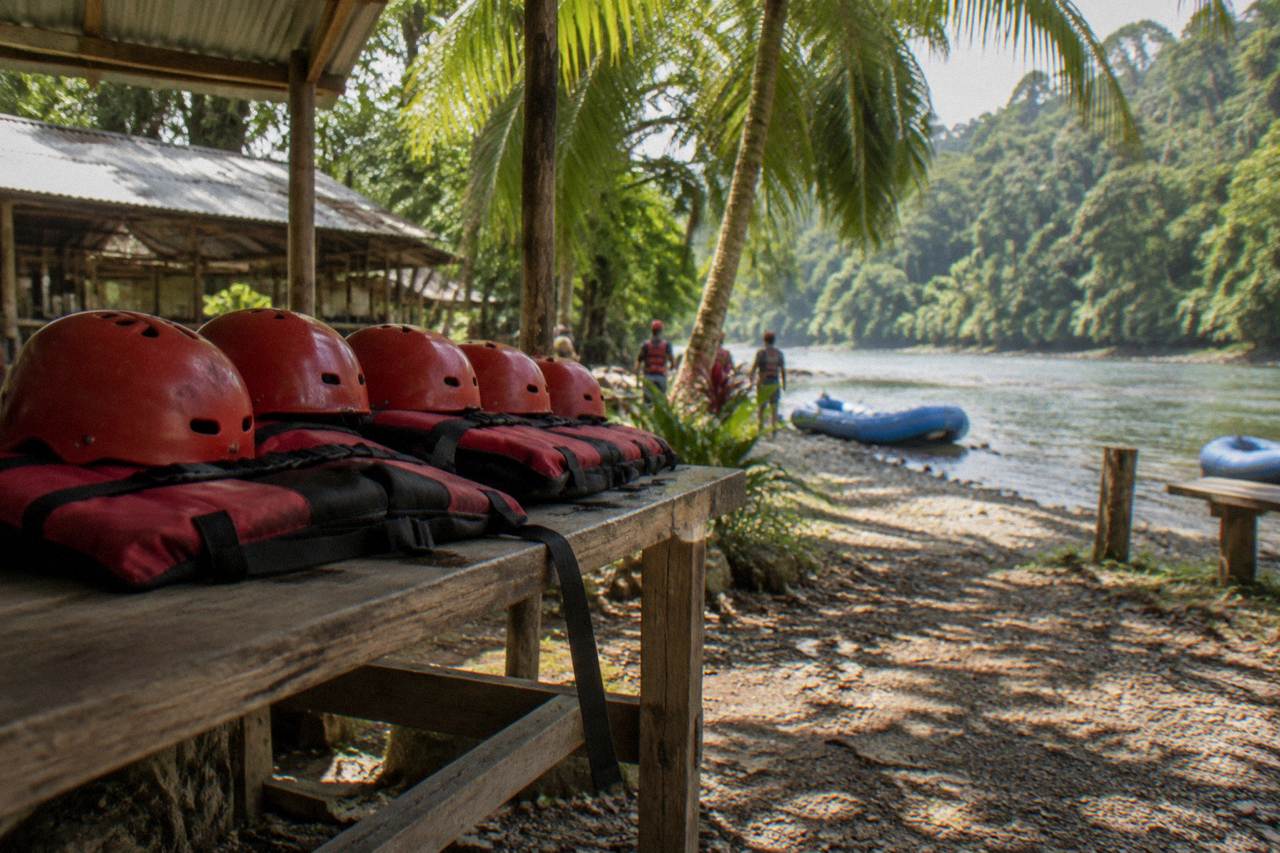
The same norm gives operators two duties that matter to families. They must tell participants the minimum age for the activity according to the rapid classification, and they must supply and verify a helmet and a life jacket for every participant. The life jacket must meet a specified buoyancy, for example 22 lbs for Class III and above. So when a Sarapiqui listing states a minimum age, it is stating a figure the operator is required to communicate, which is one reason the numbers on listings are specific rather than vague.

| Participant age | Rapid classes permitted | What it means on the Sarapiqui |
|---|---|---|
| Under 5 | None | Cannot join any commercial rafting trip |
| 5 to 7 | Class I and II only | Too young for even the family Class II-III runs listed here |
| 8 to 11 | Class I, II and III | Legal for Class II-III family trips, subject to operator minimums |
| 12 to 17 | Class I, II, III and IV | Legal for Class III-IV runs, subject to operator minimums of 12 to 15 |
| 18 and over | Class I to V | All commercial classes open |
The full text of the norm is public: the rafting technical norm is published as a PDF on the national virtual learning platform, and it is worth reading the age table yourself if your group sits near a boundary. For a plain-language tour of what each class actually feels like on the water, see the companion guide on rapids classes explained for Costa Rica.
Which Sarapiqui Rafting Trips Can Children Join By Age?
Among the Sarapiqui listings on this site, stated minimum ages range from 4 on the wildlife safari float to 15 on the most demanding Class III-IV run from La Fortuna. Three listings state age 6 or 7 for Class II-III family trips, several state 8, and the Class III-IV group clusters at 12 to 15. Many listings defer to a check-the-listing note instead of printing an age at all.
Because the national norm is only a floor, the number that decides your booking is the one on the specific listing. The family trip from La Virgen de Sarapiqui states minimum age 6, includes lunch, and carries a 4.9 rating from 200 reviews at from $85 per person. The Near Arenal Class II-III tour states minimum age 7 and runs 8 hours total from La Fortuna, from $105.87 per person, with a 5.0 rating from 101 reviews. The 2.5-hour snacks trip departing Sarapiqui states minimum age 8. At the top end, the 6-hour Class 3-4 trip from La Fortuna states minimum age 15, and the 5-hour Class III-IV extreme run from La Fortuna states minimum age 14.
Note the pattern: operators do not simply copy the legal floor of 12 for Class IV water. They add margin, because a 12-year-old who is legally allowed on Class IV may not have the paddling strength a big-water day demands. The listing minimums are the operator's honest translation of that judgment.
| Sarapiqui listing | Rapid class | Stated minimum age | Other eligibility notes on the listing |
|---|---|---|---|
| Family Rafting Class II-III, La Virgen | II-III | 6 | Up to 24 guests, lunch listed |
| Near Arenal Class II-III, La Fortuna | II-III | 7 | Up to 15 guests, lunch listed |
| 2.5-Hour Rafting with Snacks, Sarapiqui | II-III | 8 | 2.5 hours total, snacks only |
| Class III-IV Extreme, La Virgen | III-IV | 14 | Up to 18 guests, lunch listed |
| Class 3-4 from La Fortuna, 6 hours | III-IV | 15 | Up to 25 guests, hotel pickup listed |
| Wildlife Safari Float, La Virgen | Float | 4 | Gentle float, up to 50 guests |
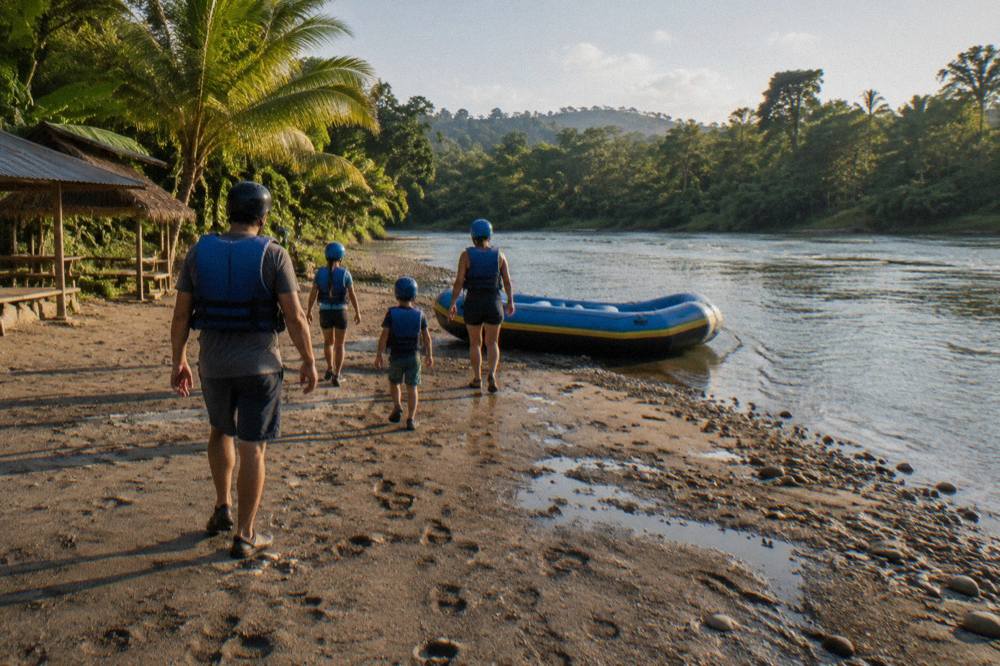
Where no age is printed, treat the listing's fine print as the gate. The budget 3-hour Class II-III run from La Virgen, from $60 per person with a 5.0 rating from 59 reviews, leaves the minimum age to the listing, as does the full-day Class II-III departure from San Jose. For a fuller walk-through of matching children to water, the dedicated guide on rafting with kids in Costa Rica covers packing, ages and expectations together.
Are There Weight Limits For Sarapiqui Rafting Trips?
No national law sets a rafting weight limit in Costa Rica. The national norm requires operators to verify that every participant's safety equipment fits and functions, and in practice Sarapiqui operators apply their own weight ranges, commonly reported around 100 to 120 kg as an upper bound, together with checks on whether a life jacket and helmet fit properly. Each listing's terms govern. Age rules follow the same pattern, and if you're rafting with children, our guide to kids and Costa Rica's toughest rapids explains the legal minimums plus the stricter cut-offs Sarapiqui outfitters prefer.
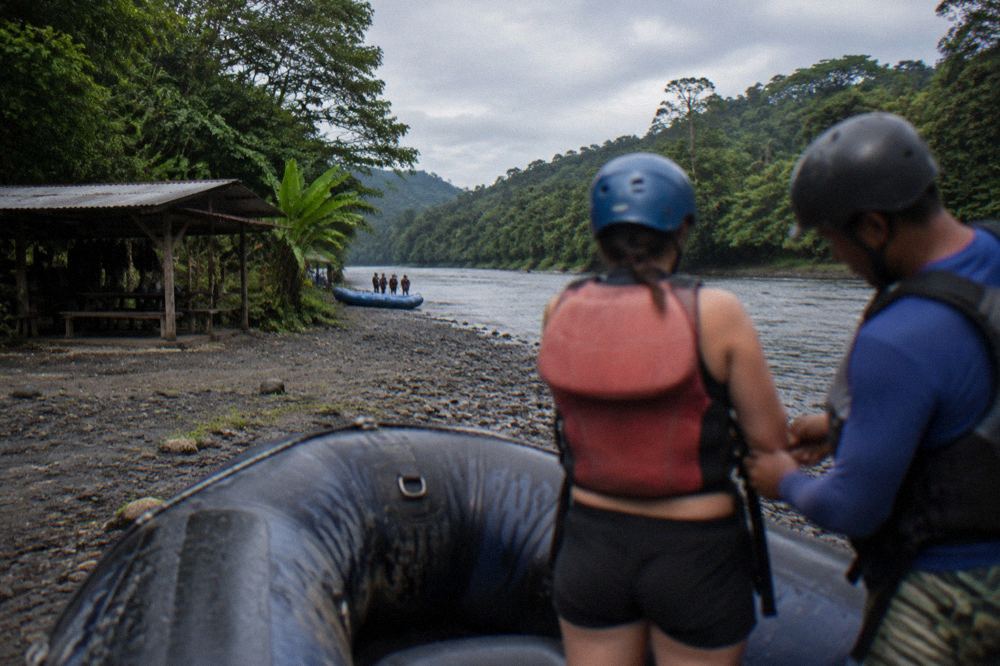
The reason weight matters is equipment, not stamina alone. A personal flotation device only works if it fits and is rated for the water class, and the norm requires operators to supply and verify helmets and life jackets for every participant. Operators also ask about physical condition: current operator policies commonly require swimming ability and good physical condition on the Class III-IV runs, and the national norm requires health and physical condition disclosures, with pregnancy, certain cardiovascular conditions, low mobility and obesity commonly listed by operators as restrictions or not recommended.
None of the Sarapiqui listings on this site prints a numeric weight limit in its public inclusions, so the honest instruction is: check the listing before you book, and answer the operator's health questions truthfully. The most reviewed trip on this site, the Sarapiqui River Extreme White Water Rafting Class IV run from La Fortuna, 5.0 from 845 reviews at from $85 per person, puts its eligibility terms on the live listing rather than in the marketing copy. Check availability and read the requirements section before committing; free cancellation is listed on that trip.
| Eligibility factor | What the national norm says | What operators commonly add |
|---|---|---|
| Weight | No statutory number; equipment must fit and be verified | Upper bounds around 100 to 120 kg reported by operators |
| Swimming ability | Not fixed in the norm's public excerpts | Often required on Class III-IV runs |
| Physical condition | Health disclosures required | Good physical condition commonly required on Class IV water |
| Equipment fit | Helmet and PFD mandatory, supplied and verified by operator | Fit check at the river before launch |
For a wider view of who each trip type suits, the Class II-III family float guide pairs ages with water difficulty on the gentler runs.
What Health Conditions Affect Rafting Eligibility On The Sarapiqui?
Pregnancy, certain cardiovascular conditions, low mobility and obesity are commonly listed by Costa Rican operators as restrictions or as not recommended, and the national rafting norm requires operators to collect health and physical condition disclosures before a trip. None of these is automatically a blanket ban: the operator decides trip by trip, which is why the disclosure form matters.
The disclosure is not paperwork theater. On a Class III-IV run, paddling is continuous physical work in moving water, and the operator's guide team is responsible for rescue and group leadership if a raft flips. A guide certified under the national competency norm INTE G60-2:2019 holds certification in rafting and swiftwater rescue plus current first aid and CPR, as the guide competency norm states, but no certification removes the need for honest health information from guests.
Practical guidance follows from this. Declare the condition when you book, not at the river bank. If a condition rules out the Class IV run, the river still has two other doors: the Class II-III runs, and the wildlife safari float from La Virgen, which lists a minimum age of 4, takes up to 50 guests, and includes lunch and a sugar cane tour, from $90 per person. The float is not rafting and carries no whitewater claim; it is the gentle option on the same water.
Afternoon timing can also help families and cautious first-timers: the Class 2-3 Sarapiqui afternoon trip from La Fortuna runs 5 hours total, includes lunch, and carries a 4.8 rating from 39 reviews at from $92.66 per person. Its minimum age sits on the listing.
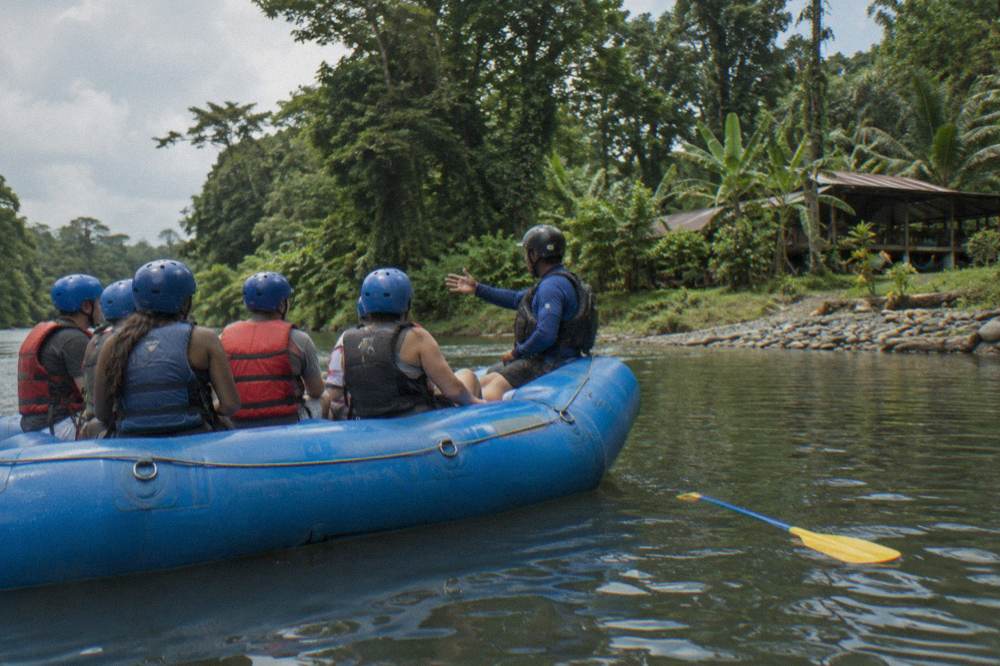
How Old Must A Guide Be, And What Certification Must They Hold?
Costa Rican rafting guides must hold national certification in rafting and swiftwater rescue, maintain current first aid and CPR certification, and meet minimum age and regulatory compliance requirements under the guide competency norm INTE G60-2:2019. The adventure tourism regulation additionally requires operators to use ICT-credentialed or ICT-approved qualified personnel for rafting.
This matters to eligibility because the guide is part of the safety system that makes age and health limits work. A certified guide performs safety, rescue and group leadership functions on the water; the adventure tourism regulation, Decreto 39703-S-TUR and its updates, ties that to ICT credentialing. When a Sarapiqui listing mentions internationally certified guides, as the La Virgen family and extreme listings do, it is pointing at this framework.
Guests cannot audit a guide's certificate from the raft, but they can ask. Two questions at booking are reasonable: whether guides hold the national rafting certification, and what the minimum age and weight terms are for the specific trip. Operators who answer both plainly are the ones whose listings tend to state ages and equipment duties explicitly.
| Requirement | Source | What a guest can check |
|---|---|---|
| Minimum age by rapid class | INTE G60-1:2019 | Compare your child's age to the trip's class and the listing minimum |
| Helmet and PFD supplied and verified | INTE G60-1:2019 | Gear handed out and fitted before launch |
| Guide rafting and swiftwater rescue certification | INTE G60-2:2019 | Ask the operator at booking |
| First aid and CPR current | INTE G60-2:2019 | Ask the operator at booking |
| ICT-credentialed or approved personnel | Adventure tourism regulation | Ask whether the operator is a registered adventure operator |
How Do You Confirm Your Group Qualifies Before Booking A Sarapiqui Trip?
Confirm three things in order: the trip's rapid class against the national age table, the listing's own minimum age and weight terms, and the health disclosure questions. Book only when all three clear, and prefer listings with free cancellation listed so an unanswered eligibility question does not lock your money.
Worked through, the method is short. Say your group is two adults, a 13-year-old and a 9-year-old, staying in La Fortuna. The national table says the 13-year-old is legal on Class IV water, but the 6-hour Class 3-4 trip states minimum age 15, so that door closes at the operator level; the Class II-III runs are legal and listed for the 9-year-old on several departures. The practical answer is a Class II-III family trip from La Fortuna or the operator base at La Virgen, and this is exactly the comparison Sarapiqui River Rafting exists to make: matching the ages in your group to the trips that will actually take them.
| Step | Question to settle | Where the answer lives |
|---|---|---|
| 1 | What rapid class is this trip? | The listing's class label, for example Class II-III or Class III-IV |
| 2 | Is everyone over the legal floor for that class? | The national age table above |
| 3 | Is everyone over the operator's minimum age? | The listing's stated minimum age |
| 4 | Do weight or health terms affect anyone? | The listing's requirements and the booking health questions |
| 5 | Can you cancel if a question stays open? | The listing's cancellation terms |

One more eligibility angle deserves plain honesty: no official published statistics on rafting-specific incidents in Costa Rica were identified in searches of the tourism and emergency authorities, so no site can honestly quote you a risk rate. What you can verify is structural: the norm, the certification chain, the equipment duty and the operator's own terms. That is a better basis for a decision than an invented number. The same logic applies river by river, and our plain-language guide to whitewater rafting risk in Costa Rica shows what the national norms require and what a Sarapiqui listing should reveal before you book.
Beyond ages, the water itself sets eligibility in a way no table captures. The Sarapiqui is rain-fed and undammed: operators report Class II-III conditions at lower dry-season flows and up to Class III or IV after heavy rain, and trips are cancelled or rerouted in high water, flooding or road closures. A family cleared for the Class II-III run in April may meet a different river in November, and the operator's call on the day stands. The companion guide on Sarapiqui river levels and rapid class by season covers that side of the decision.
For travelers who want the demanding water, the Class 4 rafting trip from La Fortuna with lunch, from $122.04 per person with a 5.0 rating from 29 reviews, states its minimum age on the listing, as does the Class III-IV extreme 3-hour run from La Virgen at minimum age 14.
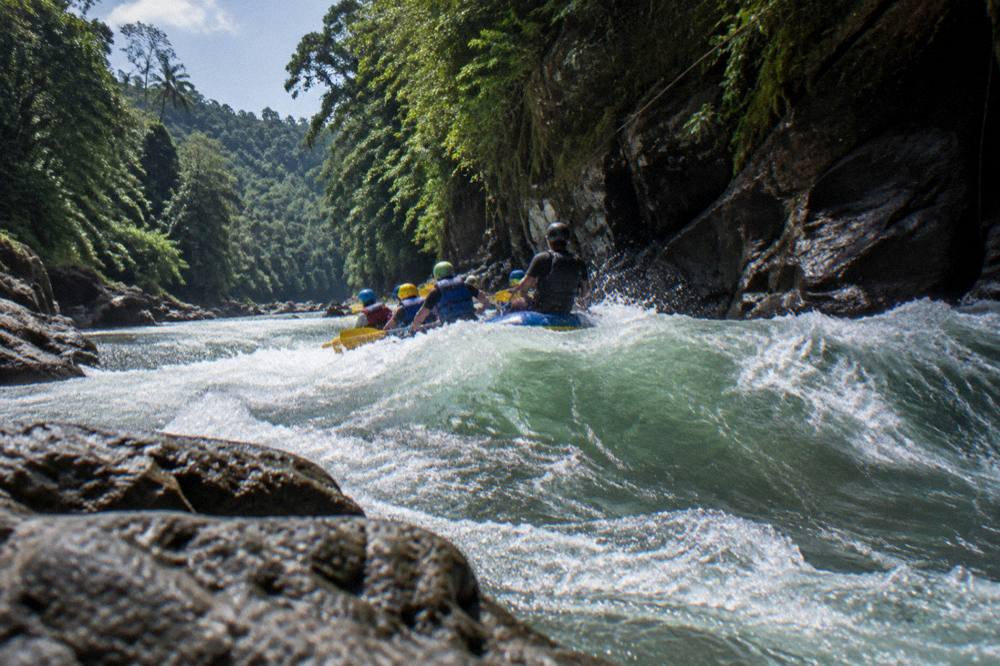
A final planning note for mixed groups: splitting the party is normal on this river. La Virgen and the La Fortuna departures are close enough that one half of a family can run Class IV water the same morning the other half takes the safari float or the Class II-III run, and several listings on this site pair naturally that way. The distances involved, about 1 hour 30 minutes from San Jose and about 1 hour to 1 hour 10 minutes from La Fortuna to the Sarapiqui area, make a same-day split practical, weather and roads permitting.
Common Questions About Rafting Age And Weight Limits In Costa Rica
What Is The Minimum Age For White Water Rafting In Costa Rica?
Under the national norm INTE G60-1:2019, ages 5 to 7 may run Class I-II only, ages 8 to 11 up to Class III, ages 12 to 17 up to Class IV, and adults 18 and over up to Class V. Children under 5 may not raft at all. Operators set their own, often higher, minimums: on this site's Sarapiqui roster the stated ages range from 4 on the wildlife float to 15 on a Class III-IV run.
Can An 8-Year-Old Go White Water Rafting In Costa Rica?
Legally yes on water up to Class III. In practice it depends on the operator: the family Class II-III trip from La Virgen states minimum age 6, the Near Arenal Class II-III tour states 7, and another Sarapiqui listing states 8. Several listings print no age at all, so check the listing for the specific trip and date.
Is There A Weight Limit For Sarapiqui Rafting?
There is no statutory weight limit. The national norm requires operators to supply and verify properly fitting helmets and life jackets, and operator policies commonly report upper bounds around 100 to 120 kg, with fit and physical condition checks on top. The listing's own requirements section is the binding version.
Can You Go Rafting While Pregnant In Costa Rica?
Pregnancy is commonly listed by operators as a restriction or not recommended, and the national norm requires health and physical condition disclosures before a trip. The gentle wildlife safari float from La Virgen is a separate, non-whitewater option, but even there you should declare the pregnancy when booking.
Do Kids Need Their Own Life Jackets And Helmets?
Every participant needs properly fitting gear regardless of age. The national norm makes it the operator's duty to supply and verify a helmet and a life jacket for each participant, with specified buoyancy for Class III and above, and listings on the Sarapiqui include safety equipment among the standard inclusions.
What If The River Is Too High On The Day Of Our Trip?
The Sarapiqui is rain-fed and undammed, so rapid class moves with the water: operators report Class II-III at lower dry-season flows and up to Class III or IV after heavy rain. Trips are cancelled or rerouted in high water, flooding or road closures, and the operator's call on the day stands. Free cancellation is listed on the trips in this guide's picks.