Rapids Classes Explained: What Class II, III And IV Mean
Rapids classes are the shorthand every rafting listing uses, and on the Sarapiqui the same stretch of river can be Class II-III in March and Class III-IV in July. Here is what the numbers actually mean, in plain words, with real trips attached to each class.
Short answer
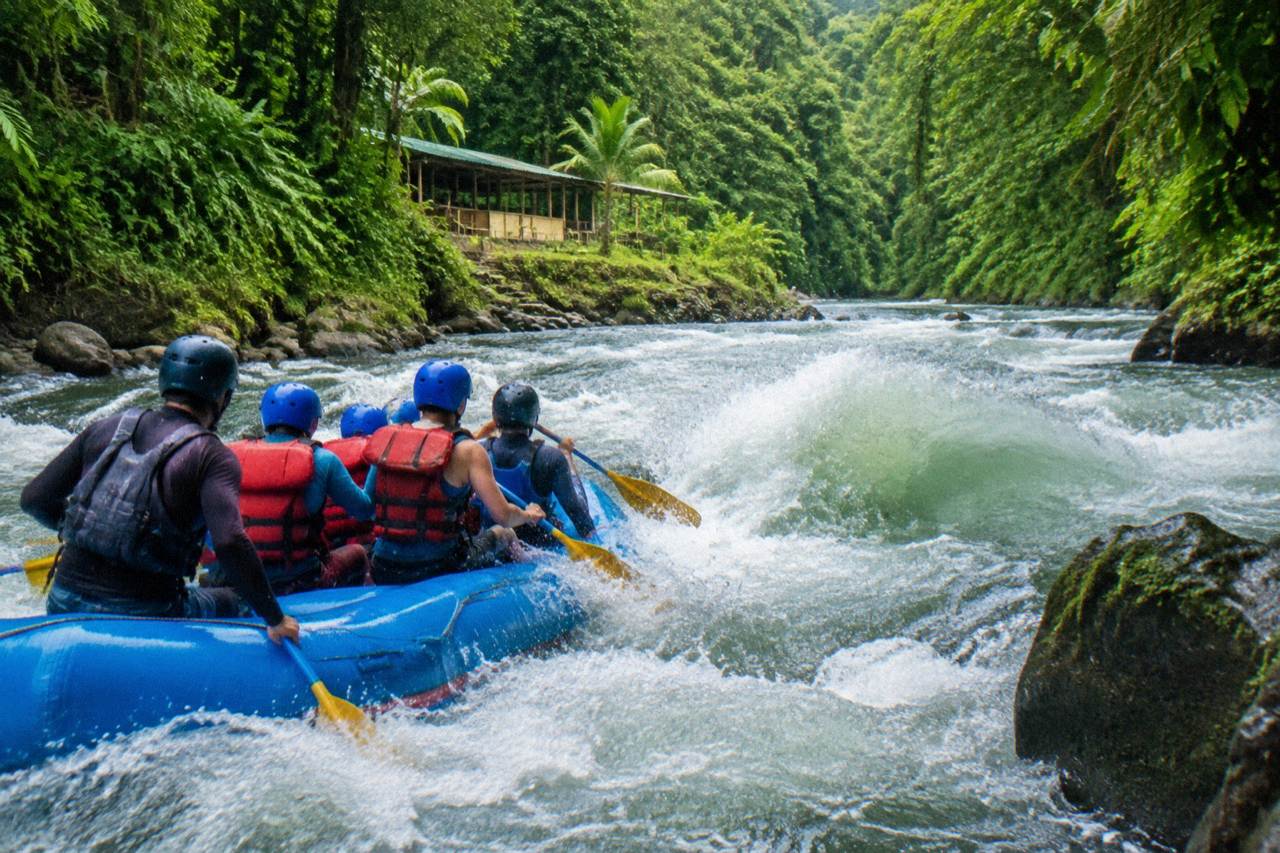
Class 3 rapids are moderate whitewater with irregular waves and narrow passages that need real paddling, the scale runs from Class I flat water to Class VI unrunnable, and the Sarapiqui offers Class II-III family sections plus Class III-IV jungle runs. Costa Rican norms set minimum ages by class: 8 for Class III, 12 for Class IV.
Rapids classes are the one number that tells you what a rafting day will feel like, and Costa Rica listings lean on them constantly. The scale, called the International Scale of River Difficulty, runs from Class I to Class VI, and every Sarapiqui trip on this site is described in its terms. The catch is that the Sarapiqui is rain-fed and undammed, so its rapids move between classes with the water: operators report Class II-III at lower dry-season flows and up to Class III or IV after heavy rain. That is the single most useful thing to understand before you book anything.
This guide explains each class in plain words, anchors every level to real Sarapiqui trips from the roster, and sets out the age rules that Costa Rica's national rafting norm attaches to each class. If you want the trip-by-trip version, the Sarapiqui rafting trips compared guide breaks down all 31 listings side by side.
What Is Class 3 Rapids On The International Scale?
Class 3 rapids are moderate whitewater: waves are moderate to large and irregular, rocks and drops create narrow passages that require maneuvering, and a trained guide reads the line while the crew paddles hard on command. Small waterfalls and eddies with force appear. Self-rescue is usually straightforward, but a swim here is a real swim, not a float.
The scale is a description, not a measurement. There is no gauge or machine that prints "Class 3" on a rapid. Guidebooks and operators grade each stretch by its waves, its drops, its constrictions and the consequence of a mistake, which is why the same rapid can be described slightly differently by two operators. On the Sarapiqui, operators describe it this way: an upper run graded Class II-III at lower flows becomes Class III at higher water, and the Jungle Run section graded Class III-IV in the dry season can reach Class IV when the river is up. The class you see on a listing is the operator's honest rating of typical conditions, not a ceiling.
A quick ladder of the whole scale, in the words used by operators on this river:
| Class | Plain-words description | Where you meet it on the Sarapiqui |
|---|---|---|
| Class I | Moving flat water, ripples, no maneuvering | Calmer sections and pool-outs between rapids |
| Class II | Small waves, clear channels, occasional steering | Family sections at normal dry-season flow |
| Class III | Irregular waves, narrow passages, guided maneuvering | The step-up sections most Sarapiqui trips run |
| Class IV | Powerful waves, precise lines, consequential drops | The Jungle Run at higher water |
| Class V | Long, violent, expert-only, serious rescue risk | Not sold as a commercial Sarapiqui trip |
| Class VI | Considered unrunnable | Not applicable |
One honest caveat: the boundary between classes is where judgment lives. A Class III+ appears on many operator pages, including descriptions of this river, to flag a rapid sitting on the border. When a listing says Class II-III, read it as "mostly II with some III," and when it says Class III-IV, read it as "mostly III with committed moments of IV." The beginners' version of all of this is in the first time rafting in Costa Rica guide.
What Are Class II-III Rapids Like On The Sarapiqui?
Class II-III on the Sarapiqui means rolling waves, clear but winding channels and a handful of named drops that ask for real paddling, all between calm stretches where you can look at the jungle. It is the family grade: legally open to ages 8 and up under the national norm, with most operators listing their own minimums of 8 to 12, and it is what 15 of the 31 trips on this site run.
The Class II-III trips are the workhorses of the valley. The Sarapiqui River Family Rafting Adventure Class II & III runs from $85 per person for 3 hours from the operator base at La Virgen de Sarapiqui, rated 4.9 from 200 reviews, with a listed minimum age of 6 and up to 24 guests, lunch included, hotel pickup excluded with a van taking you to the river and back. The budget end is Rafting Sarapiqui River Class II-III, from $60 per person for 3 hours, 5.0 from 59 reviews, departing La Virgen with up to 18 guests and no meal stated. The Aguas Bravas listing from Chilamate, from $70 per person for 3 hours, 4.9 from 101 reviews, includes lunch and drinks plus a fresh fruit buffet, and lets you schedule pickup from a Sarapiqui hotel.
What the grade feels like in the boat: you get wet, you paddle in sync when the guide calls it, and there are moments where the raft drops a foot or two and everyone shouts. Swims happen and are usually calm. Guides on these trips spend as much time pointing at the banks as calling strokes, because wildlife along the river, sloths, monkeys, toucans, iguanas and aquatic birds, is commonly reported by operators and guests on this grade. That is covered properly in the Sarapiqui River wildlife from the raft guide.
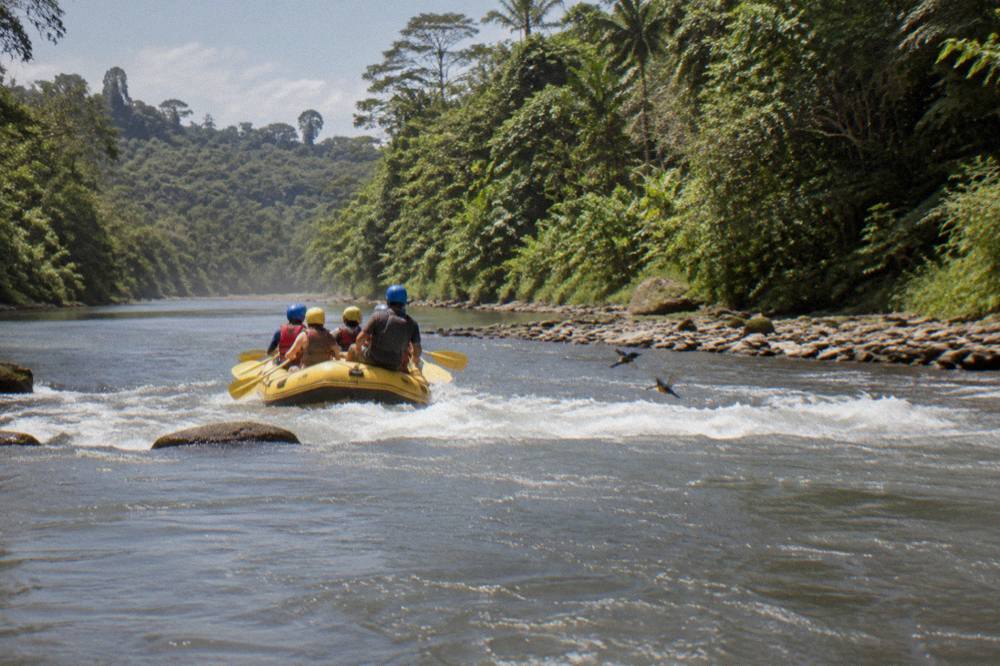
Two practical notes. First, the wildlife floats on the roster, like the 3-Hour Wildlife Safari Float from $90 per person from the same La Virgen base, are gentle float trips with no whitewater class claimed at all, so do not mistake them for the Class II-III runs. Second, Class II-III is also the grade of the connection trips that run between La Fortuna and San Jose with rafting in the middle, such as the Class 2-3 connection listing from $119 per person, 8 hours, hotel pickup and drop-off included with a traditional lunch. The class is the same, the day is very different.
What Are Class III-IV Rapids Like On The Sarapiqui?
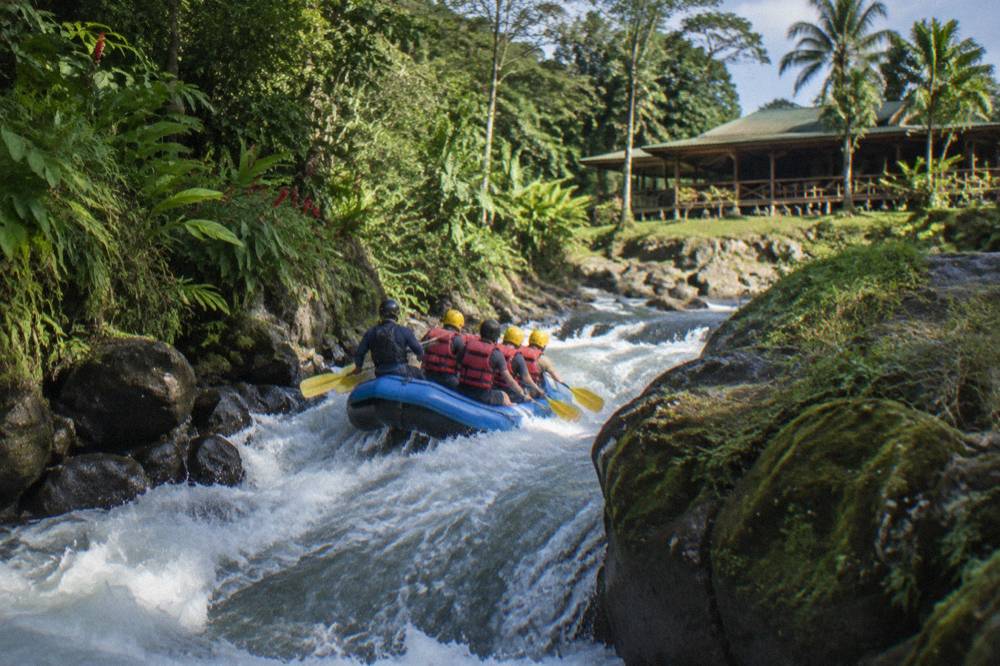
Class III-IV on the Sarapiqui is committed whitewater: big irregular waves, tight lines between rocks, drops that must be hit precisely, and paddling that does not stop between rapids. The national norm opens Class IV to ages 12 and up, operators list minimums of 12 to 15, and 10 trips on this site sell this grade, from $85 per person.
This is the Jungle Run end of the river, and the step up from the family grade is real. The featured listing on this site, Sarapiqui River Extreme White Water Rafting Class IV, is also its most reviewed trip: 5.0 from 845 reviews, from $85 per person, 5 hours from La Fortuna, with lunch, fresh fruit, towels, bottled water and hotel transport for hotels within about 6 km of the main office, and free cancellation listed. For readers deciding between a float and an upper trip, that listing is the benchmark for what a Class III-IV day from La Fortuna costs and includes.
The differences inside the grade come from the day built around it. Whitewater Rafting Sarapiqui Class 3-4 from La Fortuna, 4.9 from 136 reviews, from $122.04 per person for 6 hours, lists a minimum age of 15, up to 25 guests, hotel pickup and drop-off and a photographer with photos available for purchase. The Class IV Extreme listing, 4.9 from 29 reviews, from $85 per person for 5 hours, carries a listed minimum age of 14 and includes lunch and towels at the end. The Premium Class III-IV Day, from $160 per person for 8 hours, adds entry to Arenal Volcano National Park, food and drinks and a listed minimum age of 12. Same grade, three different days.
One thing worth knowing that first pages of search results rarely mention: operator comparisons put this river directly alongside its neighbors. The Sarapiqui Class III-IV section is more demanding and needs stronger paddling than the Balsa River, which typically runs Class II-III, and the Pacuare, also Class III-IV, is a remote gorge with a longer drive from La Fortuna. So "Class III-IV" is not a uniform product across Costa Rica, it is a floor of difficulty that each river expresses differently. The Sarapiqui versus Pacuare comparison unpacks that trade in full.
What Is The Difference Between Class 3 And Class 4 Rapids?
The difference between Class 3 and Class 4 is consequence. Class 3 requires maneuvering but forgives mistakes, with self-rescue being easy. Class 4 demands precise lines, powerful continuous paddling and scouting, and a mistake means a difficult rescue. On the Sarapiqui, the same rapid can sit on the border, which is why operators split the difference with the Class III-IV label.
In practice, three things change when a rapid steps from 3 to 4. Waves get taller and less predictable, so the guide must read water rather than follow a channel. Passages get narrower, so the crew's timing matters: a stroke two seconds late can spin the raft. And drops get steeper, so the consequence of swimming grows from "get back in" to "hold the rope, follow the guide's voice." That is why the national norm treats Class IV as the threshold requiring adult-level participation, from age 12 by law, with operators frequently setting it higher, and why the fresh safety file reports operator minimum ages of 12 to 15 for Class III-IV sections and 8 to 12 for Class II-III, with weight limits around 100 to 120 kg on some listings.
| What changes | Class 3 | Class 4 |
|---|---|---|
| Waves | Irregular, moderate to large | Large, powerful, irregular |
| Line | Readable, some steering | Precise, must be hit exactly |
| Paddling | Bursts with recovery | Continuous, no recovery |
| Scouting | Rarely needed | Often from the water, sometimes from shore |
| Swim outcome | Straightforward self-rescue | Difficult rescue, real risk |
For a reader asking whether they can handle the step up, the honest answer is that fitness and swimming confidence matter more than rafting experience, and that the listing's stated minimum age and any weight or condition notes are the binding rules. The rafting age and weight limits guide collects the roster's numbers in one place.
What Class Of Rapids Can Kids Raft In Costa Rica?
Costa Rica's national technical norm INTE G60-1:2019 sets minimum ages by rapid class: under 5 no class, ages 5 to 7 Class I and II only, ages 8 to 11 up to Class III, ages 12 to 17 up to Class IV, and 18 and over all classes. Operators may and do set higher minimums, so the listing's own age, not the law's floor, decides who boards.
That table is the single most useful piece of regulation on this topic, and it comes straight from the national rafting norm published by the national standards body, the same document that requires operators to supply and verify helmets and life jackets for every participant. Guides must hold national certification in rafting and swiftwater rescue plus current first aid and CPR under the companion norm INTE G60-2:2019, and the adventure tourism regulation requires ICT-credentialed guides. You can read the rafting norm directly at the INTE G60-1:2019 document, and the governing regulation at Decreto 39703-S-TUR.

Mapped to the roster: the family Class II-III listing from La Virgen carries a listing minimum age of 6, which sits below the Class III floor of 8 and points to the lower end of the river's grading at family flows, while the Near Arenal Class II-III tour lists minimum age 7, and Class III-IV listings post minimums of 12 to 15. The extreme listing at La Virgen posts 14, the Class 3-4 La Fortuna trip posts 15, and the Premium Class III-IV Day posts 12, exactly the legal floor for Class IV. The full family angle, including which trips feed which ages, is in the rafting with kids in Costa Rica guide.
Two cautions that the norm and the operators both make plain. Health disclosures are required by the national norm, and pregnancy, certain cardiovascular conditions, low mobility and obesity are commonly listed by operators as restrictions. And never assume a listing's age from its class label alone: where the roster says "check the listing," the listing is the only source.
How Do River Levels Change Rapid Class By Season?
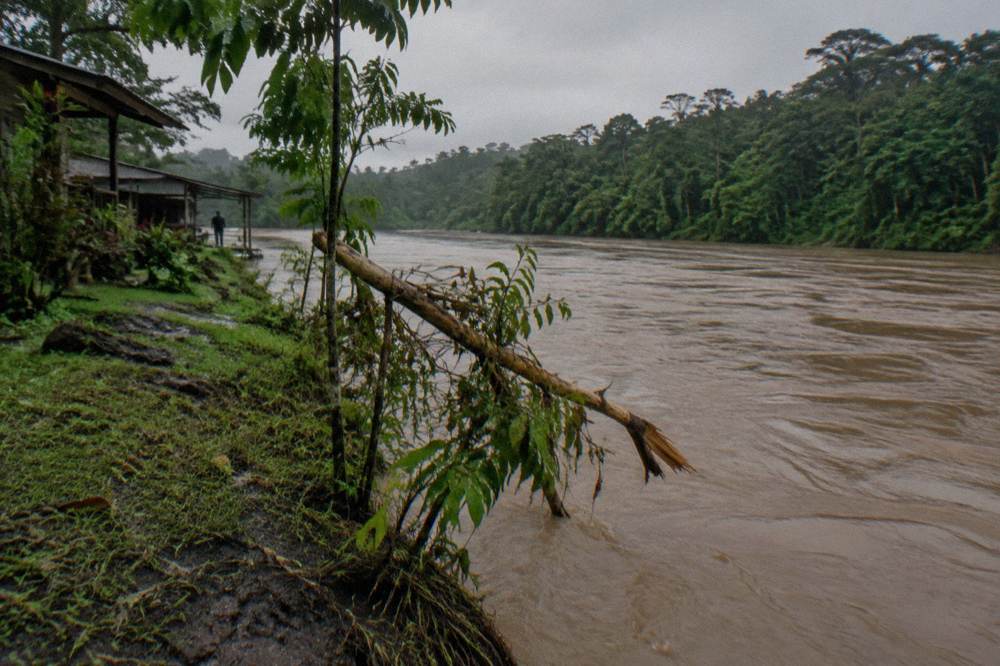
The Sarapiqui is undammed and rain-fed, so its class moves with the water: operators report Class II-III in the dry season of December to April and Class III-IV, with stronger currents and bigger waves, in the green season of May to November. The class printed on a listing describes typical conditions, not a promise for your specific day.
The climate anchors tell the story with numbers. The Sarapiqui lowlands average about 3,464 mm of rain a year on 1990 to 2020 normals; November is the wettest month at about 445 mm over roughly 17 rainy days, and April the driest at about 117 mm over about 8 rainy days. Daytime air sits around 28 to 30 C year-round. More rain means higher water, and higher water upgrades rapids: operators describe the upper run as Class II-III when low and Class III when high, and the Jungle Run as Class III-IV dry and up to Class IV at high water. Month-by-month river-level figures are not tabulated here, and nobody should trust a page that invents them.
| Period | Rain pattern | Typical river character |
|---|---|---|
| December to April (dry) | April driest, about 117 mm | Lower flows, Class II-III sections |
| May to November (green) | November wettest, about 445 mm | Higher flows, rapids push toward III-IV |
| Peak green, June to October | Heavy events saturate soils | Biggest water, trips may be rerouted |
The honest operational footnote: operators cancel or reroute trips during high water events, flooding and road closures, and this happens in green seasons, with no exceptions dressed up as guarantees. Route 32 through Braulio Carrillo has repeatedly closed in rainy-season landslides, and travelers should expect the possibility of rerouted access. What that means for choosing a class is simple: book the grade you want, and trust the operator's judgment on the day, because they are the ones reading the water. The Sarapiqui river levels guide goes deeper, and the rafting in the green season guide covers the flip side, when the higher water is exactly the point.
Which Sarapiqui Trip Matches Each Rapids Class?
Match the class to your group first, then pick the listing by price, departure and inclusions. Class II-III family trips run from $60 to $105.87 per person on this roster, Class III-IV jungle trips run from $85 to $160 per person, and wildlife floats from $90 to $122 per person carry no whitewater class at all. Departure points are La Virgen, Chilamate, La Fortuna and San Jose, and they are not interchangeable.
The full comparison lives in the cost and inclusions guide, but the class-to-trip mapping is worth restating compactly here, because it is the decision this whole article serves:
| You want | Class | Roster example | From | Duration |
|---|---|---|---|---|
| First family paddle | II-III | Family Rafting Class II-III (La Virgen) | $85 pp | 3 hours |
| Cheapest wet day | II-III | Budget 3-Hour Rafting (La Virgen) | $60 pp | 3 hours |
| Committed whitewater | III-IV | Class IV from La Fortuna (featured) | $85 pp | 5 hours |
| Full adventure day | III-IV | Jungle Run (La Fortuna or San Jose) | $123 pp | 8 hours |
| Jungle, no whitewater | Float | 3-Hour Wildlife Safari Float (La Virgen) | $90 pp | 3 hours |
| Two-day base | Class III | 2-Night Stay with Rafting (San Jose) | $556 pp | 3 days |
Reading the table honestly: durations are total trip lengths as listed, not time on the water. Ratings and review counts are the listing's own, printed with their counts, and several smaller listings have too few reviews for any rating claim at all, which is itself information. A 5.0 from 845 reviews on the featured trip and a 5.0 from 26 reviews on a mid-price listing are different facts, and both are stated plainly here rather than dressed up as equal badges.
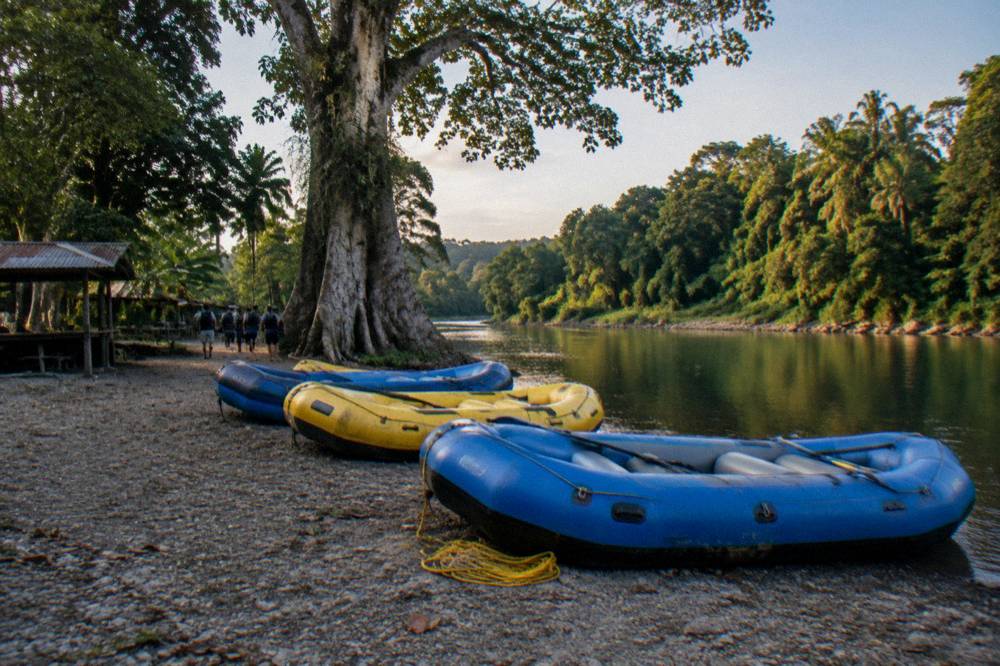
Departure logistics also follow class more than you might expect. The La Virgen base trips, both the Class II-III family run and the Class III-IV extreme from the same operator, exclude hotel pickup and meet at the base where a van takes you to the river, while La Fortuna Class III-IV trips generally include hotel transport within stated ranges. San Jose departures turn any trip into a full day, 8 to 10 hours as listed. How to reach the valley at all, including drive times and the routes, is covered in the getting to La Virgen de Sarapiqui guide, and the site's own Sarapiqui River Rafting homepage carries the live trip picker if you would rather filter than read.
What Should You Actually Book For Your First Class 3 Rapids?
For a first taste of Class 3, book a Class II-III trip: it delivers real rapids without the precision demands of Class IV, it is cheaper, from $60 per person on this roster, and it is the grade the national norm opens to ages 8 and up. Most first-timers who want more book a Class III-IV day on a later trip, once they know how they feel in big water.
That is the advice this site, as publisher, gives from comparing the listings rather than from any single trip. The reasoning: Class 3 inside a Class II-III day arrives in short bursts between calm pools, which is exactly the dosage a nervous paddler can absorb. Class 4 arrives continuously, and the step up is best taken knowingly. Guests report that the family-grade trips still get everyone soaked and shouting, and the wildlife viewing is better at the slower pace. If you already paddle, or you swim confidently and want the biggest day, go straight to the Jungle Run end: the featured Class IV listing from La Fortuna is the most reviewed proof that this works for a lot of people.
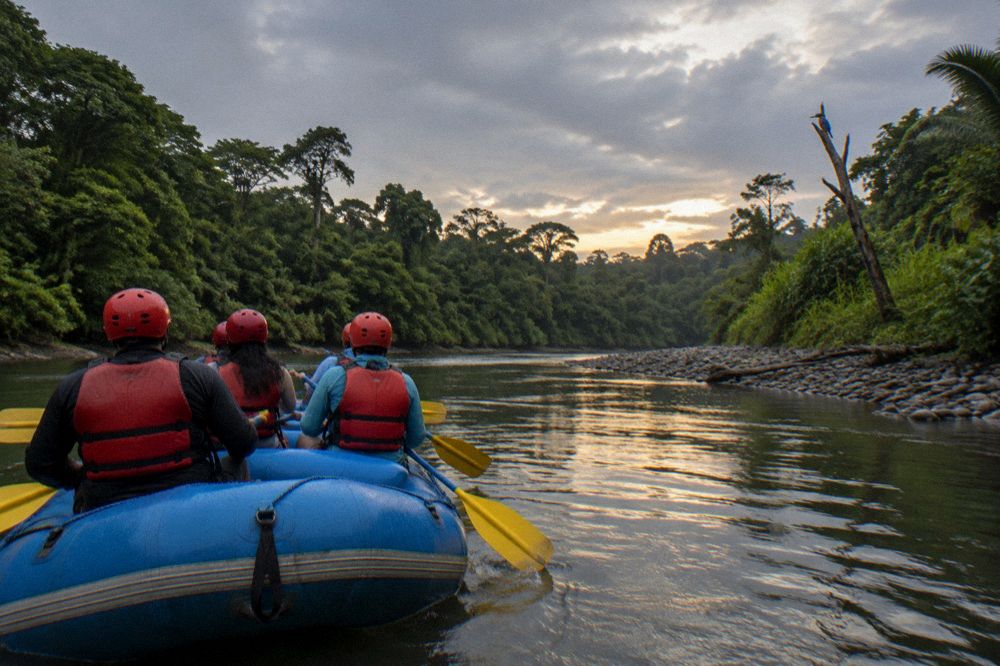
Whichever grade you choose, the checks are the same and take two minutes: read the listing's stated minimum age and any condition notes, confirm what transport is and is not included, note whether a meal is listed, and confirm the free-cancellation terms before paying. Every roster listing on this site shows free cancellation listed, but terms live on the operator's page, and water conditions live with the river, not the itinerary. Book the class, then let the day decide the details.
Common Questions About Rapids Classes In Costa Rica
What is class 3 rapids?
Class 3 rapids are moderate whitewater with irregular waves, clear but winding channels and drops that require the crew to paddle on command while a guide steers. Swimming is possible and self-rescue is usually straightforward. On the Sarapiqui, Class 3 appears inside Class II-III family trips and throughout the Class III-IV jungle runs.
Can a beginner do Class 3 rapids?
Yes, Class 3 is the standard beginner grade for commercial rafting, and the national norm opens it to ages 8 to 11. The Sarapiqui's Class II-III trips are built for first-timers, from $60 per person on this roster, with certified guides doing the reading and steering.
Can a beginner do Class 4 rapids?
Some operators accept confident swimming beginners on Class III-IV trips, and many guests do it as their first raft. The demands are real: continuous paddling and precise timing. Check the listing's minimum age, which runs 12 to 15 on the Sarapiqui's Class III-IV roster lines.
What class rapids are in Costa Rica?
Commercial runs span Class II to Class IV. The Sarapiqui offers Class II-III and Class III-IV sections, the Balsa typically runs Class II-III, the Pacuare is Class III-IV in a remote gorge, and Reventazon lower sections run Class II-III or III. Class V is not sold as a mainstream commercial day trip on these rivers.
Does the Sarapiqui's rapid class change with the season?
Yes. The river is undammed and rain-fed, so operators report Class II-III at lower dry-season flows of December to April, and Class III to IV after heavy rain in the green season of May to November. Trips can be rerouted or cancelled in high water, so the class on your day is the operator's call.
What is the minimum age for each rapid class?
Under the national norm INTE G60-1:2019: ages 5 to 7 may raft Class I and II, ages 8 to 11 up to Class III, ages 12 to 17 up to Class IV, and 18 and over all classes. Operators often set higher minimums, so check the listing. Helmets and life jackets are mandatory and supplied by the operator.