First Time Rafting In Costa Rica: What To Expect
A first rafting day on the Sarapiqui River follows a predictable rhythm: a briefing on land, a few paddle commands, a splashy but controlled run, and a lunch you earned. Here is what actually happens, hour by hour, and which beginner trips fit.
Short answer
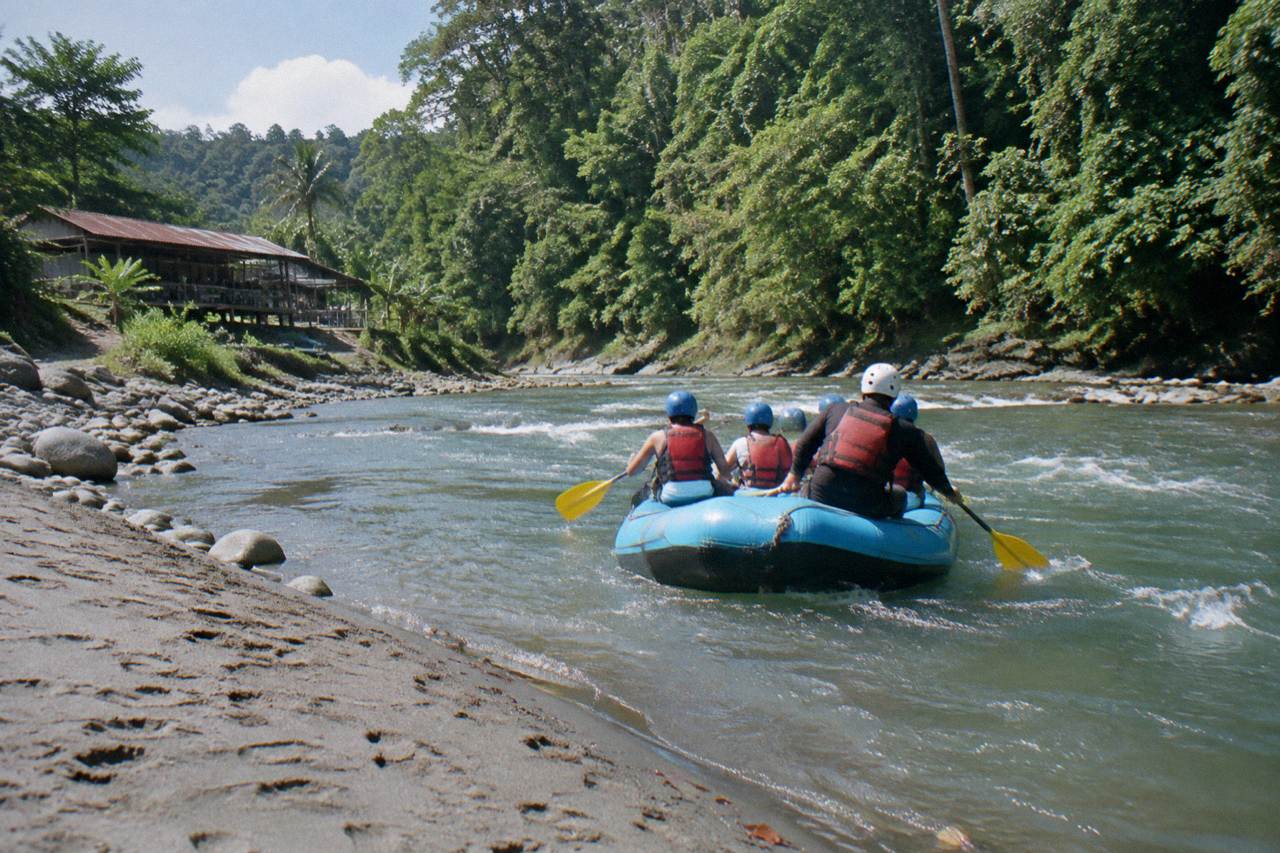
Most first timers on the Sarapiqui River book a Class II-III trip. The family rafting adventure from La Virgen runs from $85 per person, about 3 hours total, from age 6, rated 4.9 from 200 reviews. Expect a land briefing, paddle commands, a guided run, and a fruit snack, not chaos.
The Sarapiqui River is one of the friendliest places in Costa Rica to raft for the first time. It is rain-fed and undammed, so the water moves, but the upper section runs Class II-III at typical dry-season flows, which operators describe as splashy and forgiving rather than technical. That combination, warm air of about 28 to 30 C year-round and a jungle corridor close to both La Fortuna and San Jose, is why so many first-timers end up here instead of on a harder river.
The most common entry point is the Sarapiquí River Family Rafting Adventure Class II & III, which departs from the operator base in La Virgen de Sarapiqui, runs from $85 per person, takes about 3 hours total, and carries a 4.9 rating from 200 reviews. If you would rather start from La Fortuna with hotel pickup, the Near Arenal Class II-III tour (5.0 from 101 reviews, from $105.87) or the Chilamate Aguas Bravas trip (4.9 from 101 reviews, from $70) cover the same kind of water. This guide walks through the whole first day, including the parts nobody books for but everybody remembers: the briefing, the paddle commands, and what to do if you end up in the river.
What Happens On Your First Day Of Rafting On The Sarapiqui?
Your first rafting day on the Sarapiqui is mostly logistics and instruction, so much of the day goes to setup, guidance, and getting ready rather than long stretches on the water. The rapids themselves are the short centerpiece, a brief paddling section that stands out within a schedule otherwise devoted to preparation. Of a 3-hour listing like the family adventure from La Virgen, only a fraction is on the water; the listing duration covers gear fitting, the safety talk, the van ride to the river, the run itself, and the ride back. You will spend more time listening than paddling hard, and the hardest physical demand on a Class II-III day is usually climbing back into the raft after a swim, which is optional on most trips.
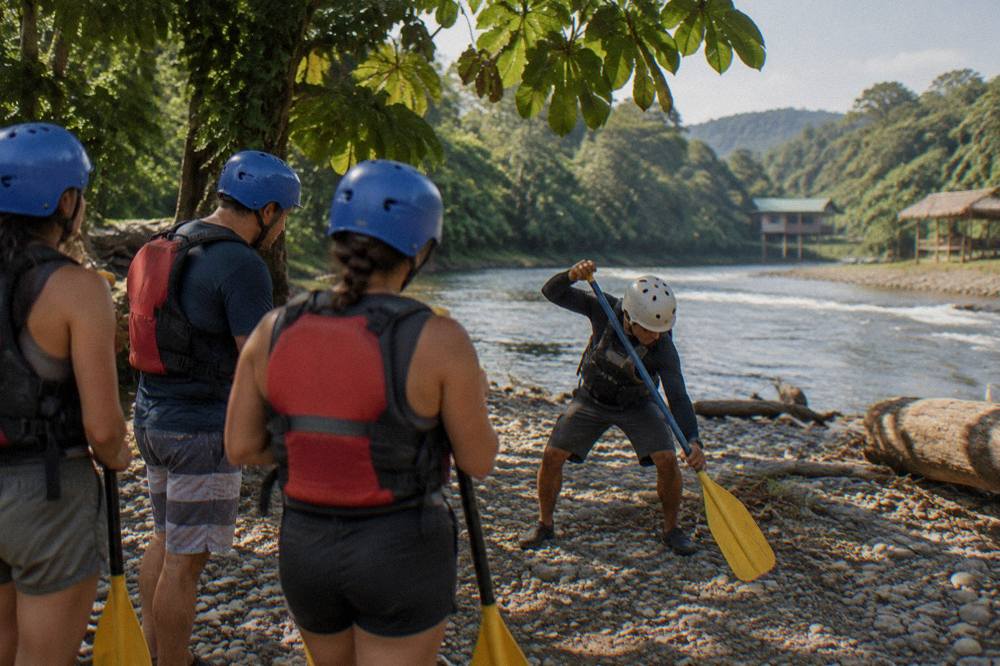
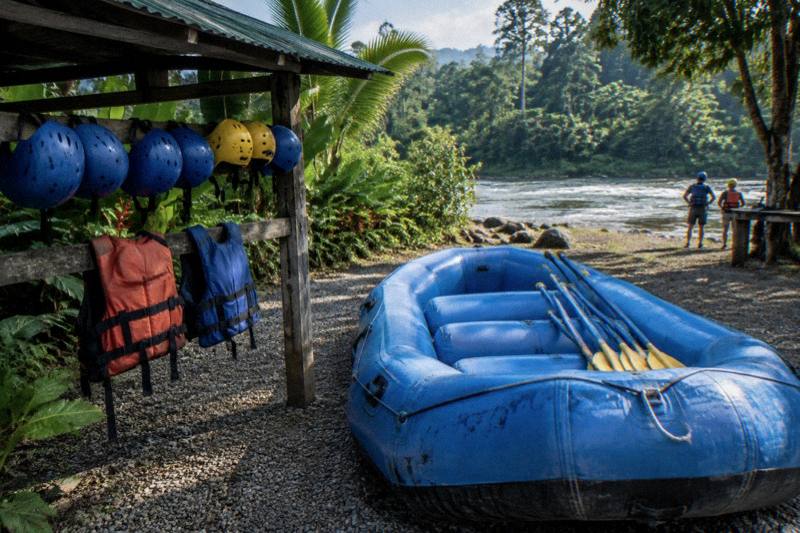
Here is the honest shape of the day. You arrive at the operator base, meet your guide, and get fitted for a helmet and a personal flotation device. Both are required by Costa Rica's national rafting norm, INTE G60-1:2019, which obliges operators to supply and verify this equipment for every participant. Then comes a safety briefing on land, then the paddle talk, then the river.
The rhythm surprises people. First-timers often imagine two hours of nonstop whitewater. In reality, a Class II-III Sarapiqui run alternates short rapid bursts with long calm stretches where the guide points at the jungle: sloths, monkeys, toucans, iguanas and aquatic birds are commonly reported by operators and guests on these trips, though no sighting is ever promised. The calm water is also where you practice paddling as a crew before the first rapid arrives.
A note on expectations and honesty: the Sarapiqui has no dams, so its level moves with rainfall. Operators report the upper section as Class II-III at lower dry-season flows and up to Class III or IV after heavy rain. Operators cancel or reroute trips in high water, flooding or road closures; that is normal and not a sign something went wrong. If you want the deeper background on how the class of the river shifts month to month, see Sarapiqui river levels and rapid class by season.
What Does The Safety Briefing Cover Before You Get On The Sarapiqui River?
Before you get on the Sarapiqui River, the safety briefing walks you through five essentials: how to sit and brace properly inside the raft, how to grip and hold your paddle, what to do if you fall into the water, how to grab a rescue rope, and how to listen and respond to your guide's commands. It happens on land before anyone gets wet, usually takes ten to fifteen minutes, and it is not optional. Costa Rica's national technical norm requires operators to instruct participants in technique and to verify safety equipment, and guides themselves must hold national certification in rafting and swiftwater rescue with current first aid and CPR under the companion norm INTE G60-2:2019, published on the national rafting norm document.
The briefing is also your chance to ask questions. Good ones: how many guests are in the raft, whether the trip uses a safety kayaker, and what the operator's minimum age and any weight limits are for that specific listing. The roster answers some of this in advance. The family adventure from La Virgen takes up to 24 guests with a listed minimum age of 6. The Near Arenal trip caps at 15 guests with a minimum age of 7. The Chilamate Aguas Bravas run does not state a group size or age on its line, so check the listing.
| Briefing topic | What you actually practice | Why it matters on a Class II-III day |
|---|---|---|
| Sitting position | Feet tucked forward under the tube, one hand on the T-grip | Keeps you in the raft through waves |
| Paddle grip | One hand on the shaft, one on the T-handle, never between hands | Prevents the classic knuckle knock |
| Self-rescue float | On your back, feet up and pointing downstream, arms out | Feet-down swimming is how ankles get caught |
| Rope rescue | Grab the throw bag rope with one hand, hand over hand to the raft | A thrown rope only works if you stop swimming away from it |
| Commands preview | Forward, back-paddle, stop, down, and high-side | The guide calls these inside rapids with no time to explain |
If any of that sounds intimidating, remember the scale. On a Class II-III section, the consequences of a mistake are usually a swim in warm moving water followed by getting hauled back aboard, not the dramatic scenarios people imagine. The safety conversation around first rafting, including the honest answer on risk statistics, is covered separately in Is rafting in Costa Rica safe.
For nervous first-timers, three listings on this site fit the brief especially well:
All three list free cancellation, which matters when you are booking something that makes you a little nervous and want the option to switch dates. The family adventure and the Near Arenal trip both list lunch; the Chilamate listing includes a fresh fruit buffet, lunch and drinks plus pickup from a Sarapiqui hotel. Details like transport differ listing by listing, so read the inclusions line before booking.

Which Paddle Commands Will You Learn As A Beginner On Sarapiqui Rapids?
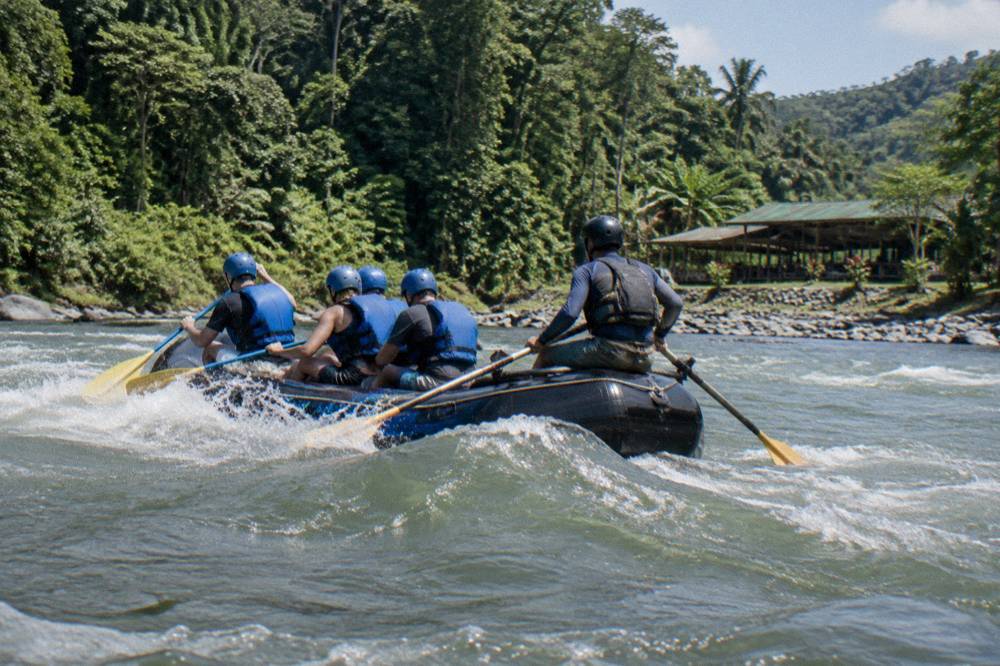
As a beginner on the Sarapiqui rapids, you will learn five paddle commands, and five is genuinely all a beginner needs: forward, back-paddle, stop, get down, and high-side or lean in. That short list covers the full set of responses you will practice on the water. Guides on the Sarapiqui call them in English or Spanish, often both, and they rehearse the crew on flat water before the first rapid. If you freeze inside a rapid, the universal correct response is to keep paddling forward until told otherwise; a raft with momentum is more stable than one drifting sideways.
The commands exist because a raft is steered as much by its crew as by the guide's oars or paddle. When the guide yells "down," everyone drops to the raft floor and holds on; this lowers the center of gravity in big waves. "High-side" means throwing your body toward the side the guide names, used when a raft climbs a wave at an angle and risks flipping. On a Class II-III first trip you may never need either, but you will be taught them.
The learning curve is short. Most crews get the rhythm within the first calm stretch, and guides on beginner sections are used to mixed boats: kids from age 6 or 7 on the family listings, nervous adults, and confident travelers who wished they had booked the Class III-IV run. Nobody is expected to arrive knowing anything. What separates a good first day from a frustrating one is listening, not strength.
The most reviewed listing on this whole site, the Sarapiqui River Extreme White Water Rafting Class IV trip from La Fortuna (5.0 from 845 reviews, from $85), uses the same command set; the water is just bigger. That is worth knowing for later: the skills from your first Class II-III day transfer directly if you catch the rafting bug and want more. The class system itself is explained in plain terms in Rapids classes explained for Costa Rica rivers.
What Should You Do If You Fall Out Of The Raft On The Sarapiqui River?
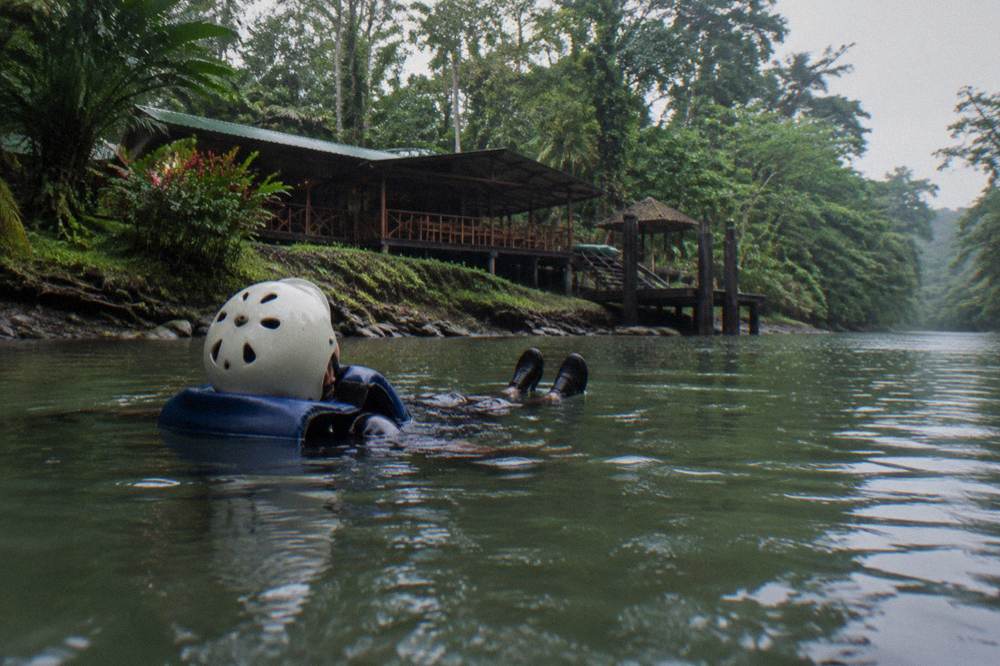
If you fall out of the raft on a beginner Sarapiqui run, the right move is to float on your back with your feet up and pointed downstream, holding your paddle if you can, and then simply wait: either the raft will come back around to pick you up or someone will throw you a rope to pull you in. You do not stand up in moving water, because foot entrapment against the rocky bottom is the one genuinely dangerous move in an otherwise harmless swim. Guides drill this in the briefing, and then usually a guest proves it works by falling in on purpose or by accident.
Here is the sequence in the order it happens. You pop up, the current carries you a few meters, you roll onto your back, and you look for the raft. Most of the time the raft is right there and a hand or a paddle shaft pulls you over the tube. If you drifted, the guide or a safety kayaker reaches you, and if they throw a rope you grab it with one hand and pull yourself hand over hand. The whole event typically lasts under a minute.
Falling out is not failure. On Class II-III sections it is close to a rite of passage, and many first-timers list the swim as the best part of the day in guest reviews. What you should not do is panic-swim toward a rock, try to stand in current, or let go of the rope to "help." The rule from the briefing is the whole rule: feet up, point downstream, let the river carry you to your rescuers.
A few people should not take even this level of risk, and the listings say so in their own words. Health and physical condition disclosures are required under the national norm, and operators commonly list pregnancy, certain cardiovascular conditions, low mobility and obesity as restrictions or non-recommended conditions. Minimum ages also matter: national norms put Class III at age 8 and above and Class IV at 12 and above, while individual listings often set higher minimums like the 6 and 7 on the two family trips named above. The full picture is in Rafting age and weight limits in Costa Rica.
How Does A First Rafting Day Unfold Hour By Hour From La Fortuna Or San Jose?
A first rafting day follows a clear arc, running roughly five hours in total from La Fortuna and up to ten from San Jose. Expect pickup or check-in at the base first, then a briefing, the river run itself, lunch, and finally the drive back. Operators commonly start between 7:00 and 8:30 in the morning. The drive from San Jose to the Sarapiqui area is about 1 hour 30 minutes; from La Fortuna to the Puerto Viejo de Sarapiqui area it is about 1 hour to 1 hour 10 minutes. Everything else in the day hangs off those two drives.
The hour-by-hour shape below reflects what the listings and operator schedules describe. Exact times vary by listing and by where you are staying; treat it as a planning sketch, not a timetable.
| Segment | What happens | Notes for first-timers |
|---|---|---|
| Pickup or base arrival | Hotel pickup where the listing includes it, or meet at the operator base | The La Virgen family trip meets at the base; hotel pickup is excluded and a van takes you to the river |
| Gear and briefing | Helmet and life jacket fitting, safety talk, paddle practice | 10 to 15 minutes on land, required by the national norm |
| Drive to the river | Short van transfer to the launch | Included on the listings that name it |
| The run | Rapids alternating with calm wildlife stretches | Commands rehearsed on flat water first |
| Snack or lunch | Tropical fruit, often a full lunch on trips that list it | Check the inclusions line; not every listing includes a meal |
| Return and photos | Drive back, chance to buy photos where offered | Photos are an exclusion on several listings, sold separately |
Where you start from changes the day more than the river does. The San Jose departures, like the full-day Class II-III trip (4.0 from 20 reviews, from $105, about 10 hours) or the connection trips that raft en route between San Jose and La Fortuna, turn the rafting into a full-day outing with round-trip transport from selected hotels. The La Fortuna and Sarapiqui-area departures are shorter and leave more of your day free.
One practical warning that belongs here and nowhere else in this article: Route 32 through Braulio Carrillo, the main San Jose to Sarapiqui road, is commonly closed by rainy-season landslides, and alternate routes add time. Operators watch this and adjust, but if you are self-driving from San Jose in the green season, check road conditions that morning. Getting to the area in general is covered in How to get to La Virgen de Sarapiqui.
What to wear and bring deserves its own mention because it is the one thing first-timers get wrong most. Quick-dry clothes, secure shoes that can get wet, a change of dry clothes, sunscreen and insect repellent; that list comes straight from what operators tell guests. The detailed versions live in What to wear rafting in Costa Rica and What to bring rafting in Costa Rica.
What Do First Time Rafters Commonly Get Wrong In Costa Rica?
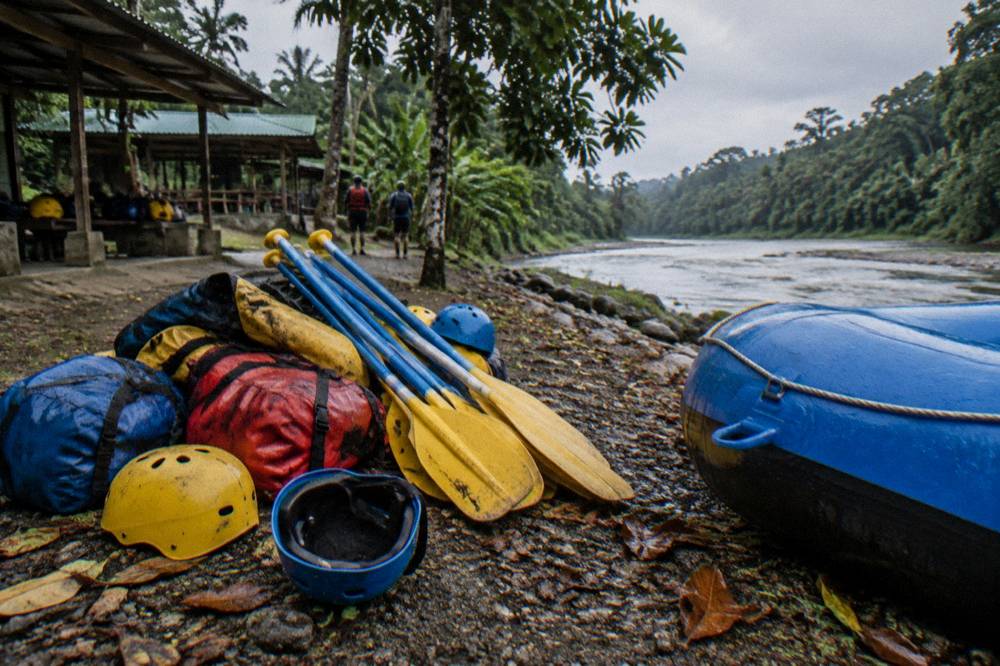
The most common mistakes first-time rafters make on Costa Rica rivers are wearing cotton clothing, bringing phones onto the raft without a dry bag, standing up after falling into the water during a swim, gripping the paddle incorrectly, and booking a rafting class that is harder than they are truly ready for. None of these are dangerous in themselves on a beginner Sarapiqui run, but each one turns a good day into a damp, frustrated one, and all five are avoidable with two minutes of reading.
| Mistake | What goes wrong | The fix |
|---|---|---|
| Cotton clothing | Stays wet and heavy all day | Quick-dry shirt and shorts; a strap for glasses |
| Phone in pocket | Soaked or gone at the first wave | Leave it locked in the base lockers where listings provide them |
| Standing in current after a swim | Foot entrapment risk | Feet up, back float, wait for the rope |
| Wrong paddle grip | Knuckles hit by a neighbor's shaft | One hand on the T-grip at all times |
| Booking above your level | Panic in the first rapid ruins the day | Start Class II-III; the Class IV runs will still be there |
The booking-level mistake deserves the most attention because it is the one you cannot fix mid-river. A first-timer asking whether they can handle Class IV is a real question with an honest answer: some can, most should not start there, and the national norm itself only opens Class IV from age 12. The Chilamate Aguas Bravas trip (from $70, 3 hours) and the La Virgen family adventure (from $85) exist precisely so the first day can be fun at Class II-III. Build up, then go big.
The other half of first-timer anxiety is wildlife expectations. Guests commonly report sloths, monkeys, toucans, iguanas, caimans and aquatic birds from Sarapiqui rafts, and the calm stretches between rapids are the viewing moments. But the river is not a zoo: no operator promises a sighting, and a rainy afternoon can hide the canopy completely. Pairing the rafting day with a dedicated walk at a place like Tirimbina Biological Reserve, open daily 7:00 a.m. to 5:00 p.m. with hanging bridges over the Sarapiqui, is the reliable way to see the forest on its own terms.
Which Sarapiqui Trip Should A Complete Beginner Book First?
Book the Class II-III family adventure from La Virgen if you want the proven beginner product: 4.9 from 200 reviews, from $85 per person, about 3 hours, minimum age 6, up to 24 guests, with lunch listed and free cancellation. It has the deepest review pool of any Class II-III listing on this site and the structure first-timers respond to, a base with changing rooms, lockers and WiFi, a fruit and yucca snack on the river, and certified international guides.
Your location should adjust the choice, not your nerve. From La Fortuna, the Near Arenal Class II-III trip is the natural pick: 5.0 from 101 reviews, from $105.87, about 8 hours with transport included, hotel pickup as the listing describes, lunch, and a small cap of 15 guests, which nervous paddlers often prefer. Already staying in the Sarapiqui area? The Aguas Bravas run from Chilamate is from $70, 4.9 from 101 reviews, and includes pickup from a Sarapiqui hotel plus a fruit buffet, lunch and drinks.
Budget and content also differ in ways the price alone hides. The La Virgen family trip excludes photos and tips but includes lunch and all safety equipment. The Near Arenal trip excludes bottled water, an odd but real detail worth knowing before a hot day. The full money picture, including what each inclusion is worth, is laid out in Sarapiqui rafting cost and inclusions.
One more angle: several listings turn the rafting into transport itself. The connection trips run the river between San Jose and La Fortuna, so the day you spend rafting is also the day you change towns, with hotel pickup and drop-off included. For a first-timer routing between the two, that is arguably the most efficient first rafting day in the country.
Common Questions About First Time Rafting In Costa Rica
What class of rapids should a beginner raft in Costa Rica?
Class II-III. That is what every beginner-oriented Sarapiqui listing runs, and it is the level the national norm opens to participants from age 8. Operators report the Sarapiqui's upper section at Class II-III at dry-season flows, splashy but forgiving. Class III-IV trips like the extreme run from La Fortuna are better as a second or third rafting day.
Do I need to know how to swim to go rafting on the Sarapiqui?
You wear a certified life jacket the entire time, and the national norm requires operators to supply and verify it, so non-swimmers do raft Class II-III trips. That said, some operators list swimming ability as a requirement for harder sections; check the listing for the specific trip you want. Comfort in water matters more than technique.
How long does a first rafting trip last?
Listing durations range from 2.5 to 5 hours for the Sarapiqui-area and La Fortuna Class II-III trips, and 8 to 10 hours for full-day San Jose departures. The family adventure from La Virgen is about 3 hours total, and only part of that is on the water; the duration covers briefing, transport, the run and the return.
Will I fall out of the raft?
Maybe, and on a Class II-III day it is usually a non-event: a short float on your back with feet up, then a hand pulls you back in. The briefing teaches exactly this. Do not stand in moving water, because foot entrapment against the rocky bottom is the real hazard in an otherwise harmless swim.
Can children go rafting on the Sarapiqui?
Yes, on the right listing. The family adventure from La Virgen lists a minimum age of 6, and the Near Arenal trip lists 7. National norms allow ages 8 to 11 on Class I to III water, and operators may set their own, often higher, minimums, so check the listing for the trip you have in mind.
What should I wear for my first rafting day?
Quick-dry clothes that can get wet, secure shoes like strap sandals or old sneakers, and a change of dry clothes for after. Avoid cotton, which stays heavy and cold all day, and anything you would mind losing. Helmets and life jackets are provided and fitted at the base before the briefing.
The short version for the nervous: a first day of rafting on the Sarapiqui is a guided, briefed, well-regulated float with some waves in the middle, and the beginner infrastructure here, from base facilities to certified guides to age-appropriate family runs, is built for exactly that first booking. For the broader site take, Sarapiqui River Rafting compares every listing side by side, or read the sibling guides linked above for the deep dives on safety, seasons and cost.
Before you go, the pick for this guide:
Family Rafting Class II-III, Meal
★ 4.9 200 reviews · From $85
Check availability →