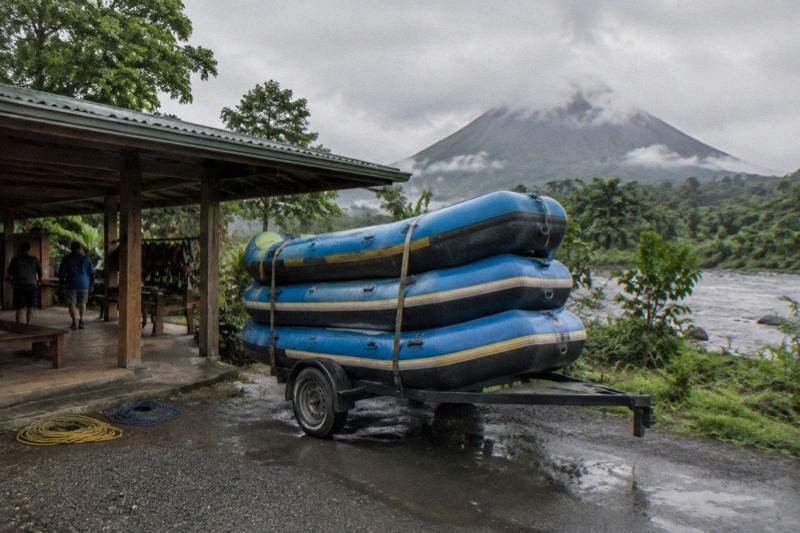
Is Rafting In Costa Rica Safe? Guides, Gear And Rules
No official rafting-specific incident statistics exist for Costa Rica, so the honest answer rests on the rules: a national technical norm sets guide certification, mandatory helmets and life vests, and minimum ages by rapid class. Here is what the law requires on the Sarapiqui River and how to judge an operator before you book.
Short answer
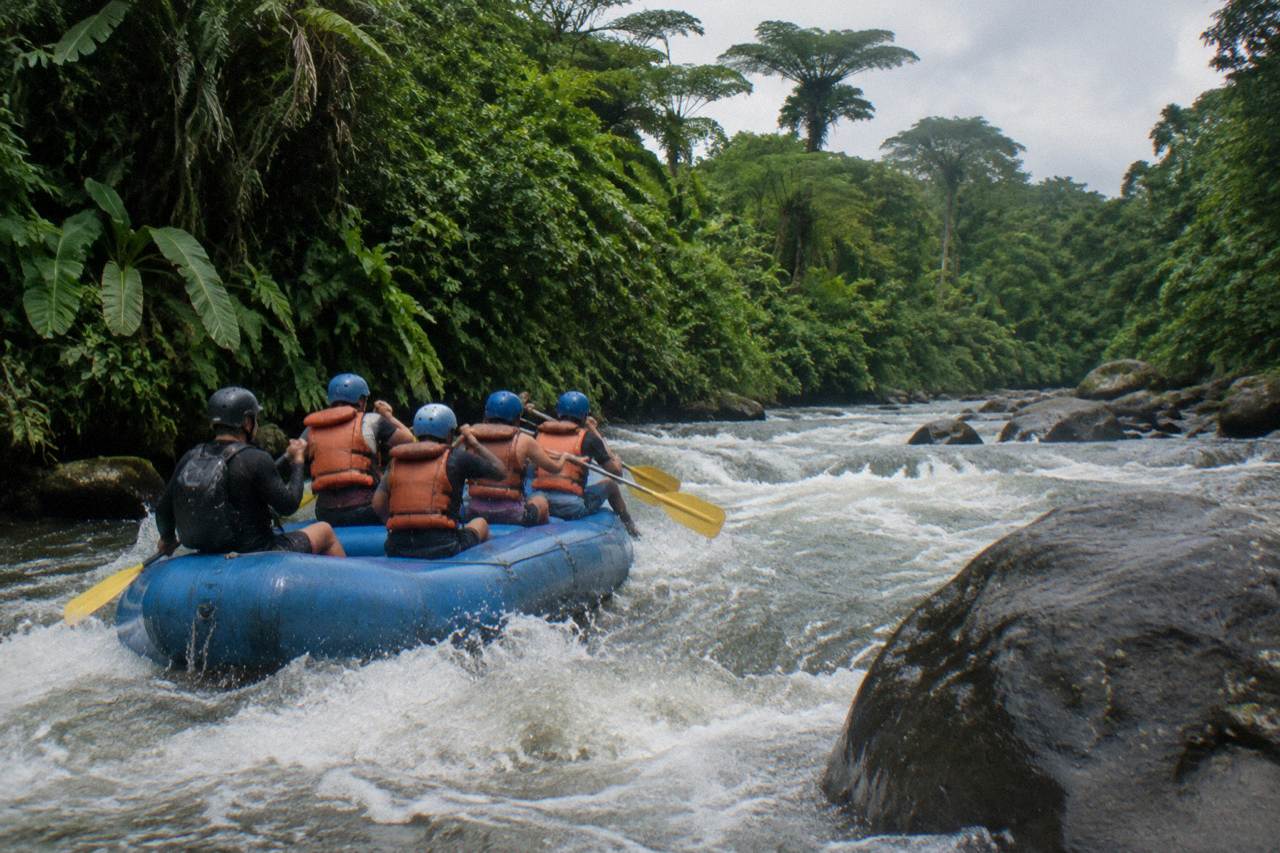
Costa Rica regulates commercial rafting through national norms: guides must hold rafting and swiftwater rescue certification plus current first aid and CPR, and operators must supply and verify helmets and life vests for every participant. Minimum ages are set by rapid class: 5 for Class I and II, 8 for Class III, 12 for Class IV and 18 for Class V. No official rafting-specific incident statistics were found.
Is White Water Rafting In Costa Rica Safe For First Timers?
Commercial rafting in Costa Rica runs under a written national framework: technical norms set minimum participant ages by rapid class, require certified guides with swiftwater rescue and first aid training, and make helmets and life vests mandatory operator-supplied equipment. No official rafting-specific incident statistics were found in searches of national sources, so no honest safety verdict can be printed here. If you're wondering what that missing data means for your own trip, our article on why Costa Rica has no official rafting fatality rate covers what the national norms demand of operators and what to check on a Sarapiqui listing before you book.
What can be verified is the structure around the trips. The Sarapiqui River is rain-fed and undammed, which means water levels, and with them rapid intensity, move with the seasons. Operators report Class II-III conditions at lower dry-season flows and up to Class III or IV after heavy rain. A first-timer is not stepping into an unregulated activity; the state publishes rafting norms, guides carry certification, and operators cancel or reroute trips when the river is too high.
The practical takeaway for a nervous beginner is class selection. The Class II-III family run on the Sarapiqui, sold from $60 per person in the budget version and from $85 per person with lunch at the Sarapiqui Outdoor Center base in La Virgen de Sarapiqui, is the entry point the roster supports for first-timers, with a listed minimum age of 6 on the La Virgen family trip. Class III-IV trips are a different product for stronger paddlers. This site's first time rafting guide walks through that choice in detail, and the rapids classes explained page breaks down what each class actually feels like on the water.
A few honest limits shape everything below. River conditions vary, so no trip, sighting or rapid class on a given day can be promised. Trip lengths, water temperature and any injury or fatality figures are not published as verified facts here, because the sources do not support them.
Who Regulates Rafting Safety In Costa Rica?
Rafting safety in Costa Rica is governed by national technical norms INTE G60-1:2019 and INTE G60-2:2019, plus the adventure tourism regulation Decreto 39703-S-TUR. Together they set participant age minimums by rapid class, require operator-supplied and verified helmets and life vests, mandate guide certification in rafting and swiftwater rescue, and require current first aid and CPR for guides. Those national norms also shape what operators ask you to wear on the river, so our guide to what not to wear when white water rafting in Costa Rica lays out the clothing mistakes that can ruin a Sarapiqui run and what to pack instead.
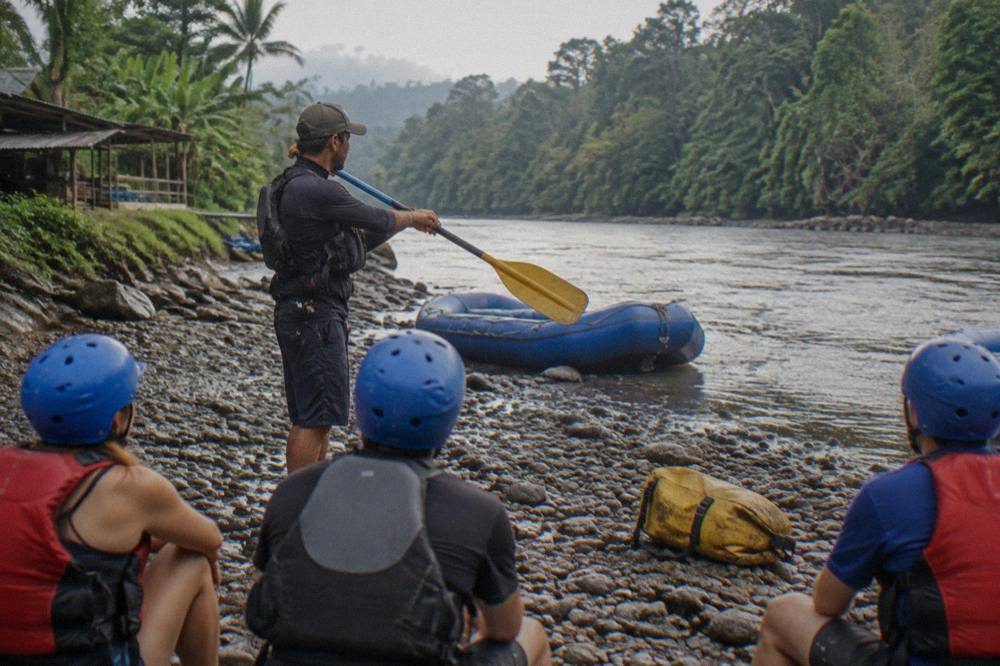
The national technical norm for rafting, INTE G60-1:2019, is a published document anyone can read, and it does two things that matter to a buyer. First, it fixes a table of minimum participant ages by rapid class, which this article reproduces below. Second, it places concrete duties on operators: inform participants of the minimum age for the activity, supply helmets and personal flotation devices for every participant, and verify their use. The companion guide competency norm, INTE G60-2:2019, requires rafting guides to hold national certification in rafting and swiftwater rescue, keep current first aid and CPR certification, and meet minimum age and regulatory compliance requirements.
On top of the technical norms sits the adventure tourism regulation, which requires adventure operators to use ICT-credentialed guides or ICT-approved qualified personnel for rafting, with guides maintaining current first aid and CPR. The full regulation text is published on the national legal information system.
| Instrument | What it governs | What it means for you |
|---|---|---|
| INTE G60-1:2019 | Participant ages by rapid class, operator duties | Legal age floors per class; operator must supply and verify helmet and vest |
| INTE G60-2:2019 | Guide competency | Guides certified in rafting and swiftwater rescue, first aid, CPR |
| Decreto 39703-S-TUR | Adventure tourism operation | Operators must use ICT-credentialed or approved guides |
One gap to state plainly: no official published rafting-specific fatality or incident statistics from the national tourism, emergency or conservation authorities were identified in searches. General aquatic accident data tracked by the Red Cross does not isolate commercial rafting. Anyone quoting a precise incident rate for Costa Rica rafting is printing a number the official record does not contain.
Within that framework, the trips themselves vary a lot, and the band below shows three genuinely different levels of intensity sold on the same river.
The featured listing here is the most reviewed product on this roster: the Class IV trip from La Fortuna, rated 5.0 across 845 reviews, from $85 per person with lunch and hotel pickup for hotels within about 6 km of the operator's main office. Its review pool is large enough to read what guests actually say, which is one of the best safety signals available to a buyer.
What Safety Gear Is Required On Sarapiqui Rafting Trips?
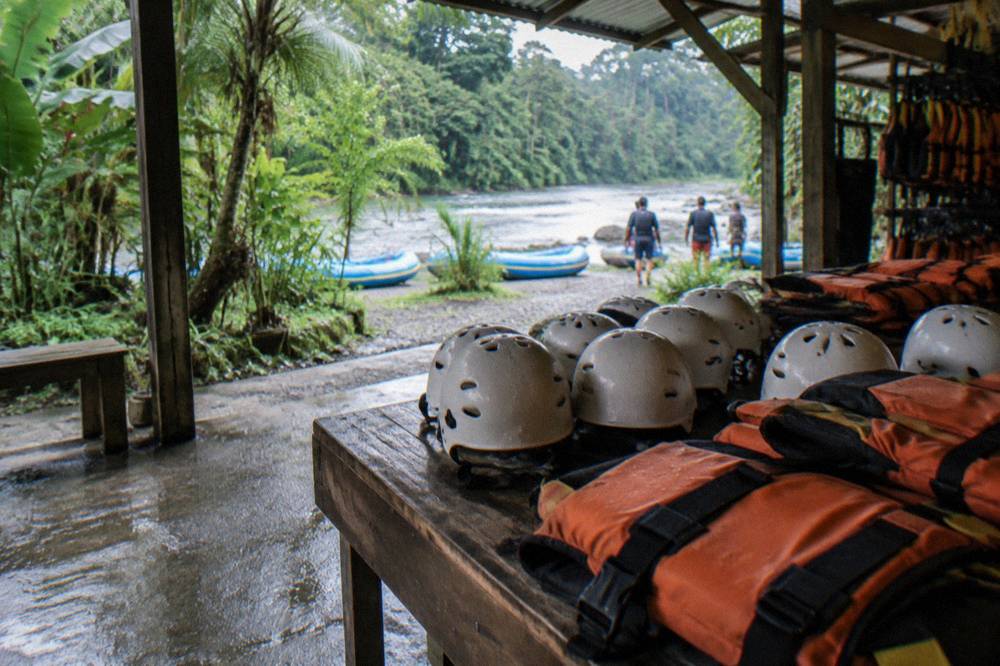
Helmets and personal flotation devices are mandatory under the national norm, and the operator, not the guest, must supply and verify them for every participant. The norm specifies buoyancy requirements for vests on Class III and above. Roster listings consistently include helmet, life jacket and paddle in their stated inclusions.
The gear duties sit with the operator. Every rafting listing on this site's roster that itemizes equipment includes some version of helmet, life jacket and paddle: the La Virgen family trip lists "all your safety equipment" with safety instructions before the river; the budget Class II-III trip lists "all equipment" and certified guides; the Class IV extreme trips list lifejacket, helmet and paddle by name. That pattern is the norm doing its work in the market.
What you wear under that gear matters too. Clothes that can get wet, secure shoes rather than flip-flops, a change of dry clothes, sunscreen and insect repellent are the commonly reported kit, and this site's what to wear rafting guide and what to bring page cover the details.
| Gear item | Who provides | What to check |
|---|---|---|
| Helmet | Operator, required by norm | Fitted before the safety talk, buckled |
| Life vest / PFD | Operator, required by norm | Snug, all clips fastened, sized to your weight |
| Paddle | Operator | Correct length handed out after the briefing |
| Dry bag | Only some listings | The 2.5-hour snacks trip lists dry bags in its inclusions |
| Lockers and changing rooms | Only some listings | The La Virgen outdoor center listings include both |
A note on what gear does not do. A vest and helmet manage the consequences of a swim, not the cause. Operator policies on the Sarapiqui commonly add swimming ability, good physical condition and weight limits, which vary by operator and are not fixed in the national norm. The norm also requires health and physical condition disclosures, and pregnancy, certain cardiovascular conditions, low mobility and obesity are commonly listed restrictions. Check the listing for the policy that applies to your trip rather than assuming a general rule.
If gear and class level are what worry you, the gentler option is worth a look.
How Old Do You Have To Be To Go Rafting In Costa Rica?
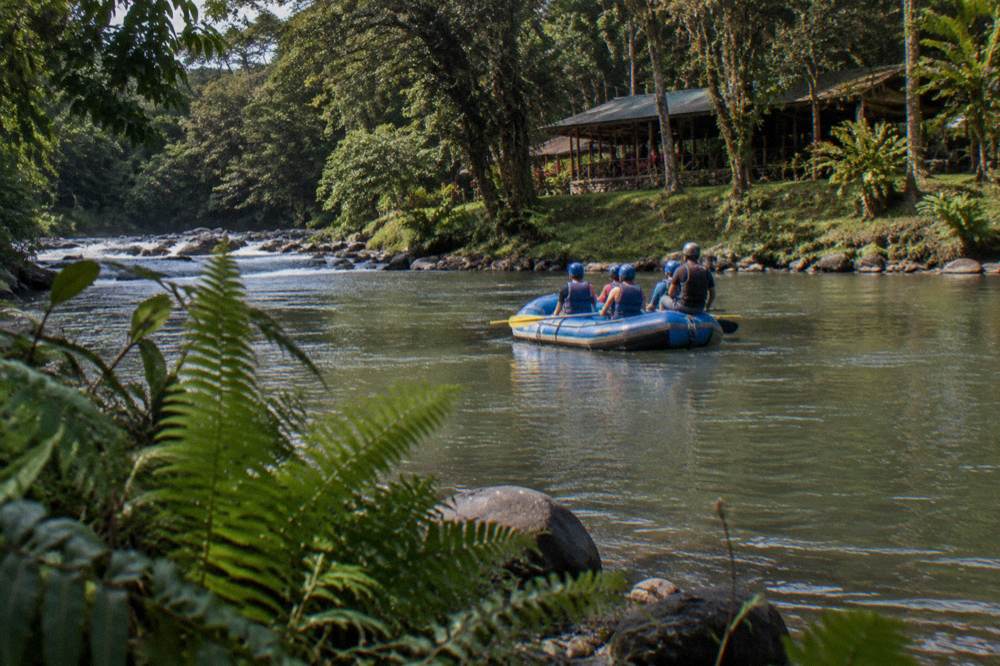
The national norm sets minimum ages by rapid class: under 5 no rafting at all, ages 5 to 7 Class I and II only, ages 8 to 11 Class I to III, ages 12 to 17 Class I to IV, and 18 and over Class I to V. Operators may and often do set higher minimums than the law, and several Sarapiqui listings do exactly that. If you're wondering whether the bigger rapids make sense for your child, the guide to Class IV rapids and kids in Costa Rica explains what Sarapiqui outfitters look for before they let a family book.
The legal floor is not the market floor. On this roster, the La Virgen family Class II-III trip states a listing minimum age of 6, below the legal floor of 8 for Class III but a family-friendly figure for the mixed-class run. The Class III-IV extreme trip at the same outdoor center states a minimum age of 14, above the legal floor of 12 for Class IV. Other listings, such as the near-Arenal Class II-III trip, state minimum age 7, and one Class III-IV La Fortuna trip states 15. The law tells you what is illegal; the listing tells you what that operator will actually accept.
| Participant age | Classes legally permitted | Example roster listing |
|---|---|---|
| Under 5 | None | Wildlife safari float lists minimum age 4, it is a float, not rafting |
| 5 to 7 | Class I and II | Family Class II-III trip lists minimum age 6 |
| 8 to 11 | Class I to III | Near-Arenal Class II-III trip lists minimum age 7 |
| 12 to 17 | Class I to IV | Class III-IV extreme trip lists minimum age 14 |
| 18 and over | Class I to V | Class IV extreme trips from La Fortuna, check the listing |

The full text of the national rafting technical norm is public, including the age table and the equipment duties quoted above. For families weighing the decision in more depth, the rafting with kids page covers ages, and the age and weight limits guide covers operator-specific policies.
The most reviewed family-format option, for reference, is the La Virgen Class II-III trip at 4.9 from 200 reviews, from $85 per person including lunch, up to 24 guests per departure.
What Actually Causes Rafting Incidents In Costa Rica?
The honest answer is that no verified incident cause data for Costa Rica commercial rafting exists in official sources, so causes cannot be listed as statistics. What the sources do support is that high water, flooding and road closures trigger cancellations and reroutes, and that the national norm exists precisely because uncontrolled water, not gear failure, is the primary variable regulators manage.
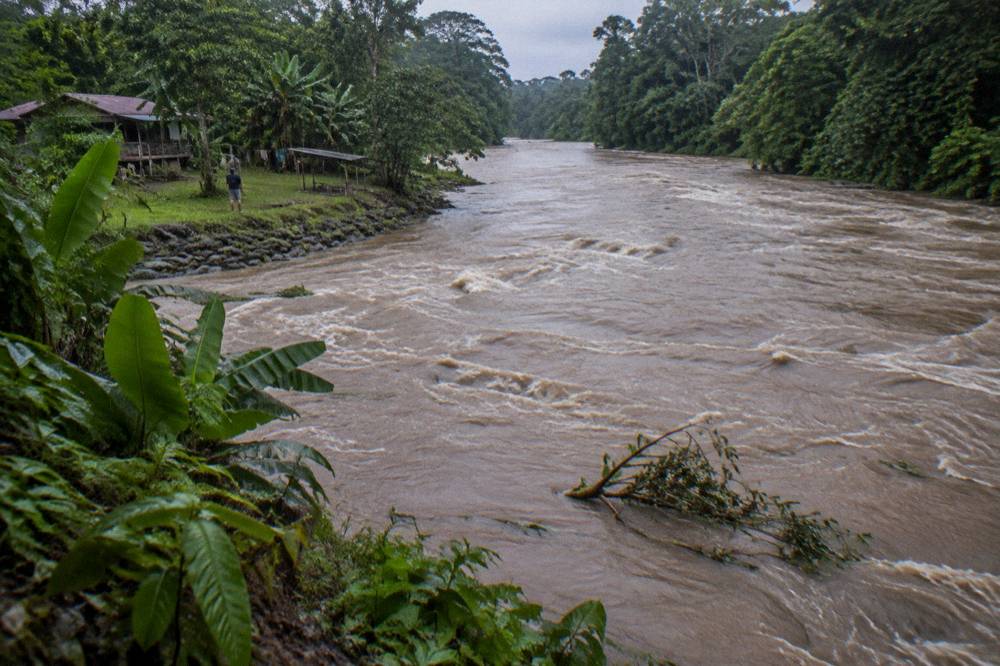
Start with what is documented. Trips on the Sarapiqui are cancelled or rerouted during high water events, flooding, or road closures on the area's routes. Green-season flooding in Sarapiqui has displaced hundreds of people into shelters in recent years, with multiple road and bridge closures, and Route 32 through Braulio Carrillo closes repeatedly in rainy-season landslides. That is the environment operators work in, and the reason a responsible operator's answer to too much water is to not run the trip.
Then the structure. The national norm's core duties, age floors, equipment verification, participant instruction, health disclosures, each target a known failure mode in commercial rafting generally: participants on water beyond their age or fitness, missing or misused gear, and undisclosed health conditions. The norms do not publish guide-to-guest ratios in the available excerpts, so this article will not invent one.
| Risk variable | What the record shows | What it means for booking |
|---|---|---|
| River level | Rain-fed, undammed river; class rises with rain | Pick a class with headroom below your comfort limit |
| Season | Dry season December to April, green season May to November | Green season runs bigger water on the same section |
| Operator judgment | Cancellations and reroutes in high water are routine practice | A cancellation is the system working, not a failure |
| Participant fit | Health and condition disclosures required by norm | Disclose honestly; policies vary, check the listing |
For readers who want the deeper dive into that last question, the blog post on whitewater rafting fatality rates addresses it head on, including the finding that no official rafting-specific figure for Costa Rica was found.
How Do You Judge A Safe Rafting Operator In Sarapiqui?
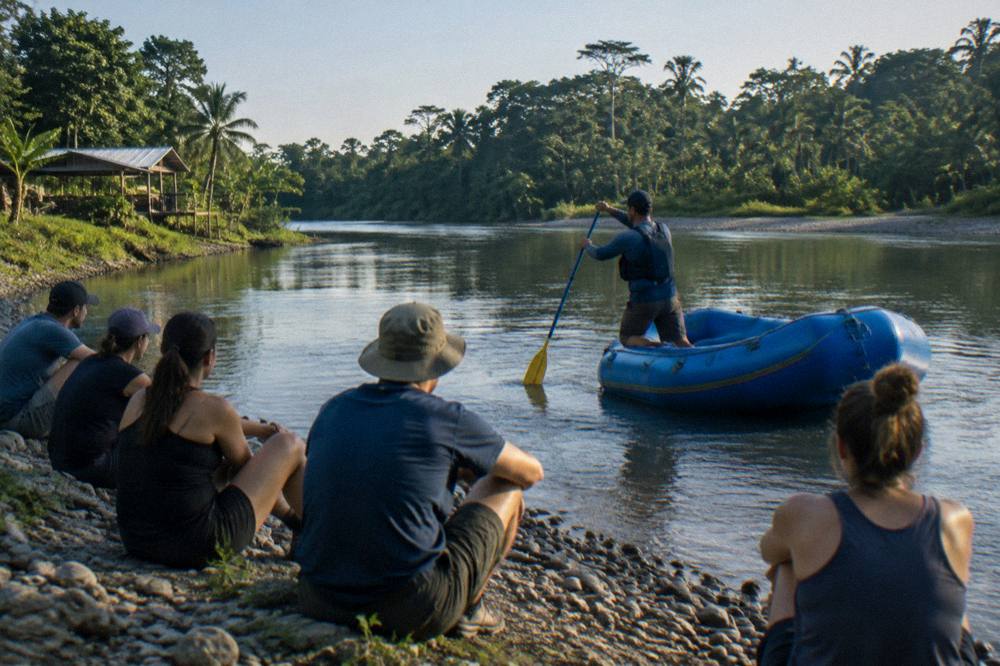
Judge an operator on verifiable signals: certified guides named in the listing, safety equipment and a pre-river briefing listed as inclusions, a stated minimum age, a group-size cap, and a published free-cancellation policy. Reviews matter most when the pool is large enough to read patterns; print the count beside any rating you rely on.
The roster itself demonstrates what those signals look like. The Class 3-4 La Fortuna trip lists hotel pickup and drop-off, lunch, a local guide, use of safety equipment and a photographer, with a minimum age of 15 and up to 25 guests, rated 4.9 from 136 reviews. The Class III-IV extreme trip from La Virgen lists safety instructions before the river, internationally certified guides, safety equipment, lockers and changing rooms, rated 5.0 from 108 reviews, minimum age 14. These are the details that separate a documented operation from a vague one.
| Signal | Strong version | Weak version |
|---|---|---|
| Guide certification | "Internationally certified guides" or equivalent, stated | No guide credential mentioned |
| Safety briefing | "Safety instructions before the river" listed as an inclusion | Nothing about a briefing |
| Minimum age | A specific number on the listing | "Check the listing" is this site's advice when absent |
| Group size | "Up to 15 guests" style cap stated | No cap stated |
| Reviews | Hundreds of reviews, rating printed with count | A handful of reviews, no rating claim |
Be careful with small review pools. A 5.0 from three reviews is a rating from three people, not a verdict. This site's practice of printing counts beside ratings exists for exactly this reason, and products with too few reviews for a star claim are labeled as such rather than dressed up.
Departure logistics are part of the judgment too. The Sarapiqui River Rafting roster separates trips by where they start: operator-base trips in La Virgen de Sarapiqui and Chilamate, where a van takes you to the river and back, and hotel-pickup trips from La Fortuna or San Jose. Never assume a La Fortuna departure meets at the river base; check the listing. The getting to La Virgen guide covers the routes, including the rainy-season closure pattern on Route 32.
What Happens If The Sarapiqui River Is Too High?
Operators cancel or reroute Sarapiqui trips during high water events, flooding and road closures, and every listing on this roster shows free cancellation. The river is undammed, so its level moves with rainfall: the green season commonly pushes sections toward Class III-IV while the dry season favors Class II-III conditions. A cancellation is the safety system working as intended.
This is where the buyer's flexibility matters more than any promise. Green season runs May to November, with November the wettest month in the Sarapiqui lowlands at roughly 445 mm of rain over about 17 rainy days, and April the driest at roughly 117 mm over about 8 rainy days, against an annual average near 3,464 mm. Daytime air sits around 28 to 30 C year-round. The river levels by season guide unpacks what that means for rapid class month by month, and the green season rafting page covers booking in the wetter half of the year.
| Condition | Typical operator response | Your practical move |
|---|---|---|
| Heavy rain, high water | Trip cancelled or rerouted to a calmer section | Keep one flexible day in your itinerary |
| Road closure on Route 32 | Rebooking or an alternate route via Bajos de Chilamate | Build slack into travel days in green season |
| Lower dry-season flows | Class II-III conditions commonly reported | Ideal window for first-timers and families |
| Higher green-season flows | Stronger currents, bigger waves reported | Choose a class below your maximum comfort |
Free cancellation is listed across the roster, from the budget $60 Class II-III trip to the $122.04 Class III-IV full days, and it is the policy that makes weather risk manageable for the buyer. Read its terms on the listing; operators write their own windows.
The steeper-water option for confident paddlers, for reference, is the Class IV extreme 5-hour trip from La Fortuna, 4.9 from 29 reviews, from $85 per person with lunch and a listed minimum age of 14.
Three products span the full spread of what this river sells, from the entry-level Class II-III run to the most reviewed Class IV descent, and comparing them side by side is the fastest way to see how class, price and review pool line up.
Common Questions About Rafting Safety In Costa Rica
Is white water rafting in Costa Rica safe?
No official rafting-specific incident statistics exist, so no safety verdict can honestly be printed. What is verifiable: national norms require certified guides, mandatory operator-supplied helmets and vests, and minimum ages by rapid class, and operators cancel trips in high water.
Do I need to know how to swim to go rafting in Costa Rica?
The national norm does not set a swimming requirement, but operator policies commonly require swimming ability and good physical condition for whitewater trips. Requirements vary by operator and trip; check the listing for the specific policy.
Who supplies the helmets and life vests?
The operator does. The national rafting norm INTE G60-1:2019 requires operators to supply and verify helmets and personal flotation devices for every participant, and the roster's listings consistently include this equipment in their stated inclusions.
Are Costa Rica rafting guides certified?
Commercial guides must hold national certification in rafting and swiftwater rescue plus current first aid and CPR under INTE G60-2:2019, and adventure tourism regulation requires ICT-credentialed or approved guides for rafting.
Can kids go white water rafting in Costa Rica?
Yes, within the norm's age ladder: ages 5 to 7 are legal on Class I and II only, ages 8 to 11 up to Class III, and ages 12 to 17 up to Class IV. Many operators set higher minimums; the La Virgen family trip lists minimum age 6 and the Class III-IV extreme trip lists 14.
What happens if the river is too high on my rafting day?
Operators cancel or reroute trips during high water, flooding or road closures, and every listing on this roster shows free cancellation. The undammed Sarapiqui rises with rainfall, so build a flexible day into green-season itineraries.