What To Wear Rafting In Costa Rica
A day on the Sarapiqui means humid air, splashing rapids and strong lowland sun, sometimes all within the same hour. Here is what to wear, what the operator hands you, and what to leave at the hotel.
Short answer
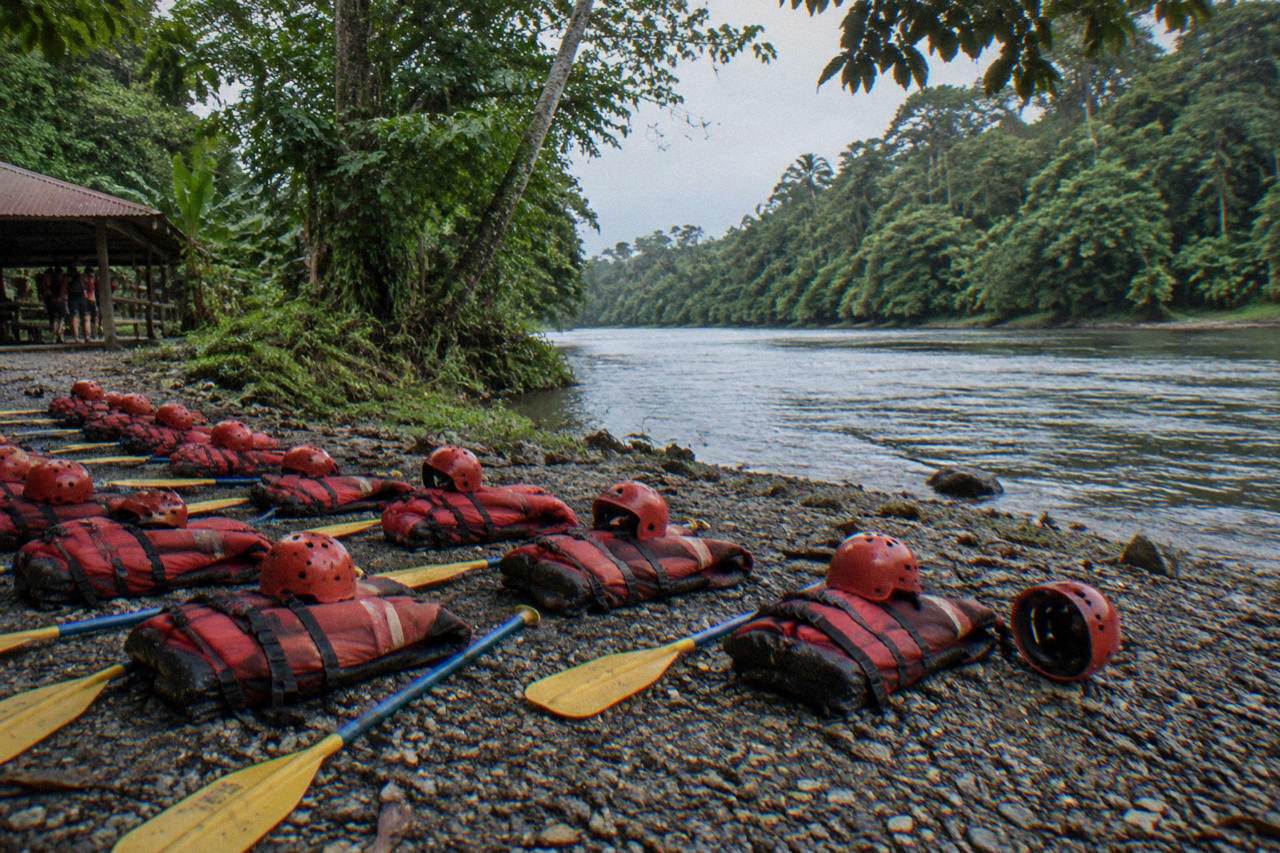
Wear a quick-dry shirt and shorts, secure water shoes or old sneakers, a swimsuit underneath, and a strap for any glasses. The outfitter supplies the helmet and life jacket, which national rafting norms require. Bring sunscreen, insect repellent, a change of dry clothes and a towel. Avoid cotton, flip-flops and anything you would mind losing to the river.
Rafting the Sarapiqui is a wet, warm, brightly lit affair. Daytime air in the lowlands typically sits around 28 to 30 C year-round, the river is rain-fed with no dams, and the runs wind under jungle cover that opens onto direct sun on the water. Clothing that works in that mix is not complicated, but the wrong shoes or a cotton shirt can make a good trip miserable. The most reviewed trip on this site, the Class IV run from La Fortuna, includes towels and fresh fruit alongside the safety gear, and what you wear under the helmet and life jacket is the part you control.
This guide covers clothing, footwear, sun and insect protection, what operators on the roster actually hand you, and the pieces of kit that reliably end up lost to the river. It draws on the operator listings compared on Sarapiqui River Rafting and on Costa Rica's national rafting norms, which say more about your kit than most visitors expect.
What Should You Wear Rafting On The Sarapiqui River?
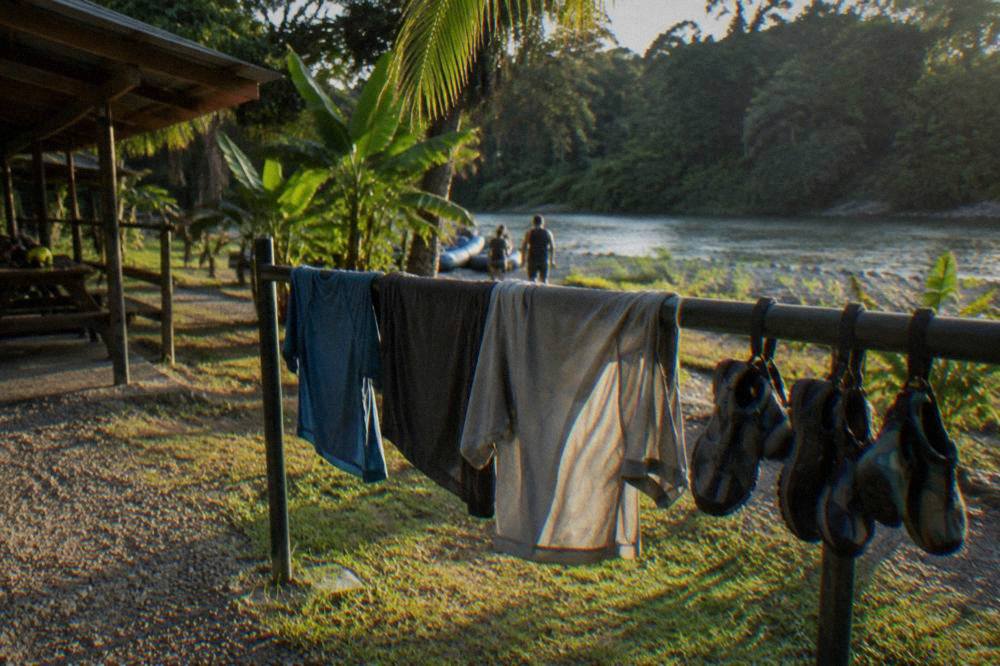
The working answer is a swimsuit as a base layer, quick-dry shorts or leggings over it, and a synthetic or merino top, either a t-shirt or a rash guard. Cotton stays at the hotel: it soaks through on the first rapid and stays heavy and chafing for the rest of the run. Every piece you wear should be something you could swim in comfortably, because on a Class III or IV day, you will.
The Sarapiqui's two common trip types make slightly different demands. The Class II-III family runs, like the family rafting adventure that departs from the operator base in La Virgen de Sarapiqui, from $85 per person, splash regularly but rarely swamp the boat. The Class III-IV trips, including the Class IV run from La Fortuna, hit bigger waves and higher water in green season, so clothes get fully soaked. Plan for the wetter version and the calmer day takes care of itself.
Fabric is the whole game. Polyester, nylon and merino wool drain and dry fast and hold their shape under a life jacket. A rash guard adds shoulder comfort under the jacket's straps, which matters on trips with a lot of paddling; the Class 3-4 run from La Fortuna, from $122.04 per person, is a full 6-hour day. Dark colors hide river silt better than white. If you burn easily, a long-sleeve synthetic shirt beats reapplying sunscreen on the water, where it washes off anyway.
For the lower half, board shorts or quick-dry hiking shorts with a drawstring work well. Leggings suit paddlers who chill easily or want sun coverage. Skip jeans, heavy cargo shorts and anything with stiff seams, all of which take on water and rub under a spray-soaked seat.
| Layer | Wear This | Skip This | Why |
|---|---|---|---|
| Base | Swimsuit, one or two pieces that stay put | Loose trunks with no tie | You will swim or be drenched |
| Top | Synthetic t-shirt or rash guard | Cotton shirts, hoodies | Cotton stays wet and chafes |
| Bottom | Board shorts, quick-dry shorts, leggings | Denim, heavy cargo shorts | Weight and rub when soaked |
| Extras | Strap for glasses, tie for long hair | Jewelry, watches | The river keeps what it takes |
One habit worth adopting from experienced paddlers: dress for the swim, not the boat. Guides on the roster, from the La Virgen operator base to the La Fortuna departures, run certified crews and full safety briefings, but the river is natural and undammed. Water levels move with rainfall, reported Class II-III at lower dry-season flows and up to Class III or IV after heavy rain, and your clothes should work in either state.
Which Shoes Work For Whitewater Rafting In Costa Rica?
Secure footwear means strapped sandals, water shoes, or old sneakers with a decent tread, always attached to your foot at more than one point. Flip-flops and slip-on canvas shoes fail instantly on a wet raft floor and are the single most common item surrendered to the river. Operators' own advice, repeated across Sarapiqui listings, is tennis shoes or secure water shoes, and barefoot is not an option on rocky banks.
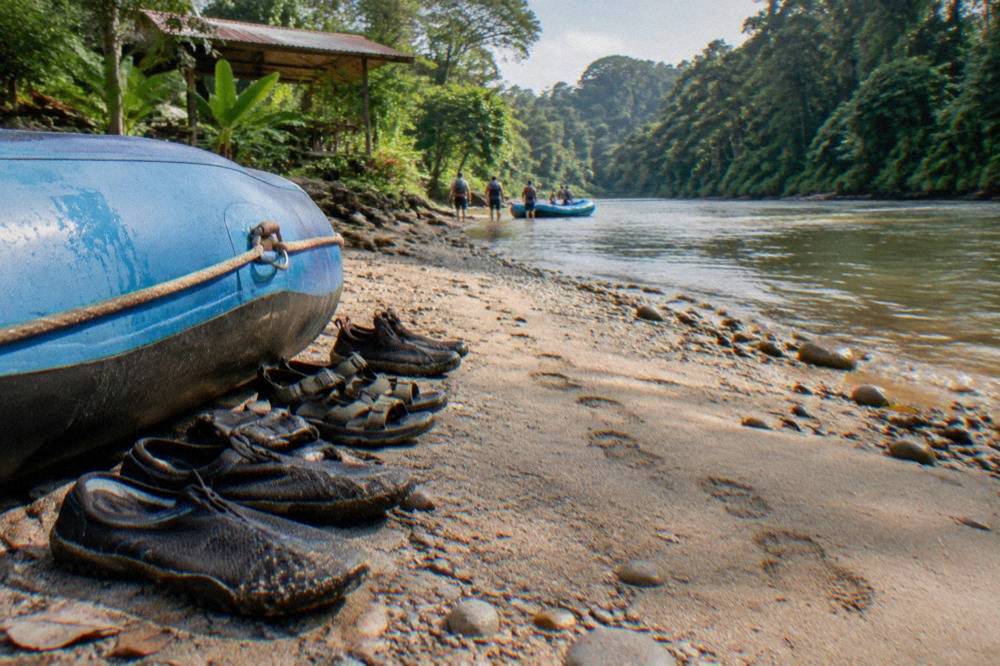
The reason is the get-in and get-out. You will wade a short distance over rounded river stones, and wet rock is slick under anything flat-soled. A heel strap or a laced upper keeps the shoe on your foot when you brace it under the raft tube. Thick soles protect against stones; thin beach slippers protect against almost nothing.
Your shoes also live inside the raft, not on it. Anything not attached to you bounces during rapids, and a shoe lost mid-run means a barefoot walk to the vehicle. Listings for the budget 3-hour Class II-III trip from La Virgen, from $60 per person and rated 5.0 from 59 reviews, include a towel but no footwear, so the shoes are entirely yours to bring.
Footwear for the whole family day follows the same rule at every age. The family Class II-III adventure lists a minimum age of 6 and up to 24 guests, and children's water shoes with a heel strap are inexpensive and worth it. Adults borrowing old running shoes should check the laces hold a knot when wet; round nylon laces famously do not.
| Footwear | Verdict | Notes |
|---|---|---|
| Strapped sandals (heel strap) | Good | Drain fast, grip wet rock |
| Water shoes | Best | Sole protection plus drainage |
| Old sneakers | Good | Lace them tight; they will stay wet |
| Trail runners | Acceptable | Heavy when soaked |
| Flip-flops, slides | Do not bring | First thing the river eats |
| Barefoot | Not permitted in practice | Rocky put-ins and take-outs |
After the run, wet shoes ride home in a plastic bag while you change into dry shoes at the base. Several La Virgen listings, including the family trip and the extreme Class III-IV adventure that shares the same operator base, list changing rooms, lockers and showers, so a dry pair waiting in the van finishes the day properly.
What Does Your Sarapiqui Rafting Outfitter Supply?
On every roster trip compared here, the operator supplies the helmet and the personal flotation device, plus paddle and raft, and the national rafting norm requires operators to provide and verify both helmet and life jacket for every participant. Most listings add snacks or fruit, transport to the river from the meeting point, and often lunch. You bring clothes, shoes and personal protection; the safety kit is theirs.
The safety equipment is not a courtesy, it is regulation. Costa Rica's national technical rafting norm INTE G60-1:2019 requires operators to supply and verify helmets and life jackets meeting national or international standards, including specified buoyancy for Class III and above. So on the Class III-IV trips, from the La Fortuna Class 4 run with lunch, 5.0 from 29 reviews and from $122.04 per person, to the Jungle Run at from $123 per person, the flotation you wear is operator-issued and checked.
Beyond the mandatory kit, the listings differ, and it is worth reading your specific one before packing. A short comparison of what the main trip types hand you:
| Trip | Roster Price | Safety Gear | Extras Listed |
|---|---|---|---|
| Class IV from La Fortuna (845 reviews) | from $85 per person | Included | Lunch, towels, fresh fruit, bottled water |
| Family Class II-III, La Virgen base | from $85 per person | Included | Fruit and yucca snack, lockers, changing rooms |
| Rafting Adventure at Rio Sarapiqui | from $70 per person | Included | Snacks |
| Class 3-4 from La Fortuna, 6 hours | from $122.04 per person | Included | Lunch, guide, photos for purchase |
| Budget 3-hour Class II-III, La Virgen | from $60 per person | Included | Towel, fruit, cookies |
Photos are almost always extra. Several listings state outright that souvenir photographs are sold at the end of the trip, so leave your own phone locked in the locker or the vehicle rather than risking it on the water. The wildlife safari float from the La Virgen base lists photos at an additional price of $35; on whitewater runs, an operator photographer or kayaker usually shoots the rapids and sells the set afterward.
What operators do not supply is your personal kit: sunscreen, repellent, dry clothes and a towel on the listings that omit one. The Aguas Bravas rafting trip from Chilamate, 4.9 from 101 reviews and from $70 per person, includes lunch, but not your shirt or your shoes. Pack as if everything wearable is your job.

Do You Need A Wetsuit Or Rash Guard In Sarapiqui?
Most paddlers do not need a wetsuit on the Sarapiqui. Air temperatures run about 28 to 30 C year-round. A rash guard or synthetic long-sleeve shirt is the more useful layer: it cuts sun, protects shoulders under the life jacket, and dries fast on the ride back.
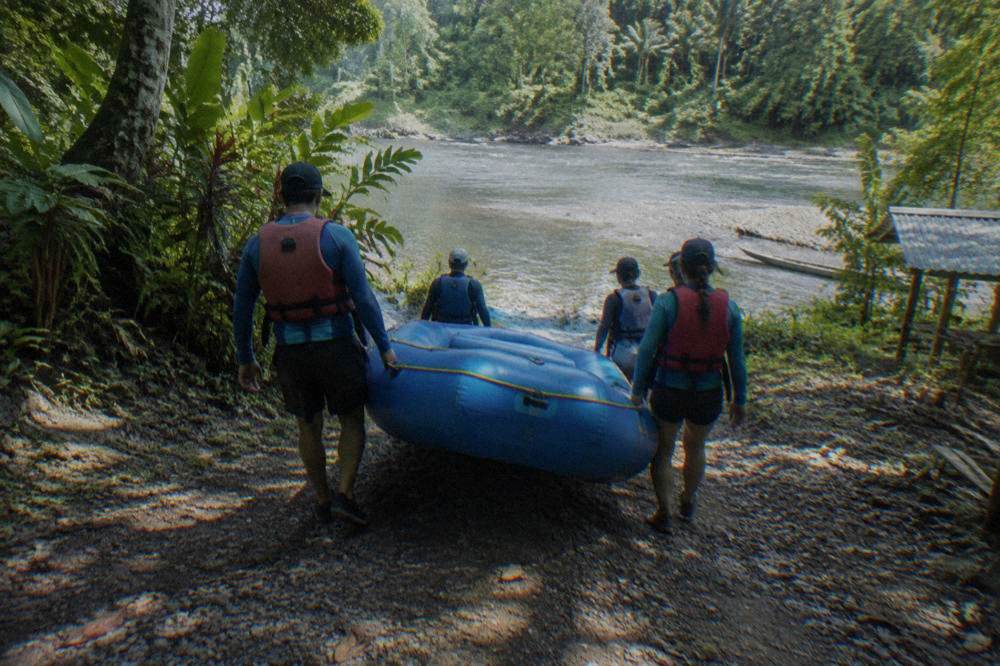
No roster listing for the Sarapiqui mentions wetsuits, and none of the operator descriptions reviewed here suggest them. That is consistent with the climate data for the lowlands, where even the wettest month, November, averages around 445 mm of rain but daytime heat holds steady. If you run cold or are rafting early morning in the green season, a thin neoprene top or a fleece-lined synthetic is a reasonable personal choice, but it is extra, not standard.
Rash guards earn their place three ways. They block UV on exposed shoulders and arms, the exact spot a life jacket leaves open. They reduce chafe from jacket straps during hours of paddling. And they stay comfortable wet in a way no cotton shirt manages. The mid-price 3-hour run from Chilamate, 5.0 from 26 reviews and from $79 per person, is shared with up to 36 guests, which means a full boat and plenty of splash even on gentler water.
Long pants are a personal call. Leggings protect from sun and the occasional scrape but hold water; shorts dry faster and feel cooler under strong midday sun. In the dry season, December to April, when flows run lower and reports put the family sections at Class II-III, shorts and rash guard are plenty. In peak green season, June to October, when operators report the same sections pushing Class III or IV with stronger currents, more paddlers opt for full arm and leg coverage.
Sunglasses deserve a specific word: if you wear prescription glasses or any sunglasses on the water, use a retainer strap. Guides report fishing glasses out of the river weekly. A cheap strap costs less than any pair of lenses, and prescription glasses lost mid-rapid are gone for good.
How Do You Handle Sun And Insects On A Sarapiqui Rafting Day?
Use reef-safe sunscreen SPF 30 or higher, applied before departure and reapplied at the fruit break, plus insect repellent on exposed skin for the banks and the shuttle ride. Reflected UV off the water and raft tubes is real even under jungle canopy, and the lowland forest shuttle legs are where mosquitoes find you, so clothing and sunscreen carry most of the sun protection since a hat rarely fits under a helmet.
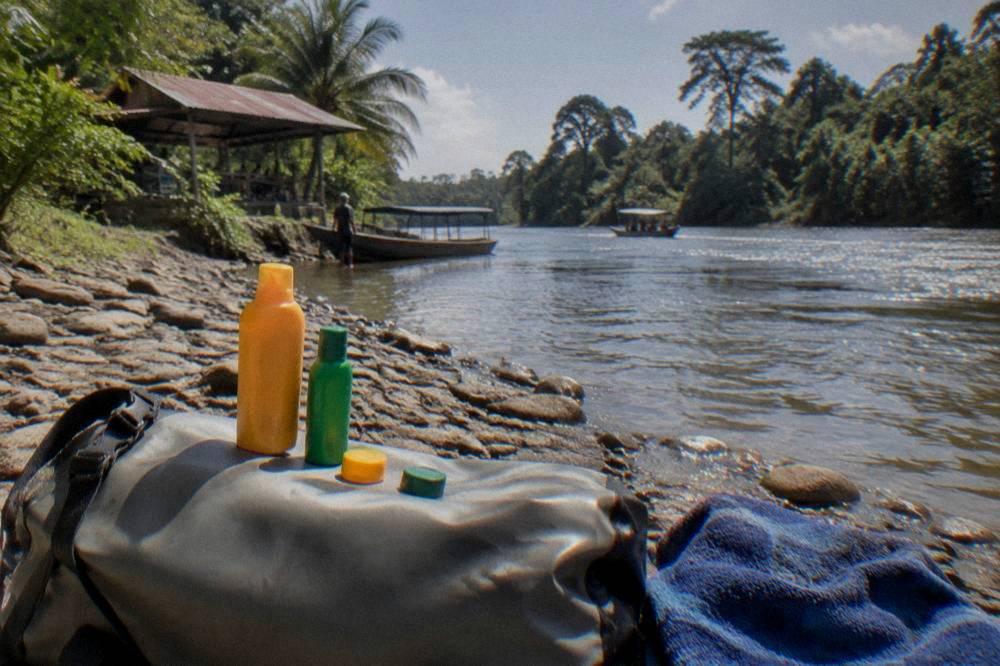
Operator and packing advice across current Sarapiqui listings is consistent: clothes that can get wet, secure footwear, and sunscreen and insect repellent in the day bag. Apply the first sunscreen coat before you leave the hotel, since it needs time to bind and the morning departures, typically between 7:00 and 8:30 a.m., come early. Reapply at the snack stop; most trips pause for tropical fruit partway through, and that is the natural moment.
Repellent matters more at the put-in, the take-out and the ride than mid-rapid, where moving water and spray keep insects off. The river corridor is lowland rainforest: sloths, monkeys, toucans, iguanas, caimans and aquatic birds are commonly reported by operators and guests along the banks, and where there is rainforest there are biting insects at the edges. The nearby reserves tell the same story; Braulio Carrillo National Park, adjacent to the Sarapiqui area, is open daily 8:00 a.m. to 3:30 p.m., and its visitors come prepared for the same conditions.
| Item | Where It Matters | Notes |
|---|---|---|
| Sunscreen SPF 30+ | Whole day, reflected off water | Apply before departure, reapply at fruit break |
| Lip balm with SPF | On the water | Wind and spray strip it fast |
| Insect repellent | Banks, put-in, shuttle rides | Lowland forest edge |
| Wide-brim hat | Base and lunch, not under helmet | Helmets rule on the river |
| Long-sleeve synthetic | On the water | Best sunscreen that cannot wash off |
A dry bag or at least a sealed plastic bag for the ride is standard practice. Keep sunscreen and repellent accessible rather than buried, or the reapply window disappears. The Class IV run from La Fortuna lists towels and bottled water at the end of the trip, which helps, but your own small kit stays with you in the vehicle.
What Should You Not Wear White Water Rafting?
Leave behind cotton in every form, flip-flops, jewelry, watches, anything with real sentimental value, and any phone or camera without a waterproof case and a leash. Denim, hoodies and heavy fabrics soak, sag and chafe. Thumb rings and loose bracelets catch on paddle handles. The rule paddlers use is simple: assume anything not strapped to you goes in the river, and dress so that losing it would not ruin the day.
The loss list on a commercial river is remarkably consistent: one shoe, one sunglasses lens, one phone, per busy week. Lockers at the La Virgen operator base exist for exactly this reason; listings for both the family Class II-III trip and the extreme Class III-IV adventure, each from $85 per person, include secure lockers, dressing rooms and WiFi, so the phone can stay ashore and connected while you paddle.
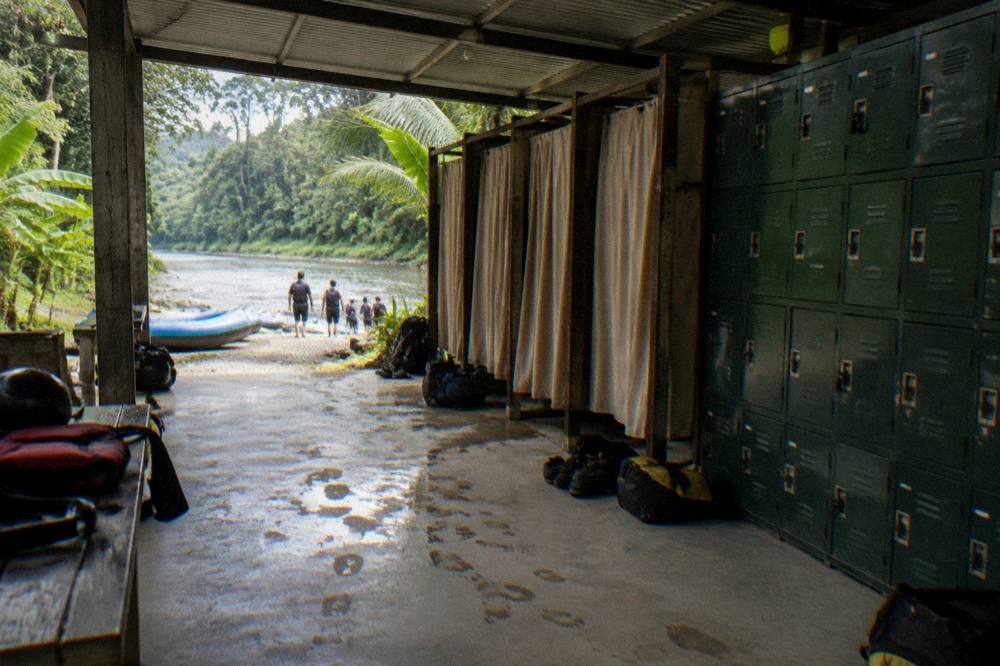
Clothing that causes trouble beyond the soaking kind deserves mention too. Very loose tank tops ride up under life jackets and trap arms. Zippers and large buckles press into your ribs under a tight flotation device. Brand-new shoes with stiff soles slip on wet rock worse than a worn pair. And white or light fabric goes transparent when drenched, which surprises more first-timers than any rapid does.
Makeup and perfumes simply wash off, and perfumes can attract bees at the fruit stop. Contact lens wearers should consider sports goggles or daily disposables; a Class IV wave will take a lens without negotiation. If you must shoot photos on the water, a wrist-leashed waterproof camera is the only version worth risking, and even then operators will ask you to stow it during the biggest rapids.
Electronics aside, the honest framing is this: rafting days end with everyone soaked, grinning and changing into dry clothes in a dressing room. Dress for that ending and the middle takes care of itself.
What Should Kids Wear Rafting In Costa Rica?
Children should wear the same kit as adults, scaled down: swimsuit, quick-dry top, shorts or leggings, and strapped water shoes, with the operator's child-size helmet and life jacket supplied on site. The national norm sets ages by rapid class, and on the roster the family Class II-III trip from La Virgen lists a minimum age of 6. Parents should check the listing for each trip, since operator minimums vary and often sit above the legal floor.
The legal ladder matters when you are matching a child to a trip. Under national norm INTE G60-1:2019, ages 5 to 7 may only paddle Class I and II, ages 8 to 11 up to Class III, and ages 12 to 17 up to Class IV. That makes the Class II-III family runs the natural first river for school-age kids, and the Class III-IV trips, like the Class III-IV extreme adventure from La Virgen, which lists a minimum age of 14, a teenage-and-up affair. The full age rules are covered in the guide to rafting age and weight limits.
Kit notes for children: a synthetic long-sleeve rash guard does double duty against sun and chill, since kids sit lower in the boat and get splashed more. Strapped sandals or water shoes in the right size, not a borrowed pair a size up, keep them steady on the put-in rocks. A strap for prescription glasses matters doubly for kids who cannot read the water without them.
Dry clothes for after are the parent's job. The family listing includes a tropical fruit and yucca snack, lunch, lockers and changing rooms at the base in La Virgen, but the dry outfit in the locker is yours to pack. Bring a full change, down to the shoes, and a plastic bag for the wet set.
Families combining the rafting day with gentler options can also look at the wildlife safari float from the same base, which lists a minimum age of 4 and up to 50 guests, from $90 per person. It is a paddle-free float rather than whitewater, and the clothing logic still holds: quick-dry everything, secure footwear, sun protection, and nothing precious on board.
Where Do You Change And Store Dry Clothes On A Rafting Day?
You change and store dry clothes at the operator's own facilities: the La Virgen base offers lockers, dressing rooms, showers and WiFi on both its family and extreme trips, the San Jose full-day listing includes shower and changing facilities, and on La Fortuna departures changing happens at end-of-trip facilities, so ask the listing. Pack a full dry outfit with shoes, one towel per person unless provided, and a waterproof bag for the wet kit.
The pattern across the roster is that trips leaving from a fixed base, the La Virgen listings and the Chilamate operations, have the fullest facilities. Trips that collect you at your hotel, like the near-Arenal Class II-III tour, 5.0 from 101 reviews and from $105.87 per person with transport included, base their logistics around the vehicle, and the dry bag rides with you. Neither is better; they are different logistics, and the listing describes each one.
A small dry bag or two sealed gallon bags solve most problems: one for the dry change, one for the wet return. Roll the wet kit tight, keep the shoes separate, and the vehicle stays livable on the drive back. Tipping, if you choose to, is typically US$5 to $10 per person for a half-day group tour and US$10 to $20 for a full day, as operators and travel sites commonly report, so a little cash in a zip pocket beats a soaked wallet.
First-timers wanting the fuller picture of how the day runs, briefing, paddling commands, swimming rescue positions, will find it in the guide to first-time rafting in Costa Rica, and the wider kit list beyond clothing, documents, cash, medication, sits in what to bring for a rafting trip.
With the clothing logic settled, the trips themselves are the next decision.
Common Questions About What To Wear Rafting In Costa Rica
What should you wear rafting in Costa Rica?
A swimsuit base, quick-dry shorts and a synthetic top or rash guard, plus strapped sandals, water shoes or old sneakers. The operator supplies the helmet and life jacket. Add sunscreen, insect repellent and a full dry change for afterward, and skip cotton, flip-flops and jewelry entirely.
Do you need a wetsuit for the Sarapiqui River?
Almost never. Daytime air runs about 28 to 30 C year-round and the river is rain-fed tropical runoff, and no roster listing mentions wetsuits. A rash guard or long-sleeve synthetic is the more useful layer for sun and shoulder comfort under the life jacket.
What shoes are best for whitewater rafting?
Anything that attaches at the heel or laces tight: water shoes, strapped sandals or old sneakers with real tread. Flip-flops, slides and loose slip-ons fail on wet raft floors and rocky banks, and barefoot access is not practical at the put-ins and take-outs.
Does the rafting operator provide the helmet and life jacket?
Yes, on every listing compared here, and Costa Rica's national rafting norm requires operators to supply and verify both for each participant. Guides must hold national certification in rafting and swiftwater rescue with current first aid and CPR under the companion guide standard.
Can you wear glasses or sunglasses on the raft?
Only with a retainer strap. Waves and spray take unstrapped glasses quickly, and prescription pairs are unrecoverable mid-rapid. Use a cheap strap for sunglasses, and consider daily disposable contact lenses or sports goggles for prescription wearers.
Where do you change clothes after rafting?
At the facilities each listing names. The La Virgen operator base lists lockers, dressing rooms and showers on its family and extreme trips, and the San Jose full-day listing includes shower and changing facilities. Pack a complete dry outfit and a bag for the wet kit.