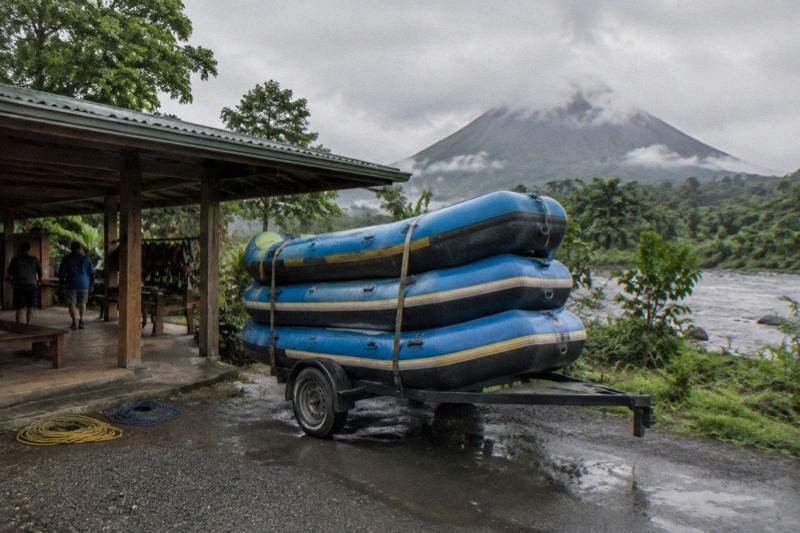
What Not To Wear When White Water Rafting In Costa Rica?
Cotton, jewelry, flip flops and cameras: the clothing mistakes that ruin a Sarapiqui rafting day, and what to wear instead, based on operator listings and national safety norms.
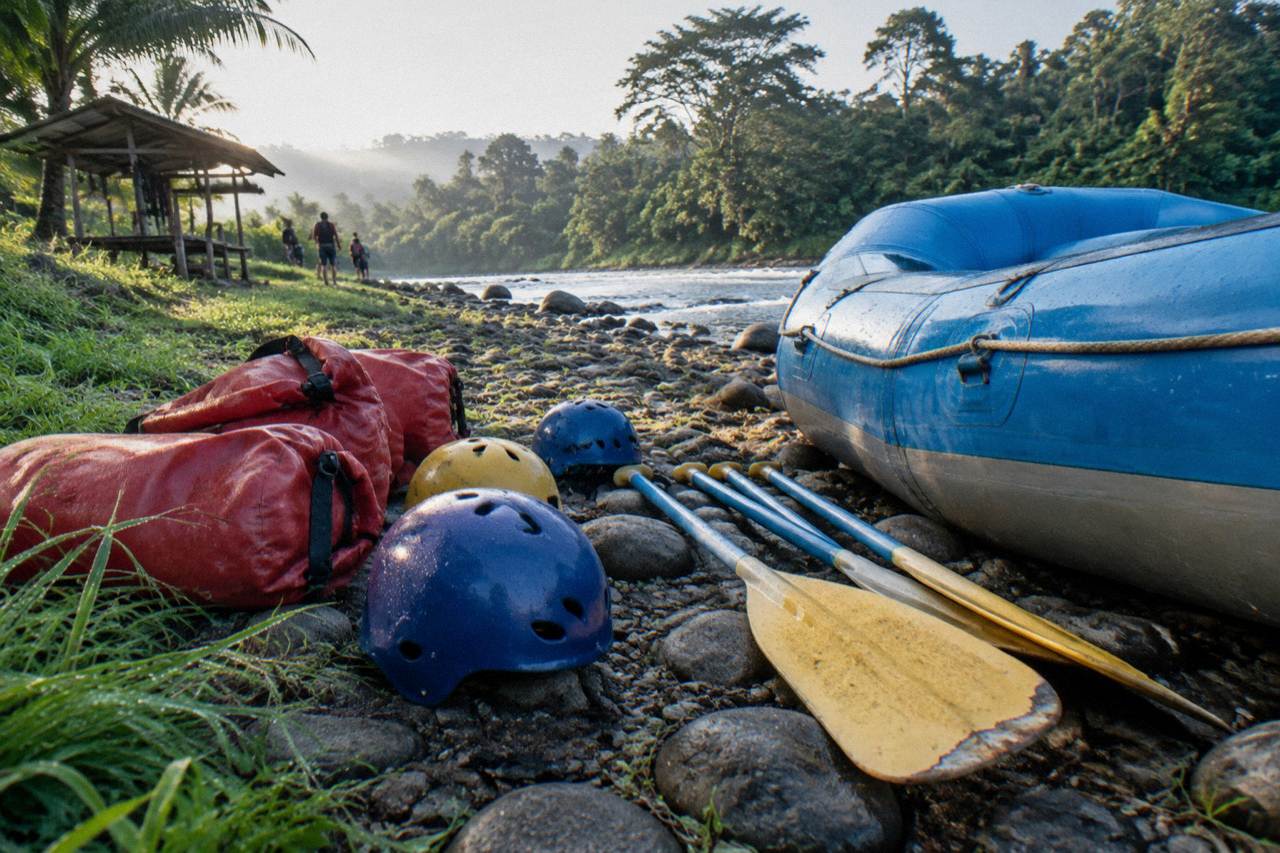
Clothing is the one part of a rafting trip the guest fully controls, and it is the part most often gotten wrong. The guides bring certified gear, the van brings the lunch, and the river brings the water; what the rafter wears decides whether the day feels like a swim with friends or a long, chafing regret. On the Sarapiqui, where operators commonly report trips running on a rain-fed river with water levels that move with the weather, the clothing mistakes are consistent enough to list. Once your outfit is sorted, the next question is how safe the sport really is, and the honest look at rafting fatality rates in Costa Rica explains what operators must follow under the national safety norms before you book a Sarapiqui trip.
The short version: no cotton, no flip flops, no jewelry, no unprotected phone or camera, and nothing you would be upset to lose or unable to swim in. The listings on this site, from the budget 3-hour Class II-III trip at from $60 per person to the Class IV extreme trip at from $85 per person, all include safety equipment such as helmets, life jackets and paddles in the price; everything else the rafter supplies. Operators and travel sites consistently recommend quick-dry clothes, secure shoes, a change of dry clothes, sunscreen and insect repellent, as the logistics research behind this site records.
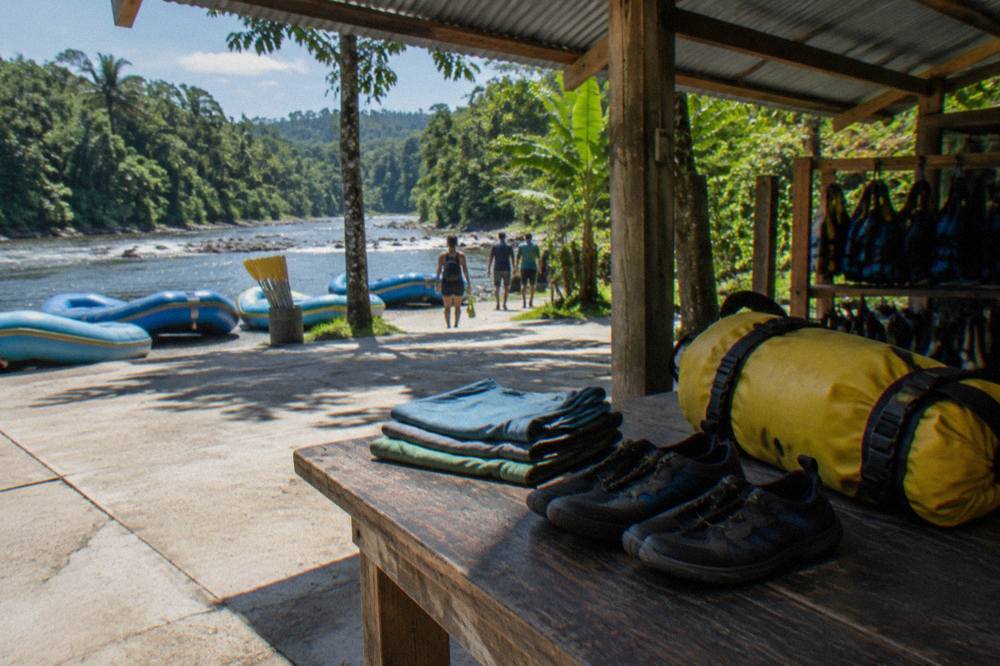
The five items to leave behind are cotton clothing, flip flops or any unstrapped sandal, jewelry and watches, unprotected phones and cameras, and anything loose or heavy that holds water, from denim jeans to bulky hoodies. Operators report the same list across the Sarapiqui listings: wear quick-dry layers, secure shoes, and bring a dry change of clothes for after the run.
Every item on that list fails for a physical reason, not a style one. Cotton absorbs water, stops insulating the moment it is soaked, and takes hours to dry in tropical humidity, which matters even on a warm day because a wet shirt plus a van's air conditioning is a reliable way to end a trip shivering. Flip flops float away in the first rapid and leave the walker barefoot on the rocks at the take-out. Jewelry catches, tangles, and disappears into the river, and an unprotected phone survives exactly until the first wave. The rest of this article walks through each mistake, why it fails, and the swap that works, drawing on the packing advice the operators themselves publish and the packing guidance in what to bring for a Costa Rica rafting trip.
For readers who already know their dates, the clothing question matters most on the bigger-water trips, where you are guaranteed to be swimming whether you plan to or not.
The three trips above span the range most Sarapiqui guests choose from: the most reviewed Class IV listing on this site, a Class II-III run that doubles as transport between La Fortuna and San Jose, and a full-day Class 3-4 Jungle Run. The clothing advice that follows applies to all of them.
Why Cotton Fails On The River
Cotton holds water against the skin, loses all insulating value when wet, and dries slowly in Costa Rica's humidity, so a cotton shirt or denim shorts makes a rafter colder and heavier across a multi-hour trip. Synthetic or merino layers shed water in minutes and keep working after a swim. The rule operators repeat is simple: if the label says cotton, leave it in the hotel.
The physics is unglamorous. Cotton fibers absorb several times their weight in water and hold it in the fabric, which means the shirt that felt fine on the van becomes a cold, heavy layer the moment the raft hits the first wave. In 28 to 30 degree daytime air, common year-round in the Sarapiqui lowlands, a soaked cotton shirt is tolerable in the sun and miserable in the shade, in the wind on the water, or in an air-conditioned vehicle on the drive back. Denim is the worst offender: it is heavy cotton, it restricts the paddle stroke when wet, and it chafes badly at the seams.
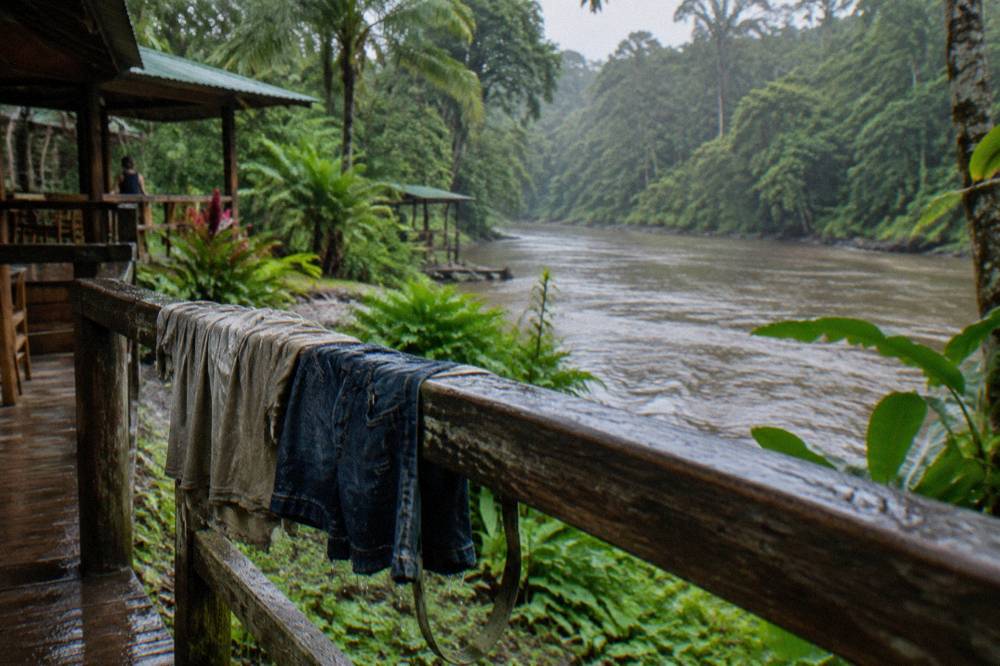
What works instead is anything sold as quick-dry or moisture-wicking: a synthetic T-shirt or rash guard, board shorts or running shorts with a drawstring, and for green-season trips a light synthetic layer for after the run. The listed inclusions on the roster's tours are a useful reality check here. The family Class II-III trip from La Virgen includes tropical fruit and yucca snacks, lockers, changing rooms and all safety equipment, but no clothing; every listing on this site follows the same pattern, the operator supplies helmet, life jacket and paddle, and the guest supplies everything worn under them. The national rafting norm INTE G60-1:2019 requires operators to supply and verify helmets and life jackets for every participant, as the norm's official text states; nothing in it obliges anyone to hand you a dry shirt.
There is a planning wrinkle worth naming. Photos are a paid extra on most listings, several of which list souvenir photographs as an exclusion, so the rafter who wants pictures either buys the operator's shots or brings a protected camera. The guest who shows up in cotton and brings an unprotected phone has arranged the worst of both worlds: cold on the water and no pictures after it. Budget for the photo package or leave the phone in the locker the listing provides.
Flip Flops, Bare Feet And Footwear That Leaves
Flip flops, slip-on sandals without a heel strap, and brand-new shoes of any kind are the three footwear failures on a Sarapiqui trip: the first two come off in moving water, and the third blisters. Operators consistently recommend secure water shoes or old running shoes with a tight lacing, worn with socks on longer trips. Bare feet fail on the rocky, sometimes slippery banks at put-in and take-out.
The pattern repeats across trip types. On a gentle wildlife float such as the 3-hour Sarapiquí River Wildlife Safari Float, from $90 per person, guests paddle flat water in kayaks and mostly stay dry, but still walk wet, sloped ground at the start and finish. On the Class III-IV extreme trips, feet are in the water constantly, and the moments when footwear matters most are exactly the moments it is most likely to be gone: a swim through a rapid, a rocky shore, a wet van step. A heel strap is the entire difference between a sandal that survives the day and one that the river keeps.
| Footwear choice | What usually happens | Better swap |
|---|---|---|
| Flip flops | Gone in the first wave, barefoot walk at take-out | Strapped sport sandals or water shoes |
| Unstrapped slip-ons | Same as flip flops, plus a slippery sole on wet rocks | Any shoe with a heel strap or laces |
| Bare feet | Cuts and slips on rocky banks, hot van walks | Cheapest acceptable option: old sneakers |
| New hiking boots | Heavy when soaked, blisters within an hour | Broken-in running shoes |
| Cotton socks | Soggy, cold, abrasive all day | Synthetic or wool blend socks, or none |
Two roster details sharpen the point. The Class II-III family trip that departs the Sarapiquí Outdoor Center in La Virgen includes changing rooms, lockers and towels in its listed inclusions, so there is a place to switch out of wet shoes before the drive; use it. And the most reviewed trip on this site, the Class IV extreme run from La Fortuna with 5.0 across 845 reviews, lists towels and bottled water among its inclusions, which tells you the operator expects every guest to finish soaked. Plan footwear for that expectation, not for staying dry.
Should you bring shoes for the kids on a family float? Yes, and the same rules apply. The family Class II-III listing sets a minimum age of 6, and the wildlife safari float lists a minimum age of 4, so the youngest paddlers are the most likely to be walking banks and van floors in wet feet. Strapped sandals in children's sizes exist cheaply; a small cut on a river rock does not. Check the listing for each trip's minimum age and any weight guidance before booking, since operators set their own limits above the national norm's age-by-class table.
Jewelry, Watches And Things The River Keeps
Rings, necklaces, bracelets, dangling earrings and wristwatches are the consistent jewelry bans on rafting trips: they snag on gear, scratch other rafters in a pile-up, and drop into the river where nobody is diving after them. The same logic covers unprotected phones, non-waterproof cameras, and sunglasses without a strap. Leave valuables in the hotel safe or the operator's locker.
The mechanism is boringly mechanical. A ring catches on a paddle handle or the raft's grab line; a chain wraps around something at the exact moment a swimmer needs a clean release; a watch band tears when a wave hits the arm. None of it is exotic, and all of it is why operator packing advice, like that on river operators' own preparation pages, keeps the list short: things that can get wet, things that stay on your feet, and nothing precious. Sunglasses deserve special mention because they are the most commonly lost item that people insist on bringing; a cheap retainer strap fixes it for a couple of dollars.
Electronics follow the same rule with a wrinkle: almost everyone wants photos. The honest options are three. Buy the operator's photo package, which several listings explicitly offer as a paid extra at the end of the trip. Bring a genuinely waterproof camera with a leash, not a phone in a "splash-proof" case. Or leave everything and enjoy the fact that the guide's photos will be better than yours anyway. Phones in pockets fail so reliably on Class III-IV water that assuming the phone will be submerged is not pessimism, it is the base case.
What To Wear Instead, Trip By Trip
For a Class II-III family trip: quick-dry shirt, secured shorts, strapped sandals or old sneakers, hat with a brim, reef-safe sunscreen applied before the safety talk. For a Class III-IV run: the same base plus a rash guard, synthetic socks if shoes rub, and a dry set of clothes in the van. For a wildlife float: quick-dry basics and shoes that can walk a wet bank, with binoculars if the listing allows dry storage.
The differences between trip types are smaller than people expect, because the gear list is really a water-exposure list. A float guest might stay dry; a Class IV guest will not. The roster's own structure shows the spread: the budget Class II-III trip from La Virgen runs 3 hours at from $60 per person with fruit and cookies included, the Class II-III Fortuna-to-San-Jose run lasts 8 hours at from $122.04 per person with lunch, and the premium La Fortuna/Arenal Class III-IV day runs 8 hours at from $160 per person with food, drinks and even Arenal Volcano National Park entry included. An 8-hour day with two vehicle legs wants more dry layers in the bag than a 3-hour base trip, where you change at the operator's dressing rooms and drive home.
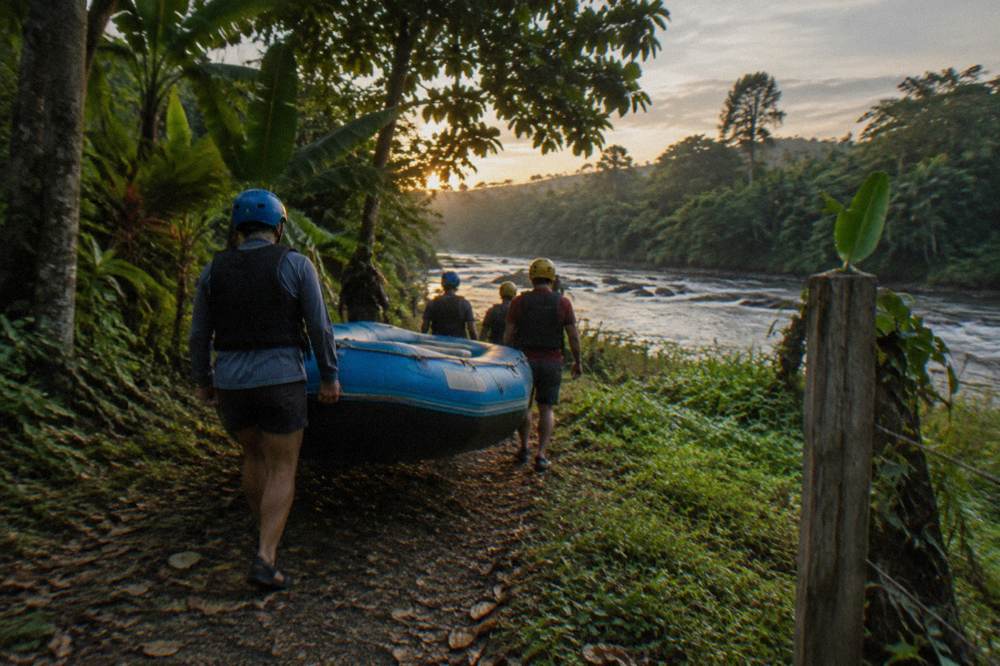
Two practical notes on season. Green season, May to November, brings higher flows and a real chance of afternoon rain, so a light synthetic layer for the return drive earns its space in the bag; the seasonal detail is covered fully in Sarapiqui river levels by season. Dry season, December to April, is lower and more predictable water, but the sun is the bigger opponent: a brimmed hat under the helmet is awkward, so sunscreen on the ears and neck does that job instead. Neither season changes the "no cotton" rule.
| Trip type on this site | Typical price and length | Wear on the water | Carry in the van |
|---|---|---|---|
| Class II-III family trip, La Virgen base | from $85 per person, 3 hours | Quick-dry shirt, secured shorts, strapped sandals | Towel, dry clothes, cash for photos |
| Budget Class II-III, no meal | from $60 per person, 3 hours | Same as above | Water bottle, snack, sunscreen |
| Class III-IV extreme from La Fortuna | from $85 per person, 5 hours | Rash guard, board shorts, old sneakers | Full dry change, towel |
| Class II-III Fortuna to San Jose run | from $122.04 per person, 8 hours | As Class III-IV, plus synthetic layer | Dry clothes accessible at both ends |
| Wildlife safari float | from $90 per person, 3 hours | Quick-dry basics, walking-capable shoes | Binoculars if dry storage allows |
The 8-hour connection trips deserve one extra line: because your luggage rides with you between La Fortuna and San Jose, pack the dry outfit where you can reach it without unpacking the whole bag at a riverbank changing room. Guests report this single packing choice deciding whether the second half of the drive is comfortable.
The budget end of the roster rewards preparation more than the premium end, because fewer things are handed to you. If cost is the constraint, the Class II-III trip from La Virgen at from $60 per person leaves real money for water shoes and a dry bag; check its live listing for transport details. Check availability alongside the full family float comparison.
What Not To Wear When White Water Rafting?
Stripped of the destination, the universal no-list is: cotton anything, flip flops or unstrapped sandals, jewelry and watches, unprotected electronics, baggy or heavy layers that trap water, and anything you cannot afford to lose. The universal yes-list is quick-dry layers, secure footwear, and a dry change waiting at the end. Every river and every operator repeats some version of this list because the physics does not change with the country.
That heading is the search phrase people actually type, and it is worth answering cleanly because the Costa Rica specifics sometimes get lost in generic packing advice. Tropical heat changes one thing: people assume wet clothes will be fine because it is warm, and mostly they are right, until the air-conditioned van. High water in green season changes another: on a rain-fed river with no dams, operators report rapid classes moving between Class II-III at lower dry-season flows and up to Class III or IV after heavy rain, so a trip booked as moderate can arrive bigger. Clothes chosen for "probably staying dry" fail on exactly those days.
Operators cancel or reroute trips in high water, flooding or road closures, and Route 32 landslides in rainy season are commonly reported; a flexible outfit plan, one that works wet and dries fast, is the clothing-level answer to a day whose water level you do not control.
The safety-equipment side is likewise the operator's job, not the guest's. The national norm mandates helmets and life jackets for every participant, guides must hold certification in rafting and swiftwater rescue with current first aid and CPR under INTE G60-2:2019, and the adventure-tourism regulation requires ICT-credentialed guides, as the regulation's official text shows. A guest who reads this while planning a first descent may also want the broader primer in first-time rafting in Costa Rica. Clothing is the guest's contribution to the same safety picture.
For anyone pairing a rafting day with other Sarapiqui plans, the clothing logic extends: the same quick-dry kit works for Tirimbina's trails and hanging bridges, and the operator lockers listed on the La Virgen trips exist precisely so the dry-world clothes are waiting. More pairing ideas sit in things to do in Sarapiqui.
The last word goes to the simplest test, the one that works in any packing list: before you zip the bag, hold up each item and ask whether it still works soaked, strapped, and shaken. Cotton fails the first, flip flops fail the second, jewelry and phones fail the third. What passes is usually a short list, and it fits in a small dry bag, which is why this site, Sarapiqui River Rafting, keeps the clothing advice short and spends its words on the trips themselves.
Common Questions About What To Wear Rafting In Costa Rica
What Not To Wear When White Water Rafting?
Cotton clothing, flip flops or unstrapped sandals, jewelry and watches, unprotected phones and cameras, and heavy layers like denim that trap water. Wear quick-dry layers, secure footwear, and keep a dry change of clothes for after the run.
Should I wear a swimsuit rafting?
A swimsuit works as a base layer, but wear quick-dry shorts or a rash guard over it. A swimsuit alone offers no sun protection for the shoulders and back during hours of paddling, and the operator's life jacket does not cover that job.
Do I need water shoes or can I wear sneakers?
Either works if it stays on. Old running shoes with tight laces are a common operator-recommended choice; flip flops and slip-ons do not. New shoes of any kind are a blister risk on a multi-hour trip, so break them in first.
Can I bring my phone on the raft?
Only in genuinely waterproof protection with a leash, and even then assume it will be submerged on Class III-IV water. Most listings sell souvenir photos as a paid extra at the end of the trip, which is the lower-risk way to get pictures.
Does what I wear change between dry and green season?
The base list stays the same year-round: no cotton, secure shoes, dry change packed. Green season, May to November, adds a light synthetic layer for the return drive and a higher chance you swim; dry season, December to April, puts more weight on sunscreen for exposed ears and neck.
Is a wetsuit needed on the Sarapiqui?
No operator listing on this site lists a wetsuit among inclusions, and daytime air in the Sarapiqui lowlands typically runs 28 to 30 C year-round. Quick-dry clothes are the standard kit guests report using.