Class II-III Sarapiqui Float For Families And First-Timers
The Class II-III run on the Sarapiqui River is the trip most families and first-time paddlers take: rolling waves, jungle banks, fruit snacks on the bank, and no prior rafting experience needed.
Short answer
The Class II-III Sarapiqui float is a beginner-friendly paddle with rolling waves and calm pools, open from age 8 by national norm, though listings set their own minimums, some as low as 6. Prices run from $60 to $122.04 per person depending on departure point and inclusions, and trips run about 3 to 8 hours total.
The Sarapiqui River has two commercial faces. The upper canyon serves the Class III-IV Jungle Run that strong paddlers travel for. The other face, the one most families meet, is the Class II-III run out of La Virgen de Sarapiqui: rolling wave trains, wide recovery pools, and enough current to feel like a real adventure without demanding experience. Operators describe it as the section for first-timers, school-age kids, and nervous grandparents, and the roster backs that up with fifteen separate Class II-III listings, more than any other trip type on the river.
The most reviewed family option is the Sarapiquí River Family Rafting Adventure Class II & III, rated 4.9 from 200 reviews, from $85 per person, with a listed minimum age of 6 and lunch included. Cheaper options exist too: the Budget 3-Hour Rafting from $60 per person holds a 5.0 rating from 59 reviews. This guide walks through what the float actually feels like, rapid by rapid, who it suits, which listing fits which family, and how the day runs from the meeting point at La Virgen de Sarapiqui. For the widest angle on booking a paddle in this country, the site's Sarapiqui River Rafting homepage compares every trip type side by side.
What Is The Class II-III Sarapiqui Float Like?
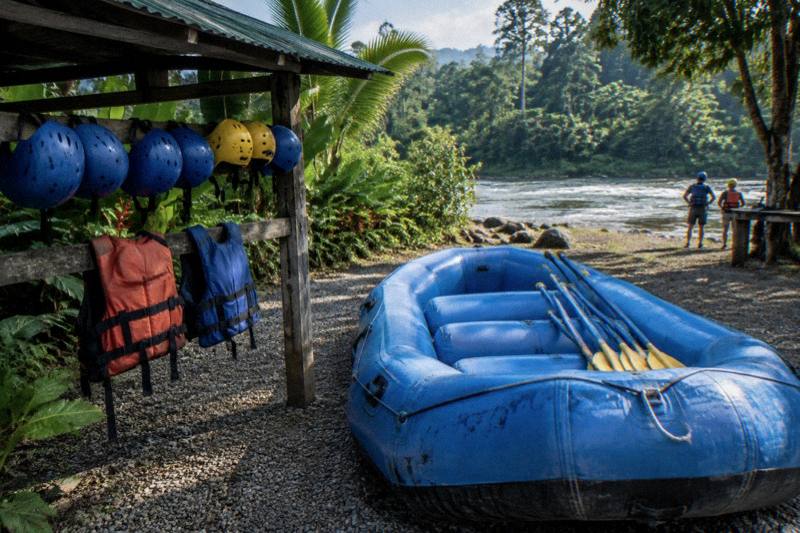
The Class II-III float is a roughly three to eight hour guided river trip, depending on the listing, spent mostly on wide, splashy wave trains separated by calm jungle pools where the raft drifts and the guide points out wildlife. No paddling experience is needed, guides give a full safety briefing first, and every trip includes helmet, life jacket and paddle.
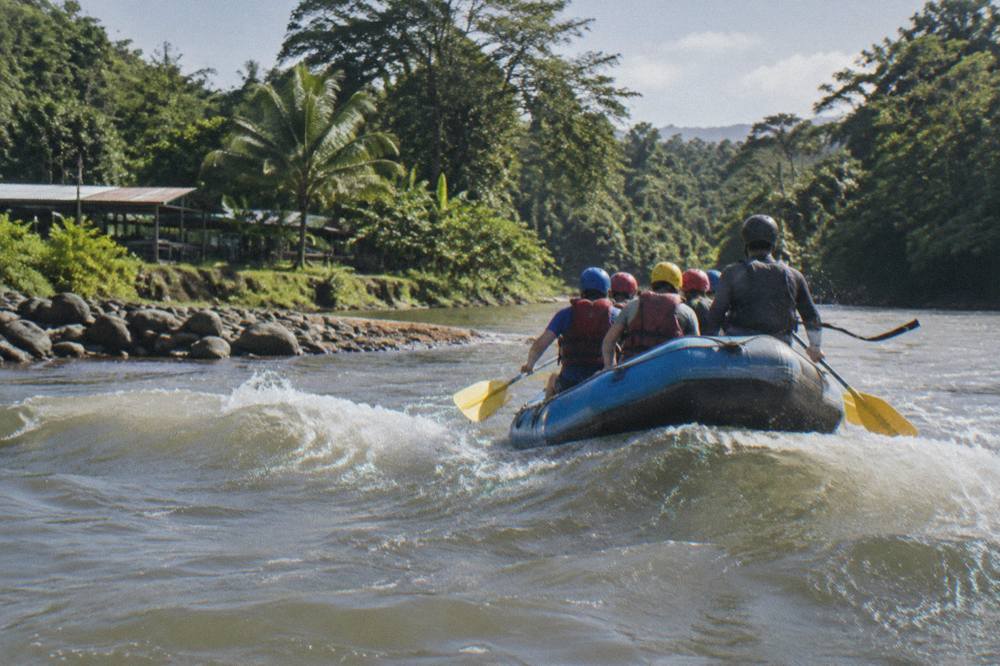
The rhythm of the trip is the thing first-timers ask about, and it is simpler than people expect. A Class II rapid on the Sarapiqui is a short staircase of small waves: the guide calls "forward," everyone paddles a few strokes, the bow lifts and drops a couple of times, and spray comes over the front. Then it ends, the pool opens up, and the guide steers while people catch their breath. A Class III rapid is the same idea with taller waves and a stronger current, and the guide will position the raft carefully and call paddling commands before you enter. Guides from the La Virgen operators run these sections daily and read the water line by line.
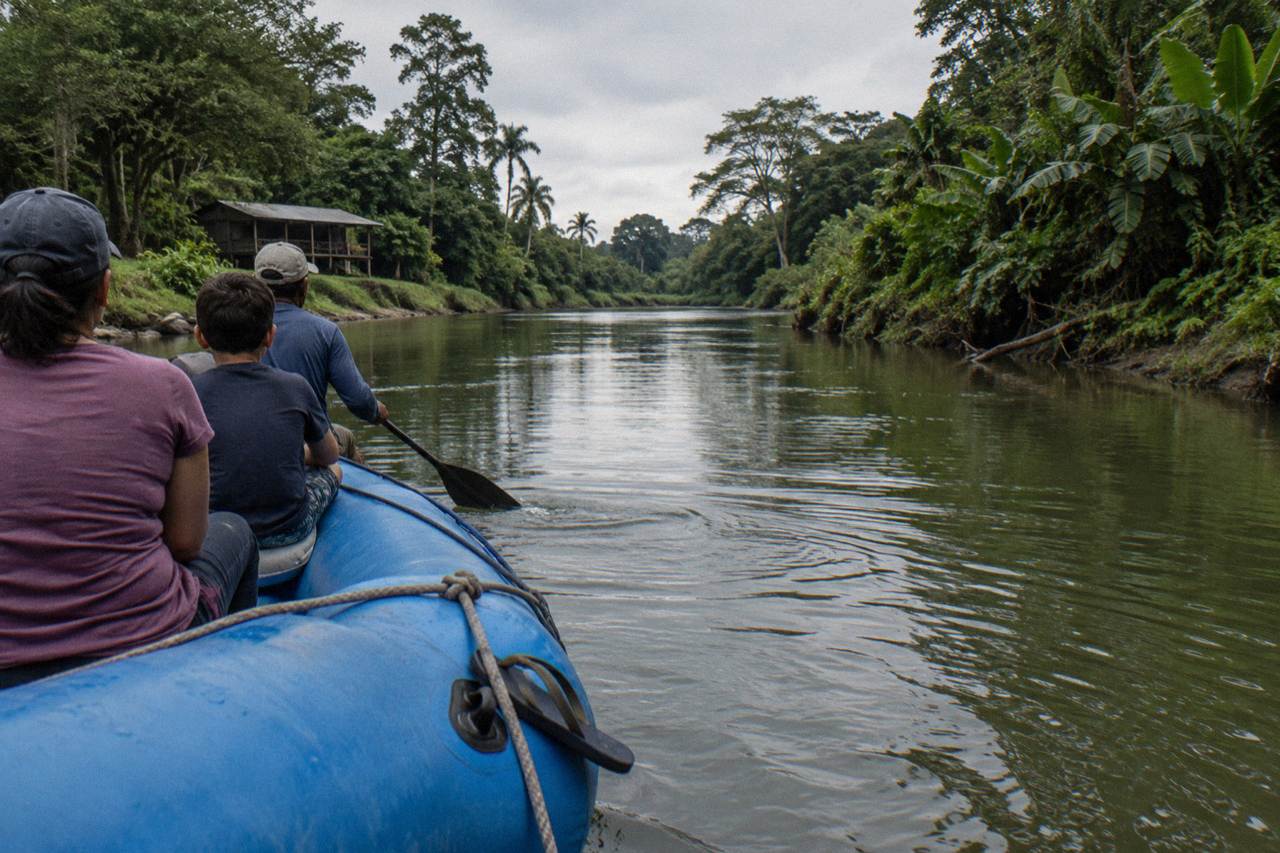
Between rapids, which is most of the trip, the raft floats through green tunnel: overhanging trees, banana leaves, kingfishers flashing downstream. This is when the wildlife watching happens. The listings describe tropical fruit and cassava snacks served on the bank, changing rooms and lockers back at base, and in many cases a cooked lunch after the run. The Sarapiquí Outdoor Center family listing, the most reviewed on the roster, includes all safety equipment, certified guides, transport to and from the river, lockers, dressing rooms, WiFi and parking at the base.
What the float is not: it is not a wildlife float. The gentle wildlife safari floats, like the 3-Hour Wildlife Safari Float from $90 per person with a listed minimum age of 4, carry no rapid class at all and sit in a different category. If your family wants waves, the Class II-III listings are the ones.
What Rapids Will You Paddle On The Family Section?
The family section runs Class II-III rapids at typical dry-season levels: small stepped wave trains at Class II and taller, pushier waves at Class III, each lasting seconds and each followed by a calm pool. The river is rain-fed and undammed, so operators report the same water can rise toward Class III after rain, and guides adjust lines or reroute accordingly.
Rapid class is a scale from I to VI, and the step from II to III is where waves get tall enough to soak everyone in the boat. On the Sarapiqui family run, operators describe the rapids as short and pool-drop: a brief drop, then recovery water. First-timers regularly ask whether the raft can flip; the honest answer is that any raft can, which is why the national rafting norm requires operators to supply and verify helmets and life jackets for every participant, and why every listing includes a safety briefing and a certified guide before the water.
Season changes the character without changing the trip type. In the dry season, December to April, operators report lower, more predictable flows with the run sitting solidly at Class II-III. In the green season, May to November, higher flows push some rapids up in intensity, and operators say the same sections can behave as Class III after heavy rain. Guides cancel or reroute when water gets too high; no operator runs trips into flood conditions, and the listings all carry free cancellation for exactly this kind of day. For more depth on how the river moves through the year, read Sarapiqui River Levels And Rapid Class By Season.
Each is a separate product with different logistics, and we compared the listings line by line rather than assuming they match.
Is The Class II-III Trip Right For Kids And Beginners?
Yes, within age limits. The national norm INTE G60-1:2019 opens Class III water to participants aged 8 and over, with ages 5 to 7 limited to Class I and II, and operators may set their own, sometimes lower-looking, house minimums. On this roster the family listing sets minimum age 6 and the Near Arenal listing sets minimum age 7; other listings say check the listing.
That mix confuses parents, so it is worth being precise. The national technical norm sets a floor by rapid class, and its table reads: under 5 years, no class at all; 5 to 7, Class I and II only; 8 to 11, Class I to III; 12 to 17, Class I to IV. A Class II-III trip is therefore legally open to 8-year-olds. The family listing from Sarapiquí Outdoor Center states minimum age 6 on the listing itself, and the Near Arenal listing states 7, which is the operator's judgment on its own section and equipment. Neither number contradicts the norm for the water actually run; the operator decides the line.
For beginners with no kids in the group, the Class II-III run is the standard first rafting trip in the country, and the operator pages describe it that way. Swimmers and non-swimmers both take it; the life jacket does the floating. Operators commonly list pregnancy, certain cardiovascular conditions and limited mobility as restrictions, per the national norm's disclosure requirements, so check the listing honestly about health before booking. Weight limits exist per operator, usually reported around 100 to 120 kg, but they are operator policy, not law: check the listing. If your crew has teenagers hungry for bigger water, Class III-IV Upper Sarapiqui Rapids covers the harder run, open from age 12 by the same norm.
The tables below put the age rules and the trip types side by side. The first is the national norm's table, set by INTE G60-1:2019. The second is this roster's Class II-III family-relevant listings.
| Participant age | Classes permitted under INTE G60-1:2019 |
|---|---|
| Under 5 | None |
| 5 to 7 | Class I and II only |
| 8 to 11 | Class I to III |
| 12 to 17 | Class I to IV |
| 18 and over | Class I to V |
| Listing (card name) | Price from | Rating and reviews | Duration | Listed minimum age | Meal |
|---|---|---|---|---|---|
| Family Rafting Class II-III, Meal | $85 per person | 4.9 from 200 reviews | 3 hours | 6 | Lunch |
| Budget 3-Hour Rafting, No Meal | $60 per person | 5.0 from 59 reviews | 3 hours | Check the listing | Not stated |
| 3-Hour Rafting, Mid Price | $79 per person | 5.0 from 26 reviews | 3 hours | Check the listing | Not stated |
| Near Arenal Rafting, 8 Hours | $105.87 per person | 5.0 from 101 reviews | 8 hours | 7 | Lunch |
| Aguas Bravas Rafting, Pickup Included | $70 per person | 4.9 from 101 reviews | 3 hours | Check the listing | Meal listed |
Which Sarapiqui Float Listing Fits Your Family?
Match the listing to where you are sleeping, not to the price tag. Families staying near La Virgen de Sarapiqui meet at the operator base, from $60 to $85 per person for a 3-hour trip. Families based in La Fortuna or Arenal pay $92.66 to $122.04 per person for 5 to 8 hour listings that add hotel pickup and lunch, which is mostly transport time, not extra rapids.
Departure area is the single biggest difference between the fifteen Class II-III listings, and the roster is strict about it. The Family Rafting Adventure meets at the Sarapiquí Outdoor Center in La Virgen de Sarapiqui; a van takes you to the river and back, and hotel pickup is excluded, so you drive yourself to base. The Budget 3-Hour Rafting departs La Virgen the same way. The Aguas Bravas listing departs Chilamate and offers either meeting at the operation center or pickup from a Sarapiquí hotel.
From La Fortuna the calculus changes. The Near Arenal Rafting listing, 5.0 from 101 reviews, runs 8 hours total with hotel pickup and lunch included, from $105.87 per person, in groups up to 15 guests, small by this roster's standards. The Afternoon Rafting listing from $92.66 per person, 4.8 from 39 reviews, suits families who want a morning at the volcano and rapids after lunch. From San Jose, the Full-Day Rafting from San Jose listing, 4.0 from 20 reviews, from $105 per person, includes round-trip transport from selected hotels and a traditional lunch, roughly a 10-hour day door to door given the verified drive time of about 1 hour 30 minutes each way.
Inclusions matter as much as departure. The cheapest listing, from $60 per person, includes equipment, guides, a snack of cookies and fruit, a towel and tour transport, but not hotel transport and no stated meal, so budget for lunch. The $85 family listing includes lunch, tropical fruit and cassava snack, lockers, changing rooms and WiFi at base. Photos are a near-universal extra: most lines list souvenir photos as an exclusion, so decide before the trip whether you want them.
The full cost picture, including what gear is always included and where photos and tips land, is broken out in Sarapiqui Rafting Cost And Inclusions.
The budget listing above is the cheapest firm-priced trip on the whole roster, and it runs the same family-class water as the pricier options. For families who want the gentlest possible day with no rapids at all, the 3-Hour Wildlife Safari Float, from $90 per person with a listed minimum age of 4, is the raft-based alternative, described in Sarapiqui River Wildlife From The Raft.
What Wildlife Do Guests See From The Raft?
Operators and guests commonly report sloths, monkeys, toucans, iguanas, caimans and aquatic birds along the Sarapiqui's banks, especially in the calm pools between rapids where the raft drifts. No sighting is promised; wildlife appears on its own schedule, and the calmer the trip, the more time there is to look.
The calm pools are the wildlife windows. While the guide holds the raft in slow current, the banks deliver the show: howler monkeys vocalizing upstream, iguanas frozen on sunlit branches, kingfishers darting across the water. The wildlife-focused listings lean into this. The Jungle Safari Float from La Fortuna, 5.0 from 23 reviews from $92.66 per person, dedicates the day to it, and the Aguas Bravas listing from Chilamate includes a fresh fruit buffet and lunch alongside the paddle.
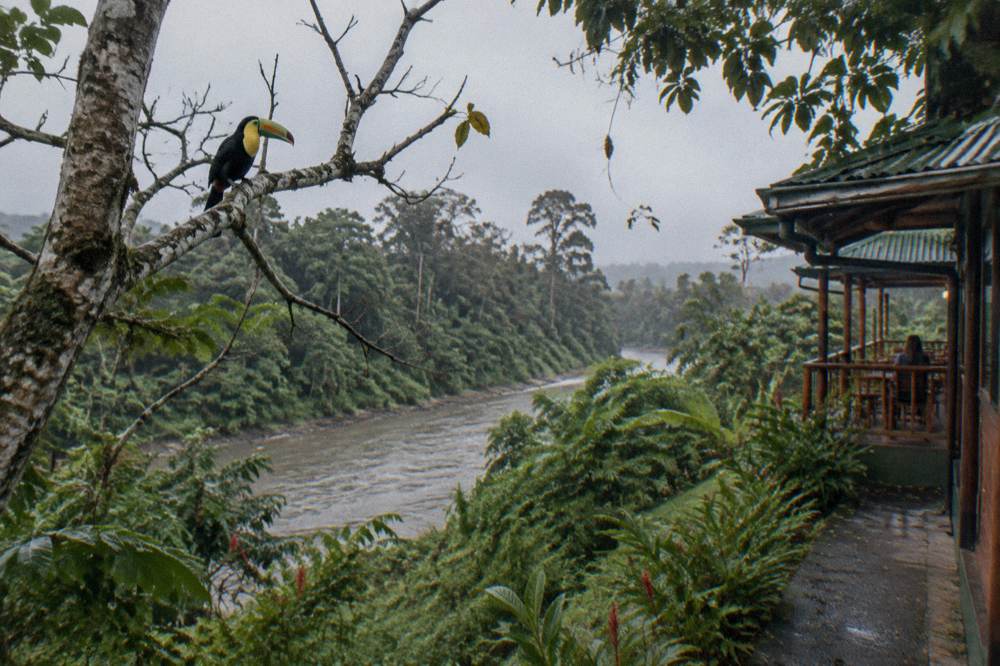
Two protected areas sit close enough to pair with a rafting morning. Braulio Carrillo National Park is reported open daily 8:00 a.m. to 3:30 p.m., per the SINAC park page, and Tirimbina Biological Reserve, reported open daily 7:00 a.m. to 5:00 p.m., has hanging bridges over the Sarapiqui itself and guided trails. Entrance fees are not printed here because sources conflict; check the official pages. Families combining a float with a reserve walk can follow the plan in Tirimbina And La Selva With A Rafting Day, and La Selva Biological Station's guided walks, reported at $44 per person for 3 hours, are listed on the station's own visitors page at tropicalstudies.org.
When Should You Take The Family Float?
December to April brings lower, more predictable flows with the run solidly at Class II-III, the friendliest profile for young kids. May to November raises the water and the excitement; June to October is reported as peak season for dynamic rafting, and families with cautious first-timers may prefer the dry months.
The verified season facts give three anchors for the Sarapiqui lowlands: about 3,464 mm of rain per year on 1990 to 2020 normals, November the wettest month at about 445 mm over 17 rainy days, and April the driest at about 117 mm over 8 rainy days. Daytime air sits around 28 to 30 C year-round, so cold is never the issue; water level is. Month-by-month river levels are not tabulated here, and any site promising exact monthly figures for this river is guessing.
| Season | Months | Reported river character | Family fit |
|---|---|---|---|
| Dry | December to April | Lower, predictable flows, Class II-III | Best for ages 6 to 9 and nervous first-timers |
| Green | May to November | Higher flows, some rapids push toward Class III | Better for confident swimmers and repeat visitors |
| Peak green water | June to October | Most dynamic rafting of the year | Match the listing's minimum age to your youngest |

Green season has a trade beyond water: Route 32 through Braulio Carrillo closes to landslides in heavy rain, as reported repeatedly in 2026, and trips get cancelled or rerouted in floods. Every listing on this roster carries free cancellation, so a rain-out costs you the plan, not the money. The green-season picture, including why lower crowds suit some families, is laid out in Rafting In Costa Rica Green Season.
What Should You Wear And Bring On The Float?
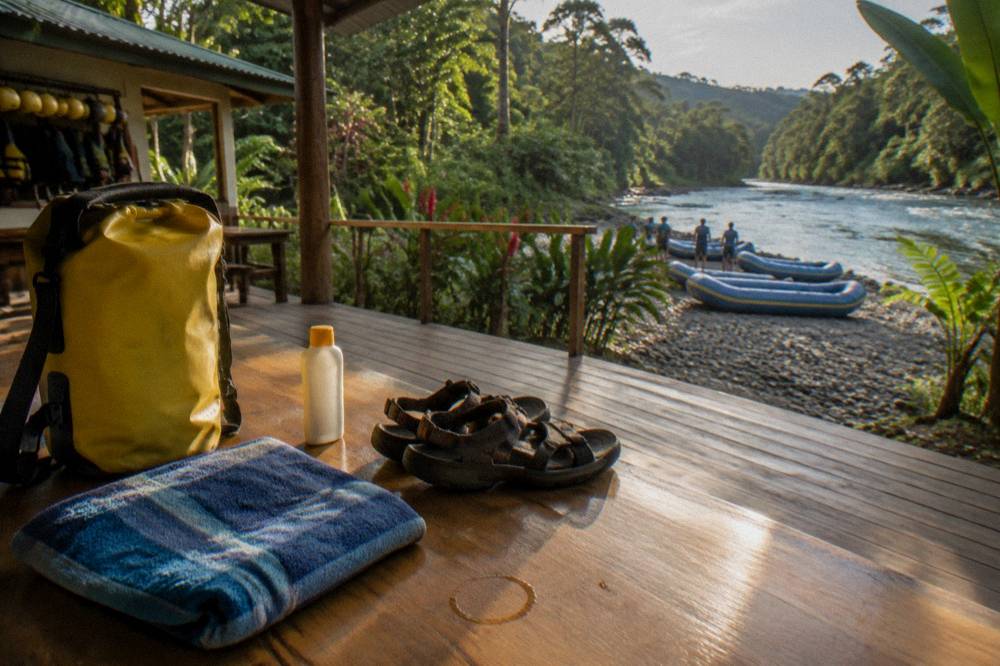
Wear clothes that can get wet, secure shoes that will not fall off, and bring a dry change of clothes, sunscreen and insect repellent; operators and listings consistently give exactly this advice. The listing supplies helmet, life jacket, paddle and, at the La Virgen base, lockers and changing rooms, so you carry very little on the water.
Footwear is the detail families get wrong. Flip-flops disappear into the river on the first wave train; wear strapped sandals or old sneakers. Quick-dry shorts and a rash guard or t-shirt beat cotton, which stays soaked and heavy. A strap for glasses is cheap insurance. Everything else rides in a locker or stays in the car: towel, dry clothes for after, cash if you want the souvenir photos, which most listings sell as an extra.
Two site guides go deeper than this section can: What To Wear Rafting In Costa Rica covers clothing choices, and What To Bring Rafting In Costa Rica covers the packing list, including what to leave at base. Both matter more here than on the hard runs, because families with kids carry more stuff and the base facilities at La Virgen make that easy.
How Does Meeting At La Virgen De Sarapiqui Work?
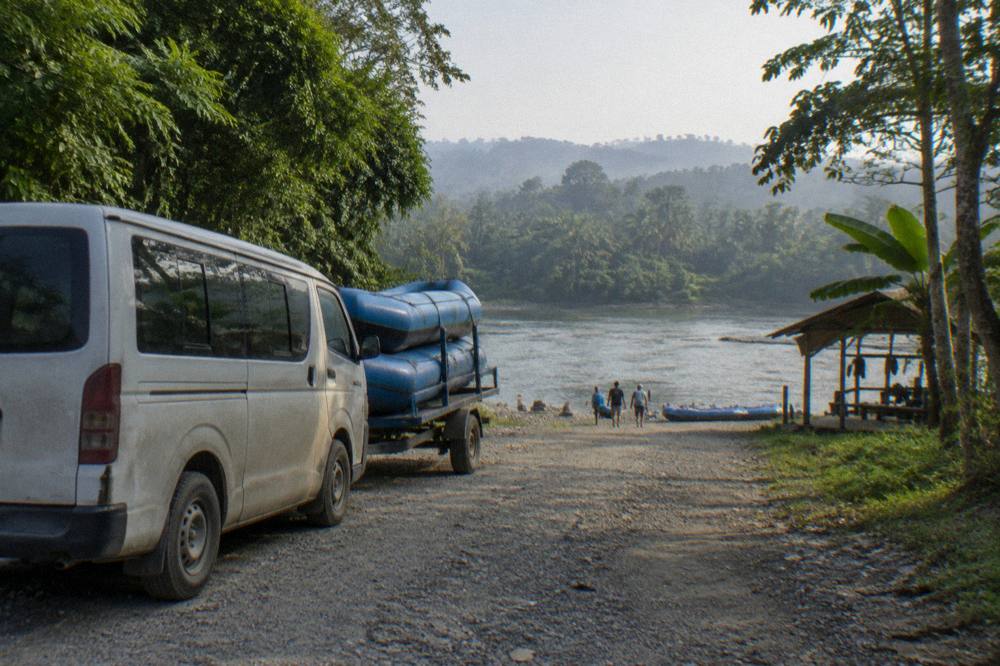
La Virgen listings meet at the operator base, not at the river: the Sarapiquí Outdoor Center address is your start point, a van carries the group to the water and back, and hotel pickup is excluded, so you need your own transport to town. Drive time is about 1 hour 30 minutes from San Jose or about 1 hour to 1 hour 10 minutes from La Fortuna to the Sarapiqui area.
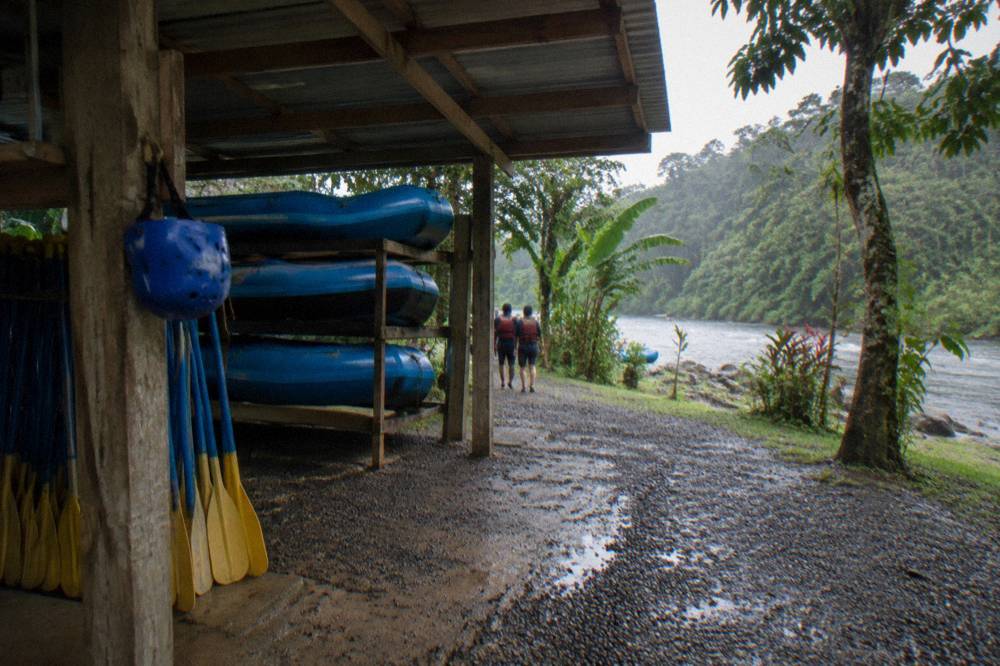
The base setup is genuinely family-friendly. The family listing includes lockers, dressing rooms, WiFi and a private parking lot, which means you arrive, change, meet the guide, take the safety briefing, and ride the van to the put-in with everything you do not need locked away. After the run you return to base for lunch and the photo showing. The same base runs the Class III-IV Extreme trip, so families with mixed appetites can split the day: one parent and the teens on the Extreme trip from $85 per person, 5.0 from 108 reviews, minimum age 14, while the rest take the family float, also from $85.
Getting to La Virgen itself is covered in How To Get To La Virgen De Sarapiqui, including the route options and the rainy-season closure risk on Route 32. The national norm covering the whole operation, from age minimums to mandatory life jackets, is published as the INTE G60-1:2019 technical document, worth a skim for any parent who wants to see the rules operators work under. Whether a day in town beyond the rafting is worth it is answered in Is Sarapiqui Worth Visiting.
The Chilamate listing above is the pickup-inclusive option for families already sleeping in the Sarapiqui area: meet the operation center ten minutes from the river, or schedule pickup from a Sarapiquí hotel, with fruit buffet, lunch and drinks included from $70 per person.
Who Should Skip The Family Float?
Skip it if everyone in your group is 14 or over, a confident swimmer, and hungry for big water: the Class III-IV listings deliver more of what you are after from the same $85 starting price. Also skip it, in the other direction, if your youngest is under 4 or you want zero rapids, in which case the wildlife float category, from $90 per person, fits better.
The middle ground is real, though. Plenty of mixed groups run the Class II-III trip and love it precisely because nobody has to be brave. The wave trains are fun at any age, the pools are warm air and slow water, and the guides, certified in rafting and swiftwater rescue under INTE G60-2:2019, do the thinking. Guest reviews of the family listing consistently praise the guides' handling of nervous kids, and the 4.9 from 200 reviews is the deepest review pool on this site's roster.
The decision, honestly framed, comes down to three questions. How old is your youngest paddler, checked against both the norm and the listing's own minimum? Where are you sleeping, La Virgen, La Fortuna or San Jose, since that picks your listing more than price does? And does your family want waves or wildlife, because the river sells both, on different boats. For a fuller walk through that last question, Rafting Near La Fortuna And Arenal compares the departure options from the Arenal side.
The mid-price listing above, from $79 per person with a 5.0 rating from 26 reviews, departs Chilamate and caps groups at 36, a workable middle option when the $60 budget trip is full.
Common Questions About The Class II-III Sarapiqui Float
Is the Class II-III Sarapiqui float suitable for beginners?
Yes. Every Class II-III listing on the roster is a shared, guided trip designed for first-timers, with a safety briefing, certified guides and all equipment included. No paddling experience is expected; guides call every stroke command.
What is the minimum age for the family rafting trip?
The national norm opens Class III water from age 8. On this roster, the family listing states minimum age 6, the Near Arenal listing states 7, and the wildlife float states 4. Other listings vary: check the listing for each product.
How much does the Class II-III Sarapiqui float cost?
From $60 per person for the budget 3-hour trip up to $122.04 per person for the longest La Fortuna and connection listings. The most reviewed family option, from $85 per person, includes lunch and base facilities.
Do the trips include lunch?
Some do, some do not, and it follows the listing line. The $85 family listing, the $92.66 afternoon trip and the Near Arenal listing all include lunch. The $60 budget trip includes a snack only. Check the inclusions on the listing before booking.
Can the trip be cancelled because of rain?
Yes. The river is rain-fed and undammed, and operators cancel or reroute in high water or flooding. Every Class II-III listing on this roster carries free cancellation, so a weather cancellation does not cost the booking price.
What wildlife will we see?
Operators and guests commonly report sloths, monkeys, toucans, iguanas, caimans and aquatic birds, especially in the calm pools. Sightings are never promised; the calmer the trip, the more time there is to watch the banks.