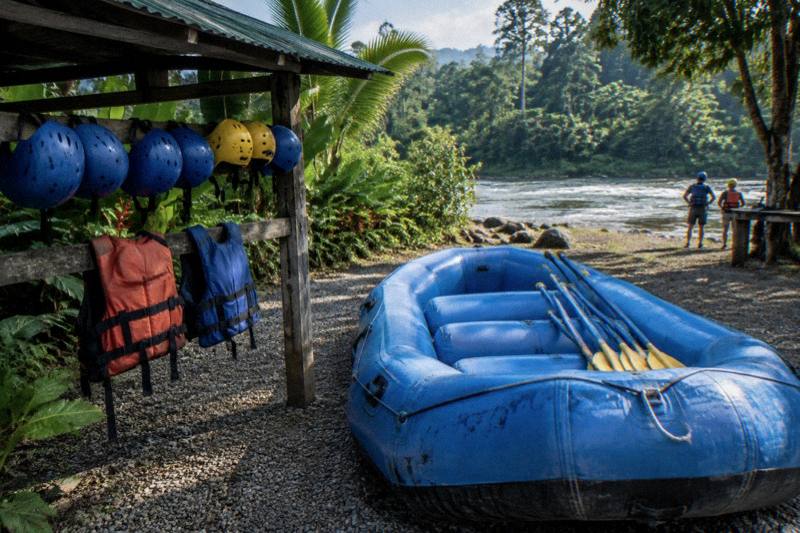
Are Class 4 Rapids Ok For Kids In Costa Rica?
Costa Rica's national rafting norm sets age limits by rapid class: Class IV is legal only from age 12, and Sarapiqui operators set their own higher minimums. Here is what parents should know.
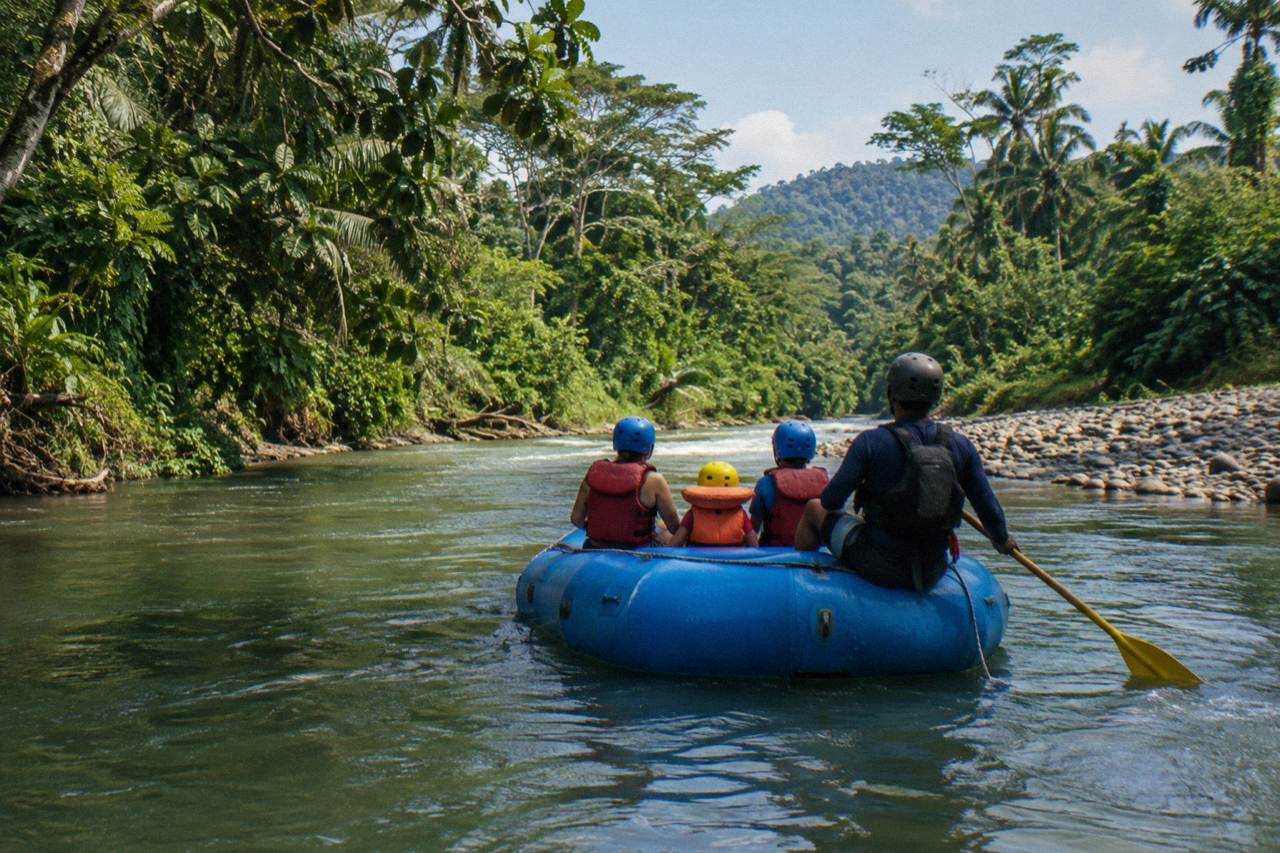
The Sarapiqui River runs two personalities. In the dry season months of December to April, operators report the upper section settles into Class II-III water that families paddle with children as young as six on some listings. After heavy rain on this undammed, rain-fed river, the same corridor builds into Class III-IV whitewater with stronger currents and bigger waves. That second version is a different product for a different paddler, and the question every parent eventually asks is where the age line actually sits. The short, honest answer: Class 4 rapids are not a kids' trip in any usual sense of the word.
No. Class IV water is an adult and older-teen trip. Costa Rica's national rafting norm permits Class IV participation only from age 12, and that is a legal floor, not a recommendation. Sarapiqui operators go further: the Class III-IV listings on this river state minimum ages of 12, 13, 14 and 15. For younger children, the family option is the Class II-III run, legal from age 8 and listed from age 6.
The reason the answer is so firm is that the number is not a marketing suggestion, it is regulation. Costa Rica publishes a national technical norm for commercial rafting, and it maps participant ages to rapid classes in a simple table. Under that table, a 9-year-old may not legally paddle Class III-IV water with any operator in the country, no matter how confident a swimmer they are. A 13-year-old may, legally, but individual operators are free to set their own minimums above the national floor, and on the Sarapiqui they mostly do. If you want to see how the rest of those rules work in practice, from certified guides to mandatory helmets and vests, our guide to rafting safety on the Sarapiqui walks you through what to check before you book.
What that leaves parents with is a clear fork. If your children are 12 or older, strong swimmers, and genuinely eager for big water, there are legal Class IV options on this river, and this article names the ones with published minimum ages. If your children are younger than 12, or simply not that into adrenaline, the Class II-III family run is the product built for you, and it is a genuinely good one rather than a consolation prize. The Sarapiquí River Family Rafting Adventure, departing the operator base in La Virgen de Sarapiqui, lists a minimum age of 6, includes lunch, and carries a 4.9 rating across 200 reviews at from $85 per person.
What Does Costa Rican Law Say About Ages And Rapid Classes?
The national technical norm INTE G60-1:2019 fixes minimum ages by rapid class: under 5 no rafting at all, ages 5 to 7 Class I and II only, ages 8 to 11 up to Class III, ages 12 to 17 up to Class IV, and 18 and over up to Class V. Class VI is never offered commercially. The same norm obliges operators to supply and verify helmets and life jackets for every participant.
That table is the single most useful document a rafting parent in this country can read, and it is public. The full text sits on the national standards institute's site at the INTE G60-1:2019 rafting norm, and it is worth a look before you book anything. Two details matter for families. First, the age bands are hard edges, not guidance: an 11-year-old is barred from Class IV water outright, and no operator waiver overrides that. Second, the norm runs alongside a guide certification standard, INTE G60-2:2019, which requires rafting guides to hold national certification in rafting and swiftwater rescue plus current first aid and CPR, as stated at the guide competency norm page. The norm also requires operators to tell customers the age floor for the class being run.
| Participant age | Rapid classes legally permitted |
|---|---|
| Under 5 | None, no commercial rafting |
| 5 to 7 | Class I and II only |
| 8 to 11 | Class I, II and III |
| 12 to 17 | Class I, II, III and IV |
| 18 and over | Class I through V |
| Any age | Class VI never |
Read the table the way an operator reads it. The Class II-III family trips on the Sarapiqui sit inside the 8-to-11 band's allowance, which is why a listing can legally take a 6-year-old if the operator chooses to be more permissive on the low end for gentle water. The Class III-IV trips sit in the 12-and-over band, which is why no operator on this river will take a 10-year-old on the big-water run, and why several listings print minimums of 13, 14 or 15, all above the legal floor. The floor is the law; the listing number is that operator's own judgment of who handles their line down the river.
There is one more wrinkle worth knowing. Operators commonly add conditions the norm does not fix: swimming ability, good physical condition, and weight limits, which operator policies around the Sarapiqui commonly place around 100 to 120 kg. The national norm also requires health and physical condition disclosures, and pregnancy, certain cardiovascular conditions, low mobility and obesity are commonly listed by operators as restrictions or non-recommended conditions. For a fuller walk through those numbers, see the site's guide to age and weight limits on Costa Rica rafting trips.
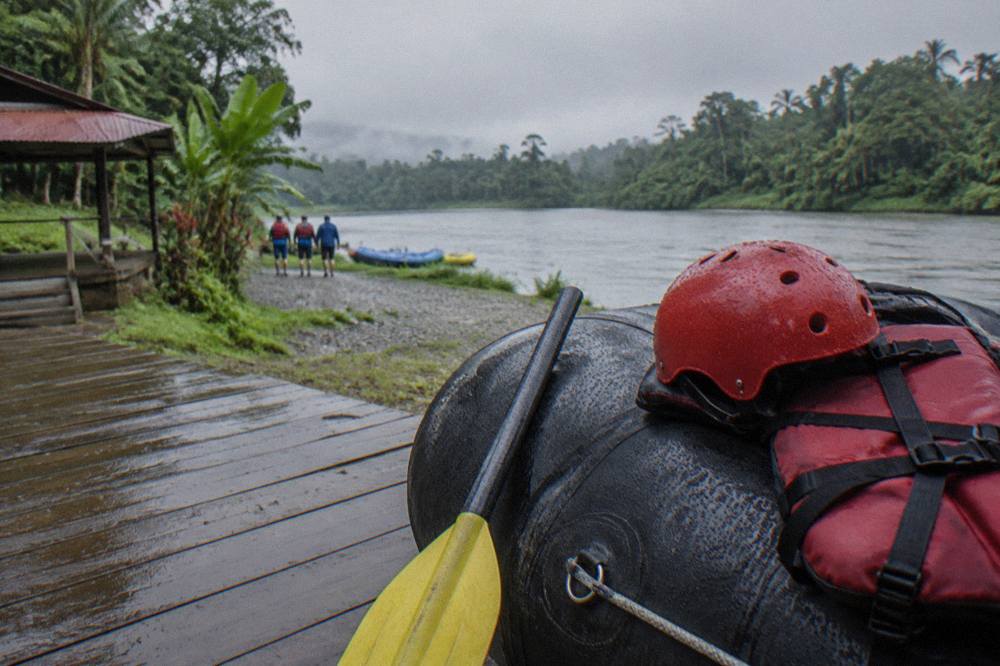
What Minimum Ages Do Sarapiqui Operators Actually Set For Class 4 Trips?
Every Class III-IV listing on this river that publishes a minimum age prints one at or above the legal floor of 12: the Sarapiqui Outdoor Center extreme trip states 14, the Wave Expeditions Class 3-4 trip from La Fortuna states 15, and another La Fortuna full-day Class IV listing states 13. One premium operator states 12. Where a listing shows no number, the age is on the listing's own booking page.
The pattern is deliberate. Operators read the same river and the same law, then price in their own raft size, guide ratios and the specific drops on their run. That is why the numbers vary even though the river does not. The table below pulls the published minimums from the Class III-IV listings on this site's roster, alongside the family and float products for comparison, so you can see the whole ladder in one place.
| Trip | Class | Listing minimum age | Price from | Duration |
|---|---|---|---|---|
| Family Rafting Adventure, La Virgen | II-III | 6 | $85 per person | 3 hours |
| Rafting Tour Near Arenal, from La Fortuna | II-III | 7 | $105.87 per person | 8 hours |
| Wildlife Safari Float, La Virgen | Float | 4 | $90 per person | 3 hours |
| Extreme White Water Adventure, La Virgen | III-IV | 14 | $85 per person | 3 hours |
| Sarapiqui River Class IV, from La Fortuna | III-IV | Check the listing | $85 per person | 5 hours |
| Whitewater Class 3-4 from La Fortuna | III-IV | 15 | $122.04 per person | 6 hours |
| Sarapiqui White Water Rafting, La Fortuna | III-IV | 13 | $99 per person | 8 hours |
| Premium Class III-IV Day, Faro Travel | III-IV | 12 | $160 per person | 8 hours |
Two rows deserve comment. The most reviewed trip on this river, the Class IV departure from La Fortuna with 845 reviews at 5.0, prints no age on its roster line: the number lives on the operator's own booking page, and "check the listing" is the honest answer here. And the premium Faro Travel day at from $160 per person is the one operator on this roster willing to take 12-year-olds, exactly the legal minimum, on Class III-IV water. Its price also shows the spread: big-water days on this river run from $85 to $160 per person depending on operator, duration and what is bundled in.
Are Class 4 Rapids Ok For Kids?
On the letter of the law, from age 12 and up, yes, with the operator's own minimum applied on top. Below 12, no, and no operator can legally take them. In practice the answer is narrower still: Class IV water asks for real paddling fitness, the ability to follow commands fast in loud water, and a swimmer's calm if the raft flips. Some 13-year-olds have all three. Most younger children do not.
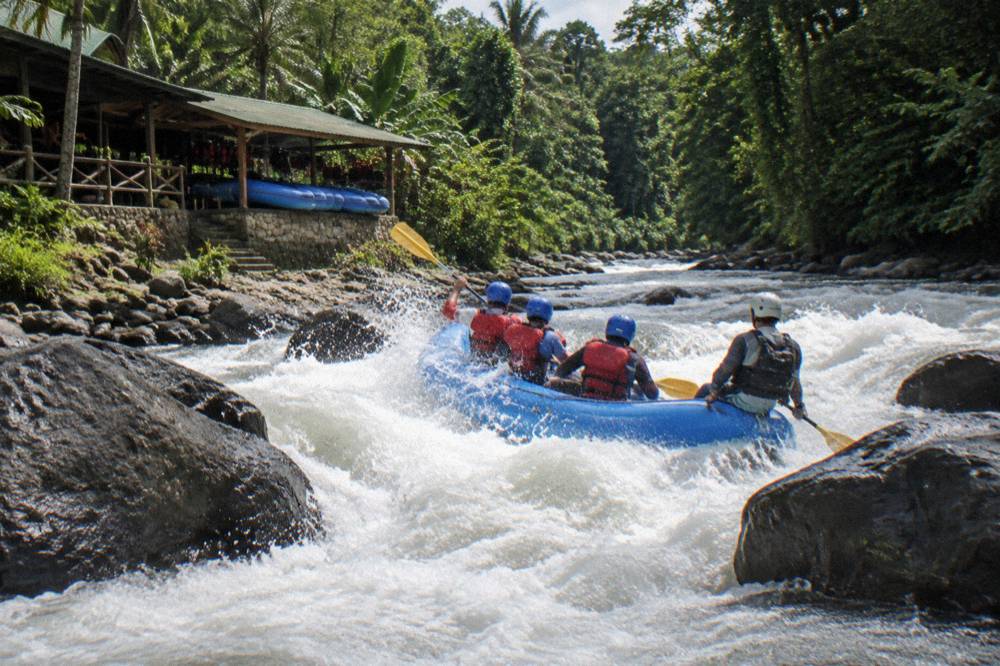
It helps to know what the water itself is doing. Class IV rapids, in the international scale used by the Costa Rican norm, mean powerful water with predictable but continuous features: steep drops, narrow passages that need precise maneuvering, and consequences that demand a fast team response. A guide shouts a stroke count, everyone paddles on cue, and the boat threads a line. The Sarapiqui's Jungle Run section, which operators describe as Class III-IV in normal conditions and up to Class IV when the river is high, is genuinely demanding paddling rather than a scenic ride with bumps. The listings' 14 and 15 minimums reflect a judgment about who handles that.
The comparison parents sometimes miss is that the same river holds the gentle option a half hour upstream. The upper run, reported as Class II-III at lower dry-season flows, is splashy, warm, forgiving water where a mixed-age crew can swim, laugh and still finish with real rapids. Guests on those trips commonly report wildlife along the banks, with sloths, monkeys, toucans, iguanas, caimans and aquatic birds all mentioned by operators and reviewers, though nothing on the river is promised. If you want the fuller picture of what lives along this corridor, the site's guide to Sarapiqui wildlife seen from the raft covers it.
For a family weighing both sides of the fork, this site's owner page, Sarapiqui River Rafting, lays out the current roster side by side. But the short version is already in the numbers: the family trip takes children from age 6 and up, the wildlife float from age 4, and every Class IV trip on the river starts at 12 at the absolute legal minimum, with most starting higher.
The Class IV trip from La Fortuna, the most reviewed listing on the river, is the one to look at if your teen is ready.
That trip runs about 5 hours door to door with hotel pickup for La Fortuna lodgings within roughly 6 km of the operator's main office, lunch included, from $85 per person, and it carries a 5.0 rating across 845 reviews. Note the pickup limit: hotels farther out are excluded, so check where your lodge sits before booking. Its roster line prints no minimum age, which means the number is on the live listing, and for a Class III-IV product you should read it before you promise your 13-year-old a seat.
The La Virgen extreme trip is the alternative that does publish its number.
That listing states a minimum age of 14 plainly, runs about 3 hours total from the Sarapiqui Outdoor Center base with lunch, from $85 per person, and holds a 5.0 rating across 108 reviews. Hotel pickup is excluded; you meet at the base in La Virgen de Sarapiqui and the operator's van handles the river shuttles. It is a good benchmark product for exactly this question: a serious Class III-IV run whose operator has decided 14, not 12, is where the trip starts.
Which Sarapiqui Trip Should A Family With Kids Book Instead?
Families with kids aged 6 to 11 should book the Class II-III family run, listed from age 6 and legal at any age in that band, with operators who expect young paddlers on board. The Sarapiquí River Family Rafting Adventure from La Virgen, from $85 per person with lunch and a 4.9 rating across 200 reviews, is the trip most families land on, while under-6s fit the wildlife safari float, listed from age 4.
The family trip's mechanics matter as much as its age floor. It departs the operator base in La Virgen de Sarapiqui, where the van, gear, lockers, changing rooms and parking are all in one place, and the river shuttle is handled for you; hotel pickup is excluded, so you drive yourself to the base. Inclusions run to all safety equipment, a safety briefing before the river, internationally certified guides, tropical fruit and a yucca snack, and lunch after the run. Free cancellation is listed, and the group caps at 24 guests. The Family Rafting Class II-III, Meal link beside this site's family float guide shows live dates and the current calendar.
Two other roster rows make good family alternatives depending on where you are sleeping. The Near Arenal Class II-III tour from La Fortuna lists a minimum age of 7, includes hotel transport and lunch, runs about 8 hours in total, and rates 5.0 across 101 reviews at from $105.87 per person, with a small group cap of 15. And the Aguas Bravas trip from Chilamate, from $70 per person with lunch and a fresh fruit buffet included, and hotel pickup from Sarapiqui lodgings on request, rates 4.9 across 101 reviews. Neither is a Class IV trip softened for kids; both are the same gentle water class as the La Virgen family run, packaged from a different departure point.
| Family situation | Best-fit trip | Why |
|---|---|---|
| Children 6 to 11, staying near Sarapiqui | Family Rafting Adventure, La Virgen | Listed from age 6, lunch included, base has changing rooms |
| Children 7 and over, staying in La Fortuna | Class II-III tour near Arenal | Hotel transport included, groups capped at 15 |
| Children under 7, any base | Wildlife Safari Float, La Virgen | Listed from age 4, calm water, sugar cane tour included |
| Confident teens 14 and over | Extreme Class III-IV, La Virgen | Published minimum age 14, 3-hour format |
| Budget family day | Aguas Bravas trip, Chilamate | From $70 per person with lunch and fruit buffet |
The depth of the family question, including how young is too young for any raft and what to pack for children, gets a fuller treatment in the site's guide to rafting with kids in Costa Rica. The one-line version: put children in the class the law and the listing both allow, dress them in clothes that can get wet with secure shoes, and let the guide run the briefing.
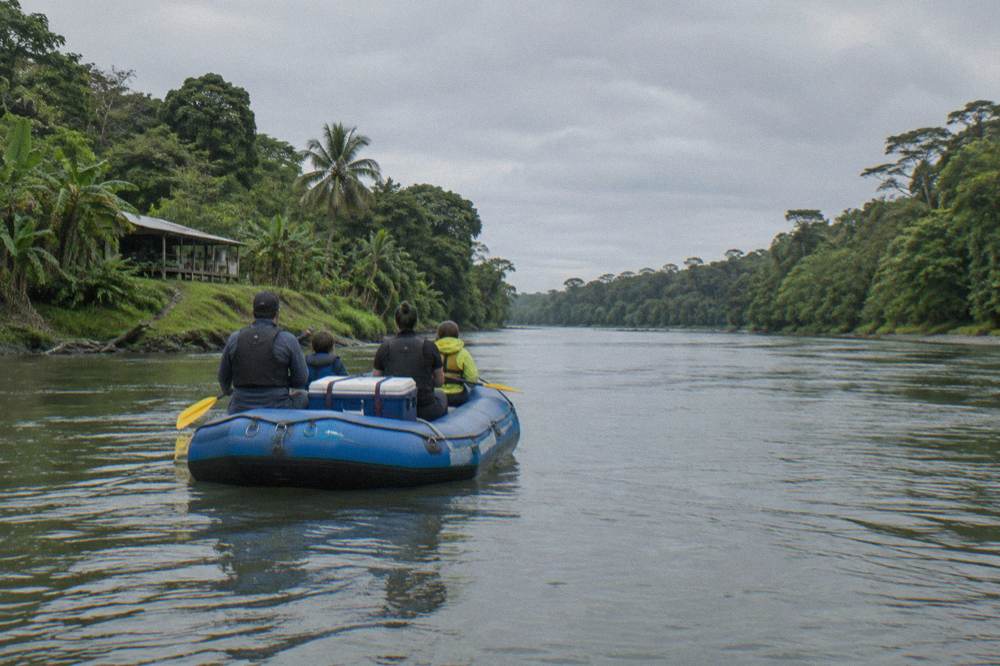
How Do You Read A Listing For Age And Safety Fine Print?
Look for three things in this order: the stated minimum age, the rapid class label, and the equipment and certification inclusions. A listing that names a class of II-III with a stated age of 6 is telling you the water is gentle and young children are expected. A listing labeled Class III-IV with an age of 14 or 15 is telling you the opposite. Free cancellation is listed on every trip in this site's roster.
The safety inclusions deserve a slow read too. The national norm requires operators to supply and verify helmets and life jackets, including PFDs with specified buoyancy such as 22 lbs for Class III and above, and the listings on this river all print equipment lines: helmet, paddle, life jacket, raft, certified guides, safety kayaker on some trips. When a listing names internationally or nationally certified guides, that maps to the INTE G60-2:2019 certification standard and the adventure tourism regulation requiring ICT-credentialed or approved guides with current first aid and CPR. These are not decoration lines; they are the regulatory spine of a legal commercial rafting trip.
One practical habit closes the gap between reading and booking. Message the operator, or read the listing's own questions section, with your child's age, swimming ability and any health notes, before you pay. Operators are required by the norm to collect health and physical condition disclosures anyway, and pregnancy, certain cardiovascular conditions, low mobility and obesity are commonly listed as restrictions. Getting that conversation done in advance means no surprises at the river base, and since every trip on this roster lists free cancellation, you are not locked in if the answer comes back wrong.
A final note on timing, because it interacts with age in a way parents often miss. The Sarapiqui is undammed, so its difficulty moves with rainfall: dry season, December to April, generally means lower, more predictable flows in the Class II-III range on the upper run, while the green season, May to November, raises the water, with June through October typically the most dynamic months. November is the wettest month in the lowlands, about 445 mm of rain over roughly 17 rainy days, and April the driest, about 117 mm over 8 rainy days. Operators cancel or reroute in high water, flooding or road closures rather than run unsafe levels, so a family booking in the wettest weeks should hold plans loosely and check the listing's cancellation terms.
Common Questions About Class 4 Rapids And Kids
Are Class 4 Rapids Ok For Kids?
From age 12 they are legal in Costa Rica, and some operators take 12 or 13-year-olds on Class III-IV water. Below 12, no operator may take a child on Class IV water at all. For younger children, the Class II-III family run is the trip built for them.
Are Class 4 Rapids Ok For Kids In Costa Rica?
No, not as a general family booking. The national norm INTE G60-1:2019 permits Class IV only from age 12, and operators on the Sarapiqui commonly require 14 or 15. The family alternative is the Class II-III run, listed from age 6 on the La Virgen family trip.
What is the minimum age for Class 4 rafting on the Sarapiqui?
The legal floor is 12. Published listing minimums on this river are 12, 13, 14 and 15 depending on the trip, so check the live listing before booking.
Can an 11-year-old do Class 3 rapids?
Yes. The national norm allows ages 8 to 11 to paddle Class I, II and III water. Several Class II-III Sarapiqui trips are open in that band, and the La Virgen family listing takes children from age 6 on gentle water.
Do operators check ages at the river?
Operators are required by the national norm to inform participants of the minimum age for the activity and to verify safety equipment. In practice you should expect to state your child's age when booking, and bringing ID for teenagers on Class IV trips is sensible.
What if the river is too high on the day?
Operators cancel or reroute during high water, flooding or road closures rather than run unsafe levels, and every trip on this site's roster lists free cancellation. In wettest-month conditions, hold plans loosely and confirm with the operator the day before.