Is The Balsa River Better Than The Sarapiqui River?
A neutral comparison of the Balsa and Sarapiqui rivers for rafting in Costa Rica: rapid class, season, access, family fit and which trips actually run on each.
No single answer fits every traveler: the Balsa is the gentler, typically Class II-III river that most first-timers and families paddle, while the Sarapiqui offers both a comparable Class II-III run and a genuinely harder Class III-IV section that operator comparisons describe as more demanding than the Balsa. If your group wants bigger water, the Sarapiqui wins. If you want the easiest possible introduction, either river works, and price and pickup matter more than the name.
That is the honest version, and it is worth unpacking, because the question hides two different ones. The first is about the rivers themselves: what each one actually paddles like. The second is about the trips sold on them, which differ in duration, price, inclusions and where they collect you from. This site sells Sarapiqui trips, so it is only fair to say that up front, and then to compare the two rivers anyway.
On river character, the verified operator comparisons are consistent. The Sarapiqui's Class III-IV section demands stronger paddling than the Balsa, which is typically Class II-III. The Sarapiqui also carries a Class II-III family run of its own, described at lower dry-season flows as Class II-III and stepping up toward Class III when the water rises in the green season. So on whitewater alone, the Sarapiqui is the river with the higher ceiling, and the Balsa is the river with the lower floor.
On trips, the Sarapiqui catalogue here is deep: fifteen Class II-III listings, ten Class III-IV listings, four wildlife floats and two combos. The cheapest firm-priced rafting listing on the roster is the budget 3-hour Class II-III run at from $60 per person, rated 5.0 from 59 reviews. At the other end of the family scale sits the family rafting Class II-III trip with lunch, from $85 per person, 4.9 from 200 reviews, minimum age 6.
What Kind Of Rapids Does Each River Have?
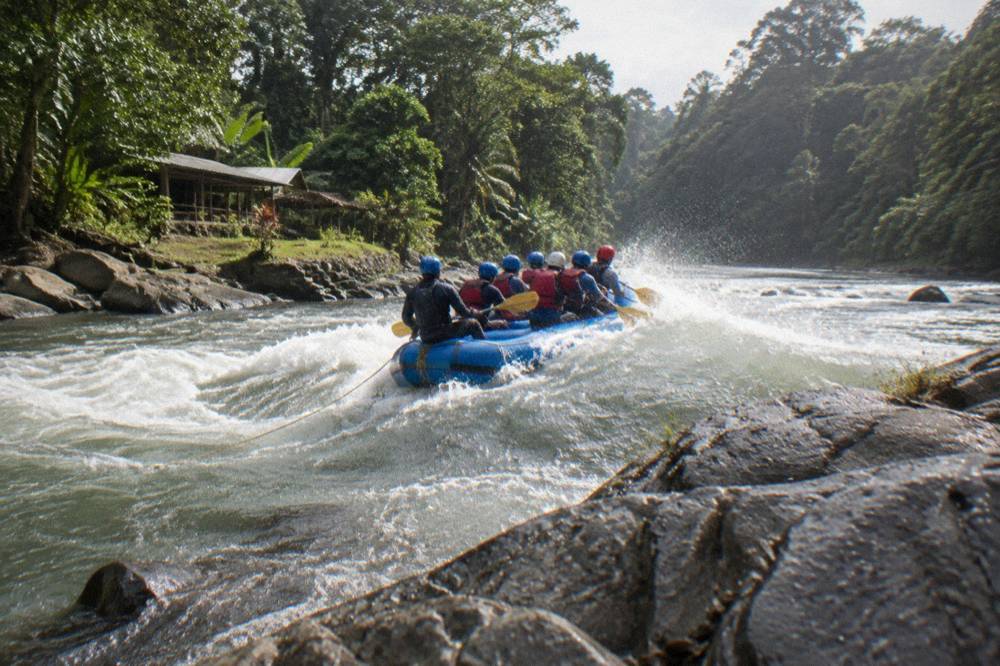
The Balsa runs typically Class II-III, a step below the Sarapiqui's harder section. The Sarapiqui splits into an upper run reported at Class II-III in the dry season and up to Class III with rain, plus a Jungle Run section reported at Class III-IV in the dry season and up to Class IV at high water. In short: the Balsa tops out lower, and the Sarapiqui gets as big as almost anything within reach of La Fortuna.
Those class descriptions come from operator and guide comparisons published across 2026, and they matter because the Sarapiqui is rain-fed with no dams. Its level moves with the weather, and the class on any given day moves with the level. The Balsa behaves the same way in principle, every undammed tropical river does, but its ceiling is lower: reports consistently put it at typically Class II-III rather than Class III-IV.
For a reader deciding between the two, the practical translation is this. If you have already rafted once and want the next step up, the Sarapiqui's Class III-IV trips are the ones that deliver it, and nothing on the Balsa does. If you are nervous, a first-timer, or bringing children, the comparison flips: both rivers have gentle-enough water in the dry season, and the tie-breakers become price, pickup and minimum age rather than rapids. If you're curious how these two rivers stack up against the rest of the country, the guide to white water rafting rivers across Costa Rica sorts every major run by class, region and season.
| River | Typical class | Reported range by season | Harder section? |
|---|---|---|---|
| Balsa | Typically Class II-III | Consistently reported at typically Class II-III | No Class III-IV section reported |
| Sarapiqui upper run | Class II-III | Class II-III at lower dry-season flows, toward Class III when higher or wetter | The family run, not the harder one |
| Sarapiqui Jungle Run | Class III-IV | Class III-IV in the dry season, up to Class IV at high water | Yes, the demanding option |
One more nuance the first page of search results rarely states plainly: wildlife floats are not rafting. The Sarapiqui also has a gentle float category, safari-style trips with no whitewater claim at all, which is a third tier neither river comparison usually mentions. We cover those further down.
Which River Is Better For Families And Beginners?
For beginners, both rivers are nearly equal: each offers Class II-III water that first-timers can manage in the dry season. For families, the Sarapiqui edges ahead on age limits, with family listings allowing minimum ages of 6 and 7, while the national norm permits ages 8 to 11 on Class I to III water and many other trips just say to check the listing.
The national technical norm INTE G60-1:2019 sets the legal floor by rapid class: under 5 no class at all, ages 5 to 7 Class I and II only, 8 to 11 up to Class III, and 12 to 17 up to Class IV. Operators are free to set their own, often higher, minimums, and many do. That is why every serious booking question about kids should end with "check the listing", and why two trips on identical water can carry different age rules.
The Sarapiqui family listing referenced above, from $85 per person with lunch, states a listing minimum age of 6 and takes up to 24 guests, meeting at the operator base in La Virgen de Sarapiqui where a van carries you to the river and back; hotel pickup is excluded on that one. The near-Arenal Class II-III tour, from $105.87 per person, 5.0 from 101 reviews, lists a minimum age of 7, includes transportation and lunch, and takes up to 15 guests, a notably smaller boat load. Two trips, similar water, different numbers: that is the level at which this decision actually gets made.
For depth on the age rules themselves, see the site's guide to rafting age and weight limits in Costa Rica, and for a wider look at gentle water, the Class II-III family float guide.
Which River Suits Stronger Paddlers?
Stronger paddlers should look at the Sarapiqui, because its Class III-IV section is the only one of the two rivers that reaches that difficulty. Operator comparisons state it needs stronger paddling than the Balsa, and the roster carries ten separate Class III-IV listings, from a 3-hour extreme trip at from $85 per person to a premium 8-hour day at from $160 per person with entry to Arenal Volcano National Park included.
The standout in that group is the most reviewed listing on the whole roster: the Class IV trip from La Fortuna, 5.0 from 845 reviews, from $85 per person, 5 hours total, with lunch, fresh fruit, towels, bottled water, and hotel transportation for hotels within about 6 km of the operator's main office. Up to 50 guests can sail, which is the largest cap in the Class III-IV group. Its 845-review pool dwarfs every other listing here, which is worth knowing when you weigh review counts elsewhere.
Below it sit several strong alternatives: the Class 3-4 trip from La Fortuna at from $122.04 per person, 4.9 from 136 reviews, 6 hours, hotel pickup and drop-off included, minimum age 15; the Jungle Run Class 3-4 day at from $123 per person, 4.9 from 29 reviews, 8 hours with hotel transport included; and the Class 4 trip with lunch from La Fortuna at from $122.04 per person, 5.0 from 29 reviews, capped at just 15 guests.
Nothing comparable exists on the Balsa, and that is not marketing, it is physics: a typically Class II-III river cannot offer a Class IV day. If your question is really "where do I get the biggest legal water within reach of La Fortuna or San Jose", the answer is the Sarapiqui's Class III-IV section, subject to the water level on the day, since operators cancel or reroute in high water.
What About Wildlife, Scenery And Water Levels?
Both rivers run through jungle corridors where operators and guests commonly report sloths, monkeys, toucans, iguanas, caimans and aquatic birds, so wildlife is not a strong differentiator. Water levels are: the Sarapiqui's class genuinely shifts between seasons, reported Class II-III in the dry season December to April and Class III-IV in the green season May to November, and trips are cancelled or rerouted during high-water events, flooding or road closures.
The Sarapiqui lowlands average about 3,464 mm of rain a year based on 1990 to 2020 normals, with November the wettest month at about 445 mm over 17 rainy days and April the driest at about 117 mm over 8 rainy days. Daytime air sits around 28 to 30 C year-round. For a deeper monthly breakdown, see Sarapiqui weather and rainfall by month.
There is also a structural fact about the Sarapiqui that most comparisons miss entirely. Law No. 10152 of 2022 established a 25-year renewable environmental safeguard along the main channel and banks of the Sarapiqui from source to the San Juan River mouth, prohibiting new hydroelectric projects and new mining-extraction concessions. That is why the river stays dam-free and rain-fed, which is exactly why its class moves with the weather. The Balsa faces no such famous protection and no dam story either, but the Sarapiqui's undammed status is written into law, not luck. If you're curious how that legal protection fits into the bigger rafting picture, our guide to Costa Rica's most famous rivers compares the Pacuare, Sarapiqui, Balsa and Reventazon side by side.
For wildlife without whitewater at all, the Sarapiqui offers the wildlife safari float, from $90 per person, 3 hours, minimum age 4, up to 50 guests, with kayak gear, a certified guide, transport to the river start, fruit and yucca snacks, a sugar cane tour and lunch included; photos cost an additional $35.
Which River Is Easier To Reach From La Fortuna Or San Jose?
Both rivers are reached from La Fortuna, but the verified drive figures favor neither dramatically: about 1 hour to 1 hour 10 minutes from La Fortuna to Puerto Viejo de Sarapiqui, and about 1 hour 30 minutes from San Jose to the Sarapiqui area. The practical difference is that the Sarapiqui roster includes listings departing San Jose itself with hotel pickup, and connection tours that raft the Sarapiqui while traveling between San Jose and La Fortuna.
Treat those drive times as planning ranges rather than promises, because the road itself is seasonal. Route 32 through Braulio Carrillo is repeatedly closed by rainy-season landslides, with 2026 reporting closures and detours via Route 10 or Bajos de Chilamate, and Route 126 via Vara Blanca is limited to light vehicles, steep and fog-prone in rain. None of this argues against either river; it argues for checking road conditions in green season and booking a trip whose pickup arrangements match where you are sleeping.
On the Sarapiqui side, the roster is unusually flexible about departure points. A full-day Class II-III trip from San Jose, from $105 per person, 10 hours, 4.0 from 20 reviews, includes round-trip transport from selected San Jose hotels plus a traditional lunch. Connection listings raft the Sarapiqui between La Fortuna and San Jose in both directions, Class II-III at from $119 per person and Class III-IV at from $122 per person, both 8 hours with pickup and drop-off included. That "raft on the way" format effectively makes the river part of your transfer, something a separate Balsa day trip cannot do for a San Jose itinerary.
If your base is La Fortuna, nearly everything above still works, and the site's rafting near La Fortuna and Arenal guide maps the pickup details listing by listing.
What Does Each River Cost To Raft?
On verified roster prices, Sarapiqui trips run from $60 per person for a bare-bones 3-hour Class II-III trip to $160 per person for a premium 8-hour Class III-IV day, with most listings clustered between $70 and $123. This site carries no Balsa listings, so no Balsa price is printed here; any figure you see for the Balsa elsewhere should be checked on the operator's live listing before you compare it against these numbers.
The table below shows the spread across the Sarapiqui roster's main rafting categories, with ratings printed only where the review pool supports a star claim. Listings with fewer reviews carry no rating here rather than a misleading one.
| Trip (roster card name) | Class | Duration | Price | Rating |
|---|---|---|---|---|
| Budget 3-Hour Rafting, No Meal | II-III | 3 hours | from $60 | 5.0 from 59 reviews |
| Family Rafting Class II-III, Meal | II-III | 3 hours | from $85 | 4.9 from 200 reviews |
| Near Arenal Rafting, 8 Hours | II-III | 8 hours | from $105.87 | 5.0 from 101 reviews |
| Full-Day Rafting from San Jose | II-III | 10 hours | from $105 | 4.0 from 20 reviews |
| Class IV from La Fortuna | III-IV | 5 hours | from $85 | 5.0 from 845 reviews |
| Class 3-4 Rafting, 6 Hours | III-IV | 6 hours | from $122.04 | 4.9 from 136 reviews |
| Premium Class III-IV Day | III-IV | 8 hours | from $160 | no rating on file |
| Private Zipline and Rafting Combo | II-III + zipline | 9 hours | from $335 per group | no rating on file |
Two reading notes. Prices are USD per person unless stated, exactly as the roster prints them, including the cents on $122.04 and $105.87. And inclusions vary sharply at similar price points: the $60 trip includes equipment, guides, a snack and in-tour transport but no hotel transport, while the $85 family trip includes lunch, lockers, changing rooms, WiFi and parking at the base, and the $85 Class IV trip from La Fortuna includes lunch and pickup within about 6 km of the main office. For the full breakdown, see the Sarapiqui rafting cost and inclusions guide. If you're still weighing which town to base yourself in, the La Fortuna versus Monteverde comparison covers how each one stacks up for rafting access and trip logistics.
So Which River Should You Actually Book?
Book the Balsa only if your priority is the shortest, gentlest possible outing and you find a listing whose price and pickup beat the Sarapiqui's, because the rivers' beginner water is comparable and the Sarapiqui catalogue is wider in every direction: cheaper at the bottom ($60 versus unknown), harder at the top (Class III-IV, which the Balsa does not offer), and richer in formats, with floats, combos, connection tours and San Jose departures.
Put differently, the Sarapiqui is the only one of the two rivers where the same watershed can host a nervous grandmother on a wildlife float, a family of five on Class II-III water, and a bachelor party on Class IV, all in the same week. The Balsa answers one of those needs. Whether that breadth matters depends entirely on your group, which is why this article refuses to crown a winner and instead maps the decision.
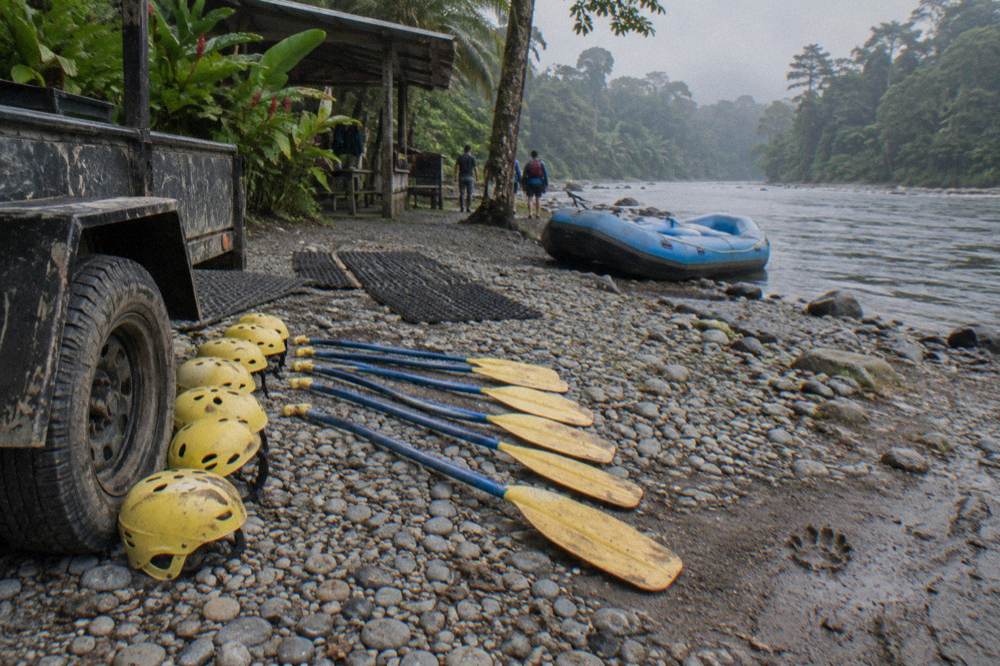
One framing borrowed from the site's own research: Costa Rica's rafting safety framework, the national norm INTE G60-1:2019, requires operators to supply and verify helmets and life jackets for every participant, and the companion guide norm requires certified rafting and swiftwater rescue guides with current first aid and CPR. Those rules apply to licensed operators on both rivers alike, so the regulator is not a tie-breaker here; the operator and the specific listing are. For what to actually check before booking, the site's first-time rafting guide walks through it.
If you want the full spread of what the Sarapiqui side offers, Sarapiqui River Rafting hosts the complete listing comparison, including the wildlife floats and the two-night packages this article only touches on.
Common Questions About The Balsa Vs The Sarapiqui
Is The Balsa River Better Than The Sarapiqui River?
It depends on your group. The Balsa is typically Class II-III and suits cautious first-timers; the Sarapiqui offers the same gentle class in dry season plus a Class III-IV section that is more demanding than anything on the Balsa. Stronger paddlers and variety-seekers should pick the Sarapiqui; the pure-nervous-beginner question comes down to price and pickup on the specific listing.
Which river has bigger rapids near La Fortuna?
The Sarapiqui. Its Jungle Run section is reported at Class III-IV in the dry season and up to Class IV at high water, while the Balsa is typically Class II-III. Operator comparisons explicitly describe the Sarapiqui Class III-IV section as requiring stronger paddling than the Balsa.
Are both rivers good for families with kids?
Yes, on their Class II-III sections, subject to ages. The national norm allows ages 8 to 11 on water up to Class III, and some Sarapiqui listings set minimum ages of 6 or 7. Many other listings say "check the listing" for minimum age, and operators may set higher limits or weight limits, so confirm before booking.
Does the river's rapid class change with the season?
On the Sarapiqui, yes, visibly. It is rain-fed and undammed, reported at Class II-III in the dry season December to April and Class III-IV in the green season May to November. Trips can be cancelled or rerouted during high water, flooding or road closures.
Which river is closer to San Jose?
The Sarapiqui area is roughly 1 hour 30 minutes from San Jose, and the roster includes listings departing San Jose with hotel pickup, plus connection tours that raft the Sarapiqui while transferring between San Jose and La Fortuna. The Balsa is primarily reached from La Fortuna.
Can I see wildlife on either river?
Both flow through jungle where operators and guests commonly report sloths, monkeys, toucans, iguanas, caimans and aquatic birds. Sightings are never promised, and no sighting rate exists. The Sarapiqui also has dedicated wildlife floats with no whitewater at all.