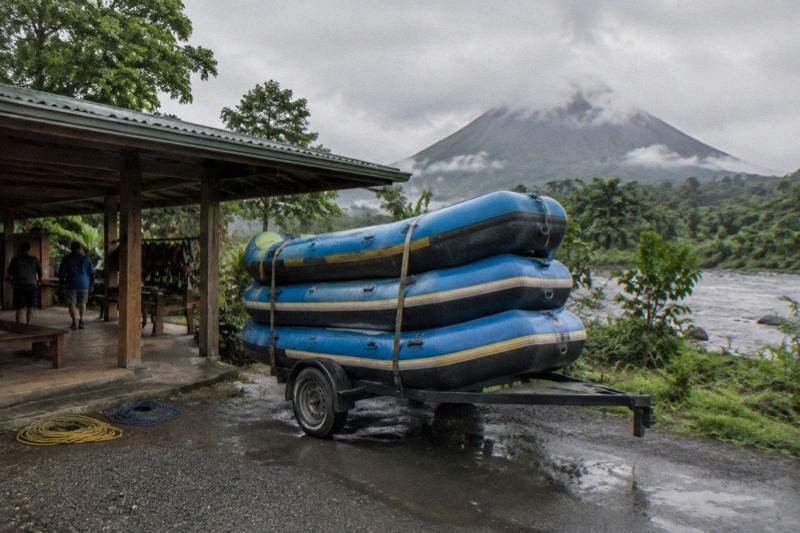
Sarapiqui Weather And Rainfall By Month
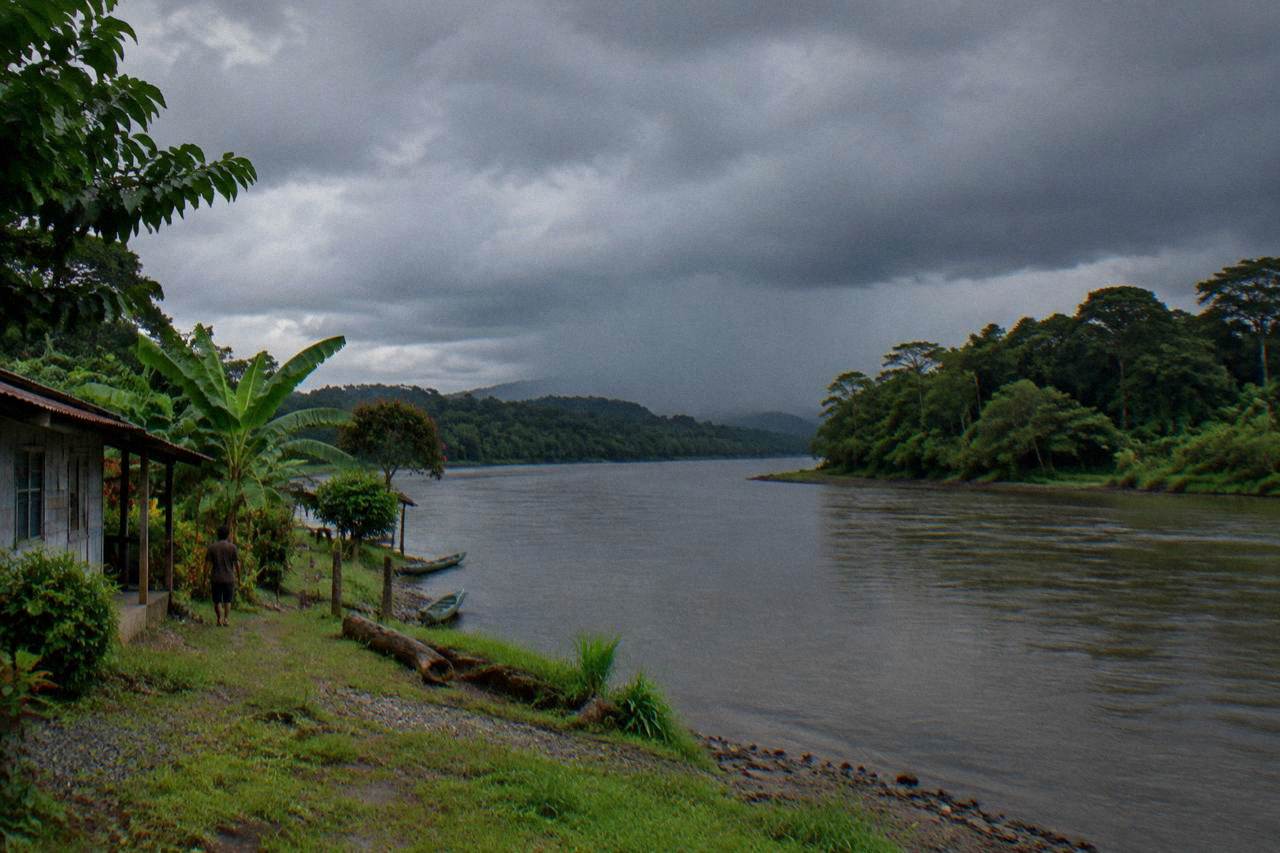
Sarapiqui sits in Costa Rica's humid Caribbean lowlands, where the year splits into a drier stretch from December to April and a wetter one from May to November. The river is rain-fed and undammed, so the weather you get on arrival is the weather the rapids get too.
Short answer
Sarapiqui averages about 3,464 mm of rain per year, with November the wettest month at about 445 mm and April the driest at about 117 mm. Daytime air temperatures run about 28 to 30 C year-round. Dry season, December to April, gives lower flows and Class II-III water; green season, May to November, brings higher flows and bigger waves.
Sarapiqui weather answers the rafting question before any operator does. The river has no dams upstream, so every shower that falls in the cordillera arrives in the channel within hours, and the same section of water can read as a friendly Class II-III float in March and a pounding Class III-IV run in October. This guide lays out the rainfall and temperature pattern month by month, using the dry season and green season split plus the recorded anchors for the wettest and driest months, then connects each pattern to the trips this site lists: the Class III-IV run out of La Fortuna, the Class II-III family trips, and the wildlife floats that suit a calm-water day. If you want a straight answer on which month to book, our month by month guide to rafting the Sarapiqui matches each season's water level to the trip that fits it.
One honest caveat up front. Month-by-month rainfall tables circulate widely online, but the tabulated climate record for the Sarapiqui lowlands as published gives annual totals plus the November and April anchors, not a verified figure for all twelve months. Rather than invent twelve numbers, this page reports what is actually recorded and explains the pattern it produces in the river. The Sarapiqui River Rafting comparison pages use the same discipline, because a made-up rainfall figure is worse than none when you are choosing a trip date.
What Is The Weather Like In Sarapiqui Through The Year?
Sarapiqui runs warm all year with daytime air temperatures of about 28 to 30 C, split into a dry season from December to April and a green season from May to November. The green season does not mean constant rain: the typical day starts sunny and delivers afternoon showers, while the deep wet months of September through November deliver the heaviest and most persistent falls.
The lowlands around La Virgen de Sarapiqui and Puerto Viejo de Sarapiqui belong to Costa Rica's humid Caribbean slope, which behaves differently from the Pacific side of the country. The Pacific coast has a sharply defined dry summer where weeks pass without rain. Here the dry season simply means less rain, roughly a third of the annual total compressed into the December to April window, not an absence of it. Travelers arriving in February still see green forest and still pack a rain layer.
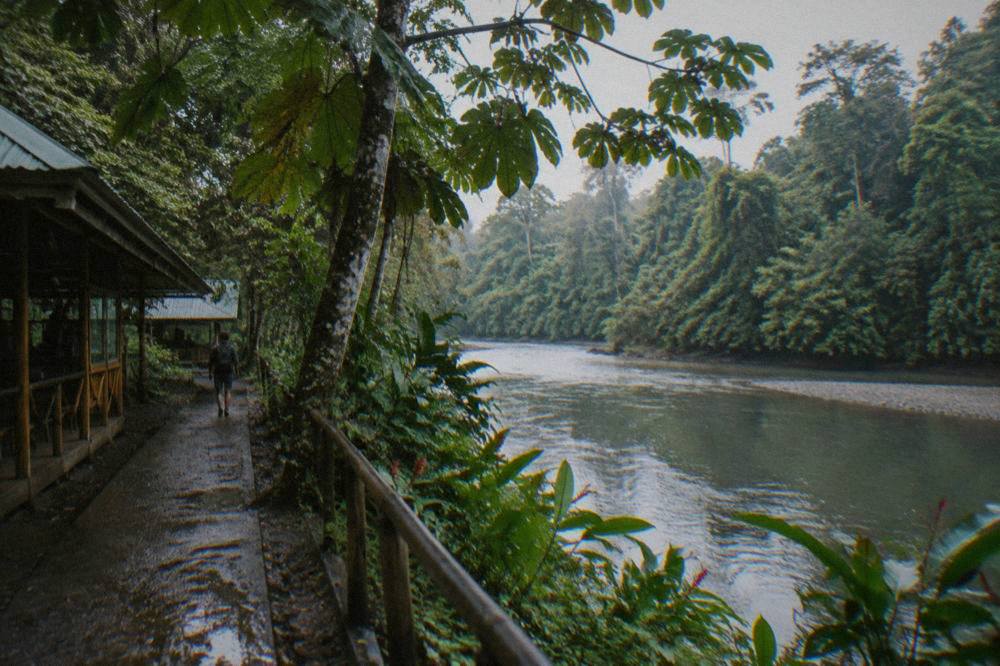
Temperature barely changes with the calendar. Nights cool a little in the dry months, and the months on either side of the transition feel the most humid, but the rafting day itself is warm in January and warm in July. The practical planning question is never whether it will be cold. It is how much water is coming down the river, which is a rainfall question, and rainfall is where the months genuinely differ. For how that translates into water in the channel, the companion page on Sarapiqui river levels by season breaks down the class ratings.
| Period | Season | Typical character | What it means for the river |
|---|---|---|---|
| December to April | Dry season | Lower, more predictable flows; occasional showers | Class II-III water commonly reported on the family sections |
| May to August | Early green season | Building flows, sunny mornings, afternoon storms | Bigger waves, Class III to IV reads on the upper run |
| September to November | Peak wet months | Heaviest rain, saturated soils, highest water | Strong currents; trips can be rerouted or cancelled in high water |
How Much Rain Does Sarapiqui Get Each Month?
The Sarapiqui lowlands average about 3,464 mm of rain per year on 1990 to 2020 climate normals. November is the wettest month at roughly 445 mm over about 17 rainy days, and April is the driest at roughly 117 mm over about 8 rainy days. Month-level figures for the other ten months are not tabulated here, because the published record does not provide them in a form this site can stand behind.
Those three anchors are enough to sketch the shape of the year. If April sits near 117 mm and November near 445 mm, the months between climb a curve: May and June step up from the dry season floor, July and August sit in the middle of the range, and September and October approach the November peak before the calendar turns and December begins the slide back down. The curve is a pattern, not a forecast, and any individual month can overshoot or undershoot it. Rainfall records in the region show single days that dropped over 100 mm at La Virgen, which is nearly an entire dry-season month in one afternoon.
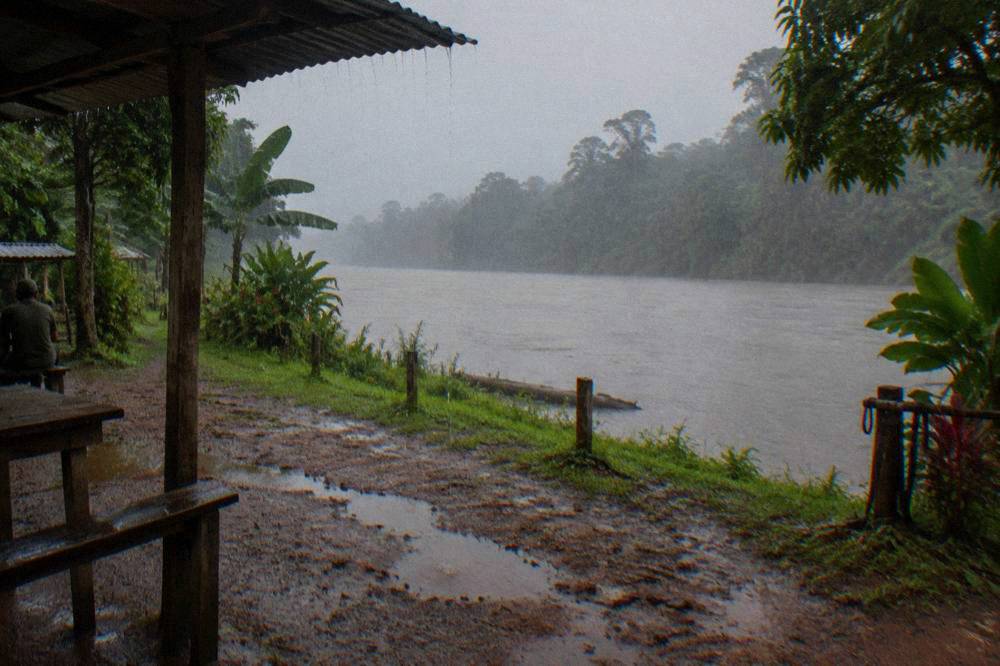
The annual figure comes from the 1990 to 2020 climate normals compiled for the Sarapiqui lowlands by weather-and-climate.com's precipitation series for Sarapiqui, which is also the source for the November and April anchors used above. Roughly 3.4 meters of rain a year is what keeps this valley forested, loud with birds at dawn, and reliably full of whitewater. Drier regions of the country would envy the problem.
| Climate anchor for the Sarapiqui lowlands | Value | Source basis |
|---|---|---|
| Average annual rainfall | about 3,464 mm | 1990 to 2020 climate normals |
| Wettest month | November, about 445 mm over about 17 rainy days | Same normals series |
| Driest month | April, about 117 mm over about 8 rainy days | Same normals series |
| Daytime air temperature | about 28 to 30 C year-round | Same normals series |

When Is The Dry Season On The Sarapiqui River?
The dry season runs December to April, with April the driest month at about 117 mm of rain. On the river this is the window when operators report lower, more predictable flows, and the family sections read as Class II-III with warmer, gentler waves. It is the natural window for first-timers and for trips with children.
Dry season planning is the simplest version of a Sarapiqui trip. Water levels settle, the rapids stay runnable week after week, and the afternoon shower, when it comes, is a brief tropical event rather than a day-defining one. The Class II-III family listings are built for exactly this water: the 3-hour Family Rafting Adventure from La Virgen, from $85 per person with lunch included, carries a minimum age of 6 and takes up to 24 guests. The budget option, Rafting Sarapiqui River Class II-III from La Virgen, runs from $60 per person for 3 hours with a fruit and cookie snack, and holds a 5.0 rating from 59 reviews.
Dry season does not switch off the bigger water entirely. The Sarapiquí River Rafting Tour, Class II-III Near Arenal, an 8-hour day from La Fortuna with hotel transport and lunch listed, from $105.87 per person with a 5.0 rating from 101 reviews, still delivers real rapids in March. What changes is the ceiling: waves stay moderate, and the Class IV features that appear at high water simply are not there. If your heart is set on the biggest whitewater of your life, the dry months may actually undersell the river, and you should read the green season section below before booking.
What Does Green Season Rain Do To The Sarapiqui River?
Green season rain, May to November, raises flows and pushes the water toward Class III-IV with stronger currents and bigger waves, as operators consistently describe. The rain-fed, undammed river responds directly to rainfall, so a wet week can transform a section that read Class II-III in the dry months. June through October is typically the window for the most dynamic water.
This is the season with the most upside and the most honesty required. More water means bigger hydraulics, longer wave trains, and a run that feels properly alive: exactly what the Class III-IV listings sell. The most reviewed trip on this site, Sarapiqui River Extreme White Water Rafting Class IV from La Fortuna, from $85 per person over 5 hours with lunch and hotel transport for hotels within about 6 km of the operator's main office, carries a 5.0 rating from 845 reviews, and its biggest water arrives with the green season rains. The same goes for the Extreme White Water Adventure Class III and IV from La Virgen, from $85 per person, 5.0 from 108 reviews, with a listed minimum age of 14.
The flip side is that green season water is not a promise of Class IV either. The class you actually get on the day moves with the level: operators report the upper run as Class II-III at lower dry-season flows and up to Class III or IV after heavy rain. A June trip after a dry spell can paddle medium water, and an October trip can be rerouted when the river jumps its banks. National norms also matter here: under the Costa Rican technical norm INTE G60-1:2019, Class III-IV participation is legally open from age 12 and up, and operators set their own, often higher, minimums, so check the listing for the trip you want. The deeper dive on this trade-off is in the green season rafting guide.
Which Month Should You Book A Sarapiqui Rafting Trip?
March and April are the strongest all-round months: rainfall is near its annual low, April brings about 117 mm over roughly 8 rainy days, daytime temperatures hold near 28 to 30 C, and the river runs at friendly, predictable levels. For maximum whitewater, aim for June through October, accepting a real chance of weather-driven changes.
Matching the month to the trip is the actual decision, and the roster makes it easy because the same river serves three kinds of day. Families and cautious first-timers should weight toward the December to April window and the Class II-III listings, whose minimum ages, where stated, run as low as 6. Confident paddlers who want the big water should book the wet half of the year and choose among the Class III-IV listings, several of which depart La Fortuna with hotel pickup listed. Wildlife watchers have a third option that cuts across seasons: the Jungle Safari Float on Sarapiqui River from La Fortuna, from $92.66 per person over 6 hours with lunch, 5.0 from 23 reviews, drifts calm water where sloths, monkeys, toucans and caimans are commonly reported by operators and guests, never promised.
Afternoon scheduling is another month-driven trick. In the green season the classic day is a sunny morning and an afternoon storm, so a morning departure often paddles better light and calmer skies. One listing formalizes the opposite bet: Rafting Class 2-3 Sarapiqui Afternoon Trip from La Fortuna, from $92.66 per person over 5 hours with lunch and bottled water, 4.8 from 39 reviews, runs the river after the morning crowds have gone. If you want a month-by-month verdict aimed purely at booking windows, the companion piece on the best month for white water rafting works through the calendar in detail.
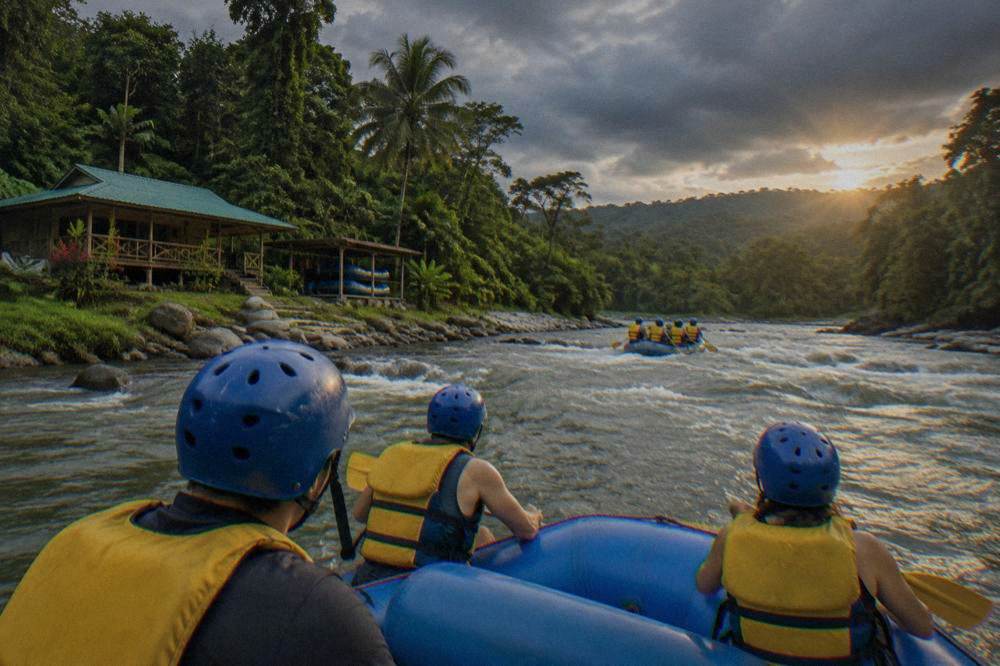
| If you want this day | Best months | Roster listings that fit |
|---|---|---|
| Gentle family rafting, minimum ages from 6 | December to April | Family Rafting Adventure Class II-III, from $85, 4.9 from 200 reviews; Budget 3-Hour Rafting, from $60, 5.0 from 59 reviews |
| Big water, Class III-IV | June to October | Class IV from La Fortuna, from $85, 5.0 from 845 reviews; Class 3-4 from La Fortuna, from $122.04, 4.9 from 136 reviews |
| Wildlife on calm water, any season | Year-round, driest months most comfortable | Jungle Safari Float from La Fortuna, from $92.66, 5.0 from 23 reviews; Wildlife Safari Float at La Virgen, from $90, 3 hours |
| Raft plus a one-way transfer between towns | Green season for the biggest water | Fortuna to San Jose run, from $122.04, 4.8 from 17 reviews; San Jose connection trips from $119 |
What Should You Pack For Sarapiqui's Rain And Heat?
Pack clothes that can get wet, secure shoes that will not fall off, a change of dry clothes, sunscreen and insect repellent, because every Sarapiqui day combines about 28 to 30 C air with a high chance of getting soaked, by rapid or by rain. The listing for your trip states what gear the operator supplies, typically helmet, life jacket and paddle.
The heat changes the packing math in a way cold-water rivers never face. You will not need a wetsuit at any point in the year, and heavy cotton is the enemy because it stays wet on the shuttle home. Operators and listing pages consistently recommend quick-drying layers plus a dry set for after the run, and many listings on this roster add towels, fresh fruit and changing rooms at the base. The Wildlife Safari Float listing, for example, includes a bath towel and secure lockers among its inclusions, and several Class II-III listings hand out towels and bottled water at the end of the tour.
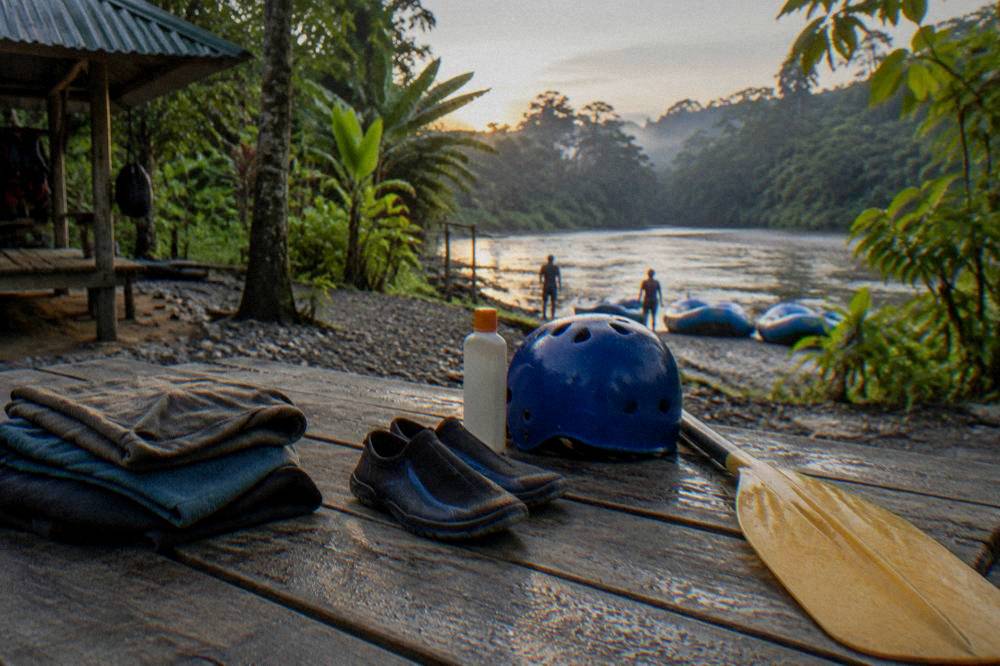
Rain-specific extras are few but real. A dry bag or a zip-lock for your phone is worth more than any jacket, since you will be in the water regardless. Footwear matters most: secure sandals with a heel strap or old trainers, never flip-flops, which the wave trains take as tribute. The full checklist, including what the norms require operators to provide by law, sits in the detailed pages on what to wear rafting in Costa Rica and what to bring for a rafting day.
Can Weather Cancel A Sarapiqui Rafting Trip?
Yes. Operators cancel or reroute Sarapiqui trips during high water events, flooding and road closures, and the green season's heaviest months carry the highest chance of a change. Route 32 through Braulio Carrillo is repeatedly closed by rainy-season landslides, with detours via Route 10 or Bajos de Chilamate, so the drive can lengthen even when the river itself is fine.
Every listing on this roster carries free cancellation as stated on its page, which matters precisely because the weather does the deciding. The pattern is documented rather than theoretical: green season flooding in the Sarapiqui area has repeatedly put hundreds of people in shelters and closed roads and bridges in the wettest months, and Route 32, the main San Jose artery toward the Caribbean lowlands, is reported closed by landslides during heavy rain in the rainy season. A trip that departs San Jose, such as the Full-Day Rafting from San Jose, from $105 per person over 10 hours with round-trip hotel transport and lunch, is exposed to road conditions as well as river level.
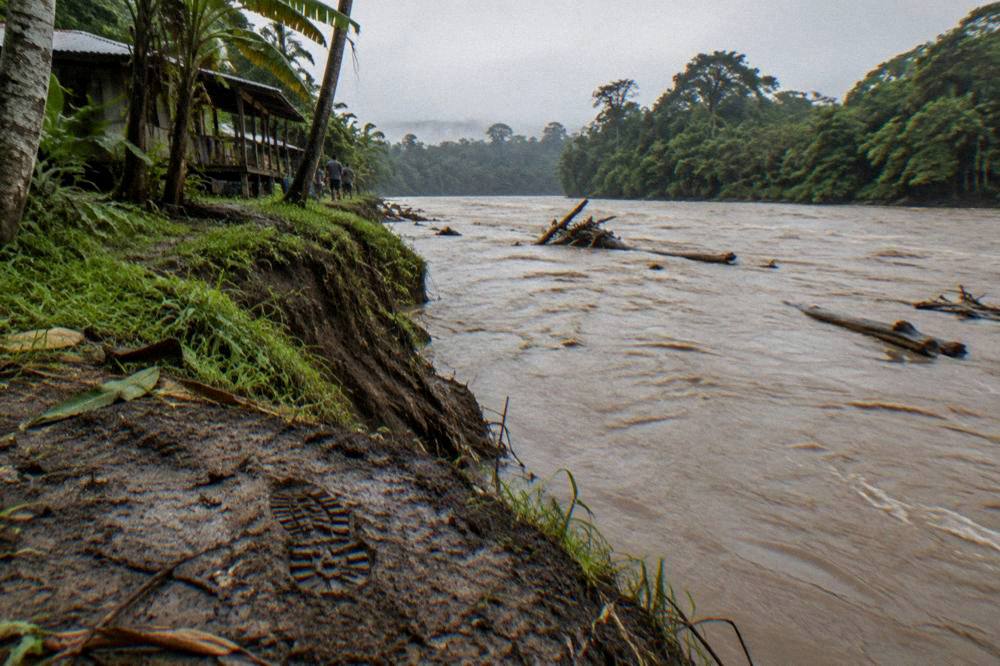
The honest framing for a wet-month booking is threefold. First, pick a listing with free cancellation stated and hotel pickup included where you can get it, so a reroute or a cancellation costs you nothing but a morning. Second, build a spare day into the region if the trip is the centerpiece of your visit, which the things to do in Sarapiqui guide makes easy with Tirimbina's hanging bridges and the La Selva walks. Third, trust the operator's call: rerouting a high-water day onto calmer sections or rescheduling it is the regulated, normal outcome, and certified guides, required under the national guide competency norm INTE G60-2:2019, make those calls with rescue training behind them. Nobody paddles a flooded river to keep a schedule.
The short version of this whole page: pick the season for the water you want, not the weather you want, because the weather is warm and wet in every month anyway. Dry season, December to April, for family-friendly Class II-III with the lowest chance of disruption. Green season, May to November, for the biggest water, booked with a spare day and a free-cancellation listing.
Common Questions About Sarapiqui Weather And Rainfall
What is the wettest month in Sarapiqui?
November, with about 445 mm of rain over roughly 17 rainy days on the 1990 to 2020 climate normals. It is also the month when high-water cancellations and reroutes are most likely on the river.
What is the driest month in Sarapiqui?
April, with about 117 mm of rain over roughly 8 rainy days. The whole December to April dry season gives lower, more predictable river flows and Class II-III water commonly reported on the family sections.
Is it too rainy to raft in the green season?
No. Green season trips run regularly, and the higher flows from May to November are what push the upper river toward Class III-IV with stronger currents and bigger waves. Operators do cancel or reroute during high water events, so choose a listing with free cancellation and keep a spare day.
Does it ever get cold in Sarapiqui?
Not on the river. Daytime air temperatures typically run 28 to 30 C year-round, and no month requires a wetsuit. Nights cool slightly in the dry season but stay mild.
Which month should I book for the biggest rapids?
June through October, during the peak of the green season, is typically when the most dynamic water arrives as flows rise after the rains. The Class III-IV listings, including the Class IV run from La Fortuna from $85 per person, are built for this water.
How much rain does Sarapiqui get in a year?
About 3,464 mm on average, based on 1990 to 2020 climate normals for the lowlands. That rainfall is what keeps the undammed river runnable in every month of the year.