What Month Is Best For White Water Rafting In Costa Rica?
A month by month answer for rafting the Sarapiqui in Costa Rica: dry season Class II-III water, green season Class III-IV push, rainfall anchors, crowding and which trips fit each month.
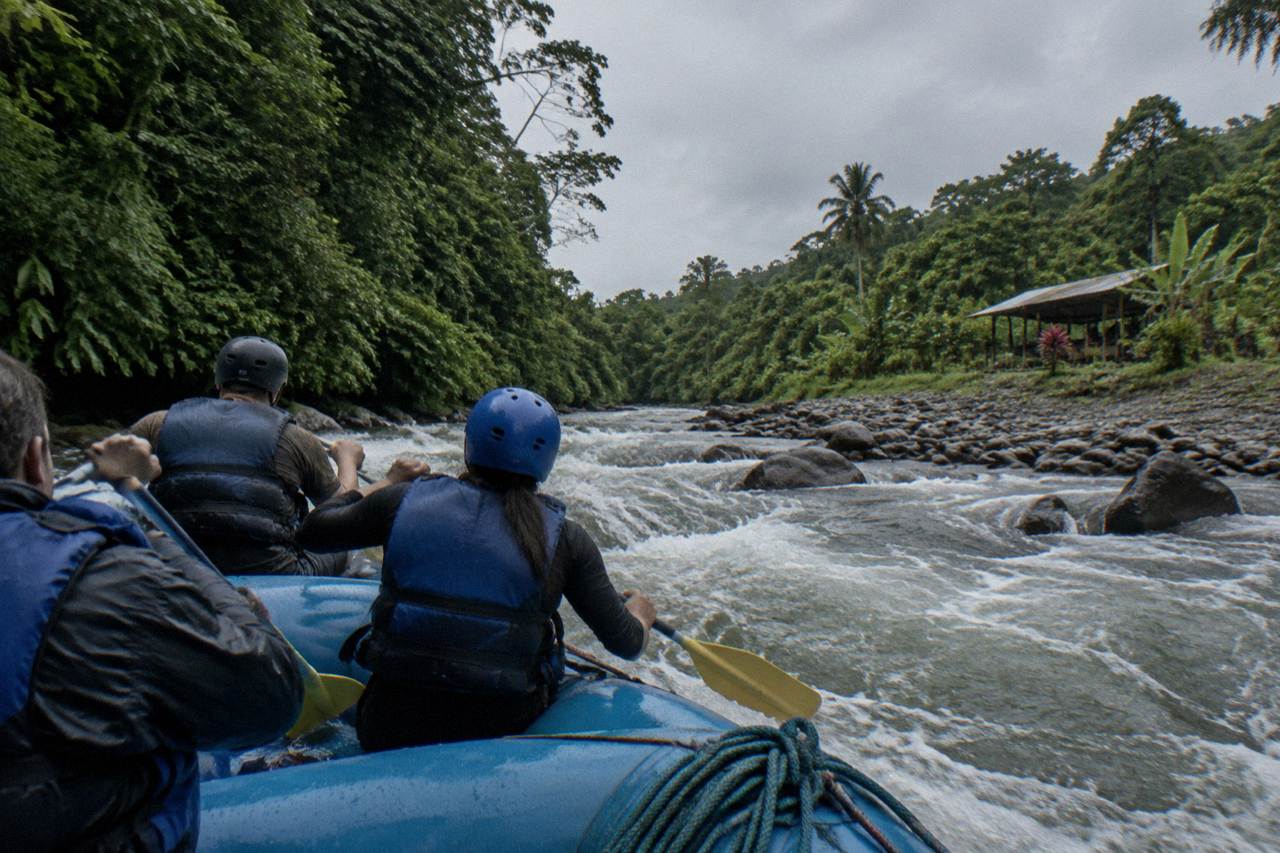
Operators report the dry season months of December through April give lower, more predictable flows, with rapids commonly reading Class II-III on the upper run. The green season months of May through November raise the water and push sections toward Class III and IV. There is no single winner. The best month is the one that matches the river you actually want.
Before the month by month detail, here are the three Sarapiqui trips this comparison keeps coming back to, because the calendar question is really a question about which of them you should be on.
How The Sarapiqui Changes Between Dry And Green Season
The Sarapiqui has two real seasons, and they hand you two different rivers. Dry season, December to April, means lower water and rapids that operators commonly report as Class II-III on the upper run, friendly to beginners and children of legal age. Green season, May to November, means higher flows, stronger currents and bigger waves, with sections reading up to Class III or IV after sustained rain. The river is undammed, so it answers to rainfall almost immediately.
The mechanism is simple and worth understanding before you pick a date. A dammed river gets a release schedule and stays predictable. The Sarapiqui gets none of that: what falls in the hills this week is what flows under your raft next week. Operators describe the same physical run as Class II-III at lower dry-season flows and up to Class III or IV after heavy rain, which is why no honest calendar can promise you a rapid class in advance. It can only tell you the odds.
The rainfall record backs this up. The Sarapiqui lowlands average about 3,464 mm of rain per year based on 1990 to 2020 climate normals, which is a lot of water by any measure. November is the wettest month at roughly 445 mm across about 17 rainy days. April is the driest at about 117 mm across about 8 rainy days. Those two months sit at opposite ends of the same river, and the difference on the water is not subtle. Daytime air temperatures barely enter the decision: they typically run about 28 to 30 C year-round, so you will be warm whenever you go.
There is a planning consequence too, and it is the one first-time visitors most often miss. The green season's heavy rain does not only raise the river. It also closes roads. Route 32 through Braulio Carrillo, the main San Jose to Sarapiqui corridor, is commonly reported closed for landslide clearing during rainy-season downpours, and trips themselves are cancelled or rerouted during high-water events and flooding. None of this is a reason to avoid green season. It is a reason to build a free-cancellation booking and a spare day into a green-season plan. Every listing on this site's roster shows free cancellation listed, so the spare day matters more than the refund policy.
A Month By Month Matrix For The Sarapiqui
No verified month-by-month river-level or rainfall table exists for the Sarapiqui, so this matrix is built honestly from what is known: the dry-green split of December to April versus May to November, and three anchor figures from 1990 to 2020 climate normals. Month-level rainfall and river-flow values are not tabulated here because inventing them would be dishonest. What the table does give is the practical pattern operators and guests report for each month.
Here is the honest version of the calendar, built only from the season anchors above.
| Month | Season | What to expect on the Sarapiqui |
|---|---|---|
| December | Dry | Lower, predictable flows; the upper run commonly reads Class II-III; holiday crowds start building |
| January | Dry | Classic family-rafting month; stable water, peak dry-season visitation |
| February | Dry | Same low-water character; reliable beginner conditions, busy on the water |
| March | Dry | Late dry season, still low water; heat near the top of the 28 to 30 C range |
| April | Dry | The driest month on record at about 117 mm over 8 rainy days; lowest, most forgiving water |
| May | Green | Transition month; flows begin climbing, rapids start reading Class III |
| June | Green | Peak big-water rafting begins; operators report dynamic Class III to IV conditions |
| July | Green | Strong flows; green season flooding has occurred in the area this month, build in a spare day |
| August | Green | Big water continues; wildlife is active along the banks in the lush season |
| September | Green | High water; one of the strongest months for Class III-IV paddling, and one of the quietest for crowds |
| October | Green | Late in the wet half; November's peak is approaching, so cancellation odds are at their highest |
| November | Green | Wettest month at about 445 mm over 17 rainy days; trips run between rain events, expect reroute risk |
Read the table as a pattern, not a forecast. June through October is the window operators and travel writers typically flag as the best months for higher water and more dynamic rafting, and September stands out as the sweet spot where big water meets low crowds. April is the mirror image: the calmest, most predictable water of the year at the end of the driest stretch. If your whole trip hinges on getting on the water on one specific day, April or January tilts the odds your way. If it hinges on big waves and you have a flexible schedule, September does.
Why Green Season Months Push The Rapids Up A Class
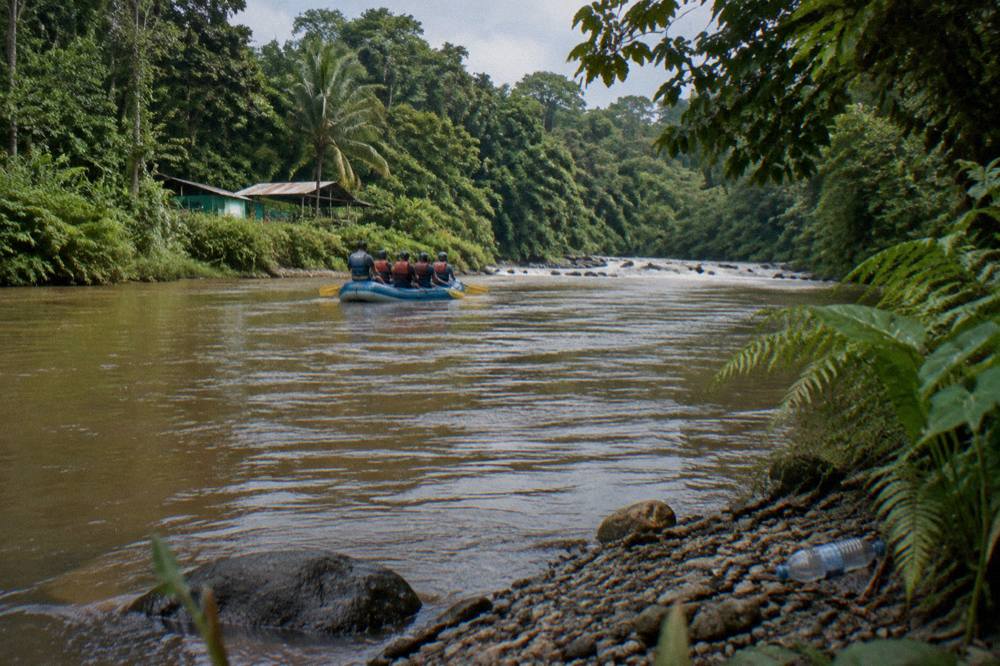
Rapids are rated by the water moving through them, and in green season there is simply more of it. Sustained rainfall raises the river, drowning out the gentle reads and turning wave trains into bigger, faster features, which is why operators describe the same section as Class II-III in dry months and up to Class III or IV after heavy rain. More water also means stronger currents, so the paddling demands climb even where the rapid count does not.
This is the part of the calendar that decides who should be on which trip, and it connects directly to the age rules on this site. Costa Rica's national technical rafting norm, INTE G60-1:2019, sets legal minimum ages by rapid class: ages 8 to 11 may only paddle Class I to III, and Class IV is open only from age 12, with operator minimums often set higher than the law requires. In practice that means a green-season Class IV day is an adults-and-strong-teens proposition, while an April Class II-III day can legally include an eight-year-old. The family listing from the Sarapiqui Outdoor Center, the Class II-III Family Rafting Adventure, sets its own minimum at age 6 and runs up to 24 guests, with lunch included and free cancellation listed. Check the listing for anything beyond that.
The Class III-IV side of the roster answers the green season instead. The featured trip on this site, the Class IV run from La Fortuna, carries a 5.0 rating from 845 reviews, from $85 per person, 5 hours total with lunch, hotel transport for hotels within about 6 km of the operator's main office, and free cancellation listed. It is the most reviewed Sarapiqui trip here by a wide margin, and reviews through the green season suggest the big-water months are precisely when its guests get the run they came for. The steeper Class 3-4 trip from La Fortuna, 6 hours with hotel pickup and drop-off listed, 4.9 from 136 reviews, from $122.04 per person, sits at the more demanding end of the same season. To see how these Sarapiqui runs stack up against rivers in other parts of the country, the Costa Rica river-by-river rafting comparison lays out which stretch suits which kind of group.
A caveat the calendar cannot fix: no operator promises a rapid class. The river decides on the day, and in extreme water operators cancel or reroute rather than run unsafe lines. That is not a loophole, it is the system working. Book the class of trip you want, in the month that favors it, and let the operator make the final call on the water.
Crowds, Prices And Cancellation Odds By Month
Crowds follow the dry season, not the river. December through April brings the highest visitor numbers to Costa Rica and the busiest rafts, while green season months bring smaller groups and, as multiple 2026 tourism sources report, lower travel prices generally. Cancellation odds move the opposite way: they are lowest in the March to April window and highest in October and November, when the wettest weather sits over the region.
For the rafting roster itself, prices hold steady across the year: the listings here print one firm price, not seasonal rates. The cheapest firm-priced rafting trip on the roster is the budget Class II-III run from La Virgen at from $60 per person, 3 hours, 5.0 from 59 reviews, snack and towel included but no meal stated. At the other end of the per-person scale, the premium Class III-IV day from La Fortuna runs from $160 per person for 8 hours with pickup, park entry and meals listed. Season changes what the water does, not what the listing charges, so the crowd and cancellation columns are the ones that should move your date.
The practical read, then, is a trade. Dry season buys you reliability, warm stable weather, easy water and the company of high season. Green season buys you bigger rapids, quieter rivers and lusher banks, at the cost of a real chance that any given day gets rained out or rerouted. Families with one window and one shot at the river should slide toward January through April. Paddlers chasing the biggest water the Sarapiqui offers, with a spare day in hand, should slide toward June through October and accept the weather dice.
Which Trips Fit Which Month
Match the listing to the month, not the other way around. Dry season pairs naturally with the Class II-III family trips and the wildlife floats, where lower water makes the gentle sections shine. Green season pairs with the Class III-IV and Class IV runs, where raised flows deliver the waves those trips are sold on. Connection trips that raft between cities work in both seasons, but they carry the highest reroute risk in October and November.
Rafting Adventure at Rio Sarapiqui, from $70 per person for 4 hours with a 5.0 rating from 29 reviews, departs the Sarapiqui area with snacks listed and free cancellation, and its unlabelled class makes it a genuine question for the operator: in April it is plausibly a relaxed paddle, in September something firmer. That is worth an email or a read of the live listing before you book, because "check the listing" is real advice on a river whose class moves.
The two connection itineraries deserve their own note for anyone routing between cities. The Class 2-3 run from La Fortuna to San Jose, 8 hours with lunch, from $122.04 per person, and its Class III-IV twin both turn the drive into the day's activity, and both are at the mercy of the same road and rain conditions discussed above. They are efficient in any month, but in the wettest weeks the spare-day rule doubles: you are betting on both the river and Route 32 or its alternates staying open.
One more pairing worth naming: the 2-night Sarapiqui stay from San Jose, from $556 per person across 3 days, which bundles a jungle night walk at La Tirimbina with a Class III rafting day. A multi-day structure is itself a hedge against the calendar, because the operator can shuffle the rafting day inside the itinerary when weather demands it, something a single-day booking cannot do.
Booking Around Weather: What To Check Before You Commit
Book with the season, not against it, and give every booking room to move. Confirm on the live listing: the operator's minimum age and any weight or fitness requirements, whether hotel pickup is included for your specific hotel, the cancellation terms, and what the operator does on high-water days. Every listing on this site shows free cancellation listed, but rebooking space still needs a spare day in your itinerary, especially from July through November.
The regulation side is reassuring if you know it exists. Beyond the age table already mentioned, the national norm requires operators to supply and verify helmets and life jackets for every participant, with specified buoyancy for Class III and above. A companion guide norm, INTE G60-2:2019, requires rafting guides to hold national certification in rafting and swiftwater rescue plus current first aid and CPR, and the adventure-tourism regulation requires ICT-credentialed or approved guides. You can read the rafting norm yourself on the Instituto Nacional de Aprendizaje's published technical document, and the guide competency norm alongside it. A listing that cannot tell you its guides hold these credentials is a listing to walk away from, whatever month it is.
Packing barely changes across the year, and the operator guidance is consistent: clothes that can get wet, secure shoes rather than flip-flops, a change of dry clothes, sunscreen and insect repellent. The sun in March is a bigger nuisance than the rain in July, and neither is a reason to stay home. If you want the full checklist, the site's packing and clothing guides cover it in depth: see what to wear rafting in Costa Rica and what to bring for a rafting day. The deeper seasonal picture, including how the river's class moves month by month, sits in the Sarapiqui river levels and rapid class guide.
The Verdict: Two Best Months, Two Different Rafters
For most travelers, April is the best single month: the driest on record, the most predictable water, legal and comfortable for the widest age range, and forgiving of a tight itinerary. For paddlers who want the Sarapiqui at its most powerful, September is the best month, delivering green-season Class III to IV water with the year's smallest crowds, provided you hold a spare day against rain. January and June are strong runners-up in each direction.
Saying it as a decision: if the raft is one activity among several on a family trip, anchor the trip in dry season and book a Class II-III listing, with the wildlife float as a calmer alternate. If the raft is the point of the trip and every member is 12 or older, strong and keen, anchor in mid green season and book the Class III-IV or Class IV run. The featured Class IV trip from La Fortuna, 5.0 across 845 reviews from $85 per person with lunch and near-town hotel transport listed, covers most of the second case, and its free cancellation means the weather risk costs you nothing but patience.
This site, Sarapiqui River Rafting, exists to make that one decision easy, and the month question is its core: the calendar is the single biggest lever on what kind of river you get. If you are still weighing rivers rather than months, the comparison pages on Sarapiqui versus Pacuare and the Balsa against the Sarapiqui cover how the alternatives differ.
Common Questions About The Best Rafting Month
What Month Is Best For White Water Rafting?
April for forgiving, family-friendly Class II-III water and reliable weather; September or early October for big green-season Class III to IV waves with small crowds. The Sarapiqui is undammed and rain-fed, so the month sets the odds rather than guaranteeing the class.
What Month Is Best For White Water Rafting In Costa Rica?
For the Sarapiqui, the country's most accessible rafting river from both San Jose and La Fortuna, April is the safest all-round answer and September the strongest big-water answer. December through March works well for beginners; June through October suits paddlers chasing bigger rapids.
Is white water rafting in Costa Rica seasonal?
Trips run in both seasons, but character changes with the calendar. Dry season, December to April, gives lower Class II-III flows. Green season, May to November, raises the river toward Class III and IV. Cancellation and reroute risk is highest in October and November, the wettest stretch.
Which month has the most rain in Sarapiqui?
November, averaging about 445 mm of rain across roughly 17 rainy days per 1990 to 2020 climate normals. April is the driest at about 117 mm over about 8 rainy days. Trips still run in the wet months, between rain events, with a spare day recommended.
Can children raft in green season?
It depends on age and the day's rapid class. National norm INTE G60-1:2019 allows ages 8 to 11 only up to Class III, and Class IV only from age 12; operators often set higher minimums, so check the listing. In high-water months the family Class II-III listings remain the right choice, age 6 minimum on that listing.
Do rafting trips get cancelled for rain in Costa Rica?
Yes. Operators cancel or reroute Sarapiqui trips during high-water events, flooding or road closures, most commonly in the wettest months. Every listing on this site shows free cancellation listed, so rebook rather than worry, and keep a spare day in your itinerary from July through November.