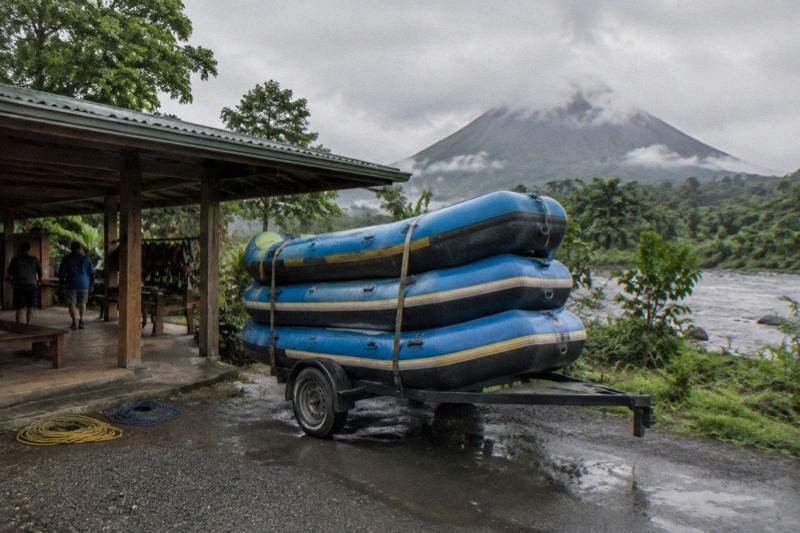
Is White Water Rafting Worth It In Costa Rica?
An honest look at who gets the most from white water rafting in Costa Rica, what the Sarapiqui trips cost and include, and who should skip the river entirely.
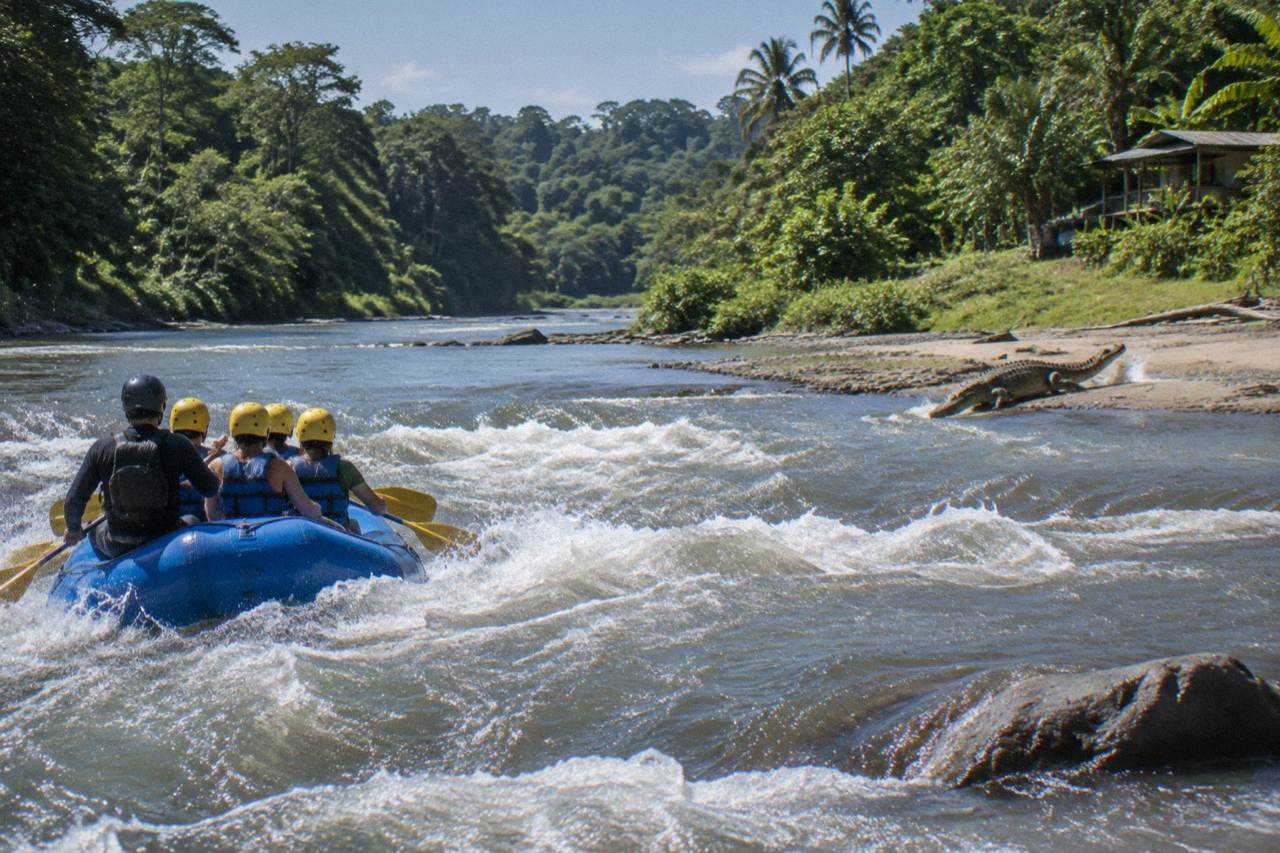
Costa Rica sells itself on two things: wildlife and adrenaline. White water rafting sits squarely in the second category, and the Sarapiqui, about an hour to an hour and ten minutes from La Fortuna and about an hour and a half from San Jose, is one of the rivers where most of that adrenaline gets manufactured. The question worth asking before you spend $60 to $160 per person is not whether rafting is exciting. It is whether the specific version of excitement a Costa Rican river delivers matches what you actually want from a day of your trip. If your budget says no to that price tag, the guide to free things to do in Sarapiqui shows how to enjoy the same river valley without paying for a seat in the boat.
That answer is genuinely different for a family with two nine-year-olds, a couple basing themselves in La Fortuna, and a traveler who gets seasick in a swimming pool. This article works through who gets the most from a rafting day, who should quietly skip it, what the river feels like at different times of year, and what the money on a real listing actually buys. The honest answer up front: for most physically able visitors with a half day to spare, the value is real, and the reviews back that up. The featured trip on this site, the Class IV Sarapiqui run from La Fortuna, holds 5.0 from 845 reviews, the largest review pool on the river, at from $85 per person. If the river has sold you on the idea, the guide to whether Sarapiqui deserves a spot on your itinerary digs into who the region actually suits and whether an overnight stay changes the experience.
For most visitors with a free half day and reasonable health, yes, and the review pools are emphatic: the featured Class IV La Fortuna trip holds 5.0 from 845 reviews, the budget Class II-III trip holds 5.0 from 59, and the family float holds 4.9 from 200. Rafting is worth it when you want a guided adrenaline hit with jungle scenery attached, and poor value if you wanted a beach day with a short boat ride.
The reason the reviews run so hot is structural. A rafting day in Costa Rica is not a self-directed activity. You arrive at an operator base or get picked up, you get a safety briefing, equipment, a certified guide in the boat, a fruit snack, and usually lunch, and the whole thing is compressed into three to eight hours depending on the listing. The operator does the work of making an unfamiliar river accessible. When that machinery works, guests feel they got a genuine adventure without any of the planning risk, and they rate accordingly.
The national framework also does quiet work here. Costa Rica regulates commercial rafting through a national technical norm, INTE G60-1:2019, which sets minimum ages by rapid class and requires operators to supply and verify helmets and life jackets for every participant. Guides must hold national certification in rafting and swiftwater rescue under INTE G60-2:2019. This is not a country where anyone with a boat and a paddle can sell you a rapid. That regulatory floor is part of what you are buying.
Who Gets The Most From A Rafting Day?
First-time rafters staying in La Fortuna or the Sarapiqui area get the most value, followed by families with children eight and over, and travelers using a rafting run as a scenic transfer between San Jose and La Fortuna. If your trip already has a volcano day and a wildlife day, a rafting day is the strongest third act available in this region, and the connection tours turn drive time into the activity itself.
The La Fortuna crowd has the easiest math. The drive from La Fortuna to the Sarapiqui rafting area runs roughly an hour to an hour and ten minutes, and several listings fold hotel pickup into the price. The featured Class IV trip includes hotel transportation for hotels within about 6 km of the operator's main office, lunch, fresh fruit, towels and bottled water, from $85 per person for a 5-hour trip. The 6-hour Class 3-4 trip from La Fortuna, 4.9 from 136 reviews at from $122.04 per person, includes hotel pickup and drop-off and lunch. You lose half a day and gain the story.
Families are the second big winner, but only above the age line. The Class II-III family float from the Sarapiquí Outdoor Center in La Virgen lists a minimum age of 6, includes lunch, and costs from $85 per person, with 4.9 from 200 reviews. The budget 3-hour Class II-III trip from La Virgen, 5.0 from 59 reviews, starts at from $60 per person, the cheapest firm-priced listing on this river, though its meal is not stated and hotel pickup is excluded. The national norm opens Class III to children from age 8, but operators set their own minimums: always check the listing.
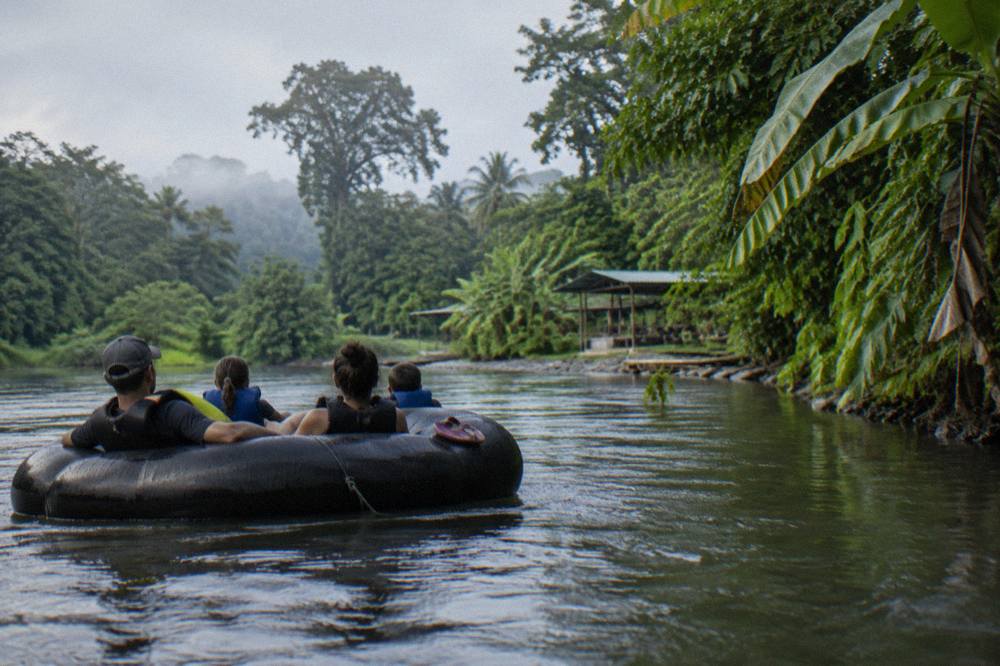
The transfer crowd is the group most people do not know exists. Several listings run the river in the middle of a San Jose to La Fortuna or La Fortuna to San Jose journey, with hotel pickup and drop-off at both ends. The 8-hour Class III-IV version costs from $122.04 per person with lunch and equipment included. Instead of a dead five hours on a highway, you spend part of it on the water. For anyone already making that drive, this is close to free value.
Who Should Skip Rafting In Costa Rica?
Skip the whitewater if you cannot swim confidently, are pregnant, live with a heart condition or severely limited mobility, or are traveling with children under the age line for the class: under 5 cannot raft at all under national norms, and ages 5 to 7 are limited to Class I and II. Operators list these same restrictions, and a wildlife float is the honest alternative that keeps the river without the rapids.
The age table matters more than most parents expect. National norm INTE G60-1:2019 sets ages 8 to 11 at Class I to III and ages 12 to 17 at Class I to IV. That means a 10-year-old can legally join the family Class II-III float but cannot join the Class III-IV run, regardless of how strong a swimmer they are. Individual listings often sit higher still: one Class III-IV listing sets minimum age 14, another 15. Never assume; check the listing for the specific trip.
Health restrictions are equally real. Operators commonly list pregnancy, certain cardiovascular conditions, low mobility and obesity as restrictions or non-recommended conditions, following disclosure duties in the national norm. Weight limits are operator policy, commonly reported around 100 to 120 kg, but they vary: again, check the listing. There is also a temperament question no regulation covers. If cold water in your face, falling out of a boat into a current, or an instructor shouting paddle commands would ruin your day rather than make it, the money is better spent elsewhere.
The gentle alternative deserves a direct mention rather than an apologetic one. The wildlife float category is not rafting: the jungle safari float from La Fortuna is a calm-water float, 5.0 from 23 reviews at from $92.66 per person for 6 hours with lunch and snacks, on a river where sloths, monkeys, toucans, iguanas and caimans are commonly reported by operators and guests. For wildlife-first travelers, that may be the better spend than any rapid. Our family float guide breaks down the calmer listings in detail.
What The River Actually Feels Like By Season
The Sarapiqui is rain-fed and undammed, so the same section reports Class II-III in the lower flows of the December to April dry season and up to Class III or IV in the May to November green season, when currents strengthen and waves grow. Operators report the most dynamic water from June to October, and they cancel or reroute trips in genuine high-water events, so neither the class nor the trip running is ever promised.
This seasonal swing is the single most under-used piece of trip-planning information on this river. A family booking the Class II-III section in March and the same family booking it in September are, in practical terms, booking two different rivers. The section comparison on Costa Rica Spirit's class guide describes the upper run as Class II-III in dry conditions, stepping to Class III with higher water, and the Jungle Run section as Class III-IV dry and up to Class IV wet. The climate anchors are firm: the Sarapiqui lowlands average about 3,464 mm of rain a year, November is the wettest month at about 445 mm over 17 rainy days, and April the driest at about 117 mm over 8 rainy days.
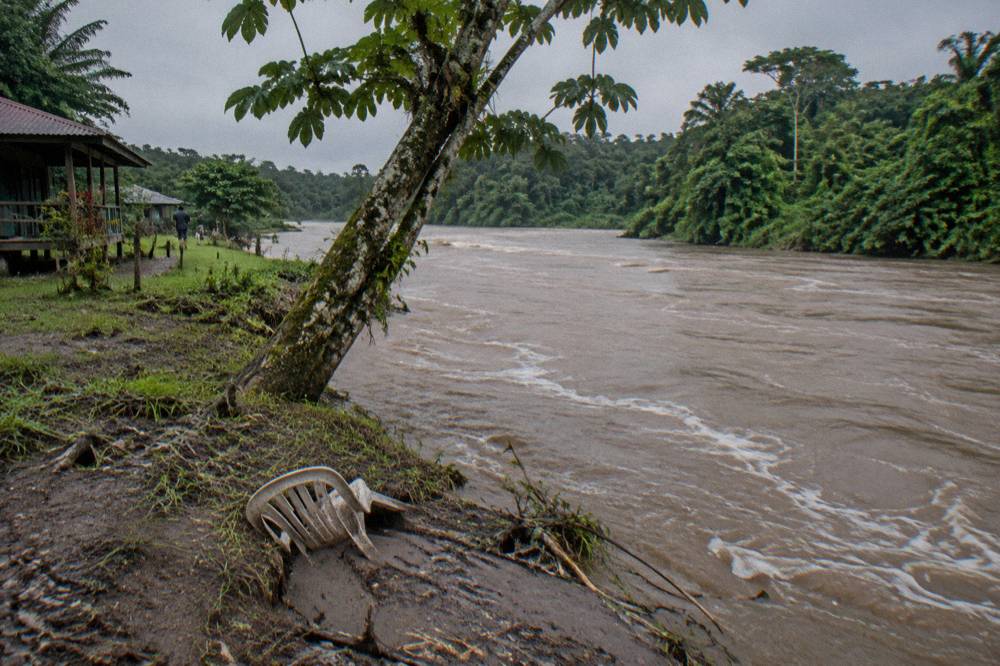
What that means for value is simple. If your goal is the biggest ride available, the green season months are when a Class III-IV booking delivers its full weight, and operators describe June to October as the peak window for higher water. If your goal is a predictable, family-friendly float with warm sun, the dry season is the safer booking, with daytime air temperatures typically 28 to 30 C year-round either way. The trade is crowds and road risk: green season brings smaller crowds, and it also brings the landslides and closures that Route 32 is commonly reported to suffer in heavy rain. Our dedicated river levels and rapid class guide covers the month-by-month picture.
Two honest caveats belong here. First, no operator or article can promise a rapid class on a given day; the river decides, and the listing's class label is the section's typical range, not a contract. Second, trips do get cancelled or rerouted during high water, flooding and road closures. Treat free cancellation, which every listing on this river's roster carries, as part of the value rather than a footnote.
What A Trip Costs And What It Includes
Firm per-person prices on this river run from $60 to $160, from the budget 3-hour Class II-III trip at from $60 with no meal stated, through the featured Class IV trip at from $85 with lunch, up to the premium 8-hour Class III-IV day at from $160. What that money buys varies sharply by listing: equipment, guide, river transport and usually a meal, but hotel pickup only where the listing states it.
The price ladder is wider than most first-time bookers expect, and the differences are mostly logistics rather than luxury. Compare the real endpoints:
| Listing | Class | Duration | Price from | Rating | Pickup | Meal |
|---|---|---|---|---|---|---|
| Budget 3-Hour Rafting, La Virgen | II-III | 3 hours | $60 per person | 5.0 from 59 reviews | Excluded | Not stated |
| Family Rafting, La Virgen | II-III | 3 hours | $85 per person | 4.9 from 200 reviews | Excluded (van to river included) | Lunch |
| Class IV from La Fortuna (featured) | III-IV | 5 hours | $85 per person | 5.0 from 845 reviews | Included within about 6 km | Lunch |
| Aguas Bravas Rafting, Chilamate | II-III | 3 hours | $70 per person | 4.9 from 101 reviews | Included from Sarapiqui hotels | Meal and drinks |
| Class 3-4 from La Fortuna | III-IV | 6 hours | $122.04 per person | 4.9 from 136 reviews | Included | Lunch |
| Premium Class III-IV Day | III-IV | 8 hours | $160 per person | No rating on file | Included | Meal |
Read that table as a decision grid rather than a price list. The two $85 trips are the same number for entirely different products: one is a 3-hour family float at the operator base in La Virgen, the other a 5-hour Class IV run from La Fortuna with hotel pickup. The $60 trip is the cheapest firm-priced listing on the roster, but its meal is not stated and you meet at the operator base, with tour transport included and hotel transport excluded. The $160 premium day, operated by Faro Travel from La Fortuna, is the most expensive per-person listing and bundles park entry and drinks; it has no rating on file, which is itself information. A listing with no reviews is not a bad product, but it is an unproven one, and our cost and inclusions guide unpacks every line.
Two costs sit outside the ticket. Gratuities are excluded on most listings, and operators and travel sites commonly report tipping of $5 to $10 per person for a half-day group tour and $10 to $20 for a full day. Souvenir photos, sold at the end of the trip, are excluded on nearly every whitewater listing. Budget for both or decide in advance to skip them.
The Wildlife Case For The River
Wildlife is the part of a rafting day that surprises people who came only for the rapids: along the Sarapiqui, sloths, monkeys, toucans, iguanas, caimans and aquatic birds are commonly reported by operators and guests, especially in the calmer stretches between rapids. No sighting is ever promised, the river is the wildlife corridor, not a zoo, and the calm-water floats exist precisely for guests who want this half of the day without the adrenaline half.
The biology explains the economics. Law No. 10152 of 2022 established a 25-year renewable environmental safeguard along the main channel and banks of the Sarapiqui River from source to the San Juan River mouth, prohibiting new hydroelectric projects and new mining material extraction concessions. The river you paddle is protected by statute, which is why the forest reaches the waterline along much of the run and why the banks stay inhabited. This is a genuine information-gain point: the rafting and the wildlife are not a lucky coincidence but the same policy outcome.
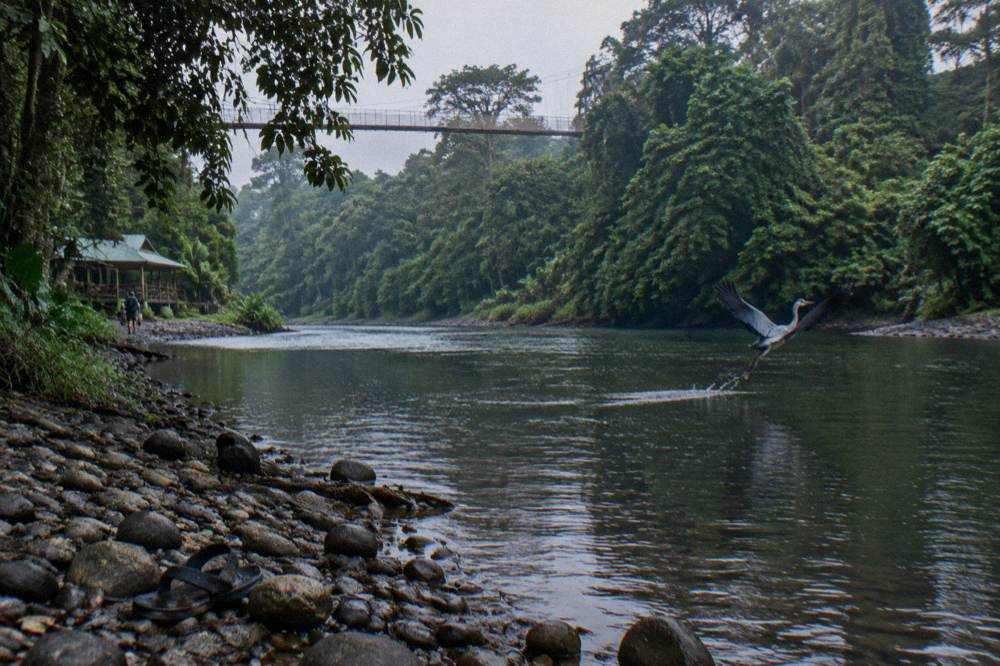
For itinerary builders, the pairing is the point. Tirimbina Biological Reserve, open daily 7:00 a.m. to 5:00 p.m. with hanging bridges over the Sarapiqui itself, sits minutes from the La Virgen operator bases, and La Selva Biological Station offers guided walks in the same lowlands. A morning on the water and an afternoon on foot covers both halves of what the region sells. If wildlife is your primary reason to travel, start with our river wildlife guide before choosing a listing, because the calm sections and the float trips deliver more bank time than the Class IV runs, where eyes stay on the water.
The same logic extends to the wider trip. Rafting occupies a half day, rarely more, and the Sarapiqui sits close enough to La Fortuna that it stacks cleanly onto a volcano itinerary without a base change. That stacking is where the real value lives: a standalone rafting day is good; a rafting day that replaces dead transfer time or bookends a wildlife morning is excellent. The Sarapiqui River Rafting homepage comparison lays the listings side by side for exactly that kind of stacking decision. To weigh the other half of that pairing, the case for visiting Arenal Volcano asks whether the volcano stop itself earns its place once the rafting day is set.
Common Questions About Rafting Value In Costa Rica
Is White Water Rafting Worth It In Costa Rica?
For most visitors with a free half day, reasonable health and a taste for adventure, yes. The review pools are emphatic: the featured Class IV Sarapiqui trip holds 5.0 from 845 reviews at from $85 per person, and the family Class II-III float holds 4.9 from 200. It is weak value only if you cannot swim, are outside the health or age limits for the class, or genuinely did not want to get wet.
How much does a rafting trip cost in Costa Rica?
Firm per-person prices on the Sarapiqui roster run from $60 for a 3-hour budget Class II-III trip to $160 for a premium 8-hour Class III-IV day. The featured Class IV trip from La Fortuna starts at from $85 with lunch and hotel pickup within about 6 km. Gratuities and souvenir photos are extra on most listings.
Can beginners do white water rafting in Costa Rica?
Yes. The Class II-III sections are the standard beginner and family water, with listings from $60 to $85 per person and minimum ages as low as 6 on the family float. Class III-IV trips demand stronger paddling and carry higher minimum ages, commonly 12 to 15 by listing. Check the listing for the specific trip's minimums.
What is the best time of year to go rafting in Costa Rica?
It depends on what you want. The dry season, December to April, brings lower, more predictable flows with Class II-III conditions on the upper Sarapiqui. The green season, May to November, brings higher water, stronger currents and bigger waves, with June to October typically the most dynamic window. Operators cancel or reroute in genuine high-water events.
Will I see wildlife on a rafting trip?
Wildlife is commonly reported but never promised. Along the Sarapiqui, guests and operators report sloths, monkeys, toucans, iguanas, caimans and aquatic birds, especially in calmer stretches. If wildlife is your priority, the calm-water safari floats offer more bank-watching time than the Class IV runs.
Is rafting in Costa Rica safe for kids?
Within the legal age lines, yes, and regulated: national norms set minimum ages by rapid class, require helmets and life jackets, and require certified guides with swiftwater rescue training. Children under 5 cannot raft at all; ages 5 to 7 are limited to Class I and II. The family Class II-III float lists minimum age 6. Operators may set higher minimums: check the listing.