Free Things To Do In Sarapiqui And When A Rafting Day Is Worth It
The Sarapiqui lowlands give away a surprising amount for nothing: riverbanks, bridges, town plazas and roadside wildlife. Here is what is genuinely free, what only looks free, and the one paid day that budget travelers keep choosing anyway.
Short answer
Genuinely free options include the Sarapiqui riverbank, public bridges, Puerto Viejo de Sarapiqui's town streets and roadside wildlife watching. Tirimbina and La Selva are paid. Every rafting trip is paid; the cheapest firm-priced listing is from $60 per person for a 3-hour Class II-III trip with a 5.0 rating from 59 reviews.
Sarapiqui is one of the few corners of Costa Rica where the best scenery does not sit behind a gate. The river itself, the bridges over it, the town streets of Puerto Viejo de Sarapiqui and the lowland roads between La Virgen and Chilamate are all public, and they deliver most of what the region is famous for: fast green water, dense jungle and animals that appear whether or not anybody charged admission. This guide walks through what is genuinely free, sorts the paid attractions that sometimes get described as free, and closes with the honest case for the one paid day budget travelers keep adding anyway, a Class II-III rafting trip whose cheapest listing on this site runs from $60 per person.
What Can You Do In Sarapiqui Without Paying Anything?
Yes, there are real free options: the Sarapiqui riverbank and its public bridges, the streets and plaza of Puerto Viejo de Sarapiqui, the lowland roads between La Virgen and Chilamate for roadside wildlife, and the viewpoints along the drive in. None of these charge admission, and together they fill two full days without a single ticket.
The honest framing matters here. Several attractions in the area get loosely called free in travel chatter, but the details say otherwise. Tirimbina Biological Reserve is open daily from 7:00 a.m. to 5:00 p.m. and is a paid reserve; La Selva Biological Station runs guided walks at $44 per person for three hours and $55 per person for six hours; Braulio Carrillo National Park is open daily from 8:00 a.m. to 3:30 p.m. and charges entry. Those are worth their prices, but they are not free, and this guide will not pretend they are.
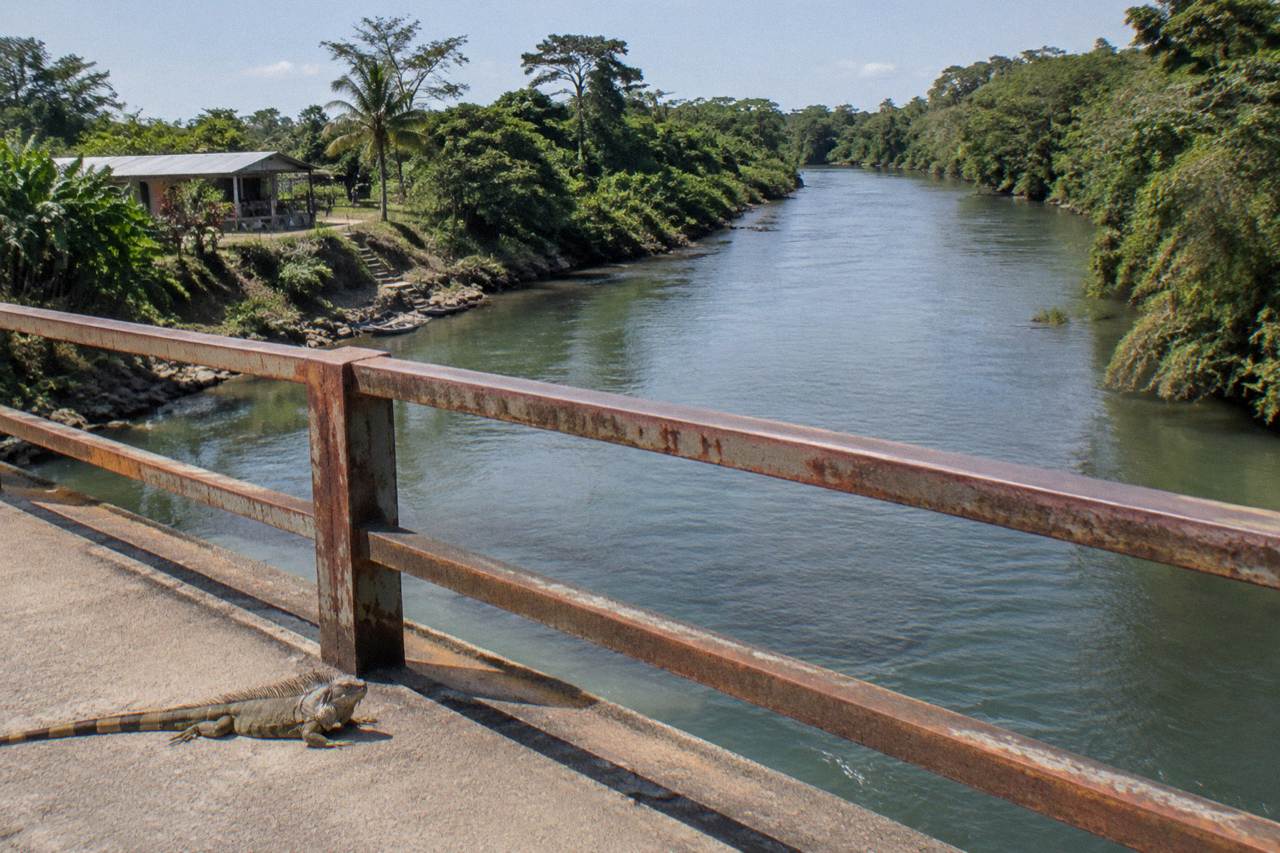
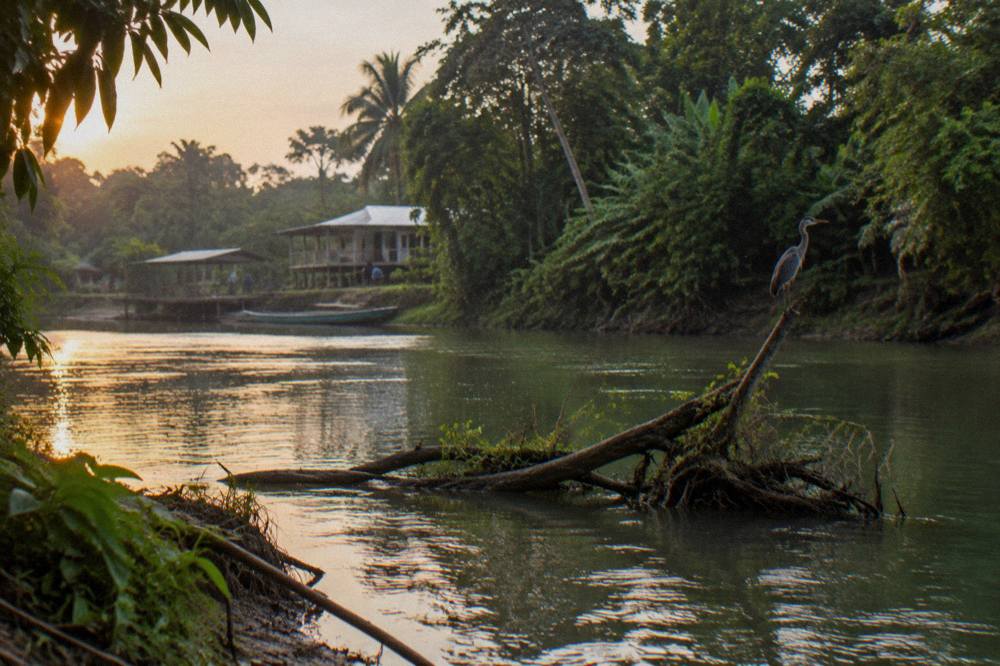
What is actually free is the river corridor itself. The Sarapiqui is a public, rain-fed, undammed river, and Costa Rican law treats riverbanks as public domain in practice along most of its lowland course. You can stand on any public bridge over the river, watch rafts come through, and see the jungle canyon without paying anyone. Wildlife along the banks, sloths, monkeys, toucans, iguanas and aquatic birds, is commonly reported by operators and guests, though no sighting is ever promised.
There is also a structural reason the free options here are unusually good. A 2022 Costa Rican law, Law No. 10152, placed a 25-year renewable environmental safeguard along the main channel and banks of the Sarapiqui from source to the San Juan River mouth, prohibiting new hydroelectric projects and new mining extraction concessions. The river that rafts run on is the same river you can watch for free, and it is protected from the developments that usually spoil accessible riverbanks.
| Option | Cost | What you get |
|---|---|---|
| Sarapiqui riverbank and public bridges | Free | River views, jungle canyon, passing rafts |
| Puerto Viejo de Sarapiqui town streets | Free | Plaza, local sodas, everyday lowland life |
| Roads between La Virgen and Chilamate | Free | Roadside wildlife, pasture and jungle edges |
| Tirimbina Biological Reserve | Paid, check the reserve | Hanging bridges over the river, trails, reported hours 7:00 a.m. to 5:00 p.m. |
| La Selva Biological Station | Paid, $44 to $55 guided walks | Research-station forest with a certified guide |
Where Can You Walk Beside The Sarapiqui River For Free?
Public bridges and riverbank access points in and around Puerto Viejo de Sarapiqui and La Virgen de Sarapiqui are the reliable free walks. The river is visible from road bridges along the lowland route, banks are open where public land meets the water, and morning is the window when wildlife and raft traffic are both active.
Start early. Daytime temperatures in the lowlands typically run 28 to 30 C year-round, and both animals and rafting crews favor the morning. Typical rafting departures across operators fall between 7:00 and 8:30 a.m., which means a mid-morning hour on a bridge usually coincides with the first rafts of the day coming downstream. Watching a crew paddle a Class II-III rapid from a bridge costs nothing and is genuinely one of the best free shows in the region.
Be honest with yourself about safety, though. Riverbanks on a rain-fed river change with the water level, and the green season from May to November brings higher flows. After heavy rain, banks can be saturated and trails muddy, and the national emergency authorities have repeatedly issued alerts and opened shelters in the Sarapiqui canton during green-season flooding events. Stay on established ground, keep off slick rocks, and treat a swollen brown river as something to photograph from a bridge rather than walk beside. The nationwide emergency number in Costa Rica is 911.
One planning note on the word "walk": there is no verified free walking tour of the town, and this site will not invent one. What exists is the town itself, walked on your own, at no cost. If a guided experience matters to you, the paid options later in this guide are the verified ones.
If watching the rafts from a bridge makes you want to be in one, that instinct is worth acting on. The three listings below are the ones budget travelers most often compare for exactly that upgrade.
Is Puerto Viejo De Sarapiqui Worth Visiting On A Budget?
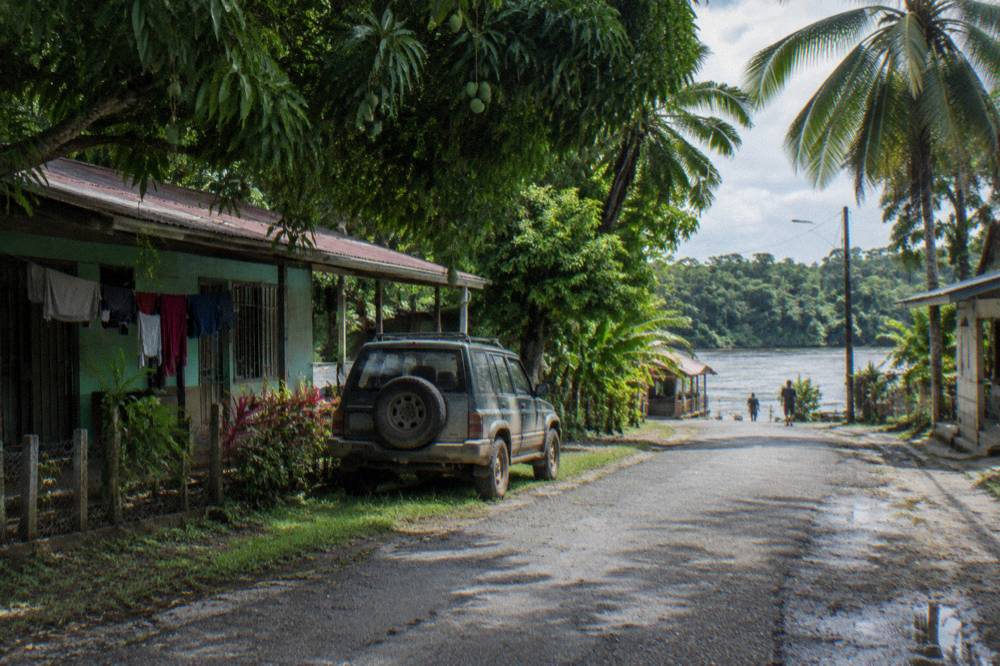
Yes, as a half-day wander rather than a destination in itself. The town is small, walkable and free to explore, with a plaza, local eateries and a genuinely local pace that the better-known tourist towns have lost. Budget travelers can fill a morning here for the price of a coffee.
Puerto Viejo de Sarapiqui is the canton seat, and it works as a base for the free activities around it. Lodging nearby includes eco retreats toward Chilamate and rainforest lodges in the La Virgen area, both convenient to the river corridor. From town, the drive to the Sarapiqui rafting launch areas is short, and the drive from San Jose to the Sarapiqui area runs roughly 1 hour 30 minutes, while La Fortuna to Puerto Viejo de Sarapiqui is about 1 hour to 1 hour 10 minutes direct. For everything else you need to sort out in town, the Puerto Viejo de Sarapiqui town guide covers where rafts launch, where to sleep and eat, and what else to do along the river.
The town's appeal is lowland everyday life: the central area, the small shops, the fruit stalls, and the constant presence of the river economy, rafts on roof racks, guides in wet gear, vans heading to launch points. Local sodas serve inexpensive Costa Rican food, and the currency note works in your favor, the colon is official but US dollars are widely accepted, so a budget day here is easy to manage.
Timing the town around the seasons helps. The dry season runs December to April, with April the driest month at about 117 mm of rain over roughly 8 rainy days; the green season runs May to November, with November the wettest at about 445 mm over about 17 rainy days. A dry-season visit means more reliable walking weather; a green-season visit means fewer crowds and lusher scenery, with the tradeoff of afternoon showers. Our month-by-month Sarapiqui weather guide breaks this down further.
For readers building an itinerary around the area, the town pairs naturally with the free river spots above and one paid nature stop. The town guide on this site covers Puerto Viejo de Sarapiqui in more depth for those who want it.
Which Nature Reserves Near Sarapiqui Are Free And Which Are Paid?
None of the established reserves near Sarapiqui are free. Tirimbina, La Selva and Braulio Carrillo all charge or run paid guided walks. The free nature experiences are the public river corridor, roadside wildlife and the jungle views from the road itself; everything with trails and hanging bridges is a paid product.
This distinction is where a lot of budget advice goes wrong. Travel forums casually list Tirimbina as a free stop, but Tirimbina is a private reserve, open daily from 7:00 a.m. to 5:00 p.m., with hanging bridges including one over the Sarapiqui River, trails and chocolate tours, all as paid offerings. Braulio Carrillo National Park, open daily from 8:00 a.m. to 3:30 p.m. including holidays, is a national park with entry controlled at its sectors. La Selva Biological Station is a research station whose visitor program is built around guided walks at $44 per person for three hours and $55 for six hours.
None of that makes them bad value; it makes them paid. A budget traveler who wants bridges over the river, deep-forest trails and a biologist as a guide will find the La Selva and Tirimbina fees justified. A traveler who just wants jungle and river scenery can get a very large share of it free from the public corridors, and spend the savings on the one paid day that the region is really known for.
| Site | Free or paid | Verified details |
|---|---|---|
| Tirimbina Biological Reserve | Paid | Open daily 7:00 a.m. to 5:00 p.m., hanging bridges over the Sarapiqui, chocolate tours |
| La Selva Biological Station | Paid | Guided short walks $44 per person (3 hours), long walks $55 per person (6 hours) |
| Braulio Carrillo National Park | Paid | Open daily 8:00 a.m. to 3:30 p.m. including holidays; entry fees not published here |
| Sarapiqui riverbank and bridges | Free | Public river corridor, no admission |
| Lowland roads La Virgen to Chilamate | Free | Roadside wildlife and jungle-edge views |
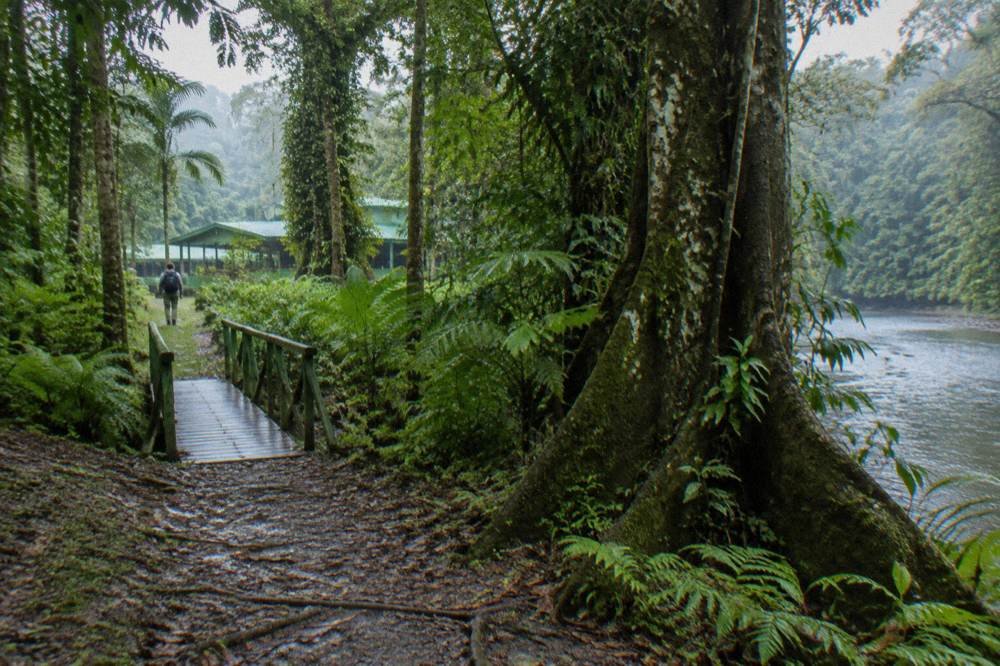
If a reserve day is on the list, the pairing that works well is one paid reserve morning plus the free river and town time in the afternoon. Visitors planning that combination can read the Tirimbina and La Selva with a rafting day guide on this site for how the two halves fit together.
Wondering whether to trade a free afternoon for the paid rafting morning? The cancellation terms make that an easy call.
What Wildlife Can You See Around Sarapiqui For Free?
Sloths, monkeys, toucans, iguanas, caimans and aquatic birds are commonly reported along the Sarapiqui River banks and in calmer sections, by both operators and guests. No sighting is ever guaranteed, but the free corridors, bridges and roadside edges produce regular reports without any tour fee.
The wildlife logic of the lowlands is simple: the river corridor is the habitat. Where there is public access to the river, there is access to the animals that live along it. Mornings and late afternoons are the productive windows, and the edges, where pasture meets forest, are often better than deep forest itself for spotting howler monkeys and sloths, because the trees are lower and the light is stronger.
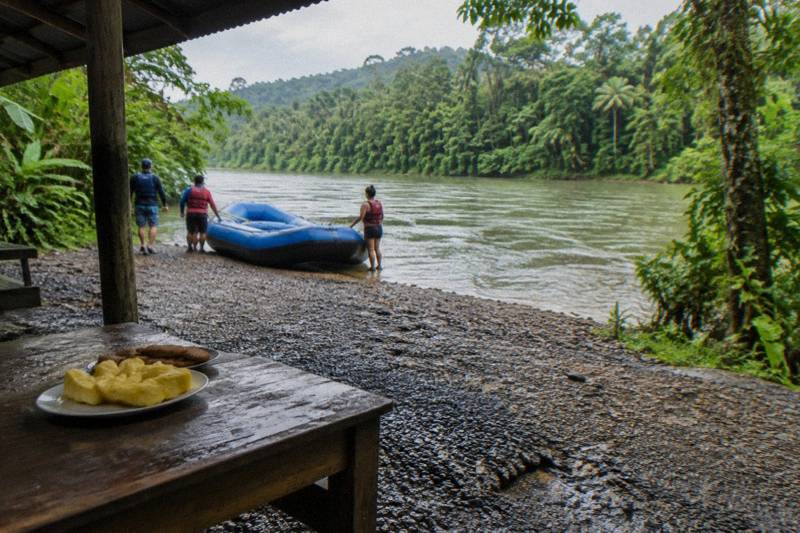
From a raft, the same corridor delivers the same animals from a different angle, which is one reason travelers on a free-day budget so often end up adding one paid river day. Operators of the Class II-III trips describe tropical fruit breaks on the bank, certified guides pointing out the canopy, and calm stretches between rapids where the watching actually happens. The Aguas Bravas rafting listing from Chilamate, rated 4.9 from 101 reviews and from $70 per person, includes a fresh fruit buffet, lunch and drinks, so the mid-river stop is built into the product rather than an afterthought.
Free wildlife watching still needs the same patience as paid. Move slowly, scan the cecropia trees for sloths, listen for howler calls at dawn, and check the quiet water near bridge pilings for caimans and herons. Binoculars transform a free morning; they cost less than a single paid tour and last for the whole trip.
For readers who want the full picture of what the river produces, the wildlife from the raft guide on this site covers sightings by section and season.
When Is A Paid Rafting Day Worth It On A Free Trip?
A paid rafting day is worth it when you want to be inside the scenery you have been watching for free. The river is the region's defining feature, every rafting trip on the roster is paid, and the cheapest firm-priced listing is from $60 per person, so the decision is usually about appetite and budget rather than value.
Be direct about the honesty limit: there is no free rafting anywhere in this region, and any claim otherwise should be treated with suspicion. What exists on this site's roster are 31 paid products, from $60 per person at the floor to a two-night package at $556 per person. The budget question is whether one of those paid days replaces or supplements the free ones.
The case for yes is strong for most travelers. The free options put you beside the river; rafting puts you in it. The Class II-III family trips are beginner-friendly and legal for participants from age 8 under the national norm, with individual operators often setting higher minimums, so check the listing. A 3-hour shared trip with a certified guide, safety equipment and a fruit snack is a different order of experience from a bridge view, and the price of the cheapest listing is comparable to a nice dinner.
The case for no is real too. If the budget is genuinely closed, the free days in this guide are not a consolation prize; they are a legitimate way to see the lowlands. The middle path most budget travelers land on: two free days plus one paid rafting morning, using the cheapest listing as the anchor.
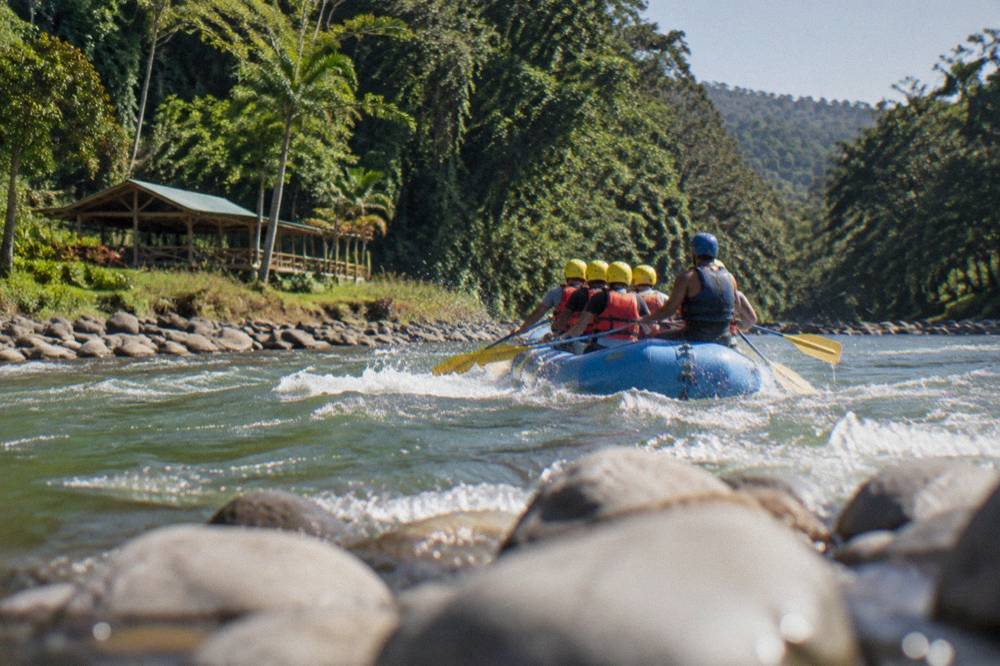
The reference point for that anchor listing: Rafting Sarapiqui River Class II-III, a 3-hour shared trip from $60 per person, rated 5.0 from 59 reviews, departing La Virgen with up to 18 guests, transport during the tour included, hotel transport excluded, and free cancellation listed. It is the cheapest firm-priced product on the roster, and it is the natural first paid day for a traveler who has spent two free days along the same river.
For a wider view of the paid tiers and what each includes, the cost and inclusions guide compares the full catalogue, and Sarapiqui River Rafting remains the homepage hub for comparing every listing side by side.
How Much Does The Cheapest Sarapiqui Rafting Trip Cost?
The cheapest firm-priced rafting listing on this site is from $60 per person for a 3-hour Class II-III shared trip rated 5.0 from 59 reviews. The next tier runs $70 to $85 per person, and family trips with meals included start at $85 per person with a 4.9 rating from 200 reviews.
Budget planning works better with the real endpoints on the table. The floor of the catalogue is the $60 Class II-III trip from La Virgen. Just above it sit several options in the $70 to $79 range: the Aguas Bravas Chilamate trip at $70 per person with pickup schedulable from Sarapiqui hotels, a 4-hour Rio Sarapiqui adventure at $70 per person, and a 3-hour mid-price trip from Chilamate at $79 per person. At $85 per person sit both the family trip with lunch from the Sarapiqui Outdoor Center, rated 4.9 from 200 reviews, and the Class III-IV extreme trip from the same base, rated 5.0 from 108 reviews.
| Listing | Price | Class | Duration | Rating |
|---|---|---|---|---|
| Rafting Sarapiqui River Class II-III (La Virgen) | from $60 per person | II-III | 3 hours | 5.0 from 59 reviews |
| Aguas Bravas rafting (Chilamate) | from $70 per person | II-III | 3 hours | 4.9 from 101 reviews |
| Family Rafting Class II-III with lunch (La Virgen) | from $85 per person | II-III | 3 hours | 4.9 from 200 reviews |
| Extreme White Water Class III-IV (La Virgen) | from $85 per person | III-IV | 3 hours | 5.0 from 108 reviews |
| Sarapiquí Class II-III Near Arenal (La Fortuna) | from $105.87 per person | II-III | 8 hours | 5.0 from 101 reviews |
Notice what the money buys beyond the river time. The $60 listing includes equipment, certified guides, a snack of cookies and fruit, a towel and in-tour transport, with hotel transport and photos excluded. The $85 family trip adds lunch, lockers, changing rooms, WiFi and parking at the operator base, with a listed minimum age of 6. The differences are concrete, which is why the cheapest option is not automatically the right one for a family; the rafting with kids guide works through that choice in detail.

A 4-hour alternative worth knowing: the Rafting Adventure at Rio Sarapiqui, from $70 per person, rated 5.0 from 29 reviews, snacks included, meal not stated, departing the wider Sarapiqui area with up to 42 guests. It splits the difference between the budget floor and the meal-included trips.
What Should You Pack For A Free Day Along The Sarapiqui River?
Pack for heat, rain and walking: lightweight clothes that dry fast, secure shoes, sunscreen, insect repellent, a refillable water bottle, a dry bag or zip bag for electronics, and cash in small bills for sodas and fruit stalls. Rain gear matters year-round, with the green season demanding it daily.
The lowland climate sets the rules. With daytime temperatures typically 28 to 30 C year-round and annual rainfall around 3,464 mm in the lowlands, a free day here is a hot day with a real chance of getting wet, from rain or from leaning over a bridge rail in spray. Tap water is generally safe in most major tourist areas, but carrying your own bottle is standard practice on a walking day.
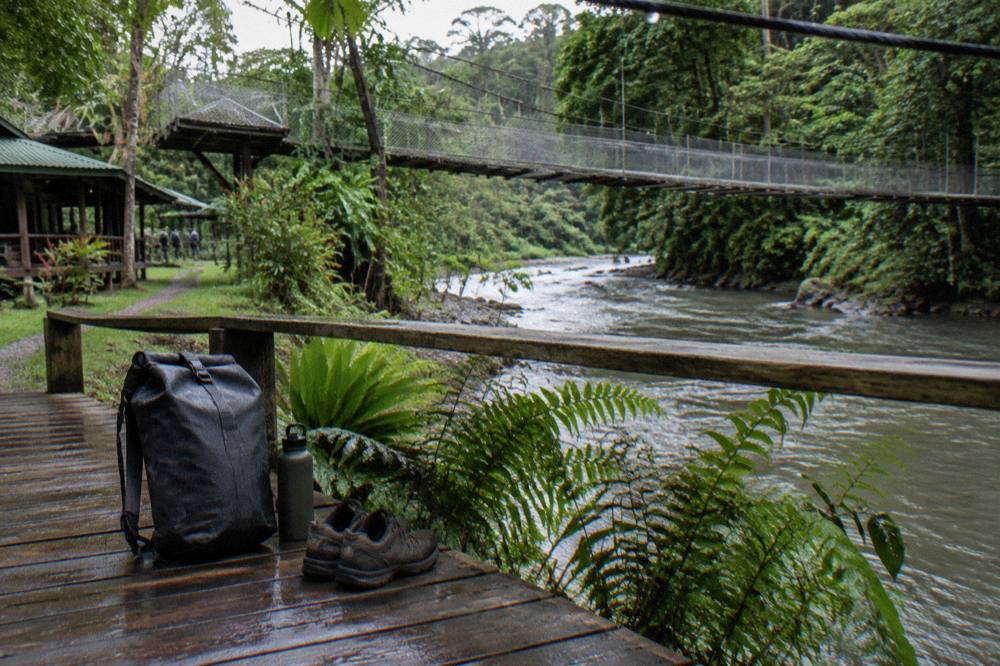
A few practical items earn their space. Binoculars for the wildlife mornings. A bandana or hat for the sun on open bridges. A dry layer for the green-season afternoons, when showers typically arrive after sunny mornings. And small US bills, accepted nearly everywhere alongside the colon, for the roadside fruit stands that turn a free walk into a cheap feast. The what to bring for rafting guide covers the fuller packing logic if a paid river day joins the plan.
| Item | Why it matters on a free day |
|---|---|
| Fast-drying clothes | Heat and humidity, plus rain in green season |
| Secure walking shoes | Riverbank paths and bridge stairs can be slick |
| Insect repellent | Lowland mosquitoes are active at the edges |
| Binoculars | Turns free wildlife watching from luck into method |
| Small bills | Fruit stalls and sodas, dollars widely accepted |
| Dry bag or zip bag | Afternoon showers and bridge spray |
Common Questions About Free Things To Do In Sarapiqui
Is La Selva Biological Station free to visit?
No. La Selva runs paid guided walks at $44 per person for a three-hour walk and $55 per person for a six-hour walk. The free nature options in the area are the public river corridor, bridges and roadside edges.
Can you see wildlife in Sarapiqui without a tour?
Yes, commonly. Sloths, monkeys, toucans, iguanas, caimans and aquatic birds are reported along the riverbanks and calmer sections by operators and guests alike. Sightings are never guaranteed, but the public corridors produce regular reports at no cost.
Is Tirimbina Biological Reserve free?
No. Tirimbina is a paid reserve, open daily from 7:00 a.m. to 5:00 p.m., with hanging bridges over the Sarapiqui River, trails and chocolate tours. Check the reserve directly for current admission details.
What is the cheapest rafting trip on the Sarapiqui River?
The cheapest firm-priced listing on this site is from $60 per person, a 3-hour Class II-III shared trip from La Virgen rated 5.0 from 59 reviews. Free cancellation is listed, and hotel transport is excluded, with in-tour transport included.
Is there any free rafting in Costa Rica?
No. Every rafting trip on this site's roster is a paid product. There is no free rafting in the Sarapiqui region, and claims to the contrary should be treated with suspicion.
When is the best season for a free trip to Sarapiqui?
Dry season, December to April, offers more reliable walking weather, with April the driest month at about 117 mm of rain. Green season, May to November, brings lush scenery and fewer crowds but heavier rain, with November the wettest at about 445 mm.
Before the final word, here again are the three listings that fit a free-day budget as the one paid upgrade.