Puerto Viejo De Sarapiqui Town Guide
Puerto Viejo de Sarapiqui is the lowland town most rafters pass through without realizing it: the commercial center of the Sarapiqui canton, a short ride from the operator bases in La Virgen and Chilamate where most river trips begin.
Short answer
Puerto Viejo de Sarapiqui is the main town of the Sarapiqui lowlands, about 1 hour 10 minutes by road from La Fortuna and about 1 hour 30 minutes from San Jose. Rafting trips mostly meet at operator bases in La Virgen and Chilamate nearby, from $60 to $160 per person depending on the trip.
Puerto Viejo de Sarapiqui is not a rafting launch site itself. It is the working lowland town that serves one: the seat of the Sarapiqui canton in Heredia, the place with the banks, the supermarkets, the pharmacies and the sodas, sitting in the flat wet country where the Sarapiqui River slows on its way north. Almost every rafting trip sold on this river meets somewhere in this town's orbit, at operator bases in La Virgen de Sarapiqui or Chilamate a short drive away, or arrives by shuttle from La Fortuna and San Jose for a day on the water.
That position is the whole reason to understand the town before you book. Visitors staying in Puerto Viejo are a short ride from the put-in, which means earlier starts, later returns and no 5 a.m. shuttle from a hotel two hours away. This guide covers what the town actually offers a rafter: where the trips depart from, where to sleep, where to eat, how to reach the area, and what else fills a day here beyond the river. The most reviewed trip on the roster, the Class IV run from La Fortuna, 5.0 from 845 reviews and from $85 per person, is one of several listings that tie the town and the river together.
What Is Puerto Viejo De Sarapiqui Known For?
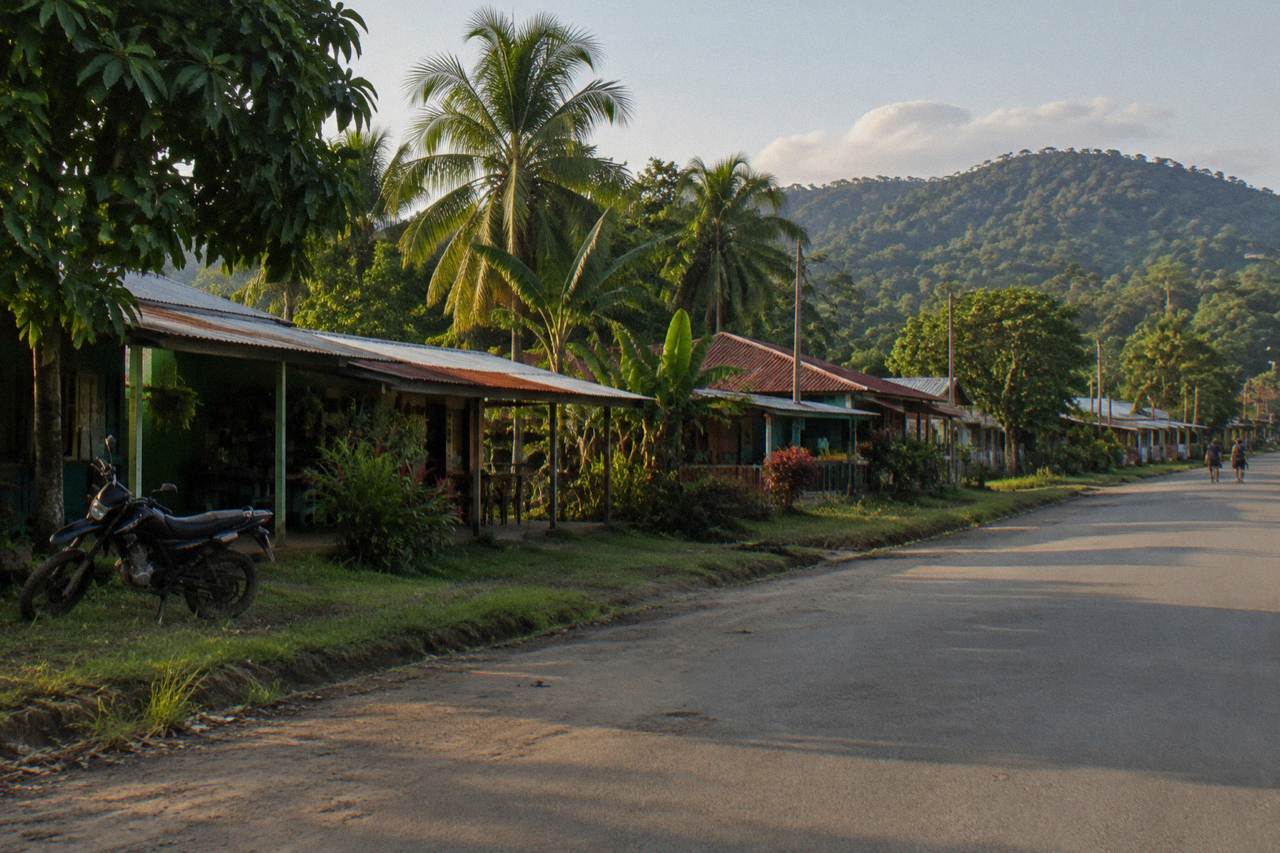
Puerto Viejo de Sarapiqui is the commercial center of Costa Rica's Sarapiqui lowlands, a rain-forest border region about 1 hour 10 minutes from La Fortuna and 1 hour 30 minutes from San Jose by road. It is known as a base for wildlife watching and river trips rather than for beaches or nightlife, and it sits a short drive from the operator bases where rafting departures meet. The town is small enough to walk end to end in twenty minutes. What it has, it has well: a couple of streets of shops and sodas, a central market rhythm that starts early and quiets by mid-afternoon, and an unhurried, genuinely local feel that the better-known tourist towns lost years ago.
The region around it carries real ecological weight. The lowlands average about 3,464 mm of rain a year by the 1990 to 2020 normals, which is what grows the dense jungle the river cuts through. November is the wettest month at roughly 445 mm over about 17 rainy days; April the driest at about 117 mm over 8. Daytime air sits around 28 to 30 C year-round, so packing is simple: light clothes, a rain layer in the green season, and dry clothes in a bag for after the raft.
One legal detail worth knowing, because it shapes why the river runs the way it does: Law No. 10152 of 2022 put a 25-year renewable environmental safeguard along the main channel and banks of the Sarapiqui River from its source to the San Juan mouth, barring new hydroelectric projects and new mining extraction concessions. The river is rain-fed and undammed, which is exactly why its rapid class moves with the weather: operators report Class II-III at lower dry-season flows and up to Class III or IV after heavy rain. That variability is covered in detail in the guide to Sarapiqui river levels and rapid class by season.
For a rafter, the practical takeaway is simple. The town is the supply stop and the sleep-over; the river is the event; and the two are close enough that a trip based here feels unhurried in a way a day trip from San Jose never does.
Where Do Rafting Trips On The Sarapiqui Depart From?
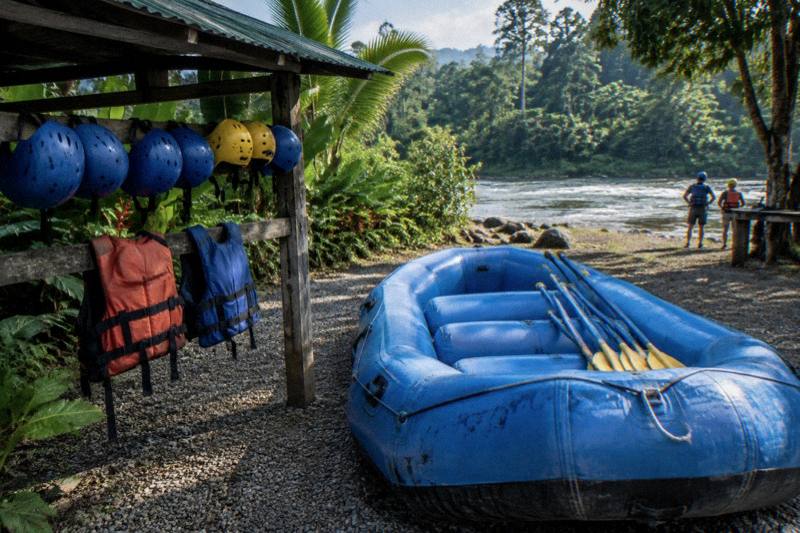
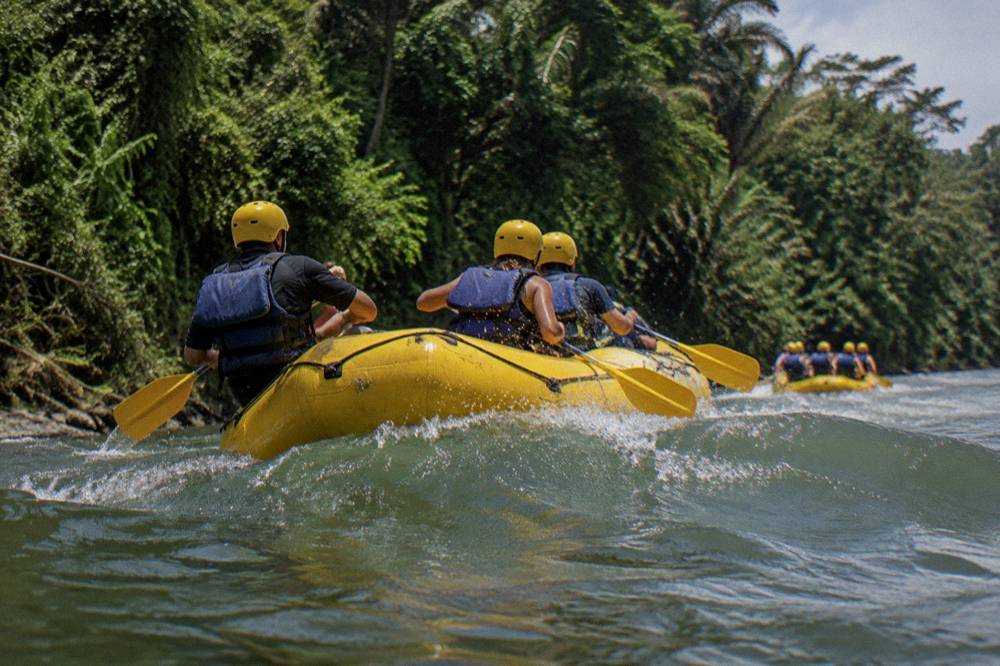
Most Sarapiqui rafting listings meet at operator bases rather than on the riverbank: several depart from La Virgen de Sarapiqui, where a base team runs family Class II-III trips and Class III-IV trips, others from Chilamate, and the largest number run as hotel-pickup days from La Fortuna. A van takes you from the base to the river and back. The departure point matters because it decides your morning. Meet at the base and your day starts on local time, a short drive from wherever you sleep in the area. Book a La Fortuna departure and pickup comes to your hotel, with the roughly 1 hour to 1 hour 10 minute drive to the Sarapiqui area built into the listing's total duration.
The family Class II-III trip from the La Virgen base, 4.9 from 200 reviews and from $85 per person with lunch included, is a good example of the base model: you meet at the operator center, the listing states hotel pickup is excluded, and a van drives you to and from the river. The base lists lockers, changing rooms, WiFi and parking, which is where you leave dry clothes. The budget 3-hour Class II-III listing from La Virgen, 5.0 from 59 reviews and from $60 per person, works the same way, with fruit and cookies on the water and no meal stated.
The Aguas Bravas listing from Chilamate, 4.9 from 101 reviews and from $70 per person with lunch and a fruit buffet, shows the middle path: meet at the Chilamate operation center, a 10-minute van ride to the river, or schedule pickup from a Sarapiqui hotel. And the biggest-volume trips on the river run from La Fortuna, among them the Class IV run with 845 reviews, which includes hotel transport for hotels within about 6 km of the operator's main office and lists pickup times that can shift by up to 20 minutes depending on where you stay.
| Listing | Departs from | Class | From (per person) | Duration | Pickup |
|---|---|---|---|---|---|
| Family Rafting Class II-III, Meal | La Virgen base | II-III | $85 | 3 hours | Not included, van to river |
| Budget 3-Hour Rafting, No Meal | La Virgen | II-III | $60 | 3 hours | Not included, van in tour |
| Aguas Bravas Rafting, Pickup Included | Chilamate | II-III | $70 | 3 hours | Sarapiqui hotel pickup listed |
| Class IV from La Fortuna | La Fortuna | III-IV | $85 | 5 hours | Hotels within about 6 km |
| Class 3-4 Rafting, 6 Hours | La Fortuna | III-IV | $122.04 | 6 hours | Hotel pickup and drop-off listed |
Group sizes, where stated, run from up to 15 guests on the small Arenal-area day tour to up to 50 on the big Class IV departure; the roster prints each listing's own cap. Minimum ages likewise come from each listing: 6 on the family trip from La Virgen, 7 on the near-Arenal Class II-III day, 14 on the base's own Class III-IV trip. National rules set the floor, not the ceiling: under the norm INTE G60-1:2019, ages 8 to 11 may paddle Class I to III and ages 12 to 17 may paddle up to Class IV, so no operator can lawfully take a 9-year-old on a Class IV run. Details are in the guide to rafting age and weight limits in Costa Rica.
Where Should You Stay Near The Sarapiqui River?
Staying in or near Puerto Viejo de Sarapiqui splits into three practical zones: the town itself for walkable food and services, the La Virgen area a few minutes north for the main operator base and Tirimbina, and Chilamate toward the river lodges. Every zone keeps you within a short ride of the put-in areas, which is the entire point of sleeping here. The area's lodging identity is eco-lodge rather than resort: Chilamate Rainforest Eco Retreat, about 10 km from the La Virgen centers, and Tirimbina Rainforest Lodge in La Virgen are established options near the bases. We do not print nightly rates for any of them, since verified figures were not gathered; check each property directly.
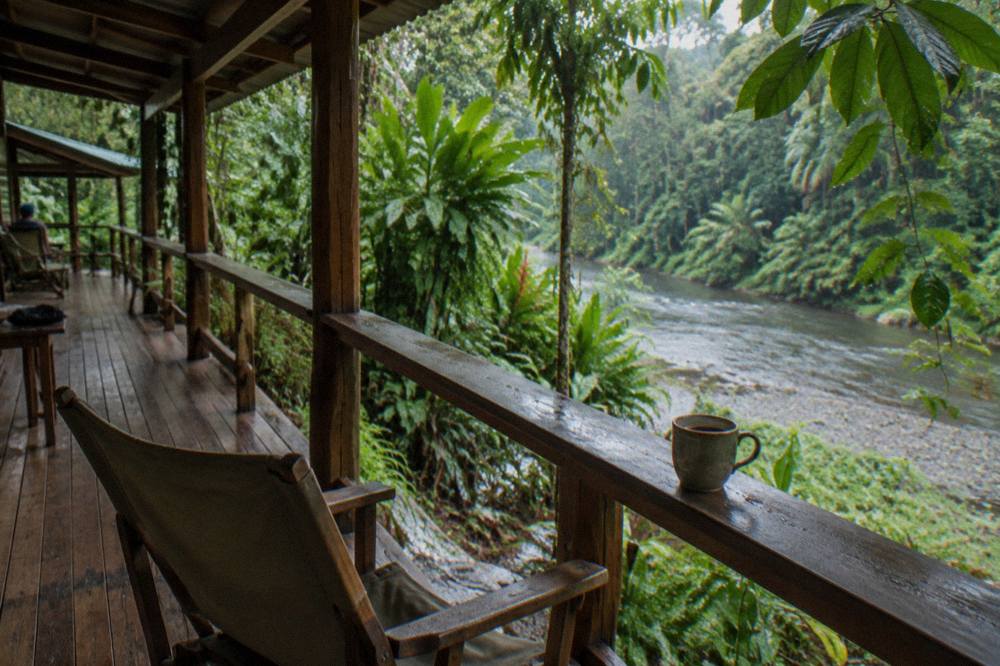
What the lodging choice really decides is your morning. Sleep near La Virgen and the base's family trip or Class III-IV extreme trip, both from $85 per person, is a five-minute drive; the listing states you meet at the base and a van handles the river shuttle. Sleep in town and you trade that for restaurants within walking distance. Sleep at a Chilamate lodge and the Aguas Bravas center is practically next door, and that listing lets you schedule hotel pickup from a Sarapiqui hotel.
Two longer listings reward an overnight stay rather than a day trip. The 2-night Sarapiqui package from San Jose, from $556 per person, includes two nights at a Sarapiqui hotel, a jungle night walk at La Tirimbina, and a Class III rafting day with meals; the listing names La Quinta Sarapiqui or similar in its standard category. That is the fullest way to use the town as a base rather than a drive-through.
| Zone | Character | Nearest rafting base | Best for |
|---|---|---|---|
| Puerto Viejo town | Walkable, banks, sodas, services | Short drive to all | Travelers wanting food and town life |
| La Virgen area | Operator base, Tirimbina reserve | La Virgen base trips | Earliest starts, changing rooms on site |
| Chilamate | Eco-lodges, quiet river stretch | Chilamate center | Lodge-based stays, wildlife mornings |
Book rafting before you book the bed in peak weeks, not the other way round. Dry-season mornings, December through April, are when the family listings run fullest, and the base's 3-hour slots are the ones that sell out first. All the listings on the roster show free cancellation, so there is little cost to holding a seat early.
Where Can You Eat In Puerto Viejo De Sarapiqui?
Eating in Puerto Viejo de Sarapiqui means sodas and small restaurants serving casado-style plates, rice and beans, plantains, grilled or stewed meat and fish, plus a handful of pizzerias and bakeries around the central streets; breakfasts run early from about 6 or 7 a.m., lunch is the main meal, and several kitchens close by early evening. The town is not a dining destination and does not pretend to be. It is reliable, cheap by resort-town standards, and exactly what you want before or after five hours on a river.
The rafting listings themselves solve one meal for you. The family trip from La Virgen includes lunch plus tropical fruit and yucca snacks; the Aguas Bravas Chilamate listing includes a fresh fruit buffet, lunch and drinks; the La Fortuna Class IV day includes lunch, fresh fruit, towels and bottled water. If your trip includes lunch, plan town meals around breakfast and dinner only. Verify the meal on your own listing before assuming: the budget La Virgen trip lists cookies and fruit but no meal, and one mid-price 3-hour listing from Chilamate explicitly lists lunch as an exclusion.
For timing, work with the river, not against it. Typical departures across the listings start between 7:00 and 8:30 a.m., which means breakfast at 6 a.m. if you are meeting at a base. Afternoon trips exist too, among them the Class II-III afternoon departure from La Fortuna, 4.8 from 39 reviews and from $92.66 per person, which suits a slow town morning. Tap water is generally reported safe in the Central Valley and major tourist areas per national water-authority standards; in rural lowland areas, ask or use bottled water.
What Else Is There To Do Around Puerto Viejo De Sarapiqui?
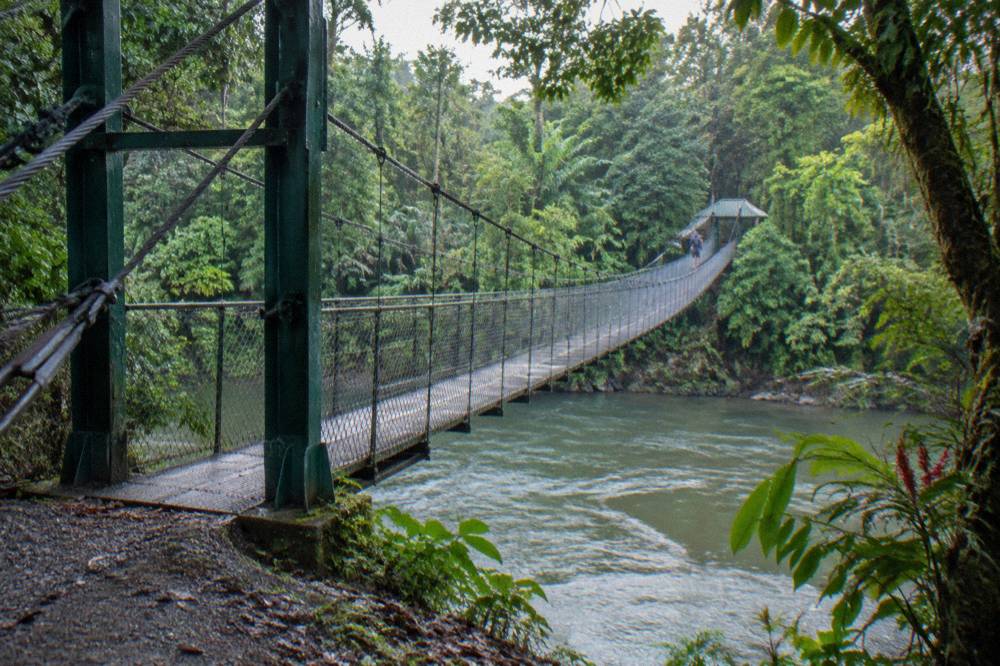
The two anchor non-rafting sights near Puerto Viejo de Sarapiqui are Tirimbina Biological Reserve, reported open daily 7:00 a.m. to 5 p.m. with hanging bridges over the Sarapiqui River, trails and chocolate tours, and La Selva Biological Station, which reportedly offers guided walks at $44 per person for 3 hours and $55 for 6 hours. Braulio Carrillo National Park, open daily 8:00 a.m. to 3:30 p.m., is the region's protected backdrop. Tirimbina is the easy half-day: suspension bridges over the river itself, forest trails, and a chocolate tour that traces cacao from seed to cup. Its hours are reported on the reserve's own site; current entry pricing was not verified, so check directly.
La Selva, run by the Organization for Tropical Studies, is the serious option: a working research station where the guided walks, reported at $44 for the 3-hour version and $55 for the 6-hour version in its regular seasons, put you on trails with a naturalist in one of the most studied forests in the tropics. Birders plan whole trips around it.
The gentler river option is the wildlife safari float, a paddle in kayaks or rafts with no whitewater: one listing from the La Virgen base, minimum age 4 and up to 50 guests, includes a sugar cane tour, fruit and yucca snacks and lunch, from $90 per person; a La Fortuna departure version runs from $92.66 per person with lunch. Sloths, monkeys, toucans, iguanas, caimans and aquatic birds are commonly reported by operators and guests on these floats, never promised. What a float does and does not involve is covered in the guide to Sarapiqui river wildlife from the raft.
| Activity | Type | Reported basis | Notes |
|---|---|---|---|
| Tirimbina Reserve | Trails, hanging bridges, chocolate tour | Open daily 7:00 a.m. to 5 p.m., reported | Check entry pricing directly |
| La Selva Biological Station | Guided research-station walks | $44 for 3 hrs, $55 for 6 hrs, reported | Regular-season scheduling applies |
| Wildlife safari float | Gentle river float | From $90 per person, lunch included | Minimum age 4 on the base listing |
| Class II-III family rafting | Whitewater, moderate | From $85 per person, lunch included | Minimum age 6 on the listing |
Beyond these, the region pairs rafting with canopy zip-lines and birdwatching tours, and one private combo listing from San Jose bundles a 9-cable, 11-platform zipline with 2 to 3 hours of Class II-III rafting on the Sarapiqui, from $335 per group over 9 hours. More angles on filling days here are in the guide to things to do in Sarapiqui.
How Do You Get To Puerto Viejo De Sarapiqui?
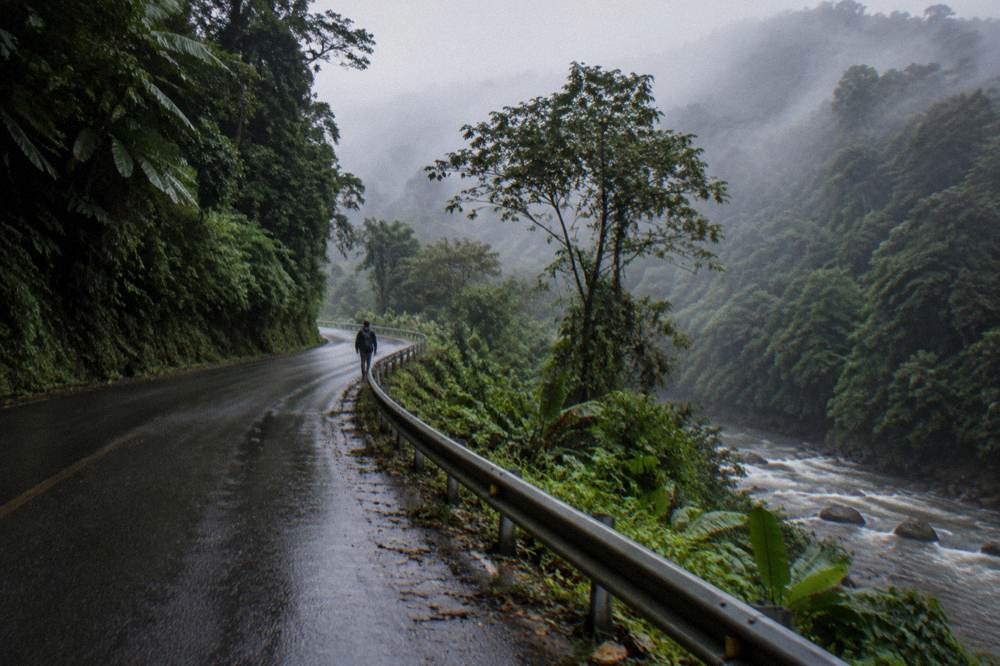
By road, Puerto Viejo de Sarapiqui is roughly 1 hour 30 minutes from San Jose via Route 32 through Braulio Carrillo, and roughly 1 hour to 1 hour 10 minutes from La Fortuna direct; both drives are the standard ways rafters reach the area, and both are exposed to rainy-season landslide closures on Route 32. The San Jose drive runs through the national park on the Braulio Carrillo highway, a steep, rain-forest stretch that closes repeatedly in heavy rain; news reporting through 2026 documents frequent landslide closures, with detours via Route 10 through Turrialba or the Bajos de Chilamate route. Route 126 over Vara Blanca from La Fortuna is the alternate, limited to light vehicles, steep and fog-prone in rain.
Public buses connect San Jose with Puerto Viejo de Sarapiqui on a regular schedule, and the town is walkable once you arrive. If your plan is rafting rather than the town itself, the listings remove the driving question entirely: the full-day Class II-III departure from San Jose, from $105 per person over 10 hours, includes round-trip transport from selected San Jose hotels, and the connection listings run rafting on the way between San Jose and La Fortuna so the river becomes part of the transfer.

The rule of thumb from all of this: leave early, and in the green season leave earlier. Trips are cancelled or rerouted during high-water events, flooding or road closures, a plain fact of an undammed rain-fed river, so a booking made for a stormy October week needs flexibility on both sides. Every listing on the roster shows free cancellation, which is the right kind of insurance for a weather-driven activity.
What Should You Know Before Booking A Sarapiqui Rafting Trip?
Before booking, match three things to your group: the rapid class against everyone's age, the departure point against where you sleep, and the total trip duration against your day. Class II-III trips on this roster run from $60 to $122.04 per person and Class III-IV from $85 to $160, durations run 2.5 hours to a full 10-hour day from San Jose, and every listing's own minimum age overrides the national floor. Age is the first filter. The national norm allows ages 8 to 11 on Class I to III and ages 12 to 17 up to Class IV, and operators set their own limits on top: 6 on the family base trip, 7 on the near-Arenal day, 14 on two of the Class III-IV listings, 15 on another. Where the roster says check the listing, check the listing.
Departure point is the second filter, and if you have read this far you already know it. Sleeping in Puerto Viejo de Sarapiqui pairs naturally with the La Virgen and Chilamate base trips; sleeping in La Fortuna opens the biggest menu, including the most reviewed listing on the river and the premium Class III-IV day at from $160 per person, which even includes entry to Arenal Volcano National Park in its inclusions.
What to wear and bring is the third. Operators and travel sites consistently advise clothes that can get wet, secure water shoes or tennis shoes, a change of dry clothes, sunscreen and insect repellent; the full packing logic is in the guides to what to wear rafting in Costa Rica and what to bring. Helmets and life jackets are mandatory and operator-supplied under the national norm, so they never go on your packing list. Guides must hold national certification in rafting and swiftwater rescue with current first aid and CPR under INTE G60-2:2019 and the adventure-tourism regulation.
| Trip style | Roster price span (per person) | Typical durations | Who it suits |
|---|---|---|---|
| Class II-III family rafting | From $60 to $122.04 | 3 to 10 hours | First-timers, families with kids over the listing age |
| Class III-IV rafting | From $85 to $160 | 3 to 8 hours | Confident paddlers, ages per listing |
| Wildlife float | From $90 to $122 | 3 to 8 hours | Wildlife watchers, no whitewater wanted |
| Rafting combos | From $335 per group | 9 hours to 3 days | Groups and multi-day planners |
One last planning note that ties this whole guide together: the cheapest firm-priced listing on the roster, at from $60 per person, meets in La Virgen, minutes from town. If you are sleeping in Puerto Viejo de Sarapiqui, the least expensive and the most reviewed trips on the river are both, functionally, your neighborhood rafting runs. The town exists in most itineraries as a corridor between La Fortuna and San Jose; slept in, it becomes the short-ride base the brochures never mention.
Common Questions About Puerto Viejo De Sarapiqui
Is Puerto Viejo de Sarapiqui the same place as Puerto Viejo on the Caribbean coast?
No. Puerto Viejo de Sarapiqui is an inland lowland town in Heredia province, the commercial center of the Sarapiqui rafting area. Puerto Viejo de Talamanca is a beach town on the southern Caribbean coast, several hours away. Always check that "Puerto Viejo" on a bus or booking refers to Sarapiqui.
How far is Puerto Viejo de Sarapiqui from La Fortuna and San Jose?
Roughly 1 hour to 1 hour 10 minutes direct from La Fortuna, and roughly 1 hour 30 minutes from San Jose via Route 32. Rainy-season landslide closures on Route 32 can extend either drive; detours are marked when the highway closes.
Do rafting tours pick up from hotels in Puerto Viejo de Sarapiqui?
Some do. The Chilamate listing allows scheduled pickup from a Sarapiqui hotel, and the La Virgen wildlife float listing includes pickup if you give your hotel at least 24 hours ahead. The La Virgen base rafting trips state hotel pickup is excluded: you meet at the base and a van takes you to the river. Check your specific listing.
What is there to do in Puerto Viejo de Sarapiqui besides rafting?
Tirimbina Biological Reserve, reported open daily 7:00 a.m. to 5 p.m., offers hanging bridges over the river, trails and chocolate tours. La Selva Biological Station reportedly runs guided walks at $44 per person for 3 hours and $55 for 6 hours. Gentle wildlife floats on the river run from $90 per person.
When is the best time of year to visit the Sarapiqui area?
Dry season, December to April, brings lower, more predictable flows and Class II-III conditions suited to families. Green season, May to November, brings higher water and the chance of Class III-IV conditions, with June through October typically the most dynamic months. Daytime temperatures run about 28 to 30 C year-round.
Can children go rafting on the Sarapiqui River?
Yes, within limits. National norm INTE G60-1:2019 allows ages 5 to 7 on Class I and II only, ages 8 to 11 up to Class III, and ages 12 to 17 up to Class IV. Listing minimums include age 6 on the family Class II-III trip and age 4 on the wildlife float. Always confirm the minimum on the listing you book.
For the complete picture of how this site compares the 31 Sarapiqui listings, start with the homepage comparison at Sarapiqui River Rafting, then narrow by class, departure town and price before you commit to a day.