How Many Days Is Enough In La Fortuna?
A day-by-day answer to how many days is enough in La Fortuna, with a rafting day on the Sarapiqui, wildlife stops, drive times and honest planning advice.
Three days is enough for a first visit to La Fortuna, giving you time for one big adventure day, one volcano or hot springs day, and one slower wildlife morning, while four days let you add a Sarapiqui rafting run without squeezing anything else out of the itinerary. The drive from La Fortuna to the Sarapiqui launch area runs about 1 hour to 1 hour 10 minutes, so a rafting day still returns you to town with daylight. Five days is only worth it if you like slow mornings.
La Fortuna works as a base because so much sits within reach. The town itself is small, a few blocks of restaurants and tour offices under the volcano, but the surrounding area packs waterfalls, hanging bridges, hot springs, farms and two raftable rivers into a compact area around town. That density is exactly why day count matters: under three days you start cutting things you will regret, past five you are repeating categories.
The single most common planning mistake is booking La Fortuna itself too thin and treating the Sarapiqui as a separate trip. It is not. The river sits close enough that the most reviewed rafting listing on this roster, the Sarapiqui River Extreme White Water Rafting Class IV tour from La Fortuna, runs as a 5 hour door-to-door day, from $85 per person, with hotel transport for stays within about 6 km of the operator's office and lunch included. It carries a 5.0 rating across 845 reviews, the largest review pool of any trip this site lists.
If you want the short version: two nights for a fast pass, three nights for a comfortable first visit, four if a rafting day and a wildlife float both belong on the list. This article walks the days one at a time, with real prices and durations from the listings this site sells.
What Can You Actually Fit Around La Fortuna?
Realistically, you can fit one major activity per day, plus something light in the afternoon, because full-day tours from La Fortuna typically depart between 7:00 and 8:30 a.m. and return mid to late afternoon. That schedule absorbs the core of your day, so plan for one big outing and a lighter second option instead of trying to stack multiple major activities. That means a four day stay comfortably holds four anchor activities: a Class III-IV rafting run, a volcano or waterfall morning, a wildlife float, and one hammock or hot springs day. Trying to stack two anchor tours in one day mostly produces a rushed version of both.
The anchor activities split into three families, and it helps to think in families rather than names. Whitewater: the Class III-IV and Class IV Sarapiqui runs, the gentler Class II-III family sections, and the wildlife floats, which are calm water, not rapids. Land: volcano hikes, waterfall trails, hanging bridges and hot springs. Slow: chocolate tours, farm visits and town time. One from each family per day is a full day. Two from the same family back to back is usually redundant.
Here is how the anchor options this site sells compare on the numbers that matter for planning:
| Trip | Class | Total duration | From (per person) | Departs | Meal |
|---|---|---|---|---|---|
| Sarapiqui River Extreme White Water Rafting Class IV | III-IV | 5 hours | $85 | La Fortuna | Lunch |
| Rafting Adventure at Rio Sarapiqui | Not stated | 4 hours | $70 | Sarapiqui area | Not stated |
| Rafting Class 3-4 Jungle Run | III-IV | 8 hours | $123 | La Fortuna / San Jose | Meal |
| Sarapiqui River Family Rafting Class II-III | II-III | 3 hours | $85 | La Virgen | Lunch |
| La Fortuna Jungle Safari Float | Float | 6-8 hours | $91-122 | La Fortuna | Meal |
One honest note on that table: the family rafting listing from La Virgen carries a 4.9 rating from 200 reviews and a listing minimum age of 6, which makes it the natural pick if children are in the group. The Class IV trips from La Fortuna carry listing minimum ages in the mid teens, 14 to 15 on the lines that state one, and by law a Class III-IV trip cannot take anyone under 12 at all. The national rafting norm INTE G60-1:2019 sets ages by rapid class, and operators often set higher minimums on top. Where the listing states no age, check the listing.
There is a temptation to treat the wildlife float as a rest day. It is not: the La Fortuna jungle safari floats run 6 to 8 hours total with transport, so plan them like an anchor day, not like an afternoon stroll. Sloths, monkeys, toucans, iguanas, caimans and aquatic birds are commonly reported by operators and guests on Sarapiqui trips, but no sighting is promised, and honest operators say exactly that.
Should the rafting day go early in the stay or late? Early, for two reasons. If heavy rain lifts the river, operators reroute or cancel, and an early day leaves room to reschedule. And the La Fortuna-to-Sarapiqui corridor can be affected by rainy season road trouble, as we cover below, so a buffer day after the adventure day is worth more than a buffer day before it.
What Does A Three Day La Fortuna Itinerary Look Like?
Day one is arrival and the waterfall or volcano, day two is the Class III-IV Sarapiqui rafting run with a hot springs evening, day three is a morning float or hanging bridges and out by afternoon, and every day starts between 7:00 and 8:30 a.m. Three days works because each day gets exactly one anchor and one soft landing. It stops working the moment you add a fourth anchor.
Day one: arrive, check in, and do the close-to-town things. The La Fortuna waterfall trail and the town itself fill an afternoon comfortably. If you landed in San Jose in the morning, remember the drive to the Sarapiqui area runs about 1 hour 28 minutes and La Fortuna sits beyond it; total drive time from San Jose to La Fortuna is a solid half day with stops, so treat day one as a half day and plan accordingly.
Day two: the rafting anchor. The Sarapiqui River Extreme White Water Rafting Class IV tour is the 5 hour option from $85 per person with lunch, towels and bottled water listed, hotel transport included within about 6 km of the office, and a 5.0 rating from 845 reviews. For a longer, bigger-water version, the Class 3-4 Jungle Run from La Fortuna or San Jose runs 8 hours from $123 per person with hotel transport and a typical meal, rated 4.9 from 29 reviews. Either way you are back in La Fortuna by late afternoon, which is exactly when the hot springs feel earned.
Day three: the wildlife morning. The Jungle Safari Float on Sarapiqui from La Fortuna runs 6 hours from $92.66 per person with lunch and snacks listed, rated 5.0 from 23 reviews, up to 30 guests. If the flight schedule is tight, a hanging bridges walk closer to town substitutes.
Three days, three anchors, no overlap. The failure mode of the three day plan is the morning of day three: if your departure is before mid afternoon, drop the float to a later trip and keep day three for packing and the waterfall you skipped. A float that starts at 7:30 a.m. and runs 6 hours does not pair with an early checkout.
After that rafting day, a natural next read is the Class III-IV Upper Sarapiqui Rapids guide, which breaks down what the harder water actually feels like and who it suits.
When Is Four Or Five Days The Right Call?
Four days is the right count when the rafting run and the wildlife float both belong on the list plus a volcano hike, and five days is right only for slow travelers or anyone pairing La Fortuna with an overnight in the Sarapiqui lowlands. The fourth day is not a throwaway; it is the day that lets the rafting run reschedule after a cancellation and the float go early rather than last.
The four day shape: rafting on day two, float on day three, and day four opens up for the volcano area or a second river option. That is where the Rafting Adventure at Rio Sarapiqui listing earns its slot: 4 hours from $70 per person, the lowest-priced anchor-length rafting trip on this roster, rated 5.0 from 29 reviews, departing the Sarapiqui area with snacks listed and no meal stated. It works as a lighter second river day for paddlers who want water twice without the full adrenaline repeat. Check the listing for transport, since pickup is not stated on that line.
Five days buys slowness, and for some travelers that is the point. The version of a five day stay this site can actually support with facts pairs La Fortuna with the Sarapiqui lowlands: raft the river on one day, walk the guided trails at La Selva Biological Station on another (guided short walks of 3 hours at $44 per person and long walks of 6 hours at $55 per person, as reported), and visit Tirimbina Biological Reserve, open daily 7:00 a.m. to 5:00 p.m., with hanging bridges over the Sarapiqui and chocolate tours. For the full lowlands version, see the Tirimbina and La Selva with a rafting day guide.
Beyond five days, returns diminish unless you are basing elsewhere and returning. There are only so many anchor activity families, and La Fortuna's quiet afternoons, good as they are, do not fill day six. Better to move on: many travelers route onward toward San Jose with a rafting connection, and the Class 2-3 and Class 3-4 connection listings from San Jose exist precisely for that move, 8 hours with hotel pickup, lunch and the river in the middle.
How Do Drive Times And Roads Shape The Day Count?
The San Jose to Sarapiqui area drive runs about 1 hour 28 minutes, La Fortuna to Puerto Viejo de Sarapiqui about 1 hour to 1 hour 10 minutes, and rainy season landslides on Route 32 can close the main highway and push you onto slower alternates, which is the strongest argument for a buffer day in any La Fortuna plan. Roads, not distances, decide how many days is enough.
| Leg | Approximate drive | Planning note |
|---|---|---|
| San Jose to Sarapiqui area | 1 hour 28 minutes | Route 32 subject to rainy season landslide closures |
| La Fortuna to Puerto Viejo de Sarapiqui | 1 hour to 1 hour 10 minutes | Direct route; the usual rafting corridor |
| La Fortuna to rafting launch sites | about 1 hour | As listed by La Fortuna rafting operators |
Route 32 through Braulio Carrillo has closed repeatedly in 2026 after heavy rain, with reports of closures and reroutes through the rainy season; Route 126 via Vara Blanca serves as an alternate for light vehicles only, steep and fog-prone in rain. Operators cancel or reroute rafting trips during high water, flooding and road closures, so no listing on this site promises a departure on any given day. The practical translation for day count: if your rafting day is your last full day and the river is blown out, you go home without rafting. Put the river early and keep a spare afternoon.
This is also why the drive matters for the arrival day itself. A morning arrival in San Jose puts you in La Fortuna by early afternoon with one stop; a midday arrival makes the drive most of the day. Travelers who undercount this tend to arrive exhausted on what they budgeted as day one, then discover they really bought a two day stay. For the full routing picture, see Rafting From San Jose To Sarapiqui, which covers the connection listings that turn the drive itself into the adventure day.
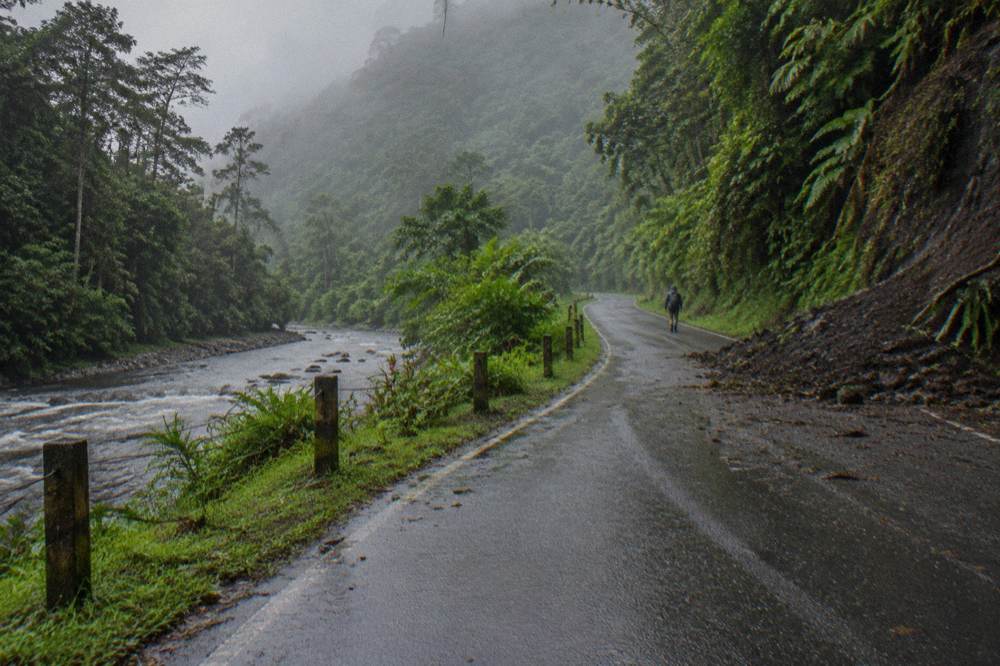
One more road note worth its own line: Route 32's problems are a rainy season pattern, not an event. The dry season months, December to April, carry lower and more predictable flows on the river, with operators reporting Class II-III conditions at low water, while the green season, May to November, brings higher water and bigger rapids, sometimes to Class III or IV after heavy rain. If bigger water is the goal, June through October is the window operators point to, and the buffer-day logic matters most then. The Sarapiqui River Levels And Rapid Class By Season guide unpacks that in full.
Does Season Change The Answer?
The day count stays three to four, but the season changes which days feel full: dry season days run on schedule with calmer water and easier roads, while green season days carry higher water, lusher forest, smaller crowds and a real chance a given day gets rerouted or cancelled. Budget the same number of days, but in the green season make one of them a buffer.
The lowlands around Sarapiqui average about 3,464 mm of rain a year on 1990 to 2020 normals, with November the wettest month at about 445 mm over roughly 17 rainy days and April the driest at about 117 mm over 8 rainy days. Daytime air runs about 28 to 30 C year-round. What that means for a La Fortuna stay: in the green season expect sunny mornings and afternoon showers, book anchor tours for morning slots, and do not schedule the rafting run as your departure day activity. In the dry season the schedule risk drops sharply, and three days genuinely suffices for most travelers.
Season also shifts the water itself. The same river section that runs Class II-III at low dry season flows can push Class III, and the Class III-IV sections can run Class IV at high water, as operators report. For beginners weighing the Class IV listings, the honest framing is in Can A Beginner Do Class 4 Rapids: the listings' minimum ages and the national norm set the legal floor, but fitness and swimming comfort are what the operator will actually assess on the day.
How Do You Build The Days If Rafting Is The Priority?
If rafting is the reason for the trip, build a four-day plan around two river days, one harder and one gentler, then frame them with an arrival day and a departure buffer. No operator can promise water conditions on a specific date, so this layout leaves room to shift a river day if conditions force a change. Two river days is the sweet spot: back to back Class IV days wears most recreational paddlers out, while a Class III-IV day followed by a Class II-III day lands well.
The pairing this site's roster supports best from La Fortuna: the Extreme White Water Rafting Class IV tour, 5 hours from $85 per person with lunch and a 5.0 from 845 reviews, on the first full day; then either the 4 hour Rafting Adventure at Rio Sarapiqui from $70 per person, or, with children 8 or older, the family Class II-III trip from La Virgen, 3 hours from $85 per person with a 4.9 from 200 reviews and a listing minimum age of 6. The law opens Class II-III water from age 8 and Class III-IV water from age 12, and operators set their own floors at or above those lines; where the roster shows no age, check the listing.
A two river day plan also answers the weather question structurally. If day two's Class IV run is cancelled for high water, the family section is the more likely of the two to run, so you still get wet. And if both cancel, the hot springs and the volcano trail are the all weather fallbacks that make La Fortuna forgiving as a base. The nearby protected areas hold up in rain too: Braulio Carrillo National Park, adjacent to the Sarapiqui area, is open daily 8:00 a.m. to 3:30 p.m. including holidays, per the park's official page.
For travelers building the whole trip around water rather than around the town, the Rio Sarapiqui Rafting Trips Compared guide lines up every listing side by side, and the homepage comparison on Sarapiqui River Rafting does the same for the quick decision.
Common Questions About Days In La Fortuna
How Many Days Is Enough In La Fortuna?
Three days for a comfortable first visit, four if a Sarapiqui rafting day and a wildlife float both belong on the list, and five only for slow travel or an overnight in the Sarapiqui lowlands. Each day holds one anchor activity departing between 7:00 and 8:30 a.m., so the count is really a count of anchors.
Can you do a Sarapiqui rafting day from La Fortuna?
Yes, several listings depart La Fortuna, including the Sarapiqui River Extreme White Water Rafting Class IV tour at 5 hours total from $85 per person with lunch and hotel transport within about 6 km of the office. The drive to the river area runs about 1 hour to 1 hour 10 minutes.
Is two days in La Fortuna enough?
Two days fits one anchor plus arrival, which in practice means choosing between the rafting run and the volcano. It works for a fast pass but cuts either the river or the hot springs evening, and it leaves no room to reschedule if heavy rain cancels a water day.
Do kids change the day count?
They change the itinerary more than the count. The family Class II-III trip from La Virgen lists a minimum age of 6, while Class III-IV listings carry minimum ages of 14 to 15 where stated, so a mixed age group may split across two different river days, which nudges the plan toward four days.
What is the best month to plan the trip?
Dry season, December to April, brings calmer Class II-III water and lower schedule risk; June through October brings higher water and bigger rapids alongside green season rain. Same day count either way, but in the green season keep one buffer day.